The Preacher’s Prayer

A prayer that I wrote for my friend, Rodney Duke, about ten years ago.  Pastors, priests, and ministers: feel free to borrow it for Palm Sunday.

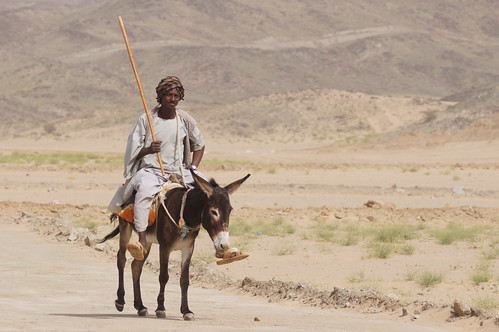
God, may your Holy Spirit ride upon my words into the hearts and minds of this congregation, just as Jesus rode a donkey into Jerusalem; and may that serve as a reminder that you can still use a jackass to reach your people.  Amen.

A Frame of Reference

Here’s an inspiring passage I found in on pages 19-20 in Douglas F. Ottati’s book, Theology for Liberal Presbyterians and Other Endangered Species (Geneva: 2006).

Will the mainline churches in America hold together or split apart?  Will liberal Protestants criticize the excesses and the idols of contemporary American culture but also remain open to the lessons and wisdom that nevertheless seem present in the wider society and culture?  Will liberal Protestants simply disappear?  Will the United States find positive, realistic, and responsible ways to exercise power in a multilateral world?  What shall we say and do about racism, sexism, and homophobia; about urban policy, transportation, and education; about matters of war and peace?  Can we ever become stewards of our natural environment?

These are among the important questions we face.  Nevertheless, for Christians and their communities, the more basic question is this: How shall we center a faithful witness?  The function of Christian theology is to help us answer this question, and I propose that we answer it in a single sentence: We belong to the God of grace.

Once we are clear about this, a number of things follow.  First, we live in assurance, refuse to set limits on the extent of God’s faithfulness, and refuse to exclude anyone from the scope of grace and redemption.  We then work for an inclusive church, support a ministry of reconciliation, and invite everyone everywhere to lay hold of the assurance and confidence that come with the knowledge of a gracious God.  Second, we acknowledge the human fault and, without losing hope, maintain a realistic attitude toward the present age and its daunting challenges.  Finally, we affirm that all people have worth, and we commit ourselves to public practices, policies, and leadership that respect persons, pursue equitable opportunities for the poor, and care for those in need.

We belong to the God of grace.  This simple confession will enable us to interpret the many threats and conflicts and issues and promises of our day in a definite theological frame of reference.

Gospelling Socially

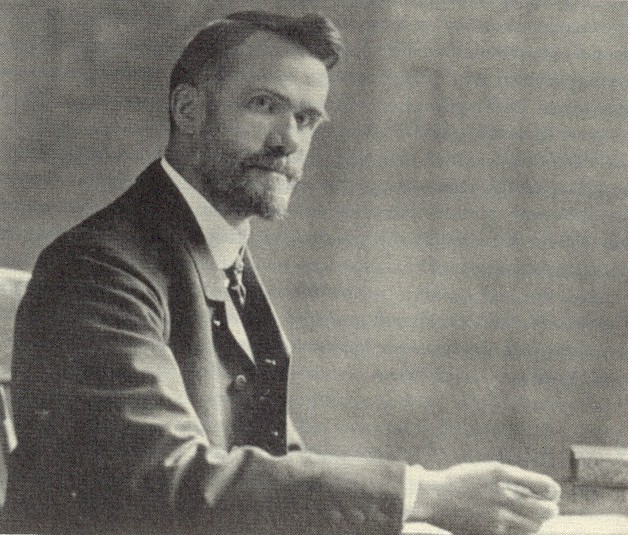
My thoughts were stirred toward the Social Gospel movement by a fantastic guest lecturer in my Philosophy of Religion class this morning.  So, I thought I might post a little from my old historical friend, Walter Rauschenbusch, an early twentieth century Baptist minister whose work I discovered while living in western North Carolina.  He taught at Rochester Divinty School in upstate New York.  It just so happens to be the place where I took my ordination exams for the PC(USA).  What Rauschenbusch had to say in the second decade of the twentieth century continues to ring eerily true in the second decade of the twenty-first, especially in light of the recent frustrations exposed by the convulsions of Occupy Wall Street:

The natural resources of the country are passing into the control of a minority.  An ever increasing number of people are henceforth to live in a land owned by an ever decreasing number.  The means of traffic are the arteries of the social body; every freight car is a blood corpuscle charged with life.  We have allowed private persons to put their thumb where they can constrict the life blood of the nation at will.  The common people have financed the industry of the country with their savings, but the control of the industry has passed out of their hands almost completely.  The profits of our common work are absorbed by a limited group; the mass of the people are permanently reduced to wage-earning positions.  The cost of living has been raised by unseen hands until several millions of our nation are unable to earn even the bare minimum which social science declares necessary for health and decency, and all families living on a fixed income have felt a mysterious and suffocating pressure.

All this was the necessary outcome of our economic system, but it was a sore surprise to most of us when the process began to culminate and we saw the end of our own doings…

…Sin is the greatest preacher of repentance.  Give it time, and it will cool our lust in shame.  When God wants to halt a proud man who is going wrong, he lets him go the full length and find out the latter end for himself.  That is what he has done with our nation in its headlong ride on the road of covetousness.  Mammonism stands convicted by its own works.  It was time for us to turn.

We are turning…

…Were you ever converted to God?  Do you remember the change in your attitude to all the world?  Is not this the new life which is running through our people the same great change on a national scale?  This is religious energy, rising from the depth of that infinite spiritual life in which we all live and move and have our being.  This is God.

Walter Rauschenbusch, Christianizing the Social Order, 1916

Walter Rauschenbusch (1861-1918)

Repent! Think Different.

This morning’s sermon from First Pres, Boonville.

The text is Mark 1:9-15.

Three brothers grow up together in Dublin, Ireland.  When they come of age and go off to make their way in the world, they make a pact: whenever they drink, they’ll always order three pints of Guinness, one for each brother.  One of the brothers settles in New York, where he finds an Irish pub and becomes a regular.  He explains the pact to the barkeep, who always knows to bring him three pints.  Then, one fine day, the man comes in and asks for only two pints.  The barkeep realizes that one of his brothers must have died.

“Condolences,” he says as he brings the pints over, “these are on the house, on account of your loss.”

“What are you talking about?”  He says, “There’s no loss.  I just gave up drinking for Lent!”

I think this guy has the right idea about Lent.  He’s creative!  He’s thinking outside of the box.

Traditionally, this is the season of the church year where they really turn on the guilt.  A lot of people talk about “giving something up for Lent.”  This tradition got started way back in the olden days when new church members (called “catechumens”) would spend several weeks spiritually preparing themselves for baptism on Easter Sunday.  They would pray and fast for extended periods of time, sometimes intentionally going without food for days on end.

Eventually, this practice was extended to all Christians and has been watered down to the point where people symbolically try to break a bad habit or deny themselves some minor luxury, like chocolate, during the 40 days before Easter (as if going without M&Ms for a few weeks was really supposed to be spiritually empowering).  Our scripture readings in church during this time tend to be a little more somber in tone.  For example, Jesus starts his sermon in today’s reading from Mark’s gospel with a call for people to “repent.”

I don’t know about you, but that word (repent) stirs up some very specific mental images for me.  Maybe it’s just because I grew up down south in the Bible Belt, but I have several memories of fiery preachers on street corners with signs that said things like, “Repent, sinner!”

These guys (they were usually male), had a knack for going into great detail about the pains of hell that awaited those sinners who would face the wrath of God on the Day of Judgment.  The only way out, they said, was to repent.  And by repent, they mean: convert to (our version of) Christianity and feel really, really sorry for all your sins.  Do that, and maybe (just maybe) God won’t burn you in hell for eternity.

So, that’s their story.  I think I want to tell a different one.  I think we need to take a good, hard look at that word, repent, and see what it actually means, rather than let some fire-breathing preacher do the job for us.  The word repent in Greek is metanoia, which literally means “to change the way you think.”

Do you remember that series of advertisements for Apple Computers that came out about ten years ago?  They had pictures of all kinds of original geniuses like Albert Einstein, Jim Henson, Mahatma Gandhi, and Jane Goodall.  And next to each person’s photo was the phrase: “Think Different.”  To me, that’s what the word repent means: “Think Different.”  Think outside the box.  Get creative.  Imagine new possibilities.  “Explore strange, new worlds.  Seek out new life and new civilizations.  Boldly go where no one has gone before.”

So the, what is it that we’re supposed to “think different” about?  Well, the full text of Jesus’ sermon from today’s gospel reading goes like this: “The time is fulfilled, and the kingdom of God has come near; repent, and believe in the good news.”

We’ve already talked about what “repent” means.  What about the rest of it?  As many of you already know, one of my favorite phrases in the entire Bible is, “the kingdom of God has come near.”  A lot of folks like to think of “the kingdom of God” (a.k.a. “the kingdom of heaven”) as a happy place that exists way up on some cloud or in an alternate dimension where people go when they die, but that’s not how Jesus uses the phrase.  Listen to what he says again, “the kingdom of God has come near.”  Another way to translate “has come near” is “is at hand.”  Let’s try something.  If you’ve been hanging out here for a while, you’ve probably done this with me before, but we’ll do it again, just so the message sinks in.  Hold your hand out in front of you and look at it.  Jesus says, “the kingdom of God (heaven) is at hand.”  How far away is heaven?  As close as your own hand.

For Jesus, the kingdom of God is a present reality.  It has to do with this world.  The kingdom of God is Jesus’ vision of what this world would be like if God were allowed to be in charge instead of the powers that be.  In a world where “might makes right,” Jesus has the audacity to stand up and say, “Blessed are the meek, for they will inherit the earth” and “blessed are the peacemakers, for they will be called the children of God.”  Remember the Berlin Wall?  It stood for decades as a symbol of the barrier between democracy and communism.  The powers that be on both sides of that wall had their guns and missiles pointed at each other around the clock.  Do you remember how it came down in a single night in 1989?  It didn’t happen because we Americans scared those Russians away with our big, bad nuclear weapons.  It happened because one East German official mistakenly announced on TV that their borders were now open.  Later that night, as people started lining up at the border, Harald Jaeger, a low-ranking border-guard, made the first decision to open his gate.  People flooded through to the other side.  Within days, the wall was torn down.  Within a year, Germany was reunited.  Two years after that, the great Soviet Union itself was gone.  An entire generation of Americans and Russians was raised to believe that the Cold War would end with a mushroom cloud and the fulfillment of Mutually Assured Destruction.  But it ended with dancing instead of marching, singing instead of marching, and the sound of champagne bottles being uncorked instead of the sound of gunfire.  Who could have imagined such a peaceful resolution?  “The kingdom of God has come near.”

Now, that’s a big-picture example.  I think the kingdom of God comes near to us every day.  Whenever we’re at the pharmacy, café, or supermarket and we look the server in the eye, “the kingdom of God has come near.”  Whenever some jerk cuts you off in traffic and you don’t give him the finger or blow your horn out of spite, “the kingdom of God has come near.”  Whenever two people in conflict sit down together and try their best to work it out, “the kingdom of God has come near.”  Whenever your kid comes home and says, “Mom & Dad, I’m gay,” and the first words out of your mouth are, “I love you,” “the kingdom of God has come near.”  Whenever your spouse is in the hospital and you’re standing by the bed, holding his/her hand and saying, “We’ll get through this,” “the kingdom of God has come near.”

Whenever aging parents agree to let their children hire in-home assistance for them, even though they don’t think they need it, but know that it will put their children’s minds at ease, “the kingdom of God has come near.”

The kingdom of God is a present reality.  It’s Jesus’ vision of what this world could be like.  He calls it “good news” and invites people to “believe in” it.  Have you ever “believed in” something or someone?  Maybe there’s some high school kid who is nervous before that big performance or big game and the coach or teacher says, “I believe in you.”  It’s empowering, isn’t it?  A statement like that can really make a difference in a kid’s life.  And I don’t care how old you are, whether you’re age 9 or 90, we all still need to hear that from time to time: “I believe in you.”  In the same way, you might donate your time and energy to cause you believe in: feeding the hungry, taking care of young kids, or helping underprivileged families have a Christmas.  When you believe in it, you give yourself to it, and that makes a difference.  Jesus called it “good news.”  He invites all of us to believe in that good news: “the kingdom of God has come near.”

And that leads us back to that word, repent.  It’s has nothing to do with guilt or fear.  It has everything to do with thinking outside of the box.  The great scientist Albert Einstein once said, “A new type of thinking is essential if [hu]mankind is to survive and move toward higher levels.”  Jesus is inviting you today to embrace the mystery of imagination and participate in the miracle of creativity.  Think different in order to make a difference.  That’s the “good news” Jesus is inviting you to “believe in” and be part of: the kingdom of God come near, the kingdom of heaven-on-earth.

We pray for it every Sunday:

“Thy kingdom come, thy will be done on earth as it is in heaven.”

Unrest

A fierce unrest seethes at the core
Of all existing things:
It was the eager wish to soar
That gave the gods their wings.

From what flat wastes of cosmic slime,
And stung by what quick fire,
Sunward the restless races climb!–
Men risen out of mire!

There throbs through all the worlds that are
This heart-beat hot and strong,
And shaken systems, star by star,
Awake and glow in song.

But for the urge of this unrest
These joyous spheres were mute;
But for the rebel in his breast
Had man remained a brute.

When baffled lips demanded speech,
Speech trembled into birth–
(One day the lyric world shall reach
From earth to laughing earth)–

When man’s dim eyes demanded light
The light he sought was born–
His wish, a Titan, scaled the height
And flung him back the morn!

From deed to dream, from dream to deed,
From daring hope to hope,
The restless wish, the instant need,
Still lashed him up the slope!

I sing no governed firmament,
Cold, ordered, regular–
I sing the stinging discontent
That leaps from star to star!

-Don Marquis, 1878-1937

Shall I Ever Get There?

The Wanderer Above the Mists, by Caspar David Friedrich, 1817-1818

I am being driven forward
Into an unknown land.

The pass grows steeper
The air colder and sharper
A wind from my unknown goal
Stirs the strings of expectation.

Still the question
Shall I ever get there?
There where life resounds
A clear pure note in the silence.

-Dag Hammarskjöld

Evolutionary Thoughts: Life

It is time to outgrow…

the fear-filled grip of mechanistic consciousness, rigidly clinging to the notion that creation is little more than dead, inert matter in a hostile, brutal, and flawed universe, where the blind forces of natural selection engage us in a battle for survival, and we end up ignorant of the mysterious life-forces that empower us from within and without.

It is time to embrace…

that wild, erotic power for creativity, embedded in the heart of the universe from time immemorial, evoking and sustaining life in a multifarious range of possibilities, revealing a depth of wisdom and purpose that we humans have scarcely begun to acknowledge or appreciate.

Diarmuid, O’Murchu, Evolutionary Faith, p.73

While not directly related, I thought I'd post a photo of a stole that I've been coveting.

Who Wants To Be A Jedi?

Star Wars as a Modern Myth

Yesterday, I was having a lively after-class discussion with my students in the coffee bar at Utica College.  The topic: Star Wars as a modern myth.

While I have nothing but disdain for George Lucas as a megalomaniac and director, I have to tip my hat to him as one of the most brilliant cinematic storytellers of the 20th century.  He intentionally wrote Star Wars according to the mythical pattern laid out by Joseph Campbell in The Hero With A Thousand Faces.  Campbell applied Jungian archetypes to the study of comparative mythology.  He argued that all the major myths of the world’s religions conformed to a pattern that he called the monomyth.

While Campbell specifically mentions the stories of Prometheus, Osiris, Buddha, and Christ, we can identify the monomythical pattern in the more recent works of L. Frank Baum, J.R.R. Tolkien, J.K. Rowling, and yes, even George Lucas.  Thus, Dorothy Gayle, Frodo Baggins, Harry Potter, and Luke Skywalker are all basically the same character.  What makes Star Wars different from the others is that Lucas was directly inspired by Campbell and intentionally wrote Star Wars as a “modern myth” according to Campbell’s pattern.

The Jedi as a Religion

Given that Lucas intentionally designed Star Wars as a myth, it shouldn’t be surprising that an actual religion has arisen around it.

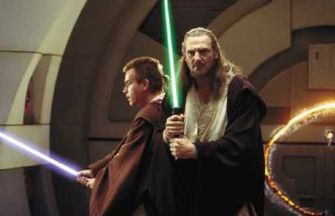
The Jedi have been objects of admiration by many (including myself).  Part monk, part Samurai, and you get to carry a lightsaber.  Who wouldn’t want to convert?

In fact, you can.  The Universal Life Church will gladly ordain you as a legal minister over the internet and, for the low price of $10.99, you can order a certificate that identifies you as a Jedi Knight.  I’m not kidding.  Click here if you’re interested.

For those who are looking for a little more commitment, check out the Jedi Church website.

Around the time that Revenge of the Sith was released, science fiction legend Orson Scott Card published an article on the Jedi as a religion.  The question that Orson Scott Card asks is, if we take the Star Wars movies as the foundational texts for the Jedi religion, what kind of religion can we expect to emerge?  Are the Jedi, as presented in the films, the kind religious order that we would actually like to see?  Card has some fascinating things to say about it.

Click here to read his fantastic article, No Faith in this Force