
God’s Dream

Here is this week’s sermon from First Presbyterian Church of Boonville, NY.

The text is Isaiah 2:1-5.

Click here to listen to the podcast.

This week, we begin our journey toward Christmas.  Decorations are going up at home and shopping has begun in stores.  As the music of Bing Crosby invades our radio waves, nostalgia mixes with anticipation and the smell of freshly-kindled wood stoves.  In church, candles are lit one by one and purple vestments are hung in honor of our coming king.  We call this season “Advent”.

Beyond the commercialized holiday bliss, there is another side to this season.  It is the time of year when the weather really starts to turn bitterly cold.  Here in Boonville, we’ve just had our first real snowfall.  The daylight hours are the shortest they will be all year and darkness seems to hover over everything.  Perhaps the early Christians chose to celebrate the birth of Christ at this time of year because they needed a pick-me-up?

In a spiritual sense, I tend to think of myself as being more of an Advent person than a Christmas person.  I spend most of my time in the cold and dark places of the soul, waiting for God to show up.  And when God finally does arrive, it almost never happens how I expected.

I feel this way, not only during Advent, but year-round.  This is why Advent (not Christmas) is my favorite time of the church year.  It describes my own spiritual journey so well.

I imagine that “dark” and “cold” is how many people must have felt during the lifetime of the prophet Isaiah, in the 8th century BC.  It was a time of extreme unrest and political upheaval.  The great Assyrian Empire lurked on the borders of the Holy Land.  Nations sought security in numbers, making alliances with each other or with the Assyrian superpower itself.  At home, rulers were becoming more and more corrupt, building their kingdoms on the backs of the poor and oppressed.  Rather than trusting in the mysterious and unseen God of Israel to deliver them, many people sought solace in the practices of magic and idol worship.  They felt safer putting their trust in gods that could be seen and controlled through arcane rituals, even if those rituals demanded the sacrifice of their own children.  These were dark and cold times indeed.

It was into this cold and dark environment that God first called Isaiah son of Amoz to speak.  Isaiah had a lot of harsh things to say about the culture in which he lived.  He criticized them for their hypocrisy and cynicism.  They pretended to be faithful and religious Jews while taking advantage of the poorest and most vulnerable members of society.

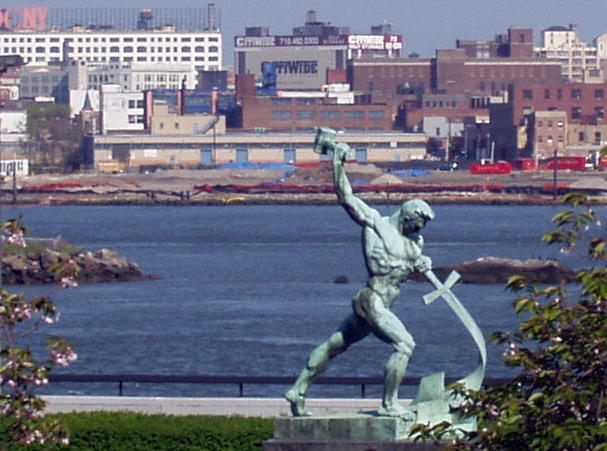
But Isaiah’s message wasn’t entirely negative: God also gave Isaiah a vision of the way his country could be.  This is the passage from which we read this morning.  In this passage Isaiah envisions his community of Jerusalem as an international center for education and spiritual renewal.  People would go there as soldiers and leave as farmers.  Death-dealing swords would be transformed into life-giving plows for the fields.  From there, the whole world would learn a new way of living and relating to one another that would transform the face of creation forever.

The people had a long way to go before this vision could become a reality, but Isaiah held onto it for dear life.  He believed that this dream would come true, not through human ingenuity or goodwill, but because God willed it, and nothing (not the hypocrisy and cynicism of the people, not the corruption of their leaders, not even the military might of the world’s greatest superpower) could prevent God’s dream from coming true.

Believing in God’s dream must have been a tall order in a time as cold and dark as Isaiah’s.  To this day, rather than being a center for peace and education, Jerusalem remains one of the most violence-ridden cities on the planet.  Almost 2,800 years later, our headlines mock Isaiah’s dream for Jerusalem as the fantasy of an idealistic fool.

Our time is no less dark and cold than Isaiah’s was.  News of international conflict continues to make us nervous.  People still grow cynical as they read headlines of corrupt politicians and hypocritical religious leaders.  While outright idol worship is not as common as it once was, we are still tempted to put our trust in objects of our own making, such as our investment portfolios, our insurance policies, our educational system, our nuclear arsenal, our political parties, or our religious institutions.  It’s comforting to trust in these things because we can see them and we think we can control them.  But the cold, dark fact of history is that none of these idols can provide us with the peace and security we seek.

The challenge of Advent is for us to look past these idols, these objects of our own making.  God is calling us to rise above our cynicism and hold onto hope: Hope that the cold and darkness will not have the last word in history; Hope that the way things could be is the way things will be; Hope that God’s dream will come true.

The dream did not come true in Isaiah’s lifetime, nor did it come true in the earthly lifetime of Jesus, nor will it probably come true in our lifetime, but rest assured: God’s dream will come true.  There have already been signs of this happening in history: wherever enemies make peace, wherever oppressed people go free, wherever healing triumphs over sickness, there we find a partial fulfillment of God’s dream and Isaiah’s vision.

God has graciously invited us to be a part of the fulfillment of this dream.  This should radically change the way we live our lives here and now.  Isaiah called the people of his community to live changed lives, saying, “O house of Jacob, come, let us walk in the light of the Lord!”

God may call some of us to be prophets, shaking the very foundations of idolatry and cynicism in our society.  I think of heroes like Martin Luther King, who dreamed God’s dream out loud.  Others of us will be called to “brighten the corner where we are”.  But let us not be deceived: our little acts of human compassion and forgiveness, no matter how small, have divine and eternal value because they are part of God’s great plan for this earth.  Every “thank you”, every “I’m sorry”, and every “I love you” spoken in word or deed is a ray of light that pierces the darkness of this cynical world.  Not one of these rays will ever be wasted or lost.  Do you believe this?

Advent does not prepare us for a nostalgic commemoration of a one-time event in history.  Advent propels us toward the revolutionary culmination of history in the fulfillment of God’s dream for this world.  O people of Boonville, come, let us walk in the light of the Lord!
 

Hopping Over Hadrian’s Wall

Today I descend into the world of self-absorbed bloggerhood and obscure historical references.

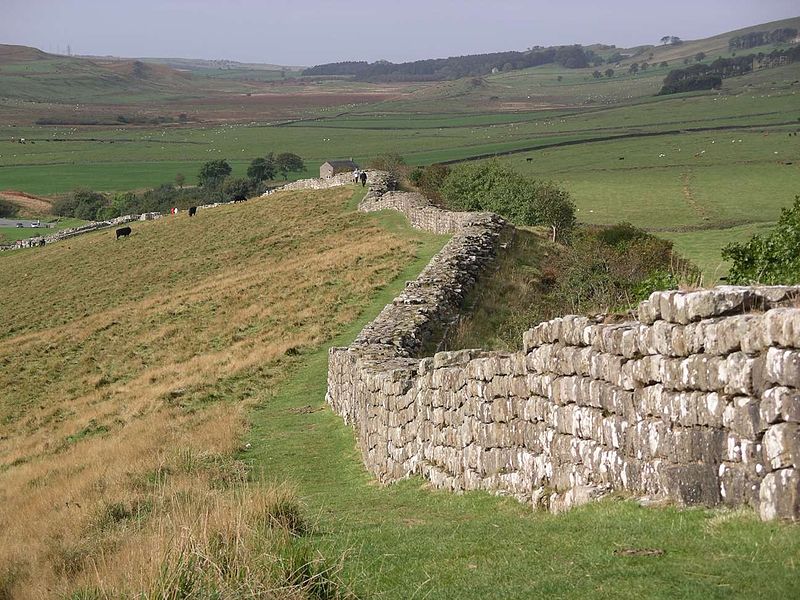
Hadrian’s Wall is a structure built by the Romans in the second century AD.  It marks the boundary between England and Scotland.  I am using it as a metaphor for what’s going on in my life right now.  I am currently transferring my ordination credentials from an historically English denomination (Free Episcopal) to an historically Scottish denomination (Presbyterian).  Hence, I am “hopping over Hadrian’s Wall”.

My reasons for making this journey are highly personal and I’d rather not discuss them publicly.  I am grateful to the people of the Free Episcopal Church for their friendship, nurture, and support over the past four years.  I hope to continue those friendships for many years to come.  Theirs is an incredible vision for ministry among the most marginalized members of society.  Free Episcopal clergy and lay ministers can be found in jails, drug rehabs, hospice care, and nursing homes.  Mainline churches would be wise to take note of the Free Episcopal model of ministry, as it may provide more creative and sustainable options for the future.

As my attention turns toward making a new home for myself in the Presbyterian Church (USA), I am preparing to take a battery of ordination exams in late January/early February.  Please pray for me as I hone my skills in Reformed theology, Presbyterian polity, and biblical exegesis.

I am also branching into congregational ministry for the first time at First Presbyterian Church of Boonville, NY.  I work there part-time, while I continue my ministry on the street and my teaching at Utica College.  Until I pass the ordination exams, I am officially “Temporary Supply” at Boonville.  This means that I preach three times a month and am on-call for pastoral emergencies.  I can’t do weddings, baptisms, or communion for now.

St. James Mission is in the process of reorganizing itself as an ecumenical outreach ministry in downtown Utica.  Our work will continue, although its form may change somewhat.  For now, we’re continuing to meet every Thursday evening for Bible study in the chapel at First Presbyterian Church of Utica.  Worship starts at 6pm.  Everyone’s welcome!

So that’s the news from me.  See you on the other side of Hadrian’s Wall!

“Worse Than An Unbeliever”

According to the Driscolls, your favorite street pastor is officially “not a man” and “worse than an unbeliever”.  I spent the first year of my daughter’s life at home with her.  In a recent Facebook discussion, one friend of mine pointed to this video as a reason why he cannot consider himself an evangelical.  His comment got me thinking about the meaning of that word.

I tend to distinguish between “evangelical” and “fundamentalist”.  Classically, the evangelicals are a subset of Protestants who emphasize personal piety and the study of Scripture.  In other words, we love Jesus and we love the Bible.  Fundamentalists, on the other hand, are a group of reactionaries emerging in the last century (or so) in opposition to the influence of “modernity” (e.g. Darwinian evolution, Freudian psychoanalysis, & historical criticism of biblical texts) on the Christian churches.  It was only in the last half of the 20th century that people realized “fundamentalist” was becoming a bad word, so they co-opted “evangelical” from the rest of us.

The (post)modern world is a scary place.  We are inundated with a glut of information and choice, but we are not told how we ought to sort all of it out.  I sympathize with the perceived need for guidance, but if we let that need lead us toward the abdication of our own moral and intellectual responsibility, we leave ourselves open to all kinds of unsavory characters who would use our cry for help as an opportunity to garner personal power and increase their profit margins.

I still consider myself an evangelical in the classical sense, although I am a gender-egalitarian, I accept the theory of evolution, I don’t believe in eternal damnation, and I support LGBT equality in church and society.  All of these criteria disqualify me from identifying as a fundamentalist.

I refuse to let my love of Jesus and the Bible excuse me from doing the mental work required to be a mature Christian and a responsible citizen in this society.

The Protestant reformers risked everything on their belief that common people have the right (and the responsibility) to read the Bible for themselves.  They stood up against an oppressive institution that preferred to spoon-feed people with easy (if somewhat arcane) answers.  It seems to me that fundamentalism is quick to return Christians to the same state of thinking from which Luther, Calvin, and Simons tried to liberate us.

As an evangelical Christian and an inheritor of the Reformation, I cannot in good conscience allow someone else to do my mental and moral homework for me.  This is why I am inclined to disagree with the Driscolls’ basic cultural and biblical hermeneutic.

Prayer Changes You

I’ve been preaching in churches all over this Presbytery for about a year.  Ironically, one of the few churches where I haven’t preached is the one I’ve been attending for the last 4 years!  I was very glad to get to preach and lead worship for our friends at Westernville Presbyterian Church.

The text for this week is Luke 18:1-8.

Click here to listen to the podcast.

When Sarah and I were in seminary together in Vancouver, there was a certain professor with whom I had a troubled relationship.  I met this professor on my first day of classes.  Young and eager, I burst into his office after class and told him all my ambitions for getting a PhD and teaching in a university.  I was hoping to gain a personal connection with this professor.  What I wanted most of all was his affirmation and approval.

After listening to me pouring my heart out, he asked what my undergraduate GPA had been.  When I told him, he shook his head and told me that it really should have been a full point higher.  In the future, he said, the college would raise its admission standards so that students like me wouldn’t be allowed in.

To be sure, my professor’s response was a bit rude.  But, to be fair to him, I had just barged into his office with a heart full of unrealistic personal expectations for this academic professional.

I was devastated, but also determined.  I put on my best “I’ll show him” attitude and hunkered down into seminary life.  I told myself I would force this professor to give me an ‘A’.  So I spoke out in class whenever I had something to say.  I submitted papers and articles for his feedback.  I showed up in his office whenever I could think of an excuse.  But the harder I fought for his approval, the more frustrated I became.

The widow in Jesus’ parable knew a thing or two about frustration as well.  Jesus didn’t tell us the specifics of the case she was pleading before the judge.  All we know about her is that she was desperate for justice.  As a widow with no apparent son, she would have been one of the most vulnerable and disenfranchised people in her society.  Some scholars think that the Hebrew word for ‘Widow’ (Almanah) is actually derived from the word for ‘Silence’ (Alam).  A widow, in that society, was (literally) a person without a voice.  She had no legal recourse for pursuing justice.  Her persistence in nagging the judge was her only weapon in this case.

As for the judge himself, we learn quickly that he is not someone to be liked or trusted.  Jesus said that he “neither feared God nor had respect for people”.  This particular phrase was often used in that time to describe individuals who were both corrupt and powerful.  He was above the law because, in the eyes of his society, he was the law.  There was no real reason why that judge should listen to this widow.  But we know that she prevailed on him in the end.  This widow’s obnoxious persistence drove the judge to the point of insanity.  In the end, he relented, saying, “I will grant her justice, so that she may not wear me out”.  In Greek, the phrase here can be literally translated, “so that she may not give me a black eye”.  As calloused and powerful as he was, this judge was beginning to feel beat up and worn down by a poor, defenseless widow!

Jesus teaches his followers that God is like this judge, only better.  He showed that even the corrupt and calloused powers-that-be can be swayed by the persistent badgering.  How much more quickly will God, the author of justice, be persuaded to act on behalf of the poor and oppressed?

This was an open question in the ancient world.  How long would God wait before helping the chosen people?  The book of Psalms is littered with cries for justice and deliverance.  Throwing a fist in the air, the Psalmist bellows, “How long, O Lord?”  The Jewish people were very familiar with the Passover story in the book of Exodus.  Every year they celebrated the liberation of their ancestors from slavery and oppression in Egypt.  Yet, this annual celebration led to a difficult question: “If God did so much for our ancestors in the Bible, why doesn’t God do something for us now?”  It was all too easy to lose faith in this mysterious and unseen God of Israel.  We read that many of the ancient Hebrews turned away from their God in favor of other deities whose idols could be seen with one’s eyes.  These lesser gods could be understood and controlled through an elaborate (and brutal) system of human sacrifices.

We, in our society, are no less interested in forces that can be understood and controlled.  We, in the postmodern world, are obsessed with quantifiable results.  We desire measurable efficiency in everything from the performance of our cars to the performance of our politicians.  We are trained to ask the question, “Does it work?”  We even ask this question of our spiritual practices.  When it comes to prayer, the number one excuse people give for not praying is, “It doesn’t work.”  So Jesus’ question, “Will not God grant justice to the chosen ones who cry out day and night?” is an open question for us as well.

Jesus answers this question in verse 8: “I tell you, God will quickly grant justice to them.”  Jesus affirms the power of prayer to make a difference in this world, but then he turns the question back around and directs it at us, “And yet, when the Son of Man comes, will he find faith on earth?”  The question is no longer about the power of prayer; instead the question is about us.

I think Jesus is correcting a deep misconception about the purpose of prayer.  In our results-oriented society, we are obsessed with the question, “Does it work?”  The value of prayer is to be measured only in terms of the practical results it produces in our lives.  Was the sick person healed?  Did the check arrive in time?  Were the fighting parties reconciled?  Did that person find peace before the end?  Jesus affirms the power of prayer to make a difference in these areas, but he also invites us to take a look at the deeper importance of prayer.  Before prayer changes the world, prayer changes us.  This is the standard by which Jesus measures the effectiveness of prayer.  Any sorcerer can give you a magic spell to change your situation for the better, but only God can change your heart for the better.  Prayer changes you before it changes the world.

In my frustration with my seminary professor, God taught me a lesson about having a changed heart.  As I said before, I tried like crazy to get this professor to notice me, but nothing seemed to work.  In time, my frustration gave way to hatred.  My friends learned to not mention his name in my presence because of the unkind things I would say about him.  You could say that I was in desperate need of a “heart transplant”.  I prayed for him.  I prayed that God would forgive him for the pain he caused me.  I prayed that God would help me forgive him.

The answer to those prayers came late one night as I stood on the balcony of my apartment.  This professor was on my mind and I prayed once again that God would help me forgive him.  Then, a thought occurred to me that made me stop in my tracks.  I didn’t need to forgive this professor for his rude comments to me.  I needed to ask forgiveness for the bitterness that was consuming my soul from the inside out.  Looking back, I think that was the Holy Spirit speaking to me and telling me what I needed to do in order to find peace.

Later that week, I went back to my professor’s office.  This time, I sat before him, not as an ambitious young graduate student, but as a broken brother in Christ.  I told him about the bitterness I harbored in my heart.  I apologized for having such unrealistic expectations about him.  I confessed my sin of hatred to the person I hated.

His response surprised me.  I had come to think of him as a cold-hearted snake who didn’t care about anyone but himself.  In that moment, I found him to be a warm and gracious person who accepted my apology and then prayed for me, right there in his office.  In his prayer for me, he expressed his admiration for my commitment to always do the right thing.  It was in my moment of greatest weakness that I finally found the personal connection and affirmation that I so longed for from this man.

I never did get that PhD (although I did end up teaching college).  Was my prayer answered in the end?  I think so.  Not because my desires were fulfilled, but because God used that situation to transform me into a new kind of person.

As you look at your life this morning, how have your prayers changed you?  Can you think of a time in your life when the power of prayer didn’t just transform your circumstances, but transformed you into a new kind of person?  If so, that’s great!  It means you’re on the right track.  If you can’t think of an example from your life, take some time this week to think about what it is that you’re praying for.  As you ask God to change your situation, take an extra second to ask how God wants you to change in the midst of this situation.  If you don’t pray at all, why not give it a try this week?  You might be surprised at the way it transforms the world around you.  You might be even more surprised at the way it changes you.

Border Crossings

Here is this morning’s sermon from First Presbyterian Church of Boonville, NY.

The text is Luke 17:11-19.

Click here to listen to the podcast

When I was a college student, some friends and I got to spend one spring break assisting with a church mission project in Romania.  We deplaned in the city Bucharest with no small amount of trepidation.  Border crossing in eastern Europe can be a tricky process.  Americans are often detained for little or no reason.  Customs agents assume that any American traveling abroad must be filthy rich, so they will sometimes hold people until they are offered a bribe in American dollars.

We held our breath and said a prayer as we approached the gate.  To our surprise, the gate was completely empty.  Not wanting to create an incident, we set our packs down and waited.  After an hour or more, no officers had come to the kiosk.  The front door to the airport was only a few meters away and our transportation was waiting on the other side.  We looked around, looked back at each other, shrugged our shoulders, and went for it.  Even though friends of ours had been detained and arrested in years past, we went through without any hassle.  Nobody even stopped or questioned us.  To be honest, I was a little disappointed because it was my first time out of the U.S. and I was looking forward to getting my passport stamped!

Crossing borders of any kind is a risky business.  When you leave familiar territory behind, you become vulnerable.  You force yourself to open up to new people and new experiences.  You depend on the kindness of strangers in order to survive.

Jesus and his disciples are crossing a border in today’s gospel reading.  The text tells us that they are “going through the region between Samaria and Galilee.”  They are walking through an “in-between space” that is neither here nor there.  Like me when I was entering Romania, they probably don’t know what to expect.  They are in an uncomfortable situation where anything can happen.

As they travel through this “in-between space”, they encounter the kinds of people one would expect to be living on the outskirts of civilization.  The particular outcasts they meet on this day are people who have been quarantined due to infectious skin diseases.  The word “leprosy” is somewhat misleading because it can refer to any of a number of medical conditions.  Modern leprosy is a particular condition (also known as Hansen’s disease) that attacks the skin and peripheral nervous system, causing lesions and numbness.

People living in quarantine (sometimes called “leper colonies”) were excluded from mainstream society.  They were cut off from friends and family.  They could no longer pursue their livelihood in a meaningful way.  Jewish law required them to wear torn clothing, let their hair grow long, and cry out, “Unclean!  Unclean!” any time another person came near.

Leprosy was, of course, a public health issue in the ancient Middle East.  However, it was also understood to be a moral and spiritual issue as well.  The Hebrew word, tzaarath, literally means “smiting”.  The ancient Israelites believed that God would smite people with leprosy as punishment for their sins.  So, people in that society believed that victims of leprosy had somehow brought it upon themselves.  This made the attack personal as lepers were exiled from social, economic, and religious life.

This is why the text tells us that the ten lepers were “keeping their distance” from Jesus as they called out for mercy.  They were not only physically distant for medical reasons.  They were spiritually distant for what they believed to be moral reasons.  The members of this group no doubt consider themselves to be among the “damned” in their society.

Later in the passage, we learn that one of the lepers is a Samaritan.  Samaritans and Jews shared a common heritage, but there was a great deal of animosity between them.  Part of this tension was ethnic in origin.  The Jews claimed that the people of Samaria had inter-married with neighboring ethnic groups, thus polluting the pure Jewish bloodline.  However, like leprosy, the presence of a Samaritan also had moral significance.  Jews accused Samaritans of mixing the worship of the one true God with polytheistic beliefs and practices.  Thus, the Jewish people believed they had solid biblical and theological basis for their outright rejection of Samaritans.

Knowing this background about leprosy and Samaritans makes Jesus’ encounter with the Samaritan leper all the more shocking.  This person would have been seen as the “lowest of the low” from a Jewish perspective.  Yet, after the miraculous healing, Jesus (the Jewish Messiah!) praises this Samaritan for his faith.  How shocking is that?!

In order to drive this point home, let me retell this story with a contemporary twist.  I warn you: this may sound controversial to some, but I think it highlights the dramatic significance of Jesus’ words and actions in this story from Luke’s gospel.

Like Jesus and the disciples, our churches and our society have been “crossing borders” for many decades.  We are asking hard questions that may bring us to re-examine old beliefs.  Many of us feel vulnerable and uncomfortable in these uncertain times.  Like the characters in this gospel story, our society has been facing an extended public health crisis that is believed to have not only medical, but also moral significance.  Those who live with HIV/AIDS are still stigmatized by society-at-large and sometimes blamed for their condition.  Like the conflict between Jews and Samaritans, many Christians today are struggling to come to terms with people who are different from ourselves, especially when we believe that difference to have moral and spiritual significance.  I can think of no one more like Samaritans in our contemporary society than gay men and lesbian women.

I am not here to offend you.  Nor am I here to espouse any kind of political agenda from the pulpit.  I’m here today to talk about Jesus and the kind of person he is.  Many faithful and learned Christians currently disagree with one another on the proper interpretation of the Scriptures when it comes to homosexuality.  I’m asking you this morning to put aside that argument for just a moment, so that we can look past the issues themselves and maybe learn something about who Jesus is.

Let’s hear this story again:

It happened that as Jesus made his way toward Jerusalem, he crossed over the border between Samaria and Galilee. As he entered a village, ten men, all HIV-positive, met him. They kept their distance but raised their voices, calling out, “Jesus, Master, have mercy on us!”

Taking a good look at them, he said, “Go, show yourselves to the priests.”

They went, and while still on their way, became clean. One of them, when he realized that he was healed, turned around and came back, shouting his gratitude, glorifying God. He kneeled at Jesus’ feet, so grateful. He couldn’t thank him enough—and he was gay.

Jesus said, “Were not ten healed? Where are the nine? Can none be found to come back and give glory to God except this gay man?” Then he said to him, “Get up. On your way. Your faith has healed and saved you.”

What kind of person is this Jesus?  Jesus is the kind of person who crosses dangerous borders with boldness!  Jesus is the kind of person who welcomes hurting strangers with words of healing and reconciliation!  Jesus is the kind of person who celebrates the faith of people who feel excluded from traditional houses of worship!

This truth has dramatic implications for us as recipients of this amazing love.  First of all, it means that whenever we feel the need to “keep our distance” from God or others, Jesus comes to meet us with his good news of healing and wholeness.  Some of us might feel like we are closest to God when we are outside church.  We might sense God’s presence most when we are walking in the woods, listening to music, or playing with a child.  If that’s you, then I have good news for you.  Jesus comes to you with these words: “Your faith has made you well.”

This truth also has dramatic implications for us as followers of Jesus.  People’s lives are hanging in the balance as they experience isolation and exclusion.  For example, many of us have heard about the suicide of college student Tyler Clementi, who jumped off a bridge a few weeks ago after being humiliated by his peers because he was gay.  However we interpret our Scriptures, I think we can all agree that no one should be driven to the point of suicide by a tasteless prank.  Jesus loves Tyler Clementi.  Whatever else we may think, our first calling, as Christians, is to love others as Jesus loves them.  When we feel uncomfortable or vulnerable while crossing borders (as a church and a society), we are called to go out with words of healing, not judgment or exclusion.  Furthermore, we are called to celebrate the faith we find in the people we meet in those “in-between spaces”.  It may not look like ours, it may come from the person we least expect, but it is real.  And Jesus celebrates it, just as Jesus celebrates each one of us.