Jesus is the Problem

Image

I chuckle to myself sometimes when I drive around and I see bumper stickers and billboards with hokey slogans like “Jesus is the Answer” because that phrase makes me want to say something snarky like, “Could you repeat the question?”

I find that folks who resort to one-liners like that are too quick to boil down the deep, rich complexity of two thousand years of Christian tradition to a cheap, one-sided formula and I just don’t think you can honestly do that if you actually read the Bible and wrestle with the things it says.  When I think about the person Jesus of Nazareth and the kinds of things he said and did, I’m frankly puzzled and disturbed more often than not.  One of the things that keeps me engaged with Jesus as my Lord and Savior is the way that he challenges me time and time again to grow as person and to break out of old, destructive ways of thinking and living.  Most often, he does this by telling stories and asking questions of his audience.  So yeah, I laugh when I see signs that say “Jesus is the answer” because, frankly, the one I want to slap on the back of my car would have to say, “Jesus is the problem.”

Jesus is a problem.  If you actually read the gospels, you’ll see he’s that perpetual, prophetic pebble in the shoe to those who think they hold all power and know all the answers to every question ever asked.  It’s literally impossible to hang around Jesus for any length of time and not get your worldview seriously knocked off-balance in some kind of significant way.

And in today’s gospel reading, Jesus is once again doing just that: knocking things off-balance as usual.

Today’s reading is all about Jesus’ teaching on the subject of prayer.  What he has to say about it challenged people in his time and continues to challenge us in our own time, although in a slightly different way.

In the ancient world, the story Jesus tells about one friend begging bread from another friend in the middle of the night would have been heard, not as a story about prayer, but as a story about public protest.

In this story, a friend shows up at his friend’s house in the middle of the night, asking for bread, “Friend,” he says, “lend me three loaves of bread; for a friend of mine has arrived, and I have nothing to set before him.”  And the other friend says, “Do not bother me; the door has already been locked, and my children are with me in bed; I cannot get up and give you anything.”

But, according to Jesus, this conflict is preordained to end in the first friend’s favor because “even though [the second friend] will not get up and give [the first one] anything because he is his friend, at least because of his persistence he will get up and give him whatever he needs.”

Now, the key word in that last sentence is persistence.  In some older translations, the word they used was importunity.  But the original Greek word here is anaideian, which literally means “shamelessness”.  By behaving so shamelessly in public, in the middle of the night, the first friend is demonstrating the abject desperation of his situation and appealing directly to his friend’s moral character.  The second friend, on the other hand, is now honor-bound to respond because refusing to do so would cost him respect in the eyes of the village, and remember that respect in the ancient world was at least as valuable as money.  So, in the end, Jesus’ parable is really all about the character of the one being asked for bread.  Taken as a metaphor for prayer, this parable is about God’s character as the one being prayed to by believers.  The question ultimately being asked here is not, “How do I get my prayers answered?” but rather “Who is God?”

Among the religious authorities in that part of the ancient world, they believed that God answered prayer based on a kind of merit system in relation to the Jewish Torah.  Only decent, established leaders with proper pedigrees and credentials would dare to approach the almighty God with a request.  Jesus, on the other hand, is turning that cultural expectation on its head.  He’s saying that it’s not the character of the person that determines God’s willingness to hear prayer, but the character of God.  God, according to Jesus, is not a bean-counting judge who’s “making a list and checking it twice” before deciding whether someone’s prayers are worth hearing.  Rather, the God that Jesus believes in is a generous, loving presence whose office door is perpetually open to any and every broken heart that comes knocking in the middle of the night, looking for some sign that they matter and they are loved.  God doesn’t care whether you have the right beliefs or the right morals.  It doesn’t matter whether or not you deserve love, you get it anyway because that’s just who God is.  God is love.  Full stop.  End of sentence.  Nothing else matters.  There’s nothing you can do about it.  Deal with it.

So that’s what the parable means in the ancient world: prayer is about shameless audacity.  Prayer is not about the worthiness of the one who is asking, but the character the one who is asked.

Here in the modern world, Jesus’ parable on prayer has just as many challenging things to say to us, although in a different way.  Unlike the world of the ancient Middle East, our culture has been shaped by two centuries of industrial capitalism.  Our main question when it comes to prayer is, “Does it work?”

We’re obsessed with things working in the modern world.  We define reality by what we can observe and measure.  If you can’t see it or attach a number to it in some way, then it must not be real.  We are the only culture in the history of the human race to think this way.  Shouldn’t that strike us as odd?  Every other human civilization has left room open in their worldview for some kind of transcendent mystery.  Some parts of reality just can’t be measured.  Everybody else seems to get that but us.  So, statistically speaking, I think we enlightened, evolved westerners should at least ask ourselves the question: Could it be possible that we are actually the ones with the problem?

There can be no doubt that our means-ends rationality has taken us far.  We have made unparalleled leaps in the fields of science, technology, medicine, communication, travel, and exploration.  The modern mind has obviously been a blessing.  But we’ve also caused more death, extinction, pollution, annihilation, and oppression than any other culture in history, so we can’t stay high up on our pedestal for very long.  Without an overarching sense of meaning and mystery, we’ve managed to do a lot without knowing what it’s all for.  So I ask again: maybe ours is the culture with the problem.

When it comes to prayer, modern westerners have repeatedly come back to that rational question: Does it work?  And they’ve typically presented one of two possible answers.

On the one hand, you have some believers arguing that it absolutely does.  They say that prayer is like magic.  If you pray to the right person in the right way, you will get what you want.  If you don’t get the result you want, then you forgot to pray, or you didn’t do it right, or you didn’t have enough faith.  This is the ultimate form of “blaming the victim” when it comes to spirituality and suffering.  Needless to say, I think this “prayer is magic” philosophy is a pile of baloney.

On the other hand, there are lots of other modern folks who say that prayer is just a placebo: a psychological self-help exercise that just comforts people and brings communities together without making a real difference in the world.  I have to say that this perspective makes me just as uncomfortable as the “prayer is magic” approach because it too neatly divides reality into the material and the spiritual, with the material being regarded as the only part that’s really real.  In the five years that I’ve been a pastor, I’ve walked with people and families through some really hard times.  I’ve seen some amazing things for which I have no logical explanation.  One might even call them miraculous.  On the other hand, I’ve seen good, devout people face unimaginable tragedy with seemingly unanswered prayers.  I’ve seen innocent children suffer and die under the deafening silence of heaven.  So, when it comes to the observable, measurable effectiveness of prayer, I don’t have a one-size-fits-all direct answer.  It’s ambiguous.

The place I come to when I hear Jesus’ teaching on prayer is that getting things done is not the point.  If we’re stuck in that place where we’re asking, “Does prayer work?” then we’re asking the wrong question.

Just like the friend in Jesus’ parable, the question comes down to this: Who is God?  Prayer draws our attention to that same loving, open presence that envelopes us all, whether we deserve it or not, whether we believe in it or not.  Prayer is not about you and it’s not about getting things done.  Prayer changes us, regardless of whether or not it changes our circumstances.  Prayer gets us out of our narrow-minded, modern rationality and helps us to grow in our awareness of the great mystery within around us.  Prayer opens our hearts and minds to hear and to trust in that silent, inner voice that continually calls out to us, saying, “I love you, God loves you, and there’s nothing you can do about it.”

Be blessed and be a blessing.

James Luther Adams

James Luther Adams (1901-1994) was a prominent Unitarian Universalist Christian whose theology shaped (and continues to shape) the liberal religious tradition.

In honor of the anniversary of his passing today, the Unitarian Universalist Christian Fellowship posted one of his sermons on their website, from which the following was excerpted:

The liberal Christian outlook is directed to a Power that is living, that is active in a love seeking concrete manifestation, and that finds decisive response in the living posture and gesture of Jesus of Nazareth. In a world that has with some conscientiousness turned against this kind of witness and its vocabulary, the effect of this witness will in a special way depend upon the quality of its costingness in concrete action and upon its relevance to the history that is in the making. To say this is only to say that the truly reliable God is the Lord of history and also that our sins will find us out. Yet, this Lord of history has given us a world in which the possibility of new beginnings is ever present along with the judgment that is always upon us. To this Lord of history Jesus responded with his message and demonstration of hope in concert with sacrifice.

Click here to read the full sermon

Harry Belafonte on Racism, Activism, Captialism, & Media

Image
Harry Belafonte. Photo by David Shankbone. Retrieved from Wikimedia Commons.


Harry Belafonte once again kills it in this interview with The Hollywood Reporter:

Click here to read the full article

Here’s an excerpt:

THR: Has the world changed for activists like you?

Belafonte: Definitely. Back then, the enemies were very clear, very precise. It is easy to fight oppression if it comes in [the form of] a swastika and a boot, and as a dictator, and you can see it and feel it and touch it. It is easy when there is a sign that says “No N—–s“ or “No Jews.“ Where it becomes the most insidious is when it buries itself and you can no longer touch it but can taste that yet it is there, fully blown, doing insane mischief. That is why I think the period now is the most challenging I’ve ever lived in. The power in many societies has become almost absolute. Those who have the power in the free-enterprise system start to crush societies and create wars that are unholy. What we did during the Bush period, what we still continue to do, even with Barack Obama, is the continuency of not changing the paradigm, of not changing the view. We still have laws that encourage torture; we did not change Guantanamo; we have laws that allow the police to arrest you at any time, not having to tell you why, and take you wherever they want. This kind of capitalism is taking us to the doorstep of [a] Fourth Reich, I think.

And here’s another one:

THR: Can you pin down what the enemy is nowadays?

Belafonte: Unbridled capitalism. The concentration of money in the hands of a very small group is the most dangerous thing that has ever happened to civilization. We are facing an oligarchy of force. Just look at who controls the press. We all witnessed how money and power squeezed out all essense of Rupert Murdoch and [Silvio] Berlusconi. Thank God for social media, which aids transparency. But even that becomes more and more restricted now, with companies like Facebook buying up all the roots of this technology.

alt/theism

Image by Rennett Stowe. Retrieved from Wikimedia Commons

Reblogged from CNN:

How many ways are there to disbelieve in God?

At least six, according to a new study.

Two researchers at University of Tennessee at Chattanooga found that atheists and agnostics run the range from vocally anti-religious activists to nonbelievers who still observe some religious traditions.

“The main observation is that nonbelief is an ontologically diverse community,” write doctoral student Christopher Silver and undergraduate student Thomas Coleman.

Click here to read the full article

I had fun with this study because, although I don’t ascribe the label atheist to myself, I am not a theist in the classical sense.  For those who may not be familiar with the terms: Classical Theism refers to belief in an eternal, omnipotent, omniscient, benevolent, and personal deity who is responsible for the creation of the universe, exists separately from it, and interferes with its normal operations at least occasionally.  Depending on who you ask, the God of classical theism might also be defined as omnipresent, immutable (unchanging) and/or impassable (incapable of feeling or suffering).

I really like a conversational strategy adopted by Unitarian Universalist minister John Buehrens: whenever someone says, “I don’t believe in God,” Buehrens responds, “Tell me about the God you don’t believe in.”  Most of the time, he says, he is able to say that he doesn’t believe in that God either.  Likewise with me: if the classical theist concept of divinity is the only legitimate definition of the word God, then I would be forced to classify myself as an atheist.  For various reasons, I reject outright the ideas of immutability, impassability, and separateness from the universe.  I radically redefine concepts of omnipotence, omniscience, creativity, and personality in ways that would make them nearly unrecognizable to a classical theist.  For reasons that I admit are not entirely rational, I continue to accept the quality of benevolence as central to my understanding of the idea of God.

There are two thinkers with whom I tend to resonate when it comes to talking about God.  The first is philosopher/theologian Paul Tillich who famously declared that God is not “a being” but “Being Itself” or “the Ground of Being”.  This is also vaguely reminiscent of St. Thomas Aquinas who said (not in so many words) that God does not “exist” but “is existence”.  In more recent years, Forrest Church (another Unitarian Universalist) wrote in his book The Cathedral of the World, “God is not God’s name.  God is our name for that which is greater than all, yet present in each.”

Like most atheists, I have no trouble acknowledging that God is a mythical concept devised by human minds in a particular cultural milieu.  I utterly reject the hypothesis that there is actually an “old man in the sky” who created the world, controls everything, and condemns earth to destruction and the majority of humanity to eternal postmortem torture as punishment for various moral and dogmatic infractions.  If that’s who God must be, then you can call me an atheist.

When it comes to the six types of atheists, I might be classified somewhere between a 3 (seeker-agnostic) and a 6 (ritual atheist).

Regarding the 3 (seeker-agnostic) the article says this:

This group is made up of people who are unsure about the existence of a God but keep an open mind and recognize the limits of human knowledge and experience.

Silver and Coleman describe this group as people who regularly question their own beliefs and “do not hold a firm ideological position.”

That doesn’t mean this group is confused, the researchers say. They just embrace uncertainty.

Regarding the 6 (ritual atheist) the article says:

They don’t believe in God, they don’t associate with religion, and they tend to believe there is no afterlife, but the sixth type of nonbeliever still finds useful the teachings of some religious traditions.

“They see these as more or less philosophical teachings of how to live life and achieve happiness than a path to transcendental liberation,” Silver and Coleman wrote. “For example, these individuals may participate in specific rituals, ceremonies, musical opportunities, meditation, yoga classes, or holiday traditions.”

For many of these nonbelievers, their adherence to ritual may stem from family traditions. For others, its a personal connection to, or respect for, the “profound symbolism” inherent within religious rituals, beliefs and ceremonies, according the researchers.

If I had to classify myself as an atheist, based on my rejection of classical theism, it would probably look like some combination of these two categories.  However, I don’t consider myself an atheist because even a combination of these recently expanded ideas is still too dogmatically confining for me.

So here I am: neither a classical theist nor an atheist.  If there is a widely acknowledged category that most closely describes the place where I live, it would be panentheism (God exists within the universe and the universe exists within God).  Unlike pantheism (God is the universe and the universe is God), panentheism leaves more room for mystery and transcendence beyond the realm of time/space/matter/energy.

However, because I like to challenge conventional labels and make up new words, I’ve been playing with the term alt/theism as a description for where I’m at.  Don’t read too much into it or get your torches and pitchforks ready, this is just pure fun with words.

For me, as an alt/theist, faith in God is based on a meta-rational “hunch” about the mysteries of existence, connection, personality, and harmony.  My hunch (which I cannot prove as fact but cannot reject as possbility) is that each of these experienced realities is derivative from some larger source or whole that can never be fully understood or explained by human reason.  To this mystery, the language of my Christian tradition attaches the name God.  My only hope in the quest for understanding is to approach the very tip of reason’s precipice and peer over the edge into the ongoing mystery with my eyes, ears, heart, mind, and mouth hanging open in wonder.

Freedom Bound: Being a Religious Liberal

Image
The Rehnberg Window


I come to you this afternoon on loan from the First Presbyterian Church of Boonville, just north of here, where I have served as minister for the last three years.  I want you to know that you have many allies in faith communities of various traditions around the world.  I believe that Unitarian Universalism represents the very pinnacle of religious liberalism, but it does not have a monopoly on that label.  No, progressive believers of every imaginable religious stripe exist in the churches, synagogues, mosques, and temples of the world.  Sometimes consciously and sometimes unconsciously, they seek to embody the Seven Principles of Unitarian Universalism within their respective traditions.  I am one such person.  Speaking as a Christian, I have discovered that these Seven Principles are as clear and concise a description as I have yet found for the way in which I seek to practice my faith.  Like you, I am proud to call myself a religious liberal.

Too often, religious liberals have been pigeonholed according to what we don’t believe: we don’t interpret our sacred texts literally, we don’t claim to possess exclusive access to absolute truth, we don’t hold fast to a rigid, black and white moral code.  All of these statements about us are true, but they’re not the whole truth.  Too often, people have negatively defined us in this way and thus propagated the myth that we don’t believe in anything.  (Joke about religious liberals and Jehovah’s Witnesses.)  They say that we don’t care about truth, that we don’t care about morality, and that the sacred texts of our traditions mean nothing to us.  And that is certainly not true.

Today, I’d like to take a look at what those two words mean in a positive sense: religious liberal.  I’d like to talk about what it is that we do believe. 

And the phrase we picked for today’s service is “freedom bound”.  I like that.  As religious liberals, each of us is always in a state of being “free” (liberal) and “bound” (religious).  Let me explain what I mean by that.

I’ll begin with the word liberal.  As most of us already know, the word liberal comes from the same Latin root as the word liberty, which means freedom.  On the most basic level, ours is a free faith.  Freedom is where we come from.  Religious liberals are those have declared their independence from the narrow confines of antiquated and superstitious dogma.  We struggle to keep our minds open to new insights from fields like science and philosophy.  For us, critical thinking is a means of grace through which reality is being made known to us.  As the 18th century Unitarian minister, William Ellery Channing once said: “I call that mind free which jealously guards its intellectual rights and powers, which does not content itself with a passive or hereditary faith, which opens itself to the light whencesoever it may come, which receives new truth as an angel from heaven.”  Freedom is where we come from.

Freedom is also where we are going.  We are “freedom bound” or “bound for freedom.”  More than most, religious liberals are able to look at their forebears with simultaneously respectful and critical eyes.  For example, we have no problem honoring the memory of someone like Thomas Jefferson as one of the founders of American democracy, but we also recognize that he didn’t go far enough in championing the cause of liberty. 

Jefferson’s most famous words are captured in the Declaration of Independence, which he composed: “We hold these truths to be self-evident, that all men are created equal, that they are endowed by their Creator with certain unalienable Rights, that among these are Life, Liberty and the pursuit of Happiness.”

However, we know that Jefferson himself was a slave-owner who held his fellow human beings in unjust captivity, treating them as mere objects and property.  Abolitionists and civil rights activists in subsequent centuries have called for the extension of those unalienable rights to people of all races and ethnicities.  Our sisters in the women’s suffrage and liberation movements have drawn our attention to the truth that all women, just as much as men, are created equal.  Environmental activists have expanded the boundaries of equality even further to include all beings, not just all humans.  Through them, we learn that the Planet itself has unalienable rights that we ignore at our own peril.

Thomas Jefferson gave us a good start in the cause of equality, but our free faith demands that we keep going past the point where he stopped.  Freedom demands that we stand up for the equality and unalienable rights of all beings.  Freedom itself is a growing thing, as is equality.  Freedom is where we are going.  So that’s what I mean when I talk about being a religious liberal: I’m talking about freedom

Here in the Unitarian Universalist Association, you express this truth beautifully in two of your seven principles.  You affirm and promote “the inherent worth and dignity of every person” as well as “a free and responsible search for truth and meaning.”  These principles, taken together, provide a firm foundation for the pursuit of religious freedom.  Insofar as you affirm these principles, you are a religious liberal.

Now, I want to turn and take a look at the other word in that phrase: religious.  I want to talk about what it means to be a religious liberal.  Now this one’s tricky.  That word, religion, can mean a lot of different things to different people.  What does it mean to be religious?  Does it mean attending services on a regular basis?  Does it mean adhering to a set of beliefs?  Does it mean celebrating the holidays and participating in the rituals of a tradition?  Religious can mean any or all of the above.

Here’s what I mean when I say it:

The word religion comes from the Latin relego, which means “to bind together or connect.”  You’re familiar with Lego blocks, right?  What do they do that other blocks don’t do?  They connect to each other!  To be religious, then, is to be connected. 

To illustrate, let me return to what I was saying a moment ago about going beyond the original ideas about freedom and equality that started with Thomas Jefferson.  In the beginning, those ideas only applied to a very small, select group of free, white men.  Over time, thanks to the efforts of others, those men were joined by women, and people of other races, and people from other countries, and people of other sexual orientations, and people of other gender identities, and the animals, and the trees, and the rivers, and the mountains, and the oceans, and the air, and even the Earth itself: all bound together, connected, in one beautiful, perfect WHOLE.  For me, that’s what it means to be religious: to recognize and honor the many connections that exist between the parts and the whole of reality.  And I can’t think of any better way to put it than you Unitarian Universalists do in the last of your Seven Principles.  You “affirm and promote… Respect for the interdependent web of all existence of which we are a part.”  I love that.  You have summed up so brilliantly and so beautifully what it means to be a religious liberal.  Religious means connected.

So then, I would say that a religious liberal is someone who is free and connected, connected and free.  We need both.  We can’t have one without the other.

If we emphasize connection at the expense of freedom, we end up with tyranny (obviously).  Individual people become little more than cogs in a machine, with no “inherent worth and dignity” of their own. 

But if we try to take freedom without connection, we end up with a very selfish, ego-centric view of the world.  This is the kind of libertarianism that says, “I don’t owe anyone anything.  If someone else is suffering or oppressed, it’s not my problem.  Let them eat cake!”

Folks who live like this have no sense of either history or obligation.  We see ourselves as self-contained units who exist independently of other self-contained (i.e. self-centered) units.  We say the welfare of the whole doesn’t bother us because it’s none of our business.

You know, there is a particular kind of cell in our bodies that behaves this way: a cancer cell.  A cancer cell, according to Michael Dowd, is simply a cell that has forgotten its history, so it consumes and multiplies without discrimination until its host body is utterly consumed from the inside out.  We are in the middle of a cancer epidemic in our society, so you can just imagine what it would be like if people started behaving like cancer cells, with no sense of history, identity, or purpose within the embrace of the Whole of reality.  Our existence is life out of balance with the whole of reality.  That’s what freedom without connection gets you: selfishness.

As religious liberals, we do our best to hold freedom and connection together as our primary values.  We affirm and promote “the inherent worth and dignity of every person” as well as “respect for the interdependent web of all existence, of which we are a part.”  We are free and we are bound.  We are bound for freedom and we are bound by freedom.

(Reblog) Thanks To Better Sex Ed, California’s Teen Birth Rate Has Plummeted By 60 Percent

Secrets of Life. A controversial sex ed film from the 1950s.

Reblogged from Think Progress:

California’s teen birth rate has plummeted to the lowest level that it’s been in the past 20 years, according to new data from the state’s health department. The state’s rate now stands at 28 births for every 1,000 teenage girls — a 60 percent drop since 1991, when the rate peaked at 70.9 births for every 1,000 girls.

Click here for full article

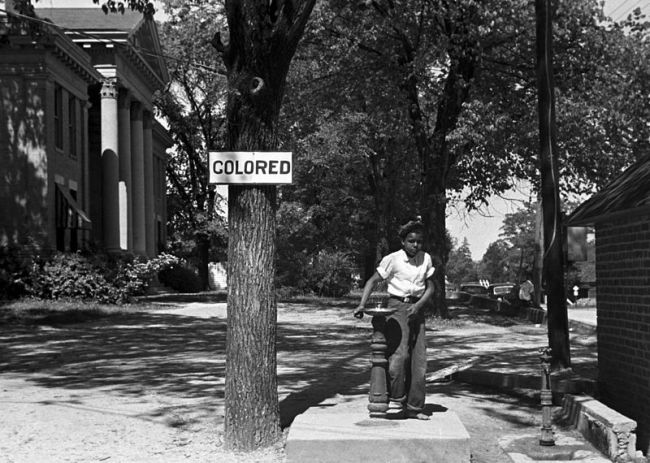
I Am Racist

Image
By John Vachon for U.S. Farm Security Administration (Library of Congress[1]) [Public domain], via Wikimedia Commons

I’m racist.  It’s important that you know that about me.  I feel that it’s even more important for me to verbalize my racism, given my constant urge to keep up appearances.  As a white American living half a century after Dr. King, I have internalized the rhetoric of racial equality without materializing the reality of it.

I like to think of myself as a “good person” and “not racist” but the fact is that neither of those statements is true.  I’m actually a bad person and I’m racist.

I live a fairly insulated and isolated life in a just about all-white bedroom community in upstate New York.  I can’t name a single African American family in my neighborhood, but I can show you who proudly flies Confederate flag on shirts, hats, trucks, and houses.  The church I pastor previously had one African American teenager attending for about six months before he finished high school.  The membership currently includes one mixed-race family.  I founded an ecumenical outreach ministry in a nearby city that is currently mostly made up of white, liberal Christians in their late twenties to mid-thirties.  The clientele of my favorite café, bagel shop, and book store are… you guessed it: mostly white.

The only time I come into regular contact with people of another race is in my teaching job at Utica College, where I’ve noticed that my non-white students regularly (but not always) get lower grades than white students.  I don’t know why that is.  Have I gone to great lengths to find out what’s wrong with my teaching and/or grading practices?  No.  Why?  Because I’m too busy with all the other stuff going on in my life to put something so big on my plate at an institution where I’m just an adjunct lecturer.  I would rather keep my schedule as convenient as possible than work to adjust an imbalance that benefits people who look like me but potentially damages long-term opportunities for people of other races.  I don’t know about you, but that sounds pretty racist to me.

I am racist because I presume that racism was a problem for previous generations, but thank God Dr. King came along and fixed it all for us with one amazing speech in 1963.  I am racist because I think having black friends makes me not-racist.  I am racist because I think racism is confined to my personal feelings about black people.

I am racist because I benefit from living in a country where the following facts are true:

  • Black youths arrested for drug possession are 48 times more likely to wind up in prison than white youths arrested for the same crime under the same circumstances.
  • Black and Latino men are three times more likely than white men to be stopped by the police and have their cars searched – even though white men are four times more likely to have weapons or drugs.
  • White men with a criminal record are more likely to be called back for a job interview than black men with no record, even when their education and experience are the same.
  • Students of color are far less likely to be put in honors courses even after you take test scores and grades into account.
  • Students of color are more than twice as likely to be suspended or expelled from school even though they are not much more likely to break school rules than whites.
  • Black college men end up just a few dollars ahead of whites who went no further than high school.
  • 45% of black children live below the poverty line, compared with 16% of white youngsters.
  • From 1939 to 1959, the earnings of black men relative to whites improved by over one third. However, from 1972 to 1992, the relative earnings of black men tapered off—and this was the period of affirmative action.
  • Black unemployment rates, for as long as records have been kept, have been at least double those experienced by whites. Today, the definition of unemployment has been sufficiently restructured (the figures no longer count people on welfare, those whose unemployment benefits have expired, those in jail or in the military) to become nearly meaningless. However, it is reasonable to claim that unemployment levels among urban youth exceed 60%.
  • Black professors hold less than 5% of faculty positions. Less than 5% of the K-12 teaching force is black. About 85% of this group is centered in urban areas.
  • Of all the doctoral degrees awarded in 1990, just 3.5% went to black men and women.
  • The attrition rate of black university students at many prestigious universities is greater than 60%.
  • Most NCAA universities refuse to release attrition rate for athletes. An NCAA study showed that nearly 75% of Division I black athletes failed to graduate.
  • While black students represent 16 % of all public school students, they make up nearly 40% of those classed as learning disabled.
  • There are more black men in jail than in college.

Note – I compiled this list from two sources:
http://abagond.wordpress.com/2010/06/12/some-facts-about-racism/

http://www-rohan.sdsu.edu/~rgibson/RACESTAT.htm

All of these facts are true but I have made no effort to change a single one of them.  That’s why I’m racist.

Because I’m racist, I don’t have the right to accuse African American people of “playing the race card” when entire communities are outraged at the verdict of a trial.  I can’t even tell them to stay peaceful and not get violent.  That would be like me slapping you across the face and reminding you that it would be immoral for you to slap me back.  As it turns out, I have a “race card” of my own and it’s an ace that’s permanently up my sleeve: it’s called being white and it gives me a distinct, unfair advantage over others.

As a racist person, I have an ethical obligation to shut up, listen, and be ready to repent when there’s an outcry.  I don’t get to offer my two cents.  Not yet.  Not while circumstances remain the same.

Yet, here I am: still writing and speaking, still spewing out a thousand or so words that will be read by dozens, if not hundreds, of people in the next few days.  I still have this urge to say my piece in public when I should be listening.  Why is that?  Because I’m racist.

What is Justice?

Image
The Triumph of Justice by Gabriel Metsu.

I was talking with an old college friend about the Zimmerman trial, race, Martin Luther King, and the concept of social justice.  My friend expressed some discomfort with the term social justice because it seems to get thrown around quite a bit without ever being specifically defined.  His last written statement was “Justice = ???”

I think that’s a fantastic question.  I can’t claim to answer it once and for all, but I’ll present my angle on what I mean when I use that word.  I’m a Christian and so is my friend, so I’ll be speaking in Christian terms and making primary use of the tools of our tradition to develop my ideas.

For me, on the most basic level, Justice = Being in Right Relationship.

My understanding of right relationship involves things like fairness, equity, informed consent, reciprocation, empathy, compassion, trust, and shared responsibility.

The term justice can be broadly applied to the interaction between any collection of two or more moral agents (e.g. person-person, person-object, person-planet, person-society, society-society, person-God, etc.).  Wherever one of these relationships is broken or violated, injustice exists.

Social justice is simply the concept of right relationship applied to the political and economic connections between people in large groups. 

Speaking as a Christian, I believe there are plenty of texts in the Bible that speak on this subject.  Here are just a few of my favorites:

Psalm 9; Psalm 12; Isaiah 58:6-10; Amos 5:11-12; Matthew 25:31-46; James 5:1-6

Before you read on, take a minute to click and read those links.  Let those words sink in a bit.  Go ahead, I’ll wait…

Fairness in political and economic relations is a big deal.  Our hyper-individualized consumerist society does its best to shield us from witnessing the effects of the unjust relationships in which we participate.  We are actively discouraged from examining the real human and environmental costs of our way of life.  Those who pursue ethical integrity in these matters are typically ostracized as weirdos or else canonized as saints.

The particular model of justice to which I subscribe is the model called Restorative Justice.  This theory of justice was used by Archbishop Desmond Tutu in his work with the Truth & Reconciliation Commission in post-Apartheid South Africa. 

The opposite of Restorative Justice is Retributive Justice (quid pro quo, and eye for an eye, etc.).  Under Retributive Justice, justice is served when an offender is caught and made to “pay the price” for what he/she has done.  To me, this is a dead-end street.  As Gandhi said, “An eye for an eye and eventually the whole world goes blind.”

Restorative Justice, on the other hand, says there can be no justice without mercy and no mercy without justice.  Under Restorative Justice, a relationship has been damaged when an offense is committed.  Punishment and reparations may be part of the mending of that relationship, but punishment is only ever a means to an end.  Justice is served when right relationship is restored.  Reconciliation, not punishment, is the proper end of justice.