Truth

‘La Verite’ (Truth) by Jules Joseph Lefebvre (1870)

Truth is not some absolute and unchanging philosophical, moral, or political position.  Rather, truth is a “living reality” that everything exists in communion with God.  Ultimately, this insight is linked back with transformative compassion for the world – that which Christian tradition calls wisdom.

-excerpted from Christianity for the Rest of Us, by Diana Butler Bass

God Loves You As You Are

This week’s sermon from Boonville Presbyterian.

We’re in week 3 of our summer series: God Has A Dream

based on the book by Desmond Tutu

Click here to listen to this sermon at fpcboonville.org

I John 4:7-21

Excerpt from the book:

Dear Child of God, in our world it is often hard to remember that God loves you just as you are.  God loves you not because you are good.  No, God loves you, period.  God loves us not because we are lovable.  No, we are lovable precisely because God loves us.  It is marvelous when you come to understand that you are accepted for who you are, apart from any achievement.  It is so liberating.

We too often feel that God’s love for us is conditional like our love is for others.  We have made God in our image rather than seeing ourselves in God’s image.  We have belittled God’s love and turned our lives into an endless attempt to prove our worth.  Ours is a culture of achievement, and we carry over these attitudes to our relationship with God.  We work ourselves to a frazzle trying to impress everyone including God.  We try to earn God’s approval and acceptance.  We cannot believe that our relationship with God, our standing before God, has got nothing to do with our performance, our works.

Someone has said: “There is nothing you can do to make God love you more, for God already loves you perfectly and totally.”  But more wonderfully, there is nothing you can do to make God love you less—absolutely nothing, for God already loves you and will love you forever.

I’ve been told more than once that, practically speaking, every preacher really only has one sermon inside of him/herself that gets preached over and over again from ordination until retirement.  I don’t know if that’s actually true, but if it is, and if I get to pick what that sermon is, then I think would pick something like this: “God loves you and there is nothing you can do about it.”

Those of you who worship with us regularly are probably chuckling to yourself right now, because that’s how we end our sermons here every week.  I don’t mind admitting that it’s almost like a kind of slogan.  Hey, if you’re gonna have a slogan, it might as well be something like that, right?

But sometimes, I get a little scared that we use it so much that it loses its meaning for us.  God’s love is probably the single most overlooked of all the divine attributes.  It’s usually the first thing that kids learn in Sunday School: “Jesus loves me, this I know for the Bible tells me so.”  We hear it so often at church that we take it for granted as a basic part of our theology.  We never let the truth God’s love seep into us and soak us to our very bones.

Can you imagine what it would be like if we took showers in the same way that we reflect on the love of God?  We’d step behind the curtain and turn the water on for all of five seconds and then get out to dry.  If a person just did that every day, could he or she honestly say that he or she had “bathed” and was “clean”?  No, we wouldn’t say that.  Would you want to sit beside that person at church?  No, I wouldn’t either.  But, if that’s the case, why then would we expect people to want to come and sit beside us in our churches when we Christians, who claim to believe that “God is love”, don’t ever give that love more than five seconds of tacit consideration in our weekly liturgy?  Can we really say that we’ve “soaked” our souls in God’s unconditional love?

This morning, I want to invite you to go deeper with me into this mystery.  I want us to spend some time kicking back together in the Jacuzzi of divine grace.  We’ll know that we’ve been in there long enough when it starts to change us.  In the same way that soaking in water wrinkles our skin and makes us smell like soap or chlorine, soaking in God’s love changes the way we “smell” to the world.

As Archbishop Tutu points out in the book, we live in a society that thinks of itself as a “meritocracy”.  The American Dream says that anyone who works hard and does what is right can reach the top of the ladder of success.  To be fair, there is something very liberating in this ideal.  In ages past, you had to born into an aristocratic family in order to have access to resources and opportunities.  There are some who would argue that we still live in such a society.  But, in a conscious philosophical sense, America refers to itself as “the land of opportunity”, where anyone can potentially become the President or an astronaut, if they want it and work hard for it.  This is a good ideal to have.  It speaks volumes about the American commitment to liberty and equality.  As my dentist once observed, “The United States is the first country in history to be founded on a philosophy rather than an ethnicity.”

However, even when this philosophical system is functioning properly (which isn’t all the time), it can still leave us with a conscious or subconscious disdain for the “losers” and “failures” of the world.  Even though we know better, we often assume that those who are poor must somehow deserve their suffering.  We don’t like handing out our spare change to homeless people because we think “they’ll just spend it all on booze or drugs.”  We don’t like hearing about people on welfare because we think they might be somehow “cheating the system” while the rest of us subsidize their laziness.  Well, I’ve spent lots of time with people who are homeless or on welfare.  Yes, some of them do abuse drugs and others do stay at home when they are physically capable of working, but not all of them do so.  Many really need the extra help that they receive.  In fact, most of them actually need a whole lot more help than they’re currently getting.  I’ve also discovered that even those who are “abusing the system” in one way or another are doing so for reasons that are more complicated than mere laziness.  Having listened to their stories on more than one occasion, I cannot say with any degree of certainty that I would not being doing the exact same thing that they are doing, given the right circumstances.

Our American meritocracy inclines us to look down on those who fail in life.  “They made their own bed,” we say, “so let them lie in it.”  But I don’t think we often stop to think and realize that, for many of them, that bed is a deathbed.  Many of them are so caught up in cycles of poverty or addiction that they can no longer “pull themselves up by their own bootstraps.”  When we dismiss them as worthless, we are functionally taking away their basic human dignity and saying to them, “You don’t deserve to live.”  These children of God, our brothers and sisters, are being given the death penalty for their mistakes.  Those who snort, “Just get a job, you lazy bum” as they pass by are casting themselves in the role of executioner.

I recently heard a rant by a popular figure whose name I will not mention.  This person says:

“There comes a time when compassion can cause disaster. If you open your home to scores of homeless folks, you will not have a home for long…

…Personal responsibility is usually the driving force behind success.

But there are millions of Americans who are not responsible, and the cold truth is that the rest of us cannot afford to support them.

Every fair-minded person should support government safety nets for people who need assistance through no fault of their own. But [some people] don’t make distinctions like that. For them, the baby Jesus wants us to provide no matter what the circumstance. Being a Christian, I know that while Jesus promoted charity at the highest level, he was not self-destructive.

The Lord helps those who help themselves. Does he not?”

“The Lord helps those who help themselves” could be the unofficial motto of our American meritocracy.  Many people think this proverb comes from the Bible.  Let me assure you that it does not.  Believe me, I’ve looked.

These words from this contemporary public figure strike me as eerily similar to the words of another passage that I came across while I was studying for my ordination exams in the Presbyterian Church:

“We know something of Christian duty and love toward the helpless, but we demand the protection of the nation from the incapable and inferior… We want [a] Church which roots in the national character, and we repudiate the spirit of a Christian cosmopolitanism.”

This passage comes to us from the so-called “German Christians” who ardently supported Adolf Hitler’s rise to power and subsequent dominance over Germany during the Nazi era.

In this week’s chapter of Desmond Tutu’s book, our friend the Archbishop shares with us a passage from Harald Ofstad’s book, Our Contempt for Weakness:

If we examine ourselves in the mirror of Nazism we see our own traits—enlarged but so revealing for that very reason.  Anti-Semitism is not the essence Nazism.  Its essence is the doctrine that the ‘strong’ shall rule over the ‘weak,’ and that the ‘weak’ are contemptible because they are ‘weak.’  Nazism did not originate in the Germany of the 1930s and did not disappear in 1945.  It expresses deeply rooted tendencies, which are constantly alive in and around us.  We admire those who fight their way to the top, and are contemptuous of the loser.  We consider ourselves rid of Nazism because we abhor the gas chambers.  We forget that they were the ultimate product of a philosophy which despised the ‘weak’ and admired the ‘strong.’

The brutality of Nazism was not just the product of certain historical conditions in Germany.  It was also the consequence of a certain philosophy of life, a given set of norms, values and perceptions of reality.  We are not living in their situation but we practice many of the same norms and evaluations.

This passage literally scares the hell out of me.  I’m not just swearing here.  When I look at my own culturally shaped ideals and realize that they might lead me to one day condone in my country what happened in Germany during the Third Reich, I want to tear them out.  I wish I could go through some kind of exorcism that would protect me from that demonic and infernal part of myself.  I feel motivated to look deeper into myself and hold tighter to what I believe is the heartbeat of the universe: the biblical truth that “God is love.”

Friends, the Lord does not help those who help themselves.  The Lord helps the helpless.  The Lord helps those who have made such a mess of their lives through their own fault that they cannot put themselves back together again and pull themselves up by their own bootstraps.  The Lord helps the undeserving, the losers, the failures, and the washouts.  The Lord helps the cowards, the deserters, the deniers, the betrayers, and the sinners.  The Lord helps the lost, the lonely, the losers, the left-out, the lazy, the let-down, the lustful, the lascivious, the lecherous, the lushes, the loveless, the lackluster, the lame-brained, the listless, and the low-down.  In short, brothers and sisters, the Lord helps us.

As Archbishop Tutu tells us, “None of us meet the norms or standards for success in all ways… we all feel inadequate in some way.”  He says elsewhere that we are all subsidized by God’s free grace.  He continues:

At the risk of getting myself into trouble, I will say that in a sense it actually doesn’t matter what we do.  For nothing we can do, no matter how bad, will change God’s love for us…

Just like a mother loves her child no matter what, so god loves you even if you don’t succeed, even if you don’t win.  Our capitalist society despises weakness, vulnerability, and failure, but God knows that failure is an inevitable part of life and that weakness and vulnerability are a part of creaturehood.  They are part of what makes us human.  It is through this weakness and vulnerability that most of us learn empathy and compassion and discover our soul…

When we begin to realize that God loves us with our weakness, with our vulnerability, with our failures, we can begin to accept them as an inevitable part of our human life.  We can love others—with their failures—when we stop despising ourselves—because of our failures.  We can begin to have compassion for ourselves and see that even our sinfulness is our acting out of our own suffering.  Then we can see that others’ sinfulness is their own acting out of their suffering.

As you can see, friends, our soaking in God’s love changes the way that we look at the world.  We are tempted to breeze past these simple words like, “God is love”, and take them for granted because they strike us as so irrelevant to what we think of as “the real world”.  We think of compassion as weak and useless.  Our culture teaches separate our lives into these semi-schizophrenic categories of the public and private spheres.  In the private sphere, we’re supposed to tell our kids that compassion is important and that they are loved unconditionally.  In the public sphere, we’re supposed to live by the principles of “winner take all” and “survival of the fittest”.  And because our culture measures “success” (and, by extension, the total value of our lives) by what we achieve in the public sphere, we tend to think of those cut-throat values as the way we should live in “the real world”.  So you see, our tendency to dismiss and ignore God’s unconditional love for us is not simply a slip of the memory.  I would go so far as to say that it is the result of a spiritual conspiracy that is currently choking the life out of our civilization.

If we are to live the kind of “abundant life” that Christ tells we are meant for, the main thing we need to do is turn our attention, in an intentional and extended sense, toward the truth that God loves each one of us unconditionally and without proviso or qualification.  That, my friends, is the truth that can set our hearts on fire and change this world forever.

God loves you and there is nothing you can do about it.

May this truth never become so routine that it loses its meaning for you.  May it soak you to the bone, cleanse your soul, and change your world from the inside out.

Be blessed and be a blessing!

Why You Want a Physicist to Speak at Your Funeral

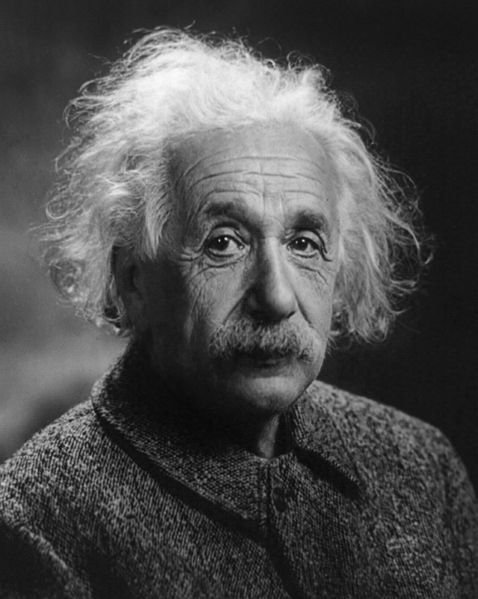
By Photograph by Oren Jack Turner, Princeton, N.J. Original image cleaned/leveled by User:Jaakobou. [Public domain], via Wikimedia Commons

My wife sent me this brilliant piece this morning.  The original author is Aaron Freeman.  It first appeared on NPR’s All Things Considered in 2005.  As you’ve probably figured out by now, I tend to identify myself as a somewhat religious person.  The professional language used here is not the one in which I’m trained, but I nevertheless find it beautiful and inspiring.  I would even go so far as to say that the physicist and the minister (this one, anyway) are describing, each in their own way, the same grand mystery of ultimate reality, in which we all live, move, and have our being.

You want a physicist to speak at your funeral.

You want the physicist to talk to your grieving family about the conservation of energy, so they will understand that your energy has not died. You want the physicist to remind your sobbing mother about the first law of thermodynamics; that no energy gets created in the universe, and none is destroyed. You want your mother to know that all your energy, every vibration, every Btu of heat, every wave of every particle that was her beloved child remains with her in this world. You want the physicist to tell your weeping father that amid energies of the cosmos, you gave as good as you got… (Click to read the full article)

The Experience of Grace

You are accepted. You are accepted, accepted by that which is greater than you, and the name of which you do not know. Do not ask for the name now; perhaps you will find it later. Do not try to do anything now; perhaps later you will do much. Do not seek for anything; do not perform anything; do not intend anything. Simply accept the fact that you are accepted!

Paul Tillich

God’s Dream

This is how the principle of ubuntu is taught to kids in Africa

This week’s sermon from Boonville Presbyterian.

Click here to listen at fpcboonville.org

I Corinthians 12:12-26

An excerpt from God Has A Dream by Desmond Tutu:

“I have a dream,” God says, “Please help Me to realize it.  It is a dream of a world whose ugliness and squalor and poverty, its war and hostility, its greed and harsh competitiveness, its alienation and disharmony are changed into their glorious counterparts, when there will be more laughter, joy, and peace, where there will be justice and goodness and compassion and love and caring and sharing.  I have a dream that swords will be beaten into plowshares and spears into pruning hooks, that My children will know that they are members of one family, the human family, God’s family, My family.”

In God’s family, there are no outsiders.  All are insiders.  Black and white, rich and poor, gay and straight, Jew and Arab, Palestinian and Israeli, Roman Catholic and Protestant, Serb and Albanian, Hutu and Tutsi, Muslim and Christian, Buddhist and Hindu, Pakistani and Indian—all belong.

One of the best pieces of advice I ever received came from a college professor of mine named Bob White.  He told me that, during my time in college, I should have some kind of “international experience”.  In a world as technologically interconnected as ours is, it’s more important now than ever before that students stretch themselves outside of their geographic comfort zone in order to see the world from a different cultural perspective.  I took Bob’s advice and, during my senior year, I went on a church-sponsored mission trip to the Eastern European country of Romania.

The experience changed my life forever, but not in the way that I thought it would.  At the time, I thought I was “bringing the light of Christ to the ends of the Earth”, but it turns out that I was the one who needed to be enlightened.  Working mostly in mental hospitals and orphanages, I experienced both tragedy and amazement on a level that I never thought possible.

For several decades, Romania suffered under the thumb of a particularly nasty Communist dictator named Nicolae Ceaucescu.  He would send his soldiers into the countryside to get women pregnant so that the children could be raised in state-sponsored orphanages as perfect Communist drones.  As a result, Romania is a country with an inordinately huge population of orphans.  Even after the fall of the Communist regime in 1989, this so-called “free” country has continued to be plagued with corruption and mass poverty.  The new government had no idea how to deal with so many orphans, so they would transfer them around from facility to facility until their paperwork got lost.

What happened next was truly awful.  Children started disappearing from the orphanages.  Without the appropriate paperwork, no one knew where they were, how to identify them, or where to find them.  Then, two weeks before my team arrived in the country, police uncovered a black market organ trade going on in Italy, with an apparently unlimited supply of fresh organs coming out of Romania.  It didn’t take much for us to put two and two together.

We visited one of the mental hospitals from which children were disappearing.  They wouldn’t let us in, in spite of our scheduled appointment.  So we parked our bus outside the front gate and waited for over an hour.  Eventually, the staff relented and let us in, but only to a certain room in the facility, and we were forbidden from taking photos or videos (a rule we disobeyed).  The scene inside reminded me of pictures I’d seen of Nazi concentration camps in World War II.  The smell alone was almost unbearable.

We sat and sang and played with the “patients” (“inmates” would be a more accurate term) for as long as the administration would allow us.  At no time did I see any doctors, nurses, or other attendants in this so-called “hospital”.  I left that place feeling more helpless than ever before.  There was no humanity in that place, no life, only existence (and even that was marginal and temporary, at best).

On the other hand, I also visited a Baptist church in a town called Galati.  We were there to distribute gifts and supplies to kids.  It was a chaotic scene at the end of a long day.  We were running out of supplies and this little church, probably no bigger than ours, was packed with over a thousand kids.  In the middle of all the chaos, a man grabbed me by the arm and said, “You will come to my house for tea!”  I didn’t know what to say, so I just told him to talk with my team leader about it.

After all the noise died down, we piled back onto our bus and collapsed.  We’d had no rest and nothing to eat all day.  My team leader stood up and thanked us for all our hard work and said there was just one more thing we had to do.

“I know you’re all exhausted,” he said, “but there’s this guy who wants us to come to his house.  I promise it won’t take long, but let’s just be polite and humor him before we go.”

We all grudgingly said okay and went to his house.  What we saw when we got there just blew us away.  This man and his family were especially concerned about all those orphans in the government systems.  Even those who weren’t being killed for their organs were just dumped out onto the street on their 18th birthday.  What this family did is take those freshly ejected orphans and bring them into their own home.  They gave these kids a safe and stable place to live while they learned viable job skills.  They even brought these kids to church and taught them about Jesus and the Bible.

As if that weren’t enough, they had prepared a welcome for us that we never could have expected.  We walked into a room with a table set with a feast of hors devours.  To a team of college students who hadn’t had anything to eat all day, it looked like heaven on earth!

What was even more like heaven on earth was what happened next.  This family and their adopted orphans talked and sang with us around the table.  In spite of the language barrier, we were all enjoying ourselves immensely.  We passed  a guitar back and forth, singing one song in English, and then one in Romanian.  Finally, when it was our turn again, I had an idea:

I said, “Here’s an oldie but a goodie,” and started playing Amazing Grace.  The Romanians in the room got extremely excited and shouted, “We know this song!”  And then, over this feast of hor devours, this foretaste of heaven, a group of Americans and Romanians, middle-class college students and previously homeless orphans, sang together this most well-known hymn, each in their own language.  I think that moment is about as close to heaven as I will ever get in this lifetime.

How amazing!  This week, as we read about God’s dream in Desmond Tutu’s book, I remember that incredible night in Galati, Romania.  In that moment, I was being fed and nourished, not just by strangers with rye bread and deviled eggs, but by that great and mysterious “interdependent web of existence”, of which I am a part.  I felt the Spirit of God in the room that night, knitting us foreigners together and filling the cups of our souls to overflowing.

What I witnessed in this family and their adopted orphans is what Archbishop Tutu calls ubuntuUbuntu is a hard word to translate into English.  Much like the Greek word agape and the Hebrew word shalom, there is no single English word that adequately captures the reality to which the African word ubuntu is referring.  Ubuntu is a particular character quality, much like courage and kindness are character qualities, but ubuntu is, in Archbishop Tutu’s words, “the essence of being human.”  Saying that someone has the quality of ubuntu is a very great compliment.  A person who possesses ubuntu recognizes that “a person is a person through other persons”.  In other words, ubuntu is all about recognizing the fact that we are interdependent beings.  To pull a phrase from the Disney movie The Lion King, we are all part of “the circle of life”.  None of us exists alone.  Archbishop Tutu says, “The self-made man or woman is really an impossibility” and “The solitary man or woman is really a contradiction in terms”.

More than just an African cultural concept, Archbishop Tutu tells us that ubuntu is “God’s dream” for us.  What God wants more than anything in the world is for us to be people who have ubuntu.  You can hear echoes of this idea when you hear Jesus say, “In all things, do unto others as you would have them do unto you.”  And again when Jesus is asked about the most important commandment in the Bible and he says, “Love the Lord your God with all your heart, with all your soul, with all your mind, and with all your strength… [and] you shall love your neighbor as yourself.”

I can also hear ubuntu in the selection we read this morning from Paul’s first letter to the Corinthians.  He compares the community of a church to a human body.  What makes us beautiful is our diversity.  All the different parts work together to form a whole.  This is more than just motivational team-building; it’s the expression of a spiritual truth.  We are part of each other.  We are one family, even one person, in God’s eyes.  Christ is more than just a person we remember on Sundays; Christ is the body of which we are a part.  We are the body of Christ on earth.  The blood of Christ flows in our veins.  We reveal this mystical reality of Christ to the world, not just by ourselves, but together as a group.  This means that if I want to be a Christian, then I need you.

We humans seem to have an uncanny ability to divide and demean ourselves.  It’s almost as if the truth of ubuntu and our common identity in Christ is so powerful, so radical, and so threatening to the status quo that we’ll come up with just about anything as an excuse to invalidate it.  We’ll build walls between each other over skin color, gender, sexual orientation, politics, religion, sports teams, musical tastes.  At what point do we wake up and realize how ridiculous it all is?  And the most hilarious part is that none of it means a thing, since we can’t ever change the fact that we all come from one source and are headed toward one destiny.  The battle lines we draw are little more than squiggles on a piece of paper to God.

God is much less concerned about who is different and much more concerned about how we treat those who are different from us.  Can we, through the lens of our particular faith, recognize and celebrate “the interdependent web of existence, of which we are a part”?  To see each other in this way is to see the image of God.  To love each other in this way is to serve Christ.  This is ubuntu.  This is our destiny.  This is God’s will, God’s vision, God’s dream for us.  The question that each of us has to answer this week (and every week) is this: how are you going to wake up and make God’s dream come true?

Vast, beautiful universe says astrophysicist

Image of a solar flare by NASA

Reblogged from the PC(USA) news feed.

Original post by Erin Cox-Holmes

The universe is so vast that trying to understand it makes our minds melt. So said Dr. Jennifer Wiseman, speaker at the Science and Faith lunch on Thursday (July 5) at the 220th General Assembly of the Presbyterian Church (U.S.A.).

An astrophysicist at NASA’s Goddard Space Flight Center, Wiseman is the director of the Dialogue on Science, Ethics and Religion of the American Association for the Advancement of Science.

It would make sense to conclude that since the universe is so overwhelming, we are small, tiny and insignificant. But, said Wiseman, what we can learn from astrophysics is that we can see the universe tuned for life… (Click here for full article)

God Believes In Us

This week, we begin our 8 week journey through Desmond Tutu’s book, God Has A Dream: A Vision of Hope for Our Time.

Archbishop Tutu talks to us this week about what he calls “the principle of transfiguration”.  He says that, while we live in a “moral universe” where God is in charge and good is ultimately destined to prevail over evil, this truth is not always readily apparent.  Sometimes, darkness, evil, and the powers that be seem to be winning.

He talks to us about one such time when:

Apartheid was in full swing as I and other church leaders were preparing for a meeting with the prime minister to discuss one of the many controversies that erupted in those days.  We met at a theological college that had closed down because of the government’s racist policies.  During our discussions I went into the priory garden for some quiet.  There was a huge Calvary—a large wooden cross without corpus, but with protruding nails and a crown of thorns.  It was a stark symbol of the Christian faith.  It was winter: the grass was pale and dry and nobody would have believed that in a few weeks’ time it would be lush and green and beautiful again.  It would be transfigured.

As I sat quietly in the garden I realized the power of transfiguration—of God’s transformation—in our world.  The principle of transfiguration is at work when something so unlikely as the brown grass that covers our veld in winter becomes bright green again.  Or when the tree with gnarled leafless branches bursts forth with the sap flowing so that the birds sit chirping in the leafy branches.  Or when the once dry streams gurgle with swift-flowing water.  When winter gives way to spring and nature seems to experience its own resurrection.

A transfiguration is a kind of miracle.  The word literally means “transformation” or “metamorphosis”.  It refers initially to that story in the New Testament where Jesus, normally a rather plain-looking carpenter from Nazareth, is momentarily seen by his disciples to be glowing with the light of eternity.  They saw him for who he truly was: the one they came to call “the Son of God”.

There are other kinds of transfiguration miracles in the Bible.  There is the Apostle Paul, who went from being a vicious hunter and killer of Christians to becoming the first great theologian of the faith he once persecuted.  Then there is Peter, who denied three times that he even knew Jesus, but later became an outspoken leader in the early church.  Finally, there is the example of the Cross itself, which hangs at the front of our church.  It was a symbol of shame and death, but has become for us a symbol of eternal life.  Paul, Peter, and the Cross: all of these are examples of the principle of transfiguration at work in the Bible.

Desmond Tutu has also seen the principle of transfiguration working miracles in his own life and that of his country.  He tells the story of the 1994 presidential elections in South Africa.  Tension was in the air as the day of the election drew near.  There were massacres, conspiracies, and boycotts all around.  This first free and fair election in decades seemed to be doomed to failure.  However, they decided to go ahead with it anyway.  On the day of the election, despite long lines and technical difficulties, there was no violence.  Tutu says, “It would have taken just two or three people with AK-47s to sow the most awful mayhem.  It did not happen.”  He describes the act of casting his first vote at age 62 as “a deeply spiritual event.”  After voting, he toured the other polling sites, where he saw a transfiguration miracle in progress.  He writes:

People entered the booth one person and emerged on the other side a totally different person.  The black person went in burdened with all the anguish of having had his or her dignity trampled underfoot and being treated as a nonperson—and then voted.  And said, “Hey, I’m free—my dignity has been restored, my humanity has been acknowledged.  I’m free!”  She emerged as a changed person, a transformed, a transfigured person.

The white person entered the booth one person, burdened by the weight of guilt for having enjoyed many privileges unjustly, voted, and emerged on the other side a new person.  “Hey, I’m free.  The burden has been lifted.  I’m free!”  She emerged as a new, a different, a transformed, a transfigured person.  Many white people confessed that they too were voting for the first time—for the first time as really free people.  Now they realized what we had been trying to tell them for so long, that freedom was indivisible, that they would never be free until we were free.

The president they elected that day, Nelson Mandela, is himself a story of transfiguration.  He was jailed for 27 years as a violent saboteur against the Apartheid regime.  After his release, Mandela went on to become a living symbol of freedom and “one of the moral leaders of the world.”

Archbishop Tutu fervently believes that “nothing, no one, and no situation is ‘untransfigurable’”.  No one is so bad that he or she is beyond hope or the love of God.  This was one of the central features of Jesus’ life.  He willingly associated with the most despicable members of society.  He welcomed outcasts and pariahs.  Jesus was not afraid to be labeled as “a friend of sinners” by the religious establishment of his day.  Tutu declares, in the spirit of Jesus, that, “Societal outcasts remain God’s children, despite their desperate deeds”.  He continues:

However diabolical the act, it does not turn the perpetrator into a demon.  When we proclaim that someone is subhuman, we not only remove for them the possibility of change and repentance, we also remove from them moral responsibility.

There is no such thing as an irredeemable person.  No matter how far we’ve fallen, God’s love never gives up on us.  Do you remember that story in the Bible about the “thief” who was crucified next to Jesus?  That word, “thief”, is not very accurate.  This person was not a heroic Jean Valjean or Robin Hood type of character.  In fact, centuries of church tradition have called him a “thief” in order to hide what he really was: a terrorist.  Crucifixion was a punishment so brutal and so shameful that it was reserved only for those who tried to overthrow the Roman government by force.  The so-called “thief” next to Jesus on the cross, if he was alive today, would probably be a member of Al-Qaida.

I tell you this so that you will realize the extreme lengths to which Jesus was willing to go in order to show God’s love for all people.  The terrorist called out, “Jesus, remember me when you come into your kingdom.”  And how did Jesus respond to this dying Al-Qaida terrorist?  “Today, you will be with me in paradise.”  Jesus says this, not because terrorism is justified, but because this person is just that precious to God.  No one is irredeemable.  God’s love never gives up (even at the bitter end for the most despicable people).

“This is all well and good,” you might say, “and it makes for wonderful Bible stories and spiritual principles, but what about real life?  In the real world, people can be downright intolerant and intolerable!”

Archbishop Tutu realizes this.  In fact, it’s fair to say that he knows this fact more intimately than you or I ever could.  As chairperson of the South Africa Truth and Reconciliation Commission, he was charged with the task of rebuilding his country after Apartheid.  It was up to the members of this group to decide how they were going to deal with the horrible atrocities and hate-crimes committed in the name of racism.  Should they hold something like the Nuremberg Trials, which were used to prosecute and execute Nazi officials after World War II?  There were certainly those in South Africa who deserved it.

There was one white officer in the South African security forces who “shot and killed a fellow human being, burned his body on a pyre, and while this cremation was going on actually enjoyed a barbecue on the side.”  Outside of South Africa, Tutu was one of the few who visited Rwanda after the brutal genocide that was committed there in the 1990s.  He saw piles of skulls with machetes and knives still stuck in them.  He said of the experience, “I couldn’t pray.  I could only weep.”

How can there be any hope for us, as the human race, when we are capable of so much evil?

Desmond Tutu believes we can begin to devise an answer to that question by first looking at the horrified shock we experience when we witness or even hear about acts of human brutality.  He says that the reason why we experience this shock is because we normally expect people to be good and decent.  Goodness, rather than evil, is what we tend to think of as “normal” for human beings.  People tend to instinctively believe that our lives were meant for something better than selfishness and cruelty.  And, even though each of us is a mixed bag, neither perfectly good nor totally evil all the time, we tend to be good and do right more often than not.  If this were not the case, says Tutu, we would not be so shocked when people behave badly.  It would just feel normal to us.  The horror we feel is a sign that goodness still lives and reigns in our hearts and in the world at large.

The next logical question that a rational person might ask then is this: If goodness reigns and God is still in charge of this world, why then is it necessary for any evil to exist at all?

In order to answer this question, Archbishop Tutu points us in the direction of freedom.  Freedom is one of God’s greatest gifts to the world.  We were made for it.  Yes, God wants us to be good and do what is right, but God wants most of all for us to freely choose to do what is good and right.  God wants to have a real relationship with us but, as we all know, a relationship can’t happen unless both parties are willing to participate.  So great is God’s respect for freedom that God was willing to take the risk that we would not choose good.

As the gift of God, freedom is “an inalienable right.”  Archbishop Tutu says that, “an unfree human being is… a contradiction in terms.”  This, he argues is the primary reason why all injustice, inequality, tyranny, and oppression is destined to ultimately fail: “they seek to deny something that cannot be denied.”  “The tyrant is on a road to nowhere,” Tutu says, “Freedom will break out.  People are made for it just as plants tend toward the light and toward water.”

God has reverence for freedom.  God could have made human beings like robots that always do what we’re told, but instead chose to make us as free partners and co-creators with God.  The ancient saint and theologian, Augustine of Hippo, once said, “God without us will not as we without God cannot.”

Have you ever read the story of Exodus in the Bible?  When the Hebrew people were suffering under the oppression of Egypt’s Pharaoh, subject to slavery and genocide, God decided that it was time for them to get back the freedom that had been taken from them.  And what did God do?  Instantly whisk the Hebrews away to the Promised Land with a snap of the fingers?  No.  God invited Moses to work as a partner.  God worked through Moses to liberate the people from tyranny.  But that’s not all…

Not only does God work through us, God also works with us.  We are not given a task and left alone to complete it.  Archbishop Tutu, tells a story from the Holocaust where a Nazi guard taunted a Jewish prisoner who was cleaning the toilets in a concentration camp.  The guard asked, “Where is your God now?”  The Jewish man replied, “Right here with me in the muck.”

There is a story in the Old Testament book of Daniel where three young Jewish men were forced into labor in the Babylonian Empire.  The king of Babylon tried to force them to bow down in worship to the gods of Babylon.  When the three young men refused, the king had them thrown into the fire, but they didn’t burn up.  And when the king looked into the fire, he saw them walking around, unharmed.  He also saw a fourth person in the fire with them, who had “the appearance of a god.”

When it comes to dealing with the evil in this world, God does not prevent us from facing it, but promises to walk through the fire with us and gives us strength to bear the pain.

God took an incredible risk in giving us freedom and calling us to work together as partners with God and each other in the task of creating a better world.  But God has decided that the risk was worth it.  Regardless of whether or not we decide to believe in God, God believes in us.  God never gives up on us.  God loves us with a love that will not let us go.

Dark Night of the Soul

I was at a pastors’ retreat earlier this week where a spiritual director suggested that I might find Dark Night of the Soul by St. John of the Cross to be a particularly helpful read at this point in my journey.

So, I’ve decided to take it up.  Just for fun, I’ll also be posting my thoughts on the chapters here on my blog.  I hesitate to call it a “commentary” because the book itself is a commentary on a poem by the same author.  Mine would be a commentary on a commentary, sort of like the Jewish Talmud, but without all the incessant arguing.

But first, here is the poem that forms the basis for this book.  I read it out loud to myself before each chapter, therefore I’ll be posting a copy of it with each blog post in this series.

I found this translation online at http://josvg.home.xs4all.nl/cits/lm/stjohn01.html

On a dark night,
Kindled in love with yearnings
–oh, happy chance!–
I went forth without being observed,
My house being now at rest.

In darkness and secure,
By the secret ladder, disguised
–oh, happy chance!–
In darkness and in concealment,
My house being now at rest.

In the happy night,
In secret, when none saw me,
Nor I beheld aught,
Without light or guide,
save that which burned in my heart.

This light guided me
More surely than the light of noonday
To the place where he
(well I knew who!) was awaiting me
— A place where none appeared.

Oh, night that guided me,
Oh, night more lovely than the dawn,
Oh, night that joined
Beloved with lover,
Lover transformed in the Beloved!

Upon my flowery breast,
Kept wholly for himself alone,
There he stayed sleeping,
and I caressed him,
And the fanning of the cedars made a breeze.

The breeze blew from the turret
As I parted his locks;
With his gentle hand
He wounded my neck
And caused all my senses to be suspended.

I remained, lost in oblivion;
My face I reclined on the Beloved.
All ceased and I abandoned myself,
Leaving my cares
forgotten among the lilies.

Since I only got the idea to blog about this after I’d already read the first two chapters, I’ll be playing a bit of initial catchup in this post.

Mother and child in Bolivia. Image by Peter van der Sluijs

The first chapter talks about the love of God being like the love of a mother for her baby.  A newborn soul (i.e. someone taking ownership of her spirituality for the first time) is nourished and cuddled without much being required on her part.  Later, as the child grows, the mother weans the child from nursing and teaches her how to walk on her own.  This is a difficult-but-natural phase in the growing-up process.

In years past, I would have read this chapter as a legalistic call to arms.  I would have said that it was my responsibility to walk on my own and live up to God’s impossible moral standards.  However, reading this chapter as a parent changed my outlook significantly.  I’m currently at the phase of life with my kids that John of the Cross was using as a metaphor for the spiritual life.

Yes, it’s true that parenting is a challenge for everyone as babies become toddlers.  However, the phase doesn’t end all at once.  Even on the toughest of days, there is still a lot of affection to be given.  My wife and I didn’t just decide one day that it was time for our daughter to grow up.  That is happening naturally over time.  We expected her to fall down as she learned how to walk.  We expected accidents to happen during potty-training.  We expected her to mispronounce new words.  She wasn’t punished for these things.  We just loved her through them and she figured them out on her own (with some help from us).

What’s really amazing is watching her personality emerge as she gets older.  Some of it she learns from imitating us (like laughing at fart jokes).  Some of it seems to be inborn (like her tendency toward left-handedness).  But all of it is part of who she is.  And we love her for it.

The same thing is true of us in our development as human beings of the spiritual variety.  God’s tenderness toward us does not end as we grow more spiritually mature.  God expects us to make mistakes and loves us through them.  God is raising us, not to conform to some foreign standard of piety, but to become the best versions of our own unique selves.

If I, as a parent, can find such joy in this process with my own kids, how much more does God do so with each one of us?