They say, “If you want to give God a good laugh, tell him your plans.”
I’ve been looking around this week for the original source of that quote. I can’t find a definitive answer. Some say it was from a comedian like Woody Allen or Lily Tomlin. Others chalk it up to an old Yiddish proverb: “We plan; God laughs.”
Personally, I like to imagine that it comes from St. Joseph the Worker, husband to the Blessed Virgin Mary and guardian of the child Jesus. Even if he did not utter these exact words himself, I think he would certainly smile and nod his head at their meaning. He knows, better than most, what it means to have one’s plans interrupted by God.
Exegesis
Today’s gospel is all about being interrupted.
It opens with Mary and Joe, a nice Jewish couple about to begin their life together as husband and wife. Then, all of a sudden, their plans are interrupted with the news that Mary was going to have a baby.
This was a big deal. Not only is having a first child a huge moment for any couple, but this situation was complicated by the fact that Mary and Joe were not yet officially married. Even worse, Joe was certain that he was not the father.
This was heartbreaking news. All of his plans for the future were suddenly thrown up into the air. In most cultures, a scenario like this would almost certainly be the subject of town gossip, but in first century Palestine, it was also a death sentence. Joseph could legally have Mary tried and executed, but he opts for a more gentle approach instead. He decides to resolve the matter quietly by breaking off the engagement and moving on with his life. All in all, it was the honorable thing to do for a man both fair and kind in the midst of a crisis.
That’s when God interrupts Joe’s story.
As Matthew tells it, an angel visited him in a dream, telling him not to be afraid because everything was happening as part of God’s plan. Joe, remarkably, listens to this dream and the wedding is still on, despite the public ridicule he would doubtless receive from friends and relations.
It takes a special kind of faith to be that open to God’s interruption in one’s life. We humans are creatures of routine and ritual. We like things done the same way every time. When things don’t go according to plan, we have a tendency to get frustrated. We don’t like being interrupted.
This tendency of ours is especially apparent when it comes to matters of faith and morality. We want to believe that God is unchanging. We like the comfort of knowing that what’s right is right and what’s true is true, for all time and forever. We depend on our religious institutions to always stay the same, meeting in the same place, singing the same songs, and telling the same stories, from cradle to grave, and continuing long after we are gone.
So, what are we to do then with stories like this one, when God interrupts, not only one family’s personal expectations, but also their foundational sense of right and wrong? Why would God, in bringing Christ the Son into the world, expose the Holy Family to danger and disgrace, and even violate the boundaries established by divine law in the Torah?
In that sense, our familiar Christmas story is profoundly disturbing. But in another sense, it is deeply comforting for all of us whose lives rarely go according to plan and often fail to live up to our most deeply held values.
The first thing this story tells us is that God is able to work with people whose lives are less than perfect.
The second (and more important) lesson this story tells us is that sometimes those imperfections and interruptions are the very things that God can use to bring good into the world. Sometimes, the interruption is the main point with God.
Whether it’s an unexpected pregnancy, a medical diagnosis, a lost job, a broken relationship, a personal failure, a missed opportunity, or any other unfortunate event, all of it is material that God is using to bring forth new life and freedom into the world.
Conclusion
That was the story for Mary and Joe and their unexpected pregnancy. The miracle born of their less-than-perfect circumstance was no less than Jesus Christ himself.
In the same way, I believe that Christ is being born into the world through each and every one of us, each day.
You might be tempted to look at your life, with all its imperfections and interruptions, as wasted time and space. But I would invite you, challenge you, dare you even, as we move from Advent into the Christmas season, to look at your life with the eyes of faith. God is doing something wonderful with your life. Christ is being born into the world again today, even through you.
God’s will for your life is for you to see the image of Christ in yourself and those around you. No person or situation is so bad that God can’t work with it. And God, as St. Paul writes in his letter to the Romans, causes “all things [to] work together for good for those who love God, who are called according to his purpose.”
This is the good news of Christmas: that God enters into this broken world, as it is, through us, as one of us, and brings good out of it for God’s own glory and praise.
St. Matthew writes in his gospel, “Now the birth of Jesus the Messiah took place in this way.” Not some other way that might have seemed more ideal, but “in this way.”
This is how God worked through Mary and Joe in their less-than-perfect situation and it is how God is working in you and through you, no matter how bad your life might seem today.
There is a story of a young novice in a monastery who goes to his abbot and says, “Father, what can I do to attain Salvation?”
The wise old abbot responds, “As little as you can do to make the sun to rise in the morning.”
So the novice replies, “What then is the purpose of meditation and all our spiritual exercises?”
And the abbot says, “To make sure that you are awake when the sun begins to rise.”
I love this story because it does such a good job of getting right to the reason why we, as people of faith, put ourselves through the hard work of prayer and the rigorous demands of the Christian life.
Saved by Grace
As Christians in the Reformed tradition, we are fond of insisting that salvation comes to us by grace, as a free gift apart from our good works, ritual observance, and correct theology. We receive this gift by faith, but even that receiving faith, St. Paul says, is a gift from God, “so that none may boast.”
We sainted sinners and sinful saints are utterly incapable, either by works or by faith, of doing anything to make the light of Christ appear in our hearts or world. Like the young monk in the story, we can do as little to attain salvation as we can to make the sun rise in the morning.
Like the shepherds of Bethlehem in the Christmas story, we do not bring Christ to birth, we simply bear witness as the Word of God “takes on flesh and dwells among us.”
Exegesis
In today’s gospel, we encounter a man who understands intimately what it means to bear witness to the presence and activity of Christ in the world.
Radical Prophet
St. John the Baptist was a dangerous radical and progressive prophet whose task was to “prepare the way” for Christ’s first coming to earth. I call him a “radical” because of the Latin term radix, which means “root.” John was a powerful mystic. As the last prophet from the Old Testament era, his ministry was inspired, not by a particular school or tradition of rabbinic interpretation, but directly by God.
Religious traditions need prophetic renewal from time to time. Without direct experience of the divine, religions begin to calcify and get “stuck in their ways.” The Buddha played a similar role in the Hindu faith. We Protestants might point to Martin Luther and John Calvin as prophetic voices in 16th century Europe. In Judaism, there were many prophets who arose throughout the history of Israel. Prophets, as radicals, reconnect the faithful to the “root” of their faith in God. They are always “dangerous” to established authorities because they call into question “the way we’ve always done it” and remind us of our core commitments to God and neighbor.
This is exactly what St. John the Baptist is doing in today’s gospel. He calls the people to a renewal of their spiritual and political lives by announcing:
“Repent, for the kingdom of heaven has come near.”
Bearing Fruit
He has particularly harsh words for the Pharisees and Sadducees, the two major parties of established religious authorities in first century Judea. To them, John says:
“You brood of vipers! Who warned you to flee from the wrath to come? Bear fruit worthy of repentance.”
By “fruit,” John means the kind of changed life that a person leads when they have come into a deep relationship with God.
The religious leaders would have been understandably offended by such comments. They might point to their seminary degrees on their office walls. Or they might make reference to their traditional ancestry, which they trace back through the prophet Abraham in the biblical book of Genesis.
But John anticipates this defensive response. He says:
“Do not presume to say to yourselves, ‘We have Abraham as our ancestor’; for I tell you, God is able from these stones to raise up children to Abraham.”
In other words, John recognizes this ruse for what it is: a distraction from living the kind of life that God envisions for the covenant community. After liberating the Hebrews from slavery in Egypt, God said to them, in effect, “I want you to be a different kind of community from the nations you see around you. Old patterns of exclusion and oppression must not be present among you. I want the nations of the world to look at you, my people, and see what kind of God I am.”
But the people of Israel, like all peoples, were consistently unable to live up to this high standard. We read in the Old Testament just how often God’s people “missed the mark” and began to take on characteristics of Egypt, Canaan, and Babylon. They worshiped humanly constructed images and ideologies in place of God, exploiting the earth and their neighbors. This is why God continually sent prophets like John. They called the people back to what it means to be God’s covenant community on earth.
Facing the Consequences
When the people refuse to listen (which is most of the time), God warns them that this way of life (“Every man/woman for him/herself”) leads only to death and destruction. This is why John says:
“Even now the ax is lying at the root of the trees; every tree therefore that does not bear good fruit is cut down and thrown into the fire.”
Notice how John does not name God as the source of this destruction. We might be tempted to think of God as the primary actor in this event, but I think it would be just as legitimate to think of it as a natural consequence of our tendency toward selfishness and the violent ways of the world. God’s intention, in sending us the prophets, is to save us from this path of self-imposed destruction. If we refuse to heed this warning, God respects our decision by allowing us to face the consequences of our actions.
Wheat and Chaff
The good news is that there is another way. Even in the midst of our rebellion against God’s ways of peace, God is present and active. In first century Judea, God sent St. John the Baptist to prepare the way for Christ.
John says:
“I baptize you with water for repentance, but one who is more powerful than I is coming after me; I am not worthy to carry his sandals. He will baptize you with the Holy Spirit and fire. His winnowing fork is in his hand, and he will clear his threshing floor and will gather his wheat into the granary; but the chaff he will burn with unquenchable fire.”
At first glance, this image might seem like another warning of wrath and judgment. But it might help if we look more closely at John’s image of the Messiah as a farmer winnowing a harvest of wheat.
Wheat grains grow inside of a husk on a stalk, much like corn. In order to salvage the nutritious wheat, the husk must be removed. This is done by a process called “winnowing.” In the ancient world, farmers did this by setting the pods over a fire. The heat would crack the husks open and the wheat would fall out. Then the farmer would toss the pile in the air with a large fork. The wheat would fall through while the husks (called “chaff”) would be blown away by the wind.
Here’s the interesting thing: the wheat and the chaff are parts of the same plant. I take them, not as symbols of two different kinds of people (“good” and “bad”), but as two realities that exist within myself. I am, at the same time, both sinner and saint. There are good parts of me and bad, wheat and chaff.
Chaff is an essential part of wheat. It protects the precious grain while it grows on the stalk. Without it, the grain would be vulnerable to predators and the elements. But there comes a time when the chaff must be removed, or else the grain will never fulfill its destiny to make new plants or be ground and baked into bread. In the same way, we who live in this complicated world are a mixture of more useful and less useful parts. These parts of us must grow together for a time, so that we can become fully-formed, well-rounded people. We wrestle with these complexities and long for the simplicity of a life where only good remains forever.
When I imagine my destiny at the end of life, I imagine God taking those less useful parts of me and separating them from the goodness in me that reflects the divine image. I see divine judgment as the “winnowing” process, by which goodness is preserved and evil eliminated. Whatever is left at the end of this process is that which will live forever in God.
Unquenchable Fire
How will God accomplish this division of good and evil with us? John tells us quite clearly:
“He [Christ] will baptize you with the Holy Spirit and fire.”
This is directly related to the winnowing process. The Holy Spirit, the presence of God within us, is the winnower’s fire that liberates the good wheat from the chaff we no longer need in our lives. God is at work within us, transfiguring us day by day into the divine image and likeness.
And John reassures us with the good news that this inner fire of God is “unquenchable.” That is, all the chaff and sin within us is unable to snuff out the presence and power of the Spirit.
Kindled by Water
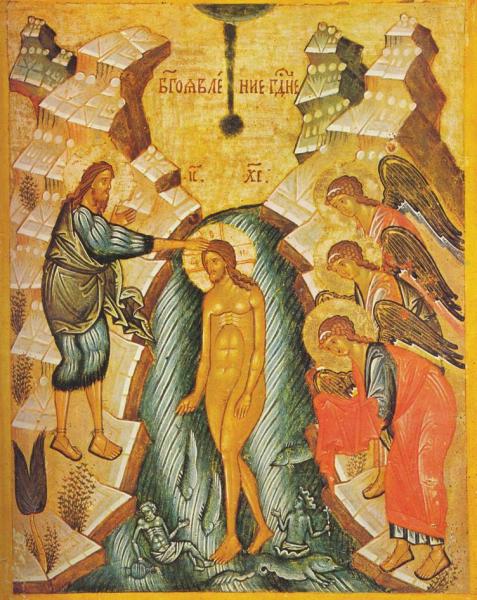
This fire was kindled in us, ironically, by water in our baptism. In that moment, when the benefits of Christ’s death and resurrection were applied to us, the Holy Spirit came to dwell in us in a way that cannot be undone. Baptism is not so much something that we do for God so much as something that God does in us. Baptism is the sign and seal of God’s pledge to save us and never leave nor forsake us.
Baptized Christians are part of Christ’s Body, and Christ loves us as dearly as we love the parts of our own bodies. He could not abandon us any more than one of us could cut off a hand or a foot. This is why John calls the fire “unquenchable.” We can resist the Spirit, but we cannot snuff her out entirely.
Application
The prophet invites us, in this Advent season, to “prepare the way” for Christ’s coming by cooperating with the energy of the Holy Spirit, who is already at work in us, separating the good wheat from the chaff we no longer need. We are invited to return to the roots of our faith and consider again what it means to be a member of Christ’s Body, the covenant community of God’s Church in the world.
This work is not something we do for God, but what God is doing in us. We cannot make Christ appear in our hearts any more than we can make the sun to rise in the morning. The good news is that Christ is already here, working God’s will in us through the power of the Holy Spirit. Our only choice is whether we will resist or cooperate with the work of the Spirit in our lives.
St. Paul writes, in his first letter to the Thessalonians:
“May the God of peace himself sanctify you entirely; and may your spirit and soul and body be kept sound and blameless at the coming of our Lord Jesus Christ. The one who calls you is faithful, and he will do this.” (1 Thess. 5:23-24)
This Advent, may we open our hearts to allow the fire of the Spirit to crack open our hard shells, and the wind of the Spirit to blow away that which we no longer need. May the water, wind, and fire of baptismal grace gather us once again into the barn of the Church, where we will dwell together in peace at Christ’s coming.
One of the funnest (and funniest) parts of Thanksgiving dinner is when family and friends start sharing stories around the table. They often start with something like, “Remember that time Uncle Harvey…”
In our family, my wife and I have one that we never get tired of telling the kids. It’s the classic story of “How I met your mother… twice.”
I first met Sarah at a student conference in western North Carolina in the summer of 1999. We had a nice chat on a group hike, established that we had a mutual friend, shook hands, and parted ways. Four years later, I was getting onto a bus in Vancouver, Canada, having just moved there to begin seminary. The woman across the row from me struck up a conversation. We had a nice chat, established a mutual friend, and… suddenly both of us had a major case of déjà vu.
As it turns out, she was the very same person I had talked to four years prior. When life gives you a second chance like that, you take it. We began dating less than a month later and married before the end of graduate school.
People love to tell family stories like this, especially during the holidays, because they help to give our lives a sense of meaning and purpose. In a world that often seems so random and out-of-control, these stories give us a hunch that there is some other Will working itself out through our existence. They remind us that we are not alone in this universe and that life itself is meaningful and good. We never get tired of telling or hearing them.
Of course, these stories don’t just exist in our families. They are a major reason why we come to church. The Bible itself, even though it is a collection of many different stories, tells one Big Story that continues to shape and change our lives today.
The biblical story is that the infinitely loving God of the universe created the world and called it Good. When we humans, in our selfishness, turned away from God and each other and fell into slavery to sin, God did not abandon us. After centuries of reaching out to us through prophets and sages, God took on flesh and came to dwell among us in the person Jesus Christ. When we refused to listen to Jesus and tried to silence him by the violence of crucifixion and death, God summarily rejected our rejection by raising Jesus from the grave. Now, we who are baptized into Christ share the healing power of his resurrection and function with the world as his Body, his hands and feet, on earth until he comes again in glory. On that day, the dead will rise and the whole creation will be made new, as God originally intended, and governed with divine justice and mercy.
This is the story we Christians tell ourselves each Sunday in church. We hear it in the Scriptures and see it in the Sacraments. We leave the liturgy each week, fed with the Body and Blood of Christ, and are sent out into the world to be the Body of Christ. It cannot be understated just how important that mission is in this world, where life often seems so empty and meaningless.
Jesus talks about this Christian story in today’s gospel reading. Like any good story, this one has a beginning, a middle, and an ending. Today, Jesus is talking to us about the ending.
He starts by undermining two thousand years of Christian speculation about the end of the world. Look in the Religion section of any bookstore, and you will find multiple books claiming to have figured out the scoop on when and how the end times will take place. But Jesus says in this passage, “But about that day and hour no one knows, neither the angels of heaven, nor the Son, but only the Father.”
St. John Chrysostom, a bishop in the early Church, agrees with Jesus on this. He wrote that human beings “should not seek to learn what angels do not know.” Jesus does not give his followers any “insider information” on the end of the world. What he asks of them is far more difficult.
What Jesus asks of Christians is that we “stay awake” and “be ready” for history to reach its conclusion. This is important. Life on this planet often feels chaotic, empty, and meaningless. To the eyes of a person without faith, it seems like a random series of events that are just happening. Without a sense of purpose in life, we are wont to slip into a mindless pursuit of pleasure and avoidance of fear.
In Jesus’ mind, this state of existence is not unlike the condition of the world immediately before the great flood of Noah. He says, “For as in those days before the flood they were eating and drinking, marrying and giving in marriage, until the day Noah entered the ark, and they knew nothing until the flood came and swept them all away, so too will be the coming of the Son of Man.”
Another way of saying this is that it was “business as usual” for everyone until the moment when the rain began to fall. They were so caught up in their little plans and schemes, they didn’t realize that God’s great story was in the process of unfolding all around them. When the moment of truth came, they were not ready.
Jesus reminds us that the world does not revolve around us. The universe will not stop its ordinary operation to accommodate our plans, however great we think they may be.
The good news is that God has an even greater plan, and we are invited to play a part in it. Jesus invites us today to reorient our lives around God’s vision for the world. God’s dream is to renew the face of the earth so that it reflects the harmonious beauty that God intended for it to have at the beginning. God dreams of a world where the hungry are fed, the sick are healed, strangers are welcome, and sinners are forgiven. Jesus often referred to God’s dream as “the kingdom of heaven”. It is the one thing around which he oriented his entire life and ministry.
The work of the kingdom of heaven has been going on since the dawn of time. It began in earnest with the incarnation, life, death, and resurrection of Jesus Christ. It continues today through Christ’s Body on earth, the Church, and will draw to a conclusion at some unknown point in the future. It is God’s dream and Jesus is inviting us to be a part of it. We come to church each week and tell each other these stories in order to be reminded that this universe is no accident, and our lives are no random series of events.
This week, we begin the liturgical season of Advent, as we prepare to celebrate that beloved moment in God’s story when Jesus Christ, the Word of God, “took on flesh and dwelled among us.” But it is also a time when we look forward to Christ’s second coming at the conclusion of history. It is a time when we are invited to reorient our lives around the divine vision of a renewed creation, the vision for which Jesus lived, died, and lives again in us.
In this coming holiday season, let us not get caught up in our cultural patterns of materialism and greed. Let us also avoid the backward-looking nostalgia for the “good old days” of Christmases past. Let us instead look within and around us for the work that Christ is giving us to do in this world today. Finally, let us look forward to the day when God’s story finishes with a happy ending and all of creation joins in the song of unending praise to its Creator, Redeemer, and Sanctifier.
Let us pray.
“O Come, Desire of Nations, bind all peoples in one heart and mind; bid envy, strife, and discord cease; fill the whole world with heaven’s peace.” Amen.
Everything that exists/happens is material that Christ can work with (including the crucifixion)
God’s vision – “the kingdom of heaven”
Less to do with what happens
More to do with who we are
Christ is establishing a new order, over and against the powers-that-be
Was the cross God’s plan for Jesus?
To say Yes is to accept the unacceptable (“cosmic child abuse”)
Crucifixion was the powers’ plan for Jesus
Prophets expose the sins of the powerful
Injustice, hypocrisy, idolatry
Jesus does this consistently
Shallowness of religious elite
Futility of a political system based on violence
Threatens the power-base with truth
God didn’t need Jesus to die, the powers did
Jesus accepted crucifixion as the consequence of his ministry
Continued to minister anyway
Borg: “The cross is the world’s No to Jesus”
Ironic injustice
He is made to suffer and die because for doing the right thing
They call him “king” ironically, to mock him
But he really is
Jesus “bears their sins” by absorbing their violent hatred without retaliation
“Father, forgive them; for they do not know what they are doing.”
They taunt Jesus to come down from the cross
Leaders, soldiers, criminal
They can only conceive of a Messiah that is like them: violent and powerful
Leaders: “He saved others; let him save himself if he is the Messiah of God, his chosen one!”
Soldiers: “If you are the King of the Jews, save yourself!”
Criminal: “Are you not the Messiah? Save yourself and us!”
The real irony: these opposing powers are really saying the same thing
But one person gets the irony: the other criminal
“Do you not fear God, since you are under the same sentence of condemnation? And we indeed have been condemned justly, for we are getting what we deserve for our deeds, but this man has done nothing wrong.”
Nearing death, giving up hope for survival, he sees clearly the futility of this world’s violent system
Unironically addresses Jesus as king:
“Jesus, remember me when you come into your kingdom.”
The hopeless loser gets it
In the world today, the “hopeless losers” still get it
They see clearly the futility of the violent world system
But the powerful are blinded by their interests in the system
We don’t want to see the truth because we still hold out hope that the system will work in our favor
Poor and oppressed people see the futility more clearly
Black Lives Matter, I Believe Women
Powerful interests try to silence these movements
Jesus stands in solidarity with them
If we want to stand with Jesus as our King, we must stand with them
Black lives, women’s lives, queer lives, trans lives, Muslim lives, refugee lives, Mexican lives, immigrant lives, disabled lives, mentally ill lives matter… and these lives are being ended by crucifixion today
Church: “Preferential option for the poor”
Like Jesus, we must be prepared to be crucified with them as a consequence of our solidarity
We must be ready to listen to their experiences and suffer with them, especially where we have been complicit in their suffering
This is repentance
Jesus, the most powerful King, stands in solidarity with those who are the least powerful
And he does it without returning violence for violence
This is what it looks like for Jesus to reign as King from the cross
His Church must do the same
Our basis for hope is that crucifixion is not the end of the story
King Jesus ascends the throne on Mount Calvary, but reigns from the empty tomb
In his resurrection, Jesus has conquered death and hell
St. Paul (Ephesians 1:17-23): “I pray that the God of our Lord Jesus Christ, the Father of glory, may give you a spirit of wisdom and revelation as you come to know him, so that, with the eyes of your heart enlightened, you may know what is the hope to which he has called you, what are the riches of his glorious inheritance among the saints, and what is the immeasurable greatness of his power for us who believe, according to the working of his great power. God put this power to work in Christ when he raised him from the dead and seated him at his right hand in the heavenly places, far above all rule and authority and power and dominion, and above every name that is named, not only in this age but also in the age to come. And he has put all things under his feet and has made him the head over all things for the church, which is his body, the fullness of him who fills all in all.”
Filled with the hope born of this faith (this pledge of allegiance), the Church stands at the forefront of countless movements for peace, justice, and mercy
We do not grow tired, even when the entire world is against us and others give up, because our hope is born of something greater than this world
St. John (1 John 4:4): “Little children, you are from God, and have conquered them; for the one who is in you is greater than the one who is in the world.”
We have even learned to take pride in the cross, the instrument of Christ’s mocking and torture:
St. Paul (1 Cor 1:18-25): “For the message about the cross is foolishness to those who are perishing, but to us who are being saved it is the power of God. For it is written, “I will destroy the wisdom of the wise, and the discernment of the discerning I will thwart.” Where is the one who is wise? Where is the scribe? Where is the debater of this age? Has not God made foolish the wisdom of the world? For since, in the wisdom of God, the world did not know God through wisdom, God decided, through the foolishness of our proclamation, to save those who believe. For Jews demand signs and Greeks desire wisdom, but we proclaim Christ crucified, a stumbling block to Jews and foolishness to Gentiles, but to those who are the called, both Jews and Greeks, Christ the power of God and the wisdom of God. For God’s foolishness is wiser than human wisdom, and God’s weakness is stronger than human strength.”
Our response
“Therefore,” (Hebrews 12:1-2), “since we are surrounded by so great a cloud of witnesses, let us also lay aside every weight and the sin that clings so closely, and let us run with perseverance the race that is set before us, looking to Jesus the pioneer and perfecter of our faith, who for the sake of the joy that was set before him endured the cross, disregarding its shame, and has taken his seat at the right hand of the throne of God.”
St. Paul again (Romans 12:1-2): “I appeal to you therefore, brothers and sisters, by the mercies of God, to present your bodies as a living sacrifice, holy and acceptable to God, which is your spiritual worship. Do not be conformed to this world, but be transformed by the renewing of your minds, so that you may discern what is the will of God — what is good and acceptable and perfect.”
Finally (Philippians 2:5-11): “Let the same mind be in you that was in Christ Jesus, who, though he was in the form of God, did not regard equality with God as something to be exploited, but emptied himself, taking the form of a slave, being born in human likeness. And being found in human form, he humbled himself and became obedient to the point of death — even death on a cross. Therefore God also highly exalted him and gave him the name that is above every name, so that at the name of Jesus every knee should bend, in heaven and on earth and under the earth, and every tongue should confess that Jesus Christ is Lord, to the glory of God the Father.”
This is not liberal idealism; it is Christian hope
Grounded in the mystery of Christ’s Resurrection from the dead
We come to church, week after week, to fed by Word and Sacrament, then sent back out into the world to keep doing this work of standing, with Christ our King, in solidarity with the crucified peoples of the earth.
We need to be reminded of these truths because the world will try to choke that faith out of us
St. John (1 John 4:4): “Little children, you are from God, and have conquered them; for the one who is in you is greater than the one who is in the world.”
The cross was this world’s No to Jesus, but the empty tomb is God’s Yes.
I. There are moments in life when the things we depend upon let us down
A. Economy, church, country, relationships: spouse/family/friends, self: body/soul
1. “What the heck just happened?”
B. We get disillusioned
1. Actually a good thing: “Dis-illusion”
2. In these moments, we get to find out where our faith really lies Today’s gospel
II. “temple” “adorned with beautiful stones and gifts dedicated to God”
A. Center of Jewish life: national/ethnic/religious
B. Literally “House of God”
1. “God (Ultimate Good) lives in this place”
III. Jesus: “As for these things that you see, the days will come when not one stone will be left upon another; all will be thrown down.”
A. Offensive: Unpatriotic, sacrilegious, blasphemous
B. Unthinkable: “How would all of this work without it?”
IV. Jesus elaborates
A. To the optimists: “Beware that you are not led astray; for many will come in my name and say, ‘I am he!’ and, ‘The time is near!’ Do not go after them.”
1. Don’t be tricked by big personalities, making promises they can’t fulfill
B. To the pessimists: “When you hear of wars and insurrections, do not be terrified; for these things must take place first, but the end will not follow immediately.”
1. It’s not the end of the world
C. “Nation will rise against nation, and kingdom against kingdom; there will be great earthquakes, and in various places famines and plagues; and there will be dreadful portents and great signs from heaven.”
1. Not an apocalyptic vision
2. Just the way things are in this world: war, natural disaster, poverty, disease
3. Don’t freak out!
D. The believer’s place in all this: “But before all this occurs, they will arrest you and persecute you; they will hand you over to synagogues and prisons, and you will be brought before kings and governors because of my name.”
1. Expect to be hated
2. Faith in God is always a threat to the status quo
a) Calls into question all the other little idols we are tempted to put our faith in
b) God is the only absolute; everything else is relative
V. “This will give you an opportunity to testify.”
A. Learn to see disillusionment as an opportunity
B. Testify (like a witness in a courtroom)
1. Speak the truth about what really matters (the way it really is)
VI. Testify how? “So make up your minds not to prepare your defense in advance”
A. Counterintuitive: Should pastors and lawyers really do this?
VII. Why not? “for I will give you words and a wisdom that none of your opponents will be able to withstand or contradict.”
A. Because the truth you speak does not come from you yourself
1. You didn’t make this up
B. Grounded in reality itself
1. Comes from God, who needs no defender
2. Truth is truth, whether they choose to believe it or not
a) Constant, like the Law of Gravity
VIII. Will they listen? “You will be betrayed even by parents and brothers, by relatives and friends; and they will put some of you to death. You will be hated by all because of my name.”
A. No. People are selfish/sinful; choose to hear/believe what they want to hear/believe
B. In this broken world, all truth is an “inconvenient truth”
B. Matthew 10:28: “Do not fear those who kill the body but cannot kill the soul; rather fear him who can destroy both soul and body in hell.
1. Fear a meaningless life, based on lies
C. Mark 8:36: “For what will it profit them to gain the whole world and forfeit their life?”
X. “By your endurance you will gain your souls.”
A. Spiritually alive, meaningful life, have the life that really counts
B. John 11:25: “I am the resurrection and the life. Those who believe in me, even though they die, will live”
C. Romero: “If they kill me, I will rise again in the Salvadoran people.”
D. Romans 8:35-39: “Who will separate us from the love of Christ? Will hardship, or distress, or persecution, or famine, or nakedness, or peril, or sword? …No, in all these things we are more than conquerors through him who loved us.”
1. Why: “For I am convinced that neither death, nor life, nor angels, nor rulers, nor things present, nor things to come, nor powers, nor height, nor depth, nor anything else in all creation, will be able to separate us from the love of God in Christ Jesus our Lord.”
XI. If you are feeling disillusioned today, do not fear/despair
A. All we have lost is our illusions
B. Christ id inviting you today to “use your disillusion”
C. Disillusionment is an opportunity
1. To find out for ourselves what it is that we really believe in
2. Knowing what we really believe in frees us speak truth to the powerful in the world
XII. Jesus Christ came into this world to show humanity the heart of God
A. But we could not bear to listen
1. When we failed to silence him, we killed him
2. But God raised Jesus from the tomb, demonstrating once and for all (in the words of Desmond Tutu) that “Goodness is stronger than evil, love is stronger than hate, life is stronger than darkness, life is stronger than death. Victory is ours, through God who loves us.”
XIII. All of the lies in the world cannot falsify the truth of God, and all the powers of death in the world cannot overcome the power of God’s love, which has been poured out so abundantly for us in the incarnation, life, death, and resurrection of Jesus Christ our Lord.
XIV. This is how I am able to stand before you today, disillusioned but unafraid
XV. This is how we are able to stand before the dark powers of the world and proclaim the truth, with St. Paul:
A. “I am convinced that neither death, nor life, nor angels, nor rulers, nor things present, nor things to come, nor powers, nor height, nor depth, nor anything else in all creation, will be able to separate us from the love of God in Christ Jesus our Lord.”
“The most infuriating thing about the Christian life is that if you think you’re doing it right, you’re probably doing it wrong; and if you think you’re doing it wrong, you’re probably doing it right.”
This week’s sermon at North Presbyterian Church, Kalamazoo.
![By Nheyob (Own work) [CC BY-SA 3.0 (http://creativecommons.org/licenses/by-sa/3.0)], via Wikimedia Commons](https://hoppinghadrianswall.com/wp-content/uploads/2016/12/saint_mary_magdalene_church_columbus_ohio_-_st-_joseph_icons_mosaic.jpg?w=900)


![By Cadetgray (Own work) [CC BY-SA 3.0 (http://creativecommons.org/licenses/by-sa/3.0) or GFDL (http://www.gnu.org/copyleft/fdl.html)], via Wikimedia Commons](https://hoppinghadrianswall.com/wp-content/uploads/2016/10/jesushealsaleper.jpg?w=900)

 Hopping Hadrian's Wall