From Fear to Faith

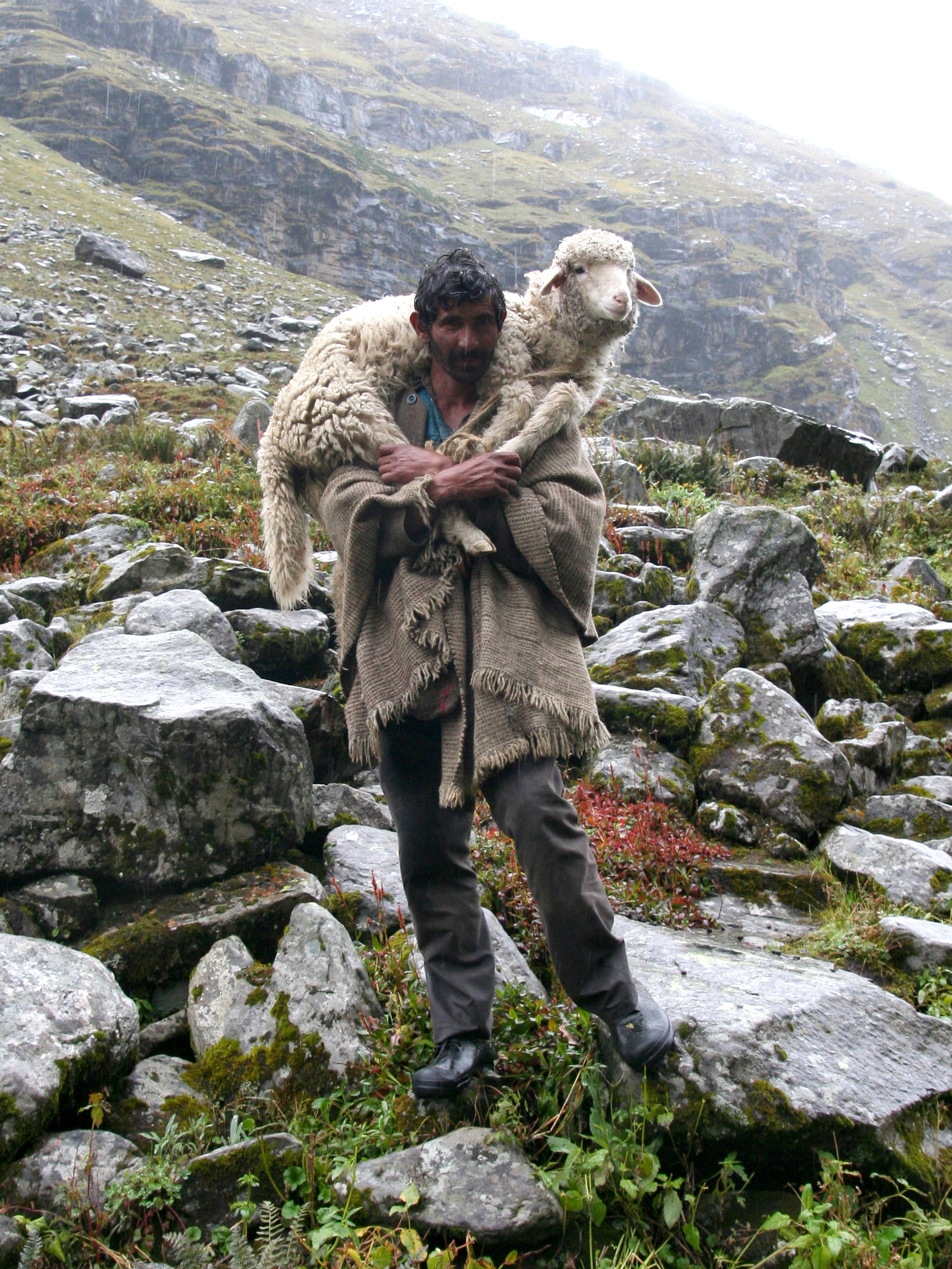
Photo by Denis Barthel

This week’s sermon from First Pres, Boonville.  The text is Matthew 6:24-34.

When I first went to seminary in 2003, I had no intention of pursuing ordained ministry as a career.  I thought I was going to teach college.  But I very quickly discovered that the academic world is quite cutthroat.  Success didn’t just come from studying hard and doing your best; you had to make connections.  You had to stand out in class so that the right professors took notice of you.  You needed those professors to write you a good recommendation for the right PhD program, so you could get a good job with tenure at a university.  It was really competitive!  In order to be the best, you had to beat the best.

So, I went in with both guns blazing.  I was determined to out-smart all my classmates.  I thought I would make my professors notice me, no matter what it took.  If I had to make other people look stupid in order to prove what a genius I was, I would do it.

This plan of mine didn’t work out as well as I thought it would.  In fact, it failed on multiple levels.  First of all, it turns out that I wasn’t exactly the sharpest tool in the shed.  In every class, there was always somebody smarter or quicker on the draw than I was.  For crying out loud, some of my fellow students had already started writing their own books!  I found out pretty quickly that if you try to portray yourself as better than everyone else when you’re not, you just end up looking ridiculous.

That leads me to the second way in which my so-called “genius” plan failed: After a while, I realized that I didn’t particularly like the kind of person I was becoming.  I spent a lot of time being bitter and angry.  As I look back, I can see that a lot of my troubles came from a particular fear that I held onto without even realizing it:  I was afraid that I was on my own, treading water in a sea of chaos.  I was afraid that the success of my future depended solely on my ability to make it happen.

When I look around at people in our society, I can see that this fear is a pretty common one.  People everywhere are afraid.  We’re afraid that there’s no master plan in life.  We’re afraid that there’s nothing holding this universe together.  We’re afraid that we’re all alone out here.

We will often do desperate things in order to keep this fear at bay.  We invest in products and programs that are supposed to make us prettier, happier, and healthier.  We pledge allegiance to organizations and ideologies that promise peace and prosperity.  The peddlers of commercial advertising and political propaganda stand ready to prey on our fears.

For our part, we the people stand ready to make sacrifices to these idols (although we would call them “compromises”).  In moments of desperation, many of us will do despicable things that we later regret (but dismiss as “unavoidable”).  In Spanish, we would be called “Desperados”.  We are not all that different from the ancient Israelites, who sacrificed animals and humans to idols of stone in exchange for good weather and plentiful crops.  The real tragedy is that, despite our sacrifices, these objects of worship are totally unable to deliver on their promises.  Our quantity and quality of life remain unimproved.  It’s just like Jesus said in verse 27, “can any of you by worrying add a single hour to your span of life?”  In the throes of my own fear, I bowed down before the false gods of ambition and competition.  I believed their promises of a secure future.  But in the end, those cut-throat tactics left me no closer to my dream job.

This slavery to fear is nothing new.  People have struggled with it in every culture around the world for centuries.  Jesus even noticed it in his own followers.  He could tell they were stuck somewhere between faith and fear.  The Greek word he used to describe that feeling is merimna, which literally means, “to be pulled in two directions”.  Don’t we all feel that way sometimes?  The voice of faith leads us in one direction while voices of fear jerk us back the other way.

We live in a world that is inherently opposed to real faith.  Real faith looks ridiculous to a fear-driven world.  Just look at the Beatitudes in Matthew 5.  Jesus said, “Blessed are the poor in spirit, those who mourn, the meek, those who hunger and thirst for righteousness, the merciful, the pure in heart, the peacemakers, the persecuted”.  The world writes these people off as naïve idealists, but Jesus calls them blessed.  You and I live somewhere between the world and Jesus.  We try to follow his leading, but we inevitably get “pulled in two directions”.  This is what Jesus meant in verse 24 when he talked about those who try to “serve two masters”.  That kind of tension is unsustainable in the long-term.  Eventually, our souls will snap and we’ll end up on one side or the other.

As I said before, the cause of this tension is our fear.  Jesus understands this.  That’s why he’s not shouting at us like a drill sergeant, telling us to buck up and try harder.  Instead, Jesus takes a very gentle approach and addresses the problem at its root.

We’re all sitting here, scared to death that we’re on our own in life and surrounded by chaos.  But Jesus interrupts our panic and invites us into a different way of looking at things.  He prescribes a kind of meditation exercise for his followers.  Specifically, Jesus invites them to meditate on creation.  We already know that Jesus was preaching this sermon outdoors on a hillside, so he may have even had specific examples close at hand.  In this exercise, Jesus directs our attention to the flora and fauna of the world around us.  It says “Consider” in verse 28, but the Greek word is an intensified form of the word “to learn” or “receive instruction”.  Jesus says, in effect, “Let the birds and the flowers become your teachers.”  Have you ever tried to do this?  If you have, then you know that in order to get a good, long look at something like a bird, you have to be very still and very quiet for long periods of time.  Doing this when you’re outside can have a wonderful calming effect on the mind.  Even if it doesn’t make your problems go away, it really helps to clear the head!  The scene reminds me of Psalm 23: “The Lord is my shepherd, I shall not want.  He makes me lie down in green pastures; he leads me beside still waters.  He restores my soul.”

Just what is it that the birds and the flowers are supposed to teach us?

Look at the birds of the air; they neither sow nor reap nor gather into barns, and yet your heavenly Father feeds them. Are you not of more value than they?  …Consider the lilies of the field, how they grow; they neither toil nor spin, 29yet I tell you, even Solomon in all his glory was not clothed like one of these. 30But if God so clothes the grass of the field, which is alive today and tomorrow is thrown into the oven, will he not much more clothe you?

The birds and the flowers teach us that we live in a world of order, not chaos.  They teach us that we are surrounded, not by scarcity, but by abundance of life.  The good news that Jesus wants to teach us through creation is that we are not alone in this world.  We’re not our here on our own!  No, the universe is permeated by a Love that will not let us go.

You are not on your own.  It’s not up to you to fight back the darkness and the chaos.  Wherever you are this morning, whatever you’re going through, there is a God who loves you.  And, as it says in Jeremiah 29:11, “I know the plans I have for you, says the Lord, plans for your welfare and not for harm, to give you a future with hope.”  It’s not up to you to do it.  It’s up to God.

The end result of this meditation exercise is that we should let go of our fear, even if it’s just a little bit at a time.  Three times in this passage, at verses 25, 31, and 34, Jesus tells us, “do not worry.”  We should strive to just be in the moment, “Today” as Jesus calls it in verse 34, and be grateful for God’s abundant blessings in our lives.  Jesus says in verse 33 that we should “strive first for the kingdom of God” and, if you remember from several weeks ago, where is the kingdom?  It’s “at hand”!  It’s right in front of us and all around us.  God’s kingdom is the place where God is present and in-charge.  That can be anywhere at anytime.

You might be thinking, “All of this is great for reducing stress and increasing relaxation, but what about my very real problems?  Can I really depend on some invisible God to have a plan for my life?”  Well yes, you can bet that God does have a plan.  I can’t tell you the exact details of God’s plan for your life, but I can tell you a little about what’s happened in mine so far:

As I said before, I really didn’t like kind of person I was becoming during my first year of grad school.  Eventually, I came to the conclusion that an academic career was not for me.  I didn’t yet know what I would do instead, but I continued to press on toward the completion of my degree.  Over the next several years, I began to realize that God was calling me to ordained ministry, first as a volunteer chaplain for homeless people.  Later, much to my surprise, the academic world came looking for me, hat in hand!  I was offered a job as a professor without a PhD or letters of recommendation.  I didn’t make it happen with my cunning and wits, God made it happen in God’s time.  Later still, a small congregation in an unfamiliar village called Boonville would invite me to become their pastor.

I never imagined that the puzzle pieces of my life would come together in such a complex and subtle way.  I can’t take credit for it.  This reality is far beyond anything that I could have planned for myself.  That’s my story.  The details of yours will be different.

This morning, I want to extend Jesus’ invitation to you.  Let creation be your teacher as you listen for the voice of faith in your life.  In the hard times, the voice of faith gives you strength.  That’s the voice inside of you that says, “You’re not alone.  You’re going to make it through this.”  In the good times, the voice of faith gives you wisdom.  That’s the voice inside of you that says, “Nothing in this world lasts forever.  Use these gifts while you can to help those around you who are in need and to make this world a better place.”

Listening to the voice of faith rather than the voice of fear gives you the peace to live as a spiritually-centered person in the midst of this hostile world.  The voice of faith gives you the power to be truly present in this moment and give thanks for the abundance of blessing that has been poured out over your life.

Psalms of Lament from Guantanamo Bay

Earlier today, I was introduced to a little book of poetry called Poems from Guantanamo: The Detainees Speak, edited by Mark Falkoff.  I was immediately struck by the similarity between these poems and the psalms of lament that one finds in the Bible.  I will offer an example of each and let them speak for themselves.

First, I invite you to reflect on these words from Psalm 10:

Why, O Lord, do you stand far off? Why do you hide yourself in times of trouble?

In arrogance the wicked persecute the poor— let them be caught in the schemes they have devised.

For the wicked boast of the desires of their heart, those greedy for gain curse and renounce the Lord.

In the pride of their countenance the wicked say, “God will not seek it out”; all their thoughts are, “There is no God.”

Their ways prosper at all times; your judgments are on high, out of their sight; as for their foes, they scoff at them.

They think in their heart, “We shall not be moved; throughout all generations we shall not meet adversity.”

Their mouths are filled with cursing and deceit and oppression; under their tongues are mischief and iniquity.

They sit in ambush in the villages; in hiding places they murder the innocent. Their eyes stealthily watch for the helpless;

they lurk in secret like a lion in its covert; they lurk that they may seize the poor; they seize the poor and drag them off in their net.

They stoop, they crouch, and the helpless fall by their might.

They think in their heart, “God has forgotten, he has hidden his face, he will never see it.”

Rise up, O Lord; O God, lift up your hand; do not forget the oppressed.

Why do the wicked renounce God, and say in their hearts, “You will not call us to account”?

But you do see! Indeed you note trouble and grief, that you may take it into your hands; the helpless commit themselves to you; you have been the helper of the orphan.

Break the arm of the wicked and evildoers; seek out their wickedness until you find none.

The Lord is king forever and ever; the nations shall perish from his land.

O Lord, you will hear the desire of the meek; you will strengthen their heart, you will incline your ear

to do justice for the orphan and the oppressed, so that those from earth may strike terror no more.

Now, with this psalm fresh in your mind, think about the poem “Humiliated in the Shackles” by Sami Al Haj, who remains imprisoned at Guantanamo Bay:

When I heard pigeons cooing in the trees,

Hot tears covered my face.

When the lark chirped, my thoughts composed

A message for my son.

Mohammad, I am afflicted.

In my despair, I have no one but Allah for comfort.

The oppressors are playing with me,

As they move freely about in the world.

They ask me to spyon my countrymen,

Claiming it would be a good deed.

They offer me money and land,

And freedom to go where I please.

Their temptations seize my attention

Like lightning in the sky.

But their gift is an evil snake,

Carrying hypocrisy in its mouth like venom.

They have monuments to liberty

And freedom of opinion, which is well and good.

But I explained to them that

Architecture is not justice.

America, you ride on the backs of orphans,

And terrorize them daily.

Bush, beware.

The world recognizes an arrogant liar.

To Allah I direct my grievance and my tears,

I am homesick and oppressed.

Mohammad, do not forget me.

Support the cause of your father, a God-fearing man.

I was humiliated in shackles.

How can I now compose verses?  How can I now write?

After the shackles and the nights and the suffering and the tears,

How can I write poetry?

My soul is like a roiling sea, stirred by anguish,

Violent with passion.

I am a captive, but the crimes are my captors’.

I am overwhelmed with apprehension.

Lord, unite me with my son, Mohammad.

Lord, grant success to the righteous.

Those of us who are American Christians are used to reading the Bible and casting ourselves in the role of hero and victim.  We cannot conceive that psalms of lament might be justly composed against us.  Listening to the voice of the oppressed and “the other” can often lead us to look at our Bibles, our country, and our lives through a new set of eyes.  May God continue to grow us in the direction of true righteousness and, as always, may God’s kingdom come and God’s will be done on earth as it is in heaven.

Turn the Other Cheek

Today’s sermon from First Presbyterian, Boonville.

The text is Matthew 5:38-48.

Click here to listen to the podcast at fpcboonville.org!

We read this morning from some of Jesus’ most quoted and most ignored teachings.  “Turn the other cheek” and “love your enemies” represent some of the highest moral ideals for Christians (and other admirers of Jesus), but when it comes to actually obeying these commandments, almost all of us will buckle under the pressure.  We reluctantly admit that we don’t believe they will “work” in real life.

Ironically, most of the examples we cite to prove our point are too hypothetical to bear any resemblance to “real life”.  It usually goes something like this: “Suppose an insane maniac breaks into your house in the middle of the night.  Any reasonable person would shoot to kill in self-defense.”  There are several different variations on this theme, but the core principle remains the same.  The problem with this and other hypothetical scenarios is that reality usually involves more variables than can be accounted for in a simulation.

However, we know that violent home invasions do happen in reality.  Let’s leave the realm of the hypothetical and present this problem in terms of an event that actually happened:

Late one night, Angie O’Gorman was rudely awakened by the sound of someone kicking in her bedroom door.  She was alone at the time.  Before she knew it, the attacker was in the room and shouting at her.  She could see his outline as he moved toward her.  It just so happened that Angie slept with a handgun under her pillow, just in case something like this ever happened…

Let me pause the story right there.  In that moment, the end-result of millions of years of human evolution was doing its work inside Angie’s mind and body.  Our biological instincts present us with two options in panic situations: fight or flight.  A person can either try to defend/retaliate or run/hide.  Which is the morally proper response?

Christians have tried to answer this question using Jesus’ teaching as a guide.  Some have said that Christ’s command is absolute and you shouldn’t return violence for violence, no matter what the cost.  Others argue that there must be exceptions to this rule because Jesus never intended for his followers to be doormats while violent people walked all over the innocent.  Which one do you think is right?

Personally, I think they’re both right.  I think Jesus does hate violence, but he also has no desire to see you become a doormat.  I think that Jesus presents Christians with a third option that goes beyond fight-flight.  There’s a theologian named Walter Wink who has written quite a bit on this subject.  This morning, I am heavily indebted to his research.

When Jesus says, “Turn the other cheek,” most people assume that he’s taking the so-called “doormat” position.  They think he’s saying, “You want to hit me?  That’s ok.  You can hit me.  God bless you.  Maybe later we can all hold hands and sing ‘Kum Ba Yah’?”  I think nothing could be farther from the truth of what Jesus is actually saying.  In order to gain a better understanding of what he did mean, we should look closer at some of the details of the text:

Jesus said, “If anyone strikes you on the right cheek, turn the other”.  Look carefully, because it says “the right cheek”.  In the ancient Middle Eastern world, people were more conscious about what hand they used for which tasks.  The left hand was only used for certain “unclean” things.  Even gesturing with the left hand was taboo for Jews at that time.  So, if someone were to strike another person, they would almost certainly use their right hand.

Now, think about this: if I come at you with my right hand (open or closed), which side of your face would it naturally land on?  The left!  The only way to land a blow on the right cheek with the right hand is with a backhand.  A backhanded slap in that time was a very specific gesture.  It was meant as an insult, not an injury.  The higher-ups on the social ladder would use the backhand against their inferiors in order to “put them in their place”.  The only expected response was for the other person to cower in shame.  This backhand slap was a way of demoralizing and dehumanizing another person.

So, what effect would “turning the other cheek” have in that situation?  Well, it would make it impossible for someone to reach your right cheek with a backhand.  Your attacker can still hit you, but only with a fist.  And in that society, only social equals hit each other with fists.  So, Jesus is saying, “If you’re going to hit me, hit me as your equal.”  Jesus is robbing the insult of its power.  Once a victim has stood up and refused to accept humiliation, the rules of the game have changed.  They don’t hit back.  They don’t cower in shame.  Neither fight nor flight is happening here.  Instead, the victim is taking charge of the situation and forcing the attacker to acknowledge their common humanity.  This is Jesus’ third option in action.  “Turning the other cheek” was Jesus’ way of inviting his followers to engage in active and creative nonviolence.  I could make similar explanations of “give your coat” and “go the extra mile”, but time this morning does not permit.

Let’s return to our initial story in Angie O’Gorman’s bedroom.  What went through her mind in that moment, when the attacker was moving toward her?  Well, her gun was under the pillow, but she didn’t think she had enough time to retrieve, aim, and fire it before the attacker reached her.  So she shouted out the first thing that came to her mind.

She asked, “What time is it?”

“Uhh,” the attacker stopped in his tracks and checked his watch, “it’s about 2:30.”

“Oh,” she said, “mine says 2:45.  I hope your watch isn’t broken.  When did you set it last?”

They went back and forth like that for several minutes.  Eventually, when some of the tension had eased, she asked how he had got into the house.

“I broke the glass on the back door,” he said.

“That’s a shame, because I don’t have money for new glass.”

He talked about his own money problems.  They talked for a while after that until Angie felt comfortable enough to ask him to leave.  He calmly said he didn’t want to.  Angie said firmly, “Okay, I’ll get you some sheets, but you have to make your own bed on the couch downstairs.”  He said that was fine.  After that, he went and lay down for the night.  In the morning, Angie made them breakfast and the would-be attacker went on his way.

I’m not presenting Angie’s case as an example of what everyone should do in a home invasion.  Every situation is different in its own complicated way. The truth is that no one really knows how they will react in that situation until they are in the thick of it.  Hopefully, no one here ever has been (or will be) in a violent home invasion, but if you are, know that God understands how people do the best they can with what they have in those situations.  I offer Angie’s story as an actual example of creative nonviolence.  That’s what “turning the other cheek” really looks like.

So, we’ve talked about what Jesus meant and how that might look in our modern world.  Now, I’d like to talk about why “turning the other cheek” is so important.  In short, it’s important that we, as Christians, turn the other cheek (in the way that Jesus meant it) because it is a reflection of how God has dealt with us.

As Jesus said, God causes the sun to shine and the rain to fall on good and evil alike.  God gives these gifts abundantly and generously to all, regardless of what they deserve.  Such is the generous and all-inclusive love of God.

No matter how hard you fight, you can never out-sin God’s love for you.  People have tried for millennia and failed.  God is always ready to turn another cheek.  When God came near to us in the person of Jesus Christ, we struck his face, but he turned the other cheek.  We denied the divinity in him, but he affirmed the humanity in us.  We nailed him to a cross, but he said, “Father, forgive them, they know not what they do.”  We killed him, but he rose from the dead.  We rejected Jesus, but Jesus has rejected our rejection.  Jesus stood his ground and never fought back.  This is the ultimate turning of the cheek.

So, when you do the same for others in the conflicts and crises of your life, you reflect the love that redeemed the world from sin, just like the moon reflects the light of the sun in the midst of the cold, dark night.

So, go out into the world today in the power of that redemptive love.  Turn the other cheek: stand your ground, resist violence without resorting to violence, defend your humanity as you affirm it in your aggressors, love your enemies, and show yourselves to be children of the God who is love and who loved us, even while we were yet sinners.

The Spirit of the Law is Love

Here is this week’s sermon from First Pres, Boonville.

The text is Matthew 5:21-37.

Starting at a very young age, people in our society are taught that certain answers are expected of them in certain situations.  There is a Sunday school urban legend that illustrates this point beautifully:

There was a Sunday school teacher leading a class of very young kids.  As part of her lesson one morning, she held up a picture of a squirrel and asked the kids if they knew what it was.  There was a dead silence in the room.  The teacher was puzzled.  She thought, “Surely, these kids know a squirrel when they see one!”  So she asked again.  And again, there was silence.  “Now kids,” she said, “do you mean to tell me that no one in this room knows what this is a picture of?”  Slowly and tentatively, one little boy in the back raised his hand.  “It looks like a squirrel,” he said, “but I know the answer is ‘Jesus’.”

We are programmed to give a “right” answer whenever we are asked a question.  This is especially true in church, where we are often told that our “right answer” will seal our eternal fate after death (for better or worse).

In Jesus’ day, people called Pharisees were thought of as experts at giving the “right answers”.  The Pharisees were upstanding citizens and pillars in the community.  They were the “neighborhood watch”, so to speak.  People thought of them as pious and respectable individuals.  If anyone had the “right answers”, it was them.

But the Pharisees had a dark side.  They knew the Bible better than anybody and they used it as a weapon.  Anyone who didn’t agree with their “right answers” or conform to their idea of “right behavior” was labeled as a “sinner” and was kicked out of life in the community.  They used their religion as a way to make themselves look good at the expense of other people.

Jesus didn’t buy their act.  He wasn’t fooled by these religious hypocrites.  Sure, they knew the “right answers” and obeyed the commandments better than anyone else, but they were totally missing the point.  From Jesus’ point of view, religion isn’t about knowing the “right answers” or obeying the rules, it’s about who you are on the inside.  So Jesus took it upon himself to challenge their pretended piety.

He started with the commandments and Bible verses they loved to quote: “You have heard it said…”

“You have heard that it was said to those of ancient times, ‘You shall not murder’”.  That was a natural one for people to start with.  “We’ve never killed anyone,” they said.

“You’re right,” Jesus said, “you haven’t.  But look at the way you talk about each other.  Think about the violence that comes out of your mouths.  Those words can be just as damaging as any murder weapon.”

“You have heard that it was said, ‘You shall not commit adultery.’”  “That’s another easy one,” they said, “we’ve never slept with someone we weren’t married to.”

“Right again,” said Jesus, “But you size up the opposite sex and treat them like objects.  You use them for your own pleasure and then just send them away.  Don’t you know that the pain and the shame of that experience will always be with that person?  You force them to live with the consequences of your actions while you get off scot-free because ‘your paperwork was in order’.  And yet you still show up to worship each week, talking all religious and acting like you’re better than everyone else.  Well, that’s not how God sees it!”

This is what Jesus has to say to the religious folks (the “insiders”).  What about the “outsiders”?  The Pharisees called them “sinners”.  We call them lots of different names in our society (freaks, weirdoes, queers, losers, screw-ups).  To “those people”, Jesus says things like this: “Peace be with you.  Your sins are forgiven.  Your faith has made you well.”  Jesus gravitated to “those people”.  They made up the majority of his early followers.

It’s ironic that so many Christians who follow Jesus today have turned his message around 180 degrees.  They speak Christ’s comforting words to themselves and reserve his harsh words for the “outsiders”.  Just like the Pharisees, too many Christians use their Bible as a weapon to beat other people down.  For example, I can even think of times when ministers have used Jesus’ words in this very passage to belittle people whose marriages don’t work out.  That’s not how Jesus meant for his words to be used!  These Christians may have memorized all the “right answers” but they’ve missed the point.  Like the Pharisees, they follow the letter of the law, but not the spirit of the law.

So, what is the point?  If it’s not about having the right answers and obeying the rules, what is it all about?  Jesus answered this question on another occasion when a Pharisee came up and asked him about what he thought was the most important part of the Bible.  Jesus said, “’You shall love the Lord your God with all your heart, and with all your soul, and with all your mind.’ 38This is the greatest and first commandment. 39And a second is like it: ‘You shall love your neighbor as yourself.’ 40On these two commandments hang all the law and the prophets.”  In the end, it’s all about love.  Love God.  Love your neighbor.  Love yourself.  Love is the spirit of the law.  If you are a person whose heart is full of love, the rest of the commandments will come to you naturally.

But the good news doesn’t stop there.  It’s not up to you and me to stir up enough love in ourselves to pass around to the whole world.  Love doesn’t come from inside us.  Love comes from God.  In I John 4, we read that “God is love.”  In the same place, St. John says, “In this is love, not that we loved God, but that God loved us”.  And later he says, “We love because God first loved us.”  God is the source of all love.  And, as St. Paul says in Romans 5, “God’s love has been poured into our hearts through the Holy Spirit that has been given to us.”

Our calling in life, as Christians, is to love.  And we fulfill that calling with the strength of the infinite love that comes from God.  One of my heroes, Dr. Martin Luther King, discovered the power of that love late one night in the early days of the Civil Rights Movement.  It was after midnight when his phone rang.  At the other end was a voice muttering death threats.  If he wasn’t out of town in three days, they would blow up his house.  He had received these kinds of threats before.  Sometimes he got up to 40 a day!  But for some reason, this one got to him.  He couldn’t sleep after that.  He was only 26 years old and too worried about what might happen to his wife and child.  I’ll tell the story in his words from here:

“I was weak.   Something said to me, you can’t call on Daddy now… You’ve got to call on that something in that person that your Daddy used to tell you about.  That power that can make a way out of no way.   And I discovered then that religion had to become real to me and I had to know God for myself.  And I bowed down over that cup of coffee—I never will forget it.  And oh yes, I prayed a prayer and I prayed out loud that night.  I said, “Lord, I’m down here trying to do what’s right.  I think I’m right; I think the cause that we represent is right.  But Lord, I must confess that I’m weak now; I’m faltering; I’m losing my courage… And it seemed at that moment that I could hear an inner voice saying to me, “Martin Luther, stand up for righteousness, stand up for justice, stand up for truth.   And lo I will be with you, even until the end of the world.”   And I’ll tell you, I’ve seen the lightning flash. I’ve heard the thunder roll. I felt sin- breakers dashing, trying to conquer my soul. But I heard the voice of Jesus saying still to fight on. He promised never to leave me, never to leave me alone. No, never alone.”

That’s the power of God’s love.  That power gave Dr. King the strength to march out and meet death-threats, fire-hoses, billy-clubs, jail cells, and ultimately, an assassin’s bullet.  The power of that same love gave Jesus the strength to carry his cross all the way to Calvary.  The power of that love is the same power that lives inside of you and me.

Christianity isn’t about having the right answers or obeying the rules.  It’s about learning to have faith in the power of God’s love.  And it starts with you.  Here’s your homework: no matter where you’re at today (even if you’re not a Christian), I want you to do like Dr. King did.  Ask God to make this love real to you.  As Paul said, “God’s love has been poured into our hearts through the Holy Spirit”.  Take a few minutes at some point during your day (beginning, middle, or end) and imagine what that might look like.  Imagine your heart being filled to overflowing with God’s love for you.  Sit with it for a while.  Imagine that it’s a blanket or a warm bath you can soak in.  Do this as often as you can.  Take that image of God’s love with you into the rest of your day.  The love and acceptance that you’ve always longed for from family, friends, and significant others is yours, free of charge.  And the Giver of that love has promised never to leave you alone.  No, never alone.

Walking With God

This is the sermon I preached at last Tuesday’s Presbytery meeting.  The text is Micah 6:1-8.

Just yesterday, I was walking out of the cafeteria at Utica College when I bumped into Cristina, who is one of my students.  Cristina heads up an on-campus activist organization called UC Pride.  This week, Cristina and the others at UC Pride are organizing an event called “No Name-Calling Week”.  The purpose of this event is to raise awareness about bullying and the effect that abusive language can have on people.

Last autumn, a student at Rutgers named Tyler Clementi committed suicide after enduring brutal treatment from his fellow students because of his sexual orientation.  For a brief period of time, the media took notice of the fact that several other students around the country were committing suicide after receiving the same kind of torture from their classmates.

These events inspired Cristina to initiate “No Name-Calling Week”.  She made up a series of fliers with derogatory names like “Geek”, “Dork”, and “Stupid” written on them.  She hoped that these fliers would inspire others to think more carefully about the kind of language they use in everyday conversation.  I said to her, “It’s like you’re trying to teach the fish to notice the water.”

To her shock and dismay, Cristina discovered that people were ripping down her fliers, crumpling them up, and throwing them in trash cans.  When she replaced the original fliers with new ones containing the names of those who committed suicide last fall, these were torn down as well.  Cristina was disheartened, to say the least.  “How could people be so ignorant and immature?” she said.  I tried my best to comfort her.  “Your program is obviously having an effect,” I said, “otherwise, people wouldn’t feel so threatened that they would need to rip the fliers down just to get them out of sight.”

Cristina lives with a potent vision of the way this world could (and should) be.  She dreams of a society where people like Tyler Clementi would never be tormented to the point of suicide.  She longs for a world where all God’s people are treated with equal respect and decency.  At the same time, Cristina lives with an abiding pain, because this world is not as it should be.  People would rather shut her up than heed her message.  In this way, Cristina reminds me of the Hebrew prophet Micah.

Micah was a person who lived with a tremendous amount of tension in his soul.  He was a proud Israelite who celebrated the dignity of his heritage.  You might even call him a patriot.  In today’s reading from chapter 6, he recalls how God led Israel’s ancestors out of slavery in Egypt and protected them during their long journey across the desert.  He highlights particular moments when their survival was threatened by the evil King Balak and the corrupt prophet Balaam.  Whenever their enemies sought to curse the Hebrews, God would turn it into a blessing.

Like my student Cristina, Micah also held onto a powerful vision for the future of his people.  His description of this vision in chapter 4 is taken almost word for word from Isaiah chapter 2.  (If one of my students were to do what he did, I’d report them for plagiarism!)  Micah envisioned Jerusalem as an international center for education and spiritual renewal.  Fear and violence would be done away with as soldiers “beat their swords into plowshares”.

But this utopia felt like a long way off from the Jerusalem that Micah lived in during the 8th century BC.  In Micah’s world, we read that “the powerful dictate what they desire”.  Politicians and judges were sold to the highest bidder.  Powerful landowners foreclosed on houses and fields.  They declared war on the poor and defrauded working-class people of their inheritance.  So brutal was their treatment of their fellow human beings that Micah went so far as to call them “cannibals”.  All the while, people hid behind a façade of religious observance and false piety.

From Micah’s point of view, his society was on a collision course with itself.  Sooner or later, their hypocrisy would be exposed and their fragile house of cards would come crashing down around them.  The nation of Israel would undergo swift and drastic downsizing, and this time, there would be no divine bailout to protect them.

“Alright God,” the people said with checkbooks in hand, “What’s it gonna take?  Name your price!  You want calves?  Rams?  Oil?  Heck, I’ll even give you my firstborn child if it’ll get you off my back!”

And Micah said, “Wait a minute.  God isn’t interested in your pious posturing.  You know what God wants from you: Do justice, love kindness, and walk humbly with your God.”

We walk.  Walking is a dynamic thing.  There’s movement in it.  And the really funny thing about walking is that (if you’re doing it right) you inevitably end up in a different place than where you started from.  That kind of change is enough to make anyone uncomfortable.  But God doesn’t call us to stand still.  God doesn’t ask the people to adopt and orthodox doctrinal stance.  When Jesus called his first disciples, he didn’t say, “Go and stand over there”.  He said, “Come and follow me.”  No offense to the old Sunday school hymn, but we as Christians don’t “stand alone on the Word of God”.  We don’t stand at all… we walk.

We don’t walk alone, either.  According to Micah, we walk “with [our] God” and God walks with us.  This has been the case from the beginning.

Micah looks back at the events of Israel’s history and sees the hand of God leading them all the way.  I think the same is true of you and I.  If we could somehow find the courage to look at our life stories through the eyes of faith, we would see glimpses of that same hand leading us.  We come from God.  God is our Ground.

When Micah dreams ahead to this amazing vision of Jerusalem’s future, he’s not just regurgitating some nice words he plagiarized from Isaiah.  That vision does not ultimately belong to Micah or Isaiah.  The vision is God’s.  And God will see it through to the end.  As it was with them, so it is with us.  That’s why I have hope for my student Cristina.  Her struggle for equality is not in vain and I have faith that she will see justice established because the One who made her, sent her on this journey, and planted the dream in her heart is the One who will make the dream come true.  We come to God.  God is our Goal.

In the meantime, we walk through a world that has drifted so far from its divine Ground that the divine Goal seems unattainable.  Yet all is not lost.  We are still not alone, for the One who walks with us has promised to never leave us nor forsake us.  The Alpha and Omega who is both the Beginning and the End of our journey is also the One in whom we live, move, and have our being.  We come through God.  God is our Guide.

God is our Ground.  God is our Guide.  God is our Goal.

“From God and through God and to God are all things.  To God be the glory forever.  Amen.”  ~Romans 11

The Kingdom of Heaven Has Come Near

Nate Saint with Nankiwi, a member of the Huaorani tribe, 2 days before he was killed.

This morning’s sermon from First Pres, Boonville.  The text is Matthew 4:12-23.

As 4:30pm on January 8, 1956 came and went, Marj Saint knew she had reason to be worried.  Her husband Nate had a reputation for being meticulously punctual.  He had last called at 12:30, saying he would check in again in four hours.  Nate and four other colleagues were working as missionaries among the Huaorani people in Ecuador, South America.

Outsiders had tried for years to make contact with the reclusive Huaorani, but every attempt since the 16th century had ended in death.  By 1955, oil companies had taken an interest in developing Huaorani land but were growing more and more frustrated with the uncooperative natives.  After numerous armed conflicts, the oil companies began working with the Ecuadoran military, which was considering a mass murder campaign to rid the jungle of the Huaorani “nuisance” once and for all.

Determined to prevent further conflict and genocide, Nate Saint, his friend Jim Elliot, and three other American missionaries gradually built rapport with the Huaorani through regular flybys and gift exchanges.  They had a few brief but friendly encounters with villagers.  They named their new mission Operation Auca.  Finally, the breakthrough seemed to come on January 8 when a group of Huaorani were spotted moving toward the area where the missionaries’ had established a landing strip.  Nate radioed his wife with the good news.  They would fly out to meet them and check back at 4:30.  The call never came.

The next day, another missionary aviator spotted the stripped remains of Nate’s plane on the landing strip and a body floating in the river.  The speared bodies of the rest of the men were found several days later.  It seemed at the time that Operation Auca had come to a sudden and violent end.

John the Baptist was a fiery and charismatic leader among Jews in the first century.  He never failed to say what was on his mind.  He regularly challenged the political and religious establishment in Judea.  His simplicity of life stood in stark contrast to the luxurious tastes of the aristocracy and made him popular with the people.  They regarded him as one of God’s prophets.  Jesus himself joined up with John’s radical movement, saying, “Truly I tell you, among those born of women no one has arisen greater than John the Baptist”.

When John began to publicly criticize the private indiscretions of Herod Antipas, the puppet king set up by the Roman Empire, the powers-that-be finally decided that they’d had enough.  John the Baptist was arrested and thrown in prison.  While his followers were allowed to visit and maintain contact, the movement suddenly found itself without a present and visible leader.  This prophetic endeavor seemed doomed to fizzle into obscurity, perhaps earning itself a footnote in a history book.  In this moment of crisis, Jesus steps into the limelight and picks up right where John’s message left off.

Jesus tells the people, “Repent, for the kingdom of heaven has come near.”  This is a difficult sentence to unpack.  You and I are used to seeing it painted on the signs of street preachers who yell at passers-by from their soapboxes.  But Jesus isn’t trying to use fear and guilt to secure religious conversions.  He’s giving them a new vision for what God is doing in their midst.  Key to understanding the meaning that Jesus intends are the words “repent” and “heaven”.  I’ll deal with them in reverse order.

When Jesus talks about “the kingdom of heaven”, he is not referring to the afterlife.  The kingdom of heaven is not a happy place in the clouds where good people will go when they die.  When Jesus uses this phrase, he is talking about a present reality that’s easier to describe than it is to define.  When blind people see and deaf people hear, that’s the kingdom of heaven coming near.  When lame people walk and lepers are cleansed of their sickness, that’s the kingdom of heaven coming near.  When the oppressed go free, sinners are forgiven, and outcasts are welcomed, that’s the kingdom of heaven coming near.  The message of the kingdom of heaven is something that Jesus preached with his life as well as his words.  The kingdom of heaven is a growing thing.  It starts small, like a mustard seed, but gradually builds.  Just like a mustard seed becomes a large bush where birds can make their nests, Jesus tells us that the kingdom of heaven will grow into a place where all people can find a home.

The kingdom of heaven did not fully come during Jesus’ earthly ministry, nor has it yet come in our lifetime, but this is what we pray for each week during the Lord’s Prayer: “thy kingdom come… on earth as it is in heaven.”  Christians are looking forward to that time when all death, disease, and dysfunction will be erased from the face of the earth.  This won’t happen through human effort and ingenuity, but through the inexorable will of God.  God will make this happen.  While the kingdom of heaven won’t be fully established until the completion of history, we can see signs of its coming now through God’s small miracles of healing, inclusion, and reconciliation.  That’s what Jesus means when he says, “heaven”.

What about the word “repent”?  We’re used to associating this word with sorrow and remorse regarding one’s sins.  That can certainly be part of it.  However, the Greek word for “repent” is metanoia, which literally means, “change the way you think”, “think different”, or “think beyond”.  When Jesus urges people to “repent”, he is inviting them to open their minds to a new way of looking at reality.  Specifically, he’s talking about the present reality of the kingdom of heaven.  “The kingdom of heaven,” he says, “has come near” or, as earlier translations have put it, “the kingdom of heaven is at hand.”  Think about what that means.  Hold your own hand out in front of you.  The kingdom of heaven is at hand.  The reality of God’s presence and God’s healing/forgiving activity in the world is that close, right in front of us!  The only question is: will we open our minds, open our hearts, and open our eyes to see it?  This is the challenge that Jesus puts before us when he says, “Repent, for the kingdom of heaven has come near.”

In times of tragedy and crisis, it’s easy to get a kind of tunnel vision where all we can see is what’s wrong with the world.  Our problems seem so huge that we feel like there’s no solution.  In those moments, can we find enough faith and courage to “repent” (metanoia)?  In other words, can we “think beyond” the present crisis in order to look at it through the eyes of faith?

As impossible as it seems, people can do this and people have done this.  Jesus took the momentum of John the Baptist’s movement and led it in a new direction as he followed his own destiny as Israel’s Messiah.  We read in today’s reading how Jesus called his first disciples, some of whom may have been involved in John’s movement.  They looked beyond their lives as fishermen and discovered their true calling as those who “fish for people”.

In the years following the massacre of missionaries in Ecuador, the sister of Nate Saint and the widow of Jim Elliot returned to the Huaorani people.  Rather than facing martyrdom like the previous group, these women were welcomed by the village.  The people had been haunted by the memory of those foreigners who did not defend themselves when attacked, even though they had guns at hand.  Huaorani culture placed a high value on vengeance, so they were even more amazed that the families of those men returned with medicine and Bibles instead of weapons.  Eventually, the women managed to set up clinics and plant churches among the Huaorani.  The kingdom of heaven came near as faith and forgiveness triumphed over fear and fury.  These bereaved members of the Saint and Elliot families looked beyond tragedy and crisis to discover their true calling.

Aren’t we called to do the same?  Doesn’t Jesus invite us to “think different” and look beyond our present circumstances to see what purpose God might have for us in the midst of crisis and tragedy?  I believe this congregation has done just that in these years that you’ve been without a pastor.  During that time, you’ve learned how to keep the ministry of your church alive using your own God-given skills and talents.  You’ve taken ownership of the ministry of this church in a radical new way.  You’ve lived the reality that many churches in this country are just now waking up to: that all God’s people are ministers.  The ministry of the church is something that we all participate in, not just those of us who are paid professionals.  This is a revolutionary truth that I hope we can carry with us into our new phase of life together as a congregation.  It was not an easy truth to learn, but you learned it because you had to.  And in doing so, you’ve allowed God to grow you in a new direction.  I believe this congregation is standing on the brink of an amazing future as a force for real ministry in this community.  The kingdom of heaven has come near!

For most of you, I have no idea what crises or tragedies you’ve faced in your lives.  I’m clueless as to how you’ve already discovered meaning and purpose in the midst of your suffering.  In whatever ways you’ve been able to do so, I want to encourage you to keep going.  You’re participating in the kingdom of heaven right now!  If you haven’t experienced that kind of enlightenment, then now would be a great time to ask God to open your mind.  Ask God to show you what kind of meaning and purpose can be drawn out of your tragedy.  Give it time, but with prayer and patience, I’m confident that you too will find a calling in your crisis and you too will see the kingdom of heaven coming near.

My Mind Was Changed

Below, I’ve posted a link to an interview with Rev. Dr. Arlo Duba, a seminary professor whose personal journey in relation to equality for LGBT Christians is remarkably similar to my own.

As a Christian who still considers himself to navigate (mostly) within the bounds of the evangelical and catholic faith, what I appreciate most about Duba is his grounding in biblical fidelity.

I hate the fact that polarization in our churches has led so many to the assumption that the relationship between LGBT equality and the Bible is “either/or”.  Too many on the extreme left dissect and ultimately dismiss the Scriptures as a unique and central source of revelation and enlightenment.  Too many on the extreme right refuse to look at the Scriptures with a new set of eyes.  They will not allow the Scriptures themselves to challenge long-standing theological and cultural assumptions.

If this argument is going to bear any fruit in our churches and in our denominations, it has to be a biblical argument.  If we allow our theological disagreement to deteriorate into a free-for-all over church property, then I believe we have all (on both sides) betrayed the Gospel of Christ and created a bloody spectacle worthy only of the Jerry Springer Show.

Those closest to me know how strongly I support the dual-cause of marriage and ordination equality for LGBT people in my church.  I think the relationship between LGBT equality and the Bible is “both/and”, not “either/or”.  I believe a biblical case can be made for our cause and I hope to call on others, especially my fellow pastors and biblical scholars, to join me in building it.

To those who work with me for LGBT equality in church and society: Let’s bring it back to the Bible, for it is there that we will find what we need to take our stand for the freedom of all God’s children.

To those who disagree with me on this issue: Let’s keep reading the Bible together.  Let’s read it as much as we can with as many different people as possible (including those who are different from or disagree with us).  Let’s let our sisters and brothers challenge our assumptions about the Scriptures.  Let’s let the Scriptures challenge our assumptions about our sisters and brothers.  We might not agree at the end of the day, but at least we will have sought the will of God together.  At least we will have (hopefully) grown in our love for God and our neighbors.  And that’s what God truly wants from all of us.

Wherever you stand, take a look at Arlo Duba’s words, posted at the link below.  There are seeds here that have the potential to grow into authentic and fruitful theological discourse.

Rev. Dr. Arlo Duba


My Mind Was Changed

Martin Luther King in his own words (and Bono’s)

I tried to think of something insightful for today’s MLK holiday, but it’s no surprise that my words could never come close to Dr. King’s.  I’ll shut up now and let him speak for himself:

There’s also a fantastic article from our local newspaper, the Utica OD:

http://www.uticaod.com/features/x1254711284/Martin-Luther-King-Jr-The-man-of-God

Finally, because it just wouldn’t be me without a U2 reference, here’s their song ‘Pride’ with footage of Dr. King:

Happy Martin Luther King Day!

Jesus Goes Viral

Today’s sermon from First Pres, Boonville.

The text is John 1:29-42.

Click here to see the famous video mentioned in the sermon.

At the end of 2004, an 18 year old named Gary Brolsma in Saddle Brook, New Jersey was goofing around on his computer one night.  He came across a catchy pop song sung by an eastern European boy band.  As a joke, he used his webcam to record himself lip-synching and dancing along to the tune.  He posted the video online for his friends to chuckle at.

Within a few months, Gary’s video had been viewed by millions of people all over the world.  People everywhere started imitating Gary’s improvised dance and posting their own videos online.  The song was re-recorded by artists in Europe, Asia, the Middle East, North & South America, and Africa.  Gary himself became an overnight celebrity.  Today, most people under the age of thirty will smile and nod their heads if you ask them about “the Numa Numa Guy”.

If you watch the video yourself (it can still be found on Google and You Tube), it’s easy to see why people took such an instant liking to it.  Here is an average-looking, young person throwing all self-consciousness and inhibition to the wind.  He’s just going for it, dancing and singing along in a language he doesn’t even know: “Nu ma, nu ma iei!”  He is totally “in the moment”, relishing the joy of being alive and silly.

Sociologists and pop culture enthusiasts have coined the phrase “going viral” to describe people, ideas, and products like this one, that rise to fame without the aid of professional publicists or corporate marketing campaigns.  Advertising executives are extremely jealous of the Numa Numa Guy and the dance that he inspired.  They desperately want to figure out what causes videos like this to “go viral” (i.e. attain overnight recognition through word-of-mouth).   Personally, I think people watch and imitate the Numa Numa dance because they want to share in the experience of that kind of joy and freedom.  I think people’s desire to live life to its fullest is what has caused the Numa Numa dance to “go viral”.

In today’s gospel reading, we can see another instance of an experience “going viral”.  But this time, it’s not the experience of a video but of a person, Jesus Christ.  John, Andrew, and Simon all experience something in Jesus that they then pass on to the next person.  As we read about their experiences, we learn about who Jesus is and what we can expect from our experiences with him.

First, we learn from John that his experience with Jesus is surprising and unexpected.  We know from other parts of Scripture that John was a prophet and a revival preacher who was not afraid to say what was on his mind and in his heart.  He was expecting the arrival of a judge who would come “with the Holy Spirit and fire”.  When Jesus finally shows up, what John sees is a “lamb” and not a judge.  Furthermore, the Holy Spirit comes “as a dove” and not “with fire”.  The reality of Jesus is so far off from John’s expectations that John himself is forced to admit that he would have missed the experience entirely had it not been for the direct intervention of the Holy Spirit.  He says, “I myself did not know him, but the one who sent me to baptize with water said to me, ‘He on whom you see the Spirit descend and remain is the one who baptizes with the Holy Spirit.’”

John’s experience with Jesus begins to go viral as he shares it with his friend Andrew and one other person.  Shortly thereafter, Andrew has his own experience with Jesus.  He experiences Jesus as an inviting and hospitable person.  During their first encounter, Andrew and his friend express an interest in getting to know Jesus better.  Jesus invites them both to “Come and see.”  He opens his home to them and (literally and figuratively) lets them in.

The viral spread of this Jesus experience continues as Andrew shares his experience with his brother Simon.  More than anything else, Simon’s experience with Jesus can be described as “revealing”.  Jesus looks at Simon and gives him a new name (“Cephas” or “Peter”).  This is not just a nickname that Jesus came up with.  Jesus is making a statement about who Simon is.  The name “Peter” means “Rock”.  This statement of Christ’s became significant as Simon Peter went on to become a leader in the early Church.  He would be a “rock” that others could lean on for support.  Already, in this early moment, Jesus is revealing to Simon something about his true self and his true calling in the world.

Like John, Andrew, and Simon, I too have experienced Jesus as surprising, inviting, and revealing.  Growing up in the Bible belt of the American south, I came to think of Jesus as a fiery judge.  I was afraid of him.  But as I grew to know him better through the Scriptures, I heard his stories of the lost sheep and the prodigal son.  I saw him forgiving sinners and befriending the outcast.  Like John the Baptist, I was surprised at who Jesus turned out to be.  Like Andrew, I found him to be a warm and welcoming person who wants to be close to us.  In time, I came to think of Jesus as my friend.  Instead of fearing him, I grew to love him.

This change in the way I think about Jesus sparked a corresponding change in the way I think about myself.  Because Jesus loves and accepts me as I am, I can love and accept myself.  If there is one miracle that Christ has worked in my life, it has been the slow but steady melting away of my self-consciousness and inhibitions when it comes to life and relationships.  Like Simon Peter, I feel like Jesus is helping me to gradually discover my true self and my true calling in the world.  In Christ, I am beginning to experience the joy and freedom in life that people are reaching for when they do the Numa Numa dance.

That’s the story of my experience with Jesus.  Yours will undoubtedly be different.  Each one of us experiences Christ in a way that is unique to us.  No two people experiences are identical.  John, Andrew, and Simon all met the same Jesus, yet each one of them had an experience that was different from the others.  John experienced Christ as “surprising”, Andrew experienced him as “Inviting”, while Simon experienced him as “Revealing”.  Likewise, some of us here might have come to faith in Christ through a radical moment of conversion.  Others of us have gradually grown in faith without a dramatic “before” and “after” story.  Some of us have come to understand Christ as a teacher or healer.  Others primarily think of him as the One who forgives our sins.

Whatever your experience of Jesus is, whatever Christ means to you, I want to encourage you to tell your story.  Tell it to yourself.  Tell it to someone else.  Let your individual experience of Jesus inform and inspire those around you.  That’s what “going viral” means.  One person has an experience and shares that experience with another person.

I pray that our individual experiences of Jesus will “go viral” in our church and our community.  I pray that others will be inspired by our witness to “come and see” for themselves what life with Christ is all about.  And I pray that their subsequent experience of Christ’s love will lead them to dance and sing with the same uninhibited exuberance that inspired Gary Brolsma and the millions of others who sang his song: “Nu ma, nu ma iei!”