
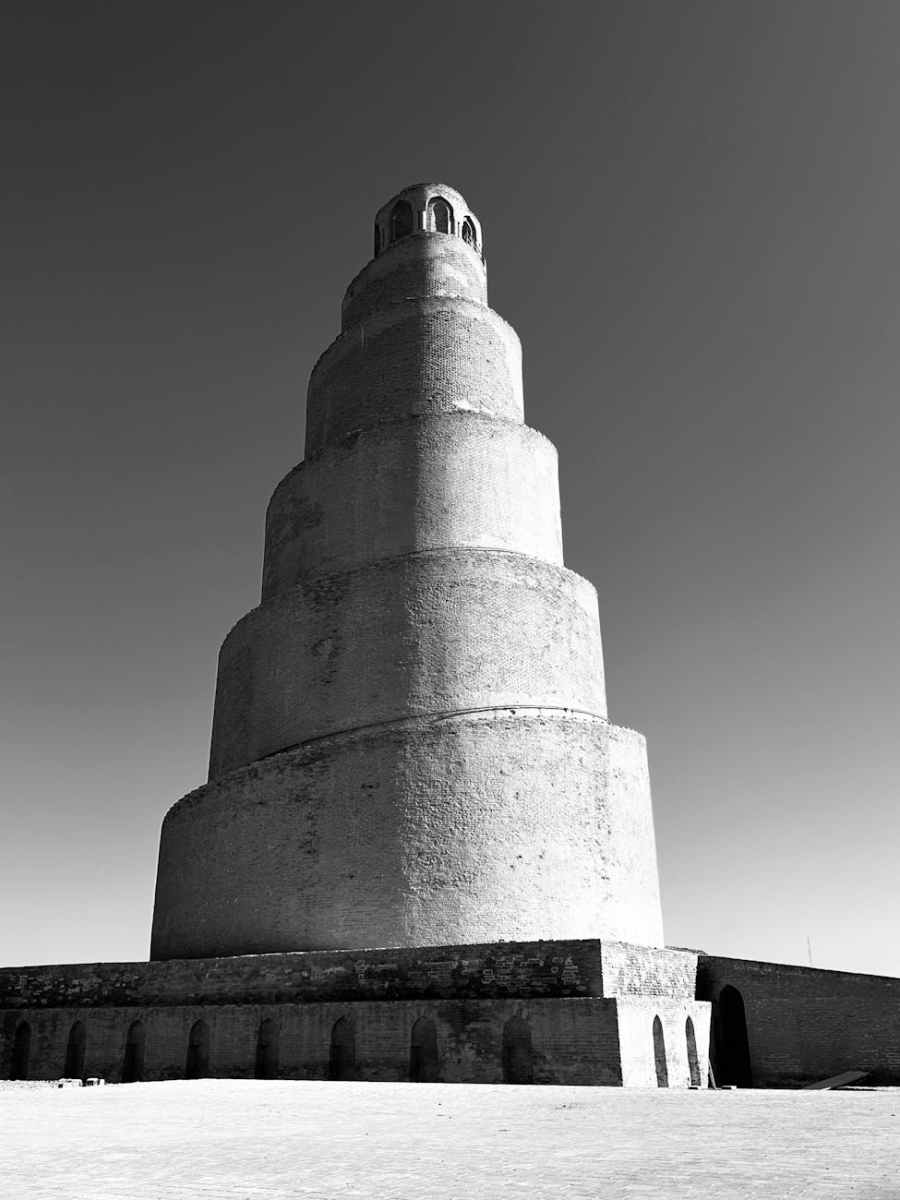
The Blessing of Babel

Sermon for the Day of Pentecost

Click here for the biblical readings

There are people in this world who enjoy a good fight, but I am not one of them.

I tend to enjoy conversations more when people with differing opinions can come together on some kind of common ground. As a result, I try to look for that common ground whenever I find myself in a debate with someone. I think that, if we can just identify the core values on which we agree, then we will see that we don’t really disagree, and we can work out the minor details of whatever differences we appear to have.

I imagine that I am a typical midwestern Episcopalian in this respect. We are nice people. We don’t go in for loud fights about rigid dogmas. We like everyone to get along. Our liturgical church tradition allows for a great diversity of theological interpretations. After all, we are descended from the Church of England, the land of good manners, so politeness is in our DNA.

Most of the time, this tendency serves us well. There are times, however, when it doesn’t. When I worked as a chaplain, I once had a patient who was a very bitter and bigoted man. He would rant for hours and use all kinds of ethnic slurs against the groups of people he didn’t like.

In particular, he believed that Hispanic people “would never fully integrate into American society” because they were too different from white people. The funny thing, though, is that this patient didn’t realize that I have one parent from Philadelphia and another from San Juan, Puerto Rico. With my light-colored skin and English last name, he assumed that I was just another white guy like him, but in reality, I am half-Hispanic. Our family integrated so well into “American society” that the dividing line between cultures ran right through the middle of my own body.

I could have said something about this to my patient, but I didn’t. This was partially because healthcare chaplains are trained to avoid controversial topics with patients, but it was also because I simply didn’t feel like dealing with it. By keeping silent, I allowed a part of my identity to be erased in the interest of keeping the peace.

I sometimes wonder what would have happened if I had politely mentioned the truth about my ancestry to my patient. Maybe it wouldn’t have changed anything at all, but then again, maybe that might have been an opportunity for the Holy Spirit to open up an avenue for growth in this man. I will never know because he passed away before I got to do another visit with him.

There are all kinds of ways that people build walls of protection around themselves. Sometimes, it takes the form of a hostile attitude that pushes other people away. Sometimes, as in my case, it takes the form of polite silence, with a smile and a nod. Sometimes, as in the case of today’s first reading from the book of Genesis, it takes the form of a literal wall around a great city and its mighty tower.

The legend of the Tower of Babel is a cautionary tale about the downside of human progress. The human race, as we read in the text, settled in the land of Shinar and spoke a single language. According to most traditional interpretations, God felt threatened by human progress, so they punished the people by confusing their languages and scattering them across the face of the earth.

I find this interpretation unsettling. Human progress, after all, is largely a good thing. In the last hundred years alone, humanity has cured diseases, ventured into outer space, and reduced extreme poverty to a fraction of where it was in previous generations. On the other hand, we have also continued to pollute the land, water, and air of our planet, constructed nuclear bombs with the power to destroy entire cities, and committed cold-hearted acts of genocide with industrial efficiency, as we did in the Holocaust. Progress, it seems, is a double-edged sword.

In the beginning of the biblical story, when God first created the heavens and the earth, they invited humanity to “be fruitful and multiply and fill the earth” (Genesis 1:28). But humanity, it seems, had another idea. They preferred to remain stationary, centralize power, and maintain a homogeneous culture in a walled city. This was the opposite of what God intended for the human race. God had made a huge planet for humanity to explore, with all kinds of diverse life-forms and creatures. God meant for the human race to be explorers, but we settled for being settlers in the place where we were.

This is the real reason why God confused the languages of the people of Shinar at the Tower of Babel: not to punish us, but to push us out of the nest and into the wide world. Diversity of language and culture is not a curse, but a blessing. It calls us out of our comfort zones to become the kind of people we were always meant to be.

Fast-forwarding to this morning’s New Testament lesson, from the Acts of the Apostles, we read about the day of Pentecost, when the Holy Spirit descended upon Jesus’ disciples and allowed their message to be heard and understood by people of many languages. Some interpretations of this passage have understood this miracle as a reversal of what happened at the Tower of Babel. The confusion of languages was resolved by the movement of the Holy Spirit.

Once again, though, I find this interpretation unsettling. It is based on the former assumption that what happened at Babel was an act of punishment. But, if I am correct in thinking of the diversification of languages as a blessing, then what happened at Pentecost is a fulfillment of that original blessing. Under the inspiration of the Holy Spirit, the people were able to discern a single message that was being communicated through multiple languages. Underneath the diversity of cultural expressions was a common thread of understanding: One Spirit speaking one message in many different ways. This interpretation of the Tower of Babel and the Day of Pentecost has profound implications for how we practice our faith as Christians today.

We live today in a world that is both more connected and more isolated than ever. Through the miracle of telecommunications, we have the ability to talk to people on the other side of the world in real time. Through the magic of the internet, we have access to a vast supply of information that previous generations couldn’t even dream of. However, our human tendency to gather in homogeneous groups of people who think alike, look alike, pray alike, vote alike, and love alike has led us to seek shelter from the vastness of the universe in echo chambers of people who will only confirm what we think we already know.

Kindred in Christ, I think it is past time for us to reclaim the double blessing of Babel and Pentecost in our own day. The price of remaining isolated in sheltered towers of like-minded individuals is nothing less than the survival of our species itself. As the great American intellectual Benjamin Franklin once said, “We must all hang together, or assuredly we will all hang separately.”

God is once again calling us to discern the voice of the one Spirit speaking in diverse tongues. What this requires of us is that we listen intently to the voices of our neighbors who speak different languages, practice different religions, vote for different candidates, and love different partners than we do. It requires also that we speak courageously, tolerantly, and lovingly from our own perspectives on these issues.

Let us not hide in fear behind walls of hostility or politeness, when it comes to the questions that matter most, but “speak the truth in love” (Ephesians 4:15) so that we might discern the voice of the one Spirit who speaks through many languages. Let us place our faith in God, who inspired St. Paul to write:

“There are varieties of gifts but the same Spirit, and there are varieties of services but the same Lord, and there are varieties of activities, but it is the same God who activates all of them in everyone. To each is given the manifestation of the Spirit for the common good.”

(1 Corinthians 12:4-7)

Beloved kindred, let us not give way to the cynicism of this age that despairs of finding common ground and sets humanity on a common course toward oblivion. Let us instead place our faith in Christ, who came that we “may have life and have it abundantly” (John 10:10). Let us take the risk of speaking our truth and listening with love, that we too might hear the voice of the one Spirit who speaks in many ways.

Amen.

Moments of Clarity

Sermon for the Feast of Pentecost

Click here to read the biblical text.

This morning, as we celebrate the Feast of Pentecost, we heard a story from the book of Acts where the Holy Spirit descends upon the gathered community of Jesus’ disciples after his resurrection and ascension. The majority of sermons on this passage focus on the first part of the story, where the really interesting and dramatic depiction of the Spirit’s arrival takes place. But I want to focus our attention this morning on the much-neglected second half of the story, where St. Peter stands up and interprets what is happening to the people around him.

The events of that day were confusing, to say the least. There were reports of inexplicable wind and fire. People were suddenly able to speak fluently in previously unknown languages. The crowd didn’t know what to make of it. The most rational explanation was to dismiss the pandemonium as a whole lot of drunken nonsense.

But that’s when Peter got up and began to offer some perspective about what was going on. Like any good Christian, he begins by setting these seemingly random events in the context of Scripture. Citing a passage from the book of Joel, Peter showed the crowd how it had always been part of God’s plan to “pour out [the] Spirit upon all flesh”: male and female, young and old, slave and free. We are, all of us together, the temple of the Holy Spirit.

What Peter does here is tie together current events, recent history, and the biblical text with the cord of the Spirit. He showed them how everything that was happening around them was not in fact a series of random events, but the unfolding of the divine plan in history.

Peter’s explanation of current events in the context of the biblical story is a perfect illustration of the term prophecy.

Words like prophet and prophecy have been misinterpreted and misunderstood in Christian history. For many people, prophecy has become a kind of fortune-telling about the imminent end of the world. Popular authors scour the book of Revelation for clues about when and how Christ will return to earth. When many people think of prophets, they conjure up images of mysterious, occult figures like Nostradamus, who claim to have special, insider information about the end of days.

It will come as no surprise to most of you that I think these so-called “prophecies” are absolute and total nonsense. The historic Churchwholeheartedly affirms, in the text of our creeds, our belief in the second coming of Christ, the final judgment, and the resurrection of the dead, but we decline to speculate about the details of when or how those events will happen.

When the disciples asked Jesus himself about these things, he responded in no uncertain terms, “About that day and hour no one knows, neither the angels of heaven, nor the Son, but only the Father.” If Christ himself doesn’t know when or how it will happen, I think the rest of us can absolve ourselves of the responsibility for figuring it out.

So then, prophecy, in the biblical sense, has nothing to do with predicting the end of the world. To the contrary, it has everything to do with interpreting the present.

Peter interpreted current events to the people from a spiritual perspective. He brought clarity to their confusion and reality to their delusion. This is the work of prophecy in the world. It is a gift of the Spirit that continues to this day. Here is one example:

I have a close friend in Canada who lives with Schizophrenia. Several years ago, when he suffered his first major psychotic break, he was in pretty bad shape. In a delusional state, he walked several miles on foot from the town where he lived to the nearest major city.

Once there, he was tired and bored and wished he had something to read. Reaching into his pocket, he found a pamphlet of Christian literature. As he looked over it, he thought to himself, “This is what I need!” So, right there in the middle of the street, in downtown traffic as the horns of frustrated commuters surrounded him, he knelt down and prayed.

And as he prayed, something remarkable happened: he had a moment of clarity. He realized that something was wrong in his brain and he should go home and get help. So, he turned around and walked the many miles back to his house. When he got there, his mother was worried sick. The police had arrived and were trying to locate him. My friend walked through the front door and said to them, “Hi. I am a danger to myself and others. I need help. You should take me to the hospital.”

Today, I’m happy to report that my friend went to the hospital, stayed there, and got the help he needed. Today, he continues to lead a meaningful life with the help of medication and therapy. And beautiful thing is how it all began with this brief moment of clarity in the middle of downtown traffic.

This personal story is just one example of the many ways in which the Holy Spirit continues the ministry of prophecy in the Church today.

It also continues in the Church’s ministry of Word and Sacrament. Every Sunday, before we read from the Scriptures, the priest recites a short prayer called a Collect. This prayer (the Collect of the Day) highlights the theme of the readings or the liturgical season. One of my favorite Collects from the Book of Common Prayer is the one for Proper 28, which we recite each November:

Blessed Lord, who caused all holy Scriptures to be written for our learning: Grant us so to hear them, read, mark, learn, and inwardly digest them, that we may embrace and ever hold fast the blessed hope of everlasting life, which you have given us in our Savior Jesus Christ; who lives and reigns with you and the Holy Spirit, one God, for ever and ever. Amen.

The Book of Common Prayer, p. 236

We pause to pray before reading the Scriptures each Sunday because we depend on the Holy Spirit’s insight in order to properly understand them. 

Episcopalians call the Holy Scriptures the Word of God, not because we think the Bible is an infallible source of historical facts, but because we believe that

“God inspired their human authors and because God still speaks to us through the Bible.”

The Book of Common Prayer, p. 853

In a similar way, the Spirit’s ministry of prophecy continues in the Church through the Sacrament of the Eucharist. In the Great Thanksgiving, the prayer we say before receiving Communion, the priest recalls the saving deeds of Christ and tells again the story of the Last Supper. She then calls upon the Holy Spirit to descend upon us and upon the physical elements of bread and wine, so that our celebration of this meal might be a Communionin the Body and Blood of Christ. 

We do not believe the Eucharist to be a mere memorial of past events. We believe Christ is really, truly, and spiritually present in this Sacrament, therefore we need the Holy Spirit to open the eyes of our hearts, so that we can receive his Body and Blood by faith as we partake of the physical elements of bread and wine.

Of course, the Scriptures and the Eucharist areby no means the only ways that the Spirit continues to work in the Church. I could keep going about Baptism, Confirmation, Ordination, Reconciliation, Matrimony, and Anointing. All of these are ways that the Holy Spirit continues to work in the life of the Church, but we would be here all day if I went into detail about each of them.

The Holy Spirit works in our lives outside church as well. I already spoke about my friend’s “moment of clarity” in the midst of a psychotic break. Many others, especially those who are in recovery from addictions, can tellabout similar moments when they decided it was time to get clean and sober. Most of them describe this moment as pure grace: that clarity came to them, not from them. They say it felt like something (or someone) was speaking to them, but without words. Not all of them are ready to believe that it was “God” who spoke to them, but you can visit any Twelve Step recovery meeting in this town and find people there who say, “We came to believe that a power greater than ourselves could restore us to sanity.” I, personally, have no trouble affirming that this too is the work of the Holy Spirit in people’s lives.

The Holy Spirit is all around us and within us, continuing the ministry of prophecy today: gifting us with moments of clarity in the midst of our confusion. The Spirit is at work today in the priest celebrating at the altar and is also at work in the alcoholic struggling for one more day of sobriety (and sometimes, the Spirit works both of those things at the same time, in the same person). The Spirit is at work today in the friendly usher who joyfully greets worshipers on their way into church and is also at work in the sceptic who barely scraped together enough faith to make it to church this morning (and sometimes, the Spirit works both of those things at the same time, in the same person).

The Spirit is at work today, confronting us with moments of clarity and leading us to let go of our delusions. The Spirit is at work today, inviting us to follow where Jesus leads and to trust that our life (as individuals, the Church, and the world) is not a series of random events, but the unfolding story of God’s love for us.

Whoever you are, and wherever you are on life’s journey, know this: the Spirit is at work in you today. Trust this and remember that you are loved.