Showing Up When You Can’t Take Control

Sermon for the fourth Sunday of Advent, Year A.

The text is Matthew 1:18-25.

When my wife and I were in seminary, there was this Chinese restaurant that we liked to eat at. And at this restaurant, there was this spicy peanut noodle soup that I absolutely adored. But of course, we couldn’t eat there all the time because we were a couple of broke seminary students. So I decided, I’m going to try to figure out how to make this at home.

So I looked up some recipes, bought some ingredients, and decided I was just going to try and wing it. We had the noodles and the vegetables, of course. But the real kicker was chili oil, milk, and peanut butter. That’s how you got that nice sauce.

So, I was putting it all together and I thought to myself, “The peanut flavor in that soup was pretty strong, and this doesn’t seem like a lot of peanut butter. I better add some more to be safe.” So I did.

But what I ended up with was not so much soup as soggy clumps of peanut butter laced with noodles. And of course, it was completely inedible.

I got myself in over my head. And I learned that day that enthusiasm cannot make up for the fact that I have no idea what I’m doing.

It’s funny when the stakes are low.
It’s harder when they’re not.

Sometimes in life, we get in over our heads with something that really matters, and still, we have no idea what we’re doing. We care, but we’re clueless.

Most painful of all are those times when we get in over our heads with something that’s happening to someone we love, and we have no control over the outcome. We want to step in, help out, take charge, and fix it. We figure if we’re smart enough, committed enough—if we just love them enough—we can manage the outcome and stop the situation from getting messy.

But real life doesn’t work that way. Other people’s lives are not problems to be solved, no matter how much we love them. We can’t control who they are, what they go through, or how their story ends. It’s their life. They have to live it—even if we’re pretty sure we could do a better job living it for them.

All we can really do is show up and stand with them while they go through it. And that gap—that gaping chasm between love and control—is one of the most uncomfortable places a human being can stand.

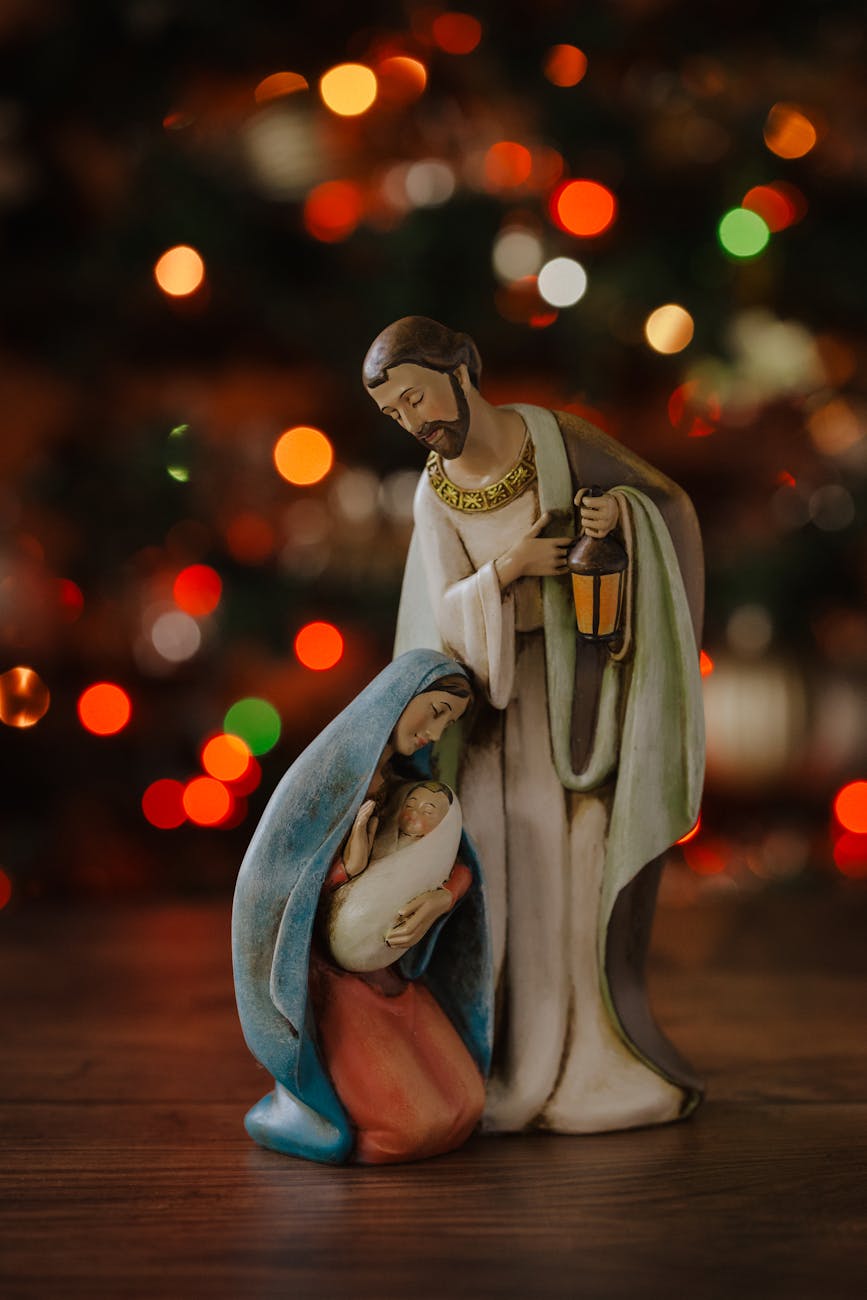
And it’s exactly where St. Joseph is standing in today’s Gospel.

The story begins with our buddy Joe finding out that his fiancée, Mary, is pregnant. And for reasons that were probably explained to you in biology class, Joe is pretty sure that he is not the father. So, what’s a guy supposed to do in a situation like that?

The text of Scripture tells us that Joseph was a righteous man. And that’s important. He’s not reckless, cruel, or indifferent. He’s just a guy trying to do the right thing in a situation that he didn’t choose and doesn’t understand.

He’s caught between the competing goods of compassion and law, love and responsibility, mercy and obligation. He’s hit the limit of what he can manage. And it’s there, in the stunned silence of that moment, that God finally gives him the answer he’s looking for.

It’s not a full explanation or a long-term strategy, or even a promise that everything’s going to work out okay. What it is is something much quieter and more grounding.

The first thing Joe hears is his name: “Joseph, son of David.” Before he’s told what to do, he’s reminded who he is. Identity before instruction.

Joe is reminded that he’s not just some working-class bumpkin. He’s the descendant of kings. In modern language, we might render “Joseph, son of David” as “Joe Davidson.” And we can imagine his dad saying to him, “Hey, Joe. Buck up there, kiddo. I know you’ll figure this out, because you’re no chump. You’re a Davidson. And I believe in you.”

We all need to hear that sometimes.

The second thing the angel does for Joe is name what he’s feeling. The angel says, “Do not be afraid to take Mary as your wife.” And that’s important too.

So often, in the midst of a crisis, it’s easy to get caught up in what’s happening on the outside and forget to pay attention to what’s happening on the inside. The problem is, when we do that, we’re still being controlled by our emotions—it’s just happening unconsciously. So we’re just reacting.

The better way is to pause, take a breath, and pay attention to what’s happening inside, so we can choose to respond from our deepest morals and values rather than just reacting emotionally. We have to be aware of our emotions before we can do that.

And that’s what the angel does for Joseph. He’s not shaming it. He’s just naming it. “Joe, you’re afraid. Anybody would be in your shoes. But now that you know that, you don’t have to let it control you.”

Fear is not failure. It’s just a part of life. But if you can stay aware of it, Joe, you can stay awake and stay present with yourself and with Mary, because she needs you right now. She doesn’t need you to fix it. She needs you to show up and listen and stay engaged with her while this important thing that God is doing is still working itself out in her life.

Joe, that’s your job. That’s your role in all this. Don’t try to manage the mystery. Just stay present to it. Because what’s coming to birth through her is nothing less than Emmanuel, which is Hebrew for “God is with us.”

And that’s true. God is with us—here and now. Not after everything makes sense. Not after the crisis has passed. Not after the fear goes away, but right here and right now. In the mess. In the uncertainty.

Later on, when Joe woke up from the dream where all this happened, he woke up to a world where nothing had changed—and yet, everything had changed. The future was still unclear. The risk was still real. And poor old Joe still didn’t have the answer to the big questions.

But what he did have was the next step. The choice to relinquish control over the story and just show up in it instead.

And that kind of faithfulness is not the kind of thing you can learn overnight. It takes a lifetime.

For me personally, the place where I’ve had to learn that lesson over and over again is with my family, and especially my kids. They say that parenting doesn’t come with an instruction manual, and boy, they’re right.

Just when I think I’ve got one stage of my kids’ lives figured out, they go ahead and move on to the next one, where once again I find out that I have no idea what I’m doing.

The first time it hit me, I was standing in a hospital parking lot the day after my first child was born, and my task was to install a car seat for the first time. It hit me that I was now responsible for the life of another human being, and I was in way over my head.

I understand when people say they don’t feel ready to have kids, because the truth is, you’re never ready. You just take it as it comes and do the best you can. So I wedged my knee into that hard plastic, yanked the seatbelt through the loops, and did what I guess was an okay job—because we made it home from the hospital in one piece.

It was the first time, but certainly not the last time, that I felt that sense of panic.

As time went on and the kids grew up, we dealt with new challenges as they came to us—homework, friendships, drama, dating, breakups. Each stage of life offered something new that my wife and I were not prepared for. Our responsibility kept increasing, and our certainty never quite caught up.

This week, that same child for whom I installed the car seat told us that what he wants to do over his Christmas break is take a day trip to Chicago by himself. He showed us his plan of where he wants to go and what he wants to do. He’s got all the train schedules and the phone numbers. He’s ready, but his mother and I are not. And yet, we are taking that leap of faith anyway.

What faithfulness often looks like in real time is not confidence or control, but the choice to stand alongside a life that is unfolding at its own pace and in its own way. It takes courage. And I’ll let you know how it goes, because I don’t know yet.

Earlier this week, many of us read about another act of courage and faithfulness that took place during the massacre at Bondi Beach, Australia, where several of our Jewish neighbors had gathered to celebrate the first night of Hanukkah. In the midst of the carnage, a Muslim man named Ahmed al-Ahmed, “in the name of conscience and humanity,” ran toward the shooter and wrestled the gun away from him, taking five bullets in the process.

He did it to protect people of a different faith and culture from his own—people he didn’t even know. And in so doing, Ahmed al-Ahmed demonstrated to the rest of us that the faith of Joseph is still alive in the world today: the courage not of control, but of presence; the courage to step toward life even when the outcome is unclear.

That kind of courage is real, and it is still available to us today.

Kindred in Christ, there are moments in life when all of us are asked to stand alongside people we love in situations we cannot control.

Where is that happening for you today?

How are you being asked to protect without possessing, to care without controlling?

Where might faithfulness look less like fixing and more like staying?

Joseph shows us how faithfulness sometimes means showing up when walking away would be much easier and much safer. Joseph shows us how courage sometimes means staying engaged when we cannot manage the outcome of events.

That is the courage and the faith that St. Joseph holds before us in today’s Gospel.

May we also have the grace to recognize that courage when it is asked of us, trusting that God is with us even when the way forward is not yet clear.

Amen?

The Winnowing Wind

Sermon for the Second Sunday of Advent, Year A

Click here to read the biblical passages.

So, we are now into that time of year when everybody hunkers down to watch their favorite holiday movies. Some people like It’s a Wonderful Life. Some people like the Hallmark Channel, but I only count that one as one movie because they all have the same plot. (No offense, I’m just preaching the truth.) Some people like Die Hard with Bruce Willis. Instead of deck the halls, he likes to deck the terrorists. But for me personally, there can be only one. And it’s The Muppet Christmas Carol. If you haven’t seen it, I highly recommend it. Because not only is it absolutely hilarious because of the Muppets, but Michael Caine, as Ebenezer or Scrooge, is just (*) chef’s kiss perfection. And finally, it’s actually one of the more faithful renditions of the classic novel by Charles Dickens. Most of us know the story already. Ebenezer Scrooge is a grouchy old miser, who gets visited by three spirits on Christmas Eve. The ghosts of Christmas past, present, and future. And through these visits, Ebenezer comes to a greater understanding of himself in order to make some necessary changes in his life. It’s a story about personal transformation, and that’s the exact same theme we find in today’s gospel.

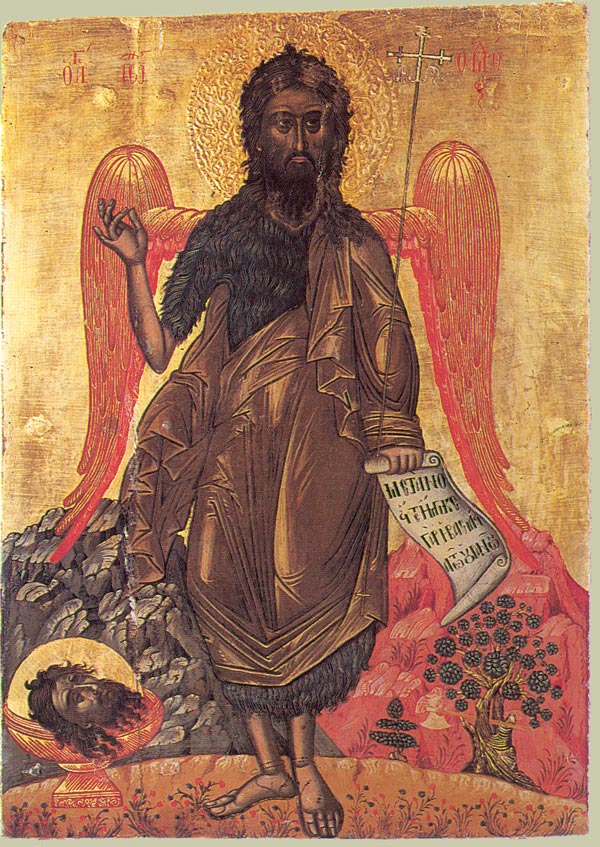
The passage focuses on the ministry of St. John the Baptist, and as you may know, John could be more than a little intense, like camping. He walks in screaming,

“Repent, for the kingdom of heaven has come near,”

calling people names, and talking about pitchforks and unquenchable fire. That’s why he’s called John the Baptist (because if he was John the Episcopalian, he would have been much more polite about the whole thing). But he wasn’t polite. He was a prophet. And the message that God spoke through this prophet was a pretty direct one.

I think it might help if we were to unpack that message just a little bit. So, first of all, we hear that word repent, which makes a lot of us think about those angry preachers we see screaming and waving a Bible around on TV. We think that to repent means to feel guilty or ashamed, but that’s not actually what it means. In Greek, the word is metanoia, coming from meta, meaning “change,” and noia, meaning “mind.”

So in the language in which the New Testament was written, the word repent actually means, “to change your mind.” Anybody here ever change your mind about something? It happens.

It makes sense to change your mind when you get new information. The poet Maya Angelo said it beautifully,

“Do the best you can until you know better. And then, when you know better, do better.”

That’s what repent means. It’s not easy, but it also has nothing to do with guilt or shame. And that’s the core of John the Baptist’s prophetic message.

He tells people to

“bear fruit worthy of repentance.”

This has to do with how they live their lives. This is what Maya Angelou was talking about: “When you know better, do better.” No need to wallow and shame. Just learn from your mistakes.

After that, John starts to get really deep, but we miss what he’s saying if we get stuck on that idea of punishment and shame. John says,

“I baptize you with water for repentance, but one who is more powerful than I is coming after me. I am not worthy to carry his sandals. He will baptize you with the Holy Spirit and fire.”

Okay. I want you to remember those words: “Holy Spirit and fire.” They’re important. Specifically, I want you to remember that the Greek word for spirit is the same word they use for wind. So what John just said to the people is that the one coming after him (that’s Jesus) will baptize them with sacred wind and fire. I know that sounds weird, but stay with me because it’s about to become important.

John says,

“his winnowing fork is in his hand, and he will clear his threshing floor and will gather his wheat into the granary, but the chaff he will burn with unquenchable fire.”

Couple of unfamiliar terms in that sentence. They are agricultural terms, and I’ll deal with them in reverse order. First for us, and second for John, is the term chaff.

Chaff is a part of the wheat plant. It’s a kind of husk that protects the grain while it’s still growing on the stalk. It’s very important, because without it, the grain would be vulnerable to predators and the elements. So the chaff isn’t bad, it’s necessary.

The only problem is that it’s not very tasty or nutritious. So, if you want to harvest that wheat and bake bread, you have to get rid of the chaff first. That’s where winnowing comes in.

Winnowing is another agricultural term. After the farmers would harvest the wheat, they would heat it up over a fire, which would crack open the husks that surrounded and protected the grain. And then the farmers would take their winnowing forks and sift the wheat by tossing it up into the air, letting the wind blow the tough husks away and allowing the delicious and nutritious grain to fall back to the earth, where it could then be collected into baskets, and later baked into bread.

So, the thing to remember about chaff is that it’s the part of the plant that protects the grain while it’s still growing, but no longer serves the purpose of what the grain is meant to become. That’s the winnowing process, if we’re talking about wheat, and it’s also the repentance process if we’re talking about us, and using the word repent in the way that it was originally intended.

That’s what I see happening in Ebenezer Scrooge, throughout the story of A Christmas Carol. Our friend Ebenezer was taken on a journey through his childhood and youth where he saw how he had used study, work, and money as a shield to protect himself from the rejection that he experienced from his family and friends.

His skills made him very successful as a financial manager, but they left him empty when it came to the really important and valuable things in life. Miserliness for Ebenezer was like the chaff that protected the grain while it was still growing, but it was also the very thing that kept him from becoming the person he was meant to be. The work of the Holy Spirit in his life, the wind and the fire, was to help him let go of his old protective shell and embrace the truth of who he really was in God’s eyes, and I think the same thing is true for each and every one of us.

We all have old habits or beliefs that hold us back from living authentically as our truest and best selves. We might think that staying thin and beautiful is the key to a long and happy marriage. We might believe that next drink might make us the life of the party. We might wonder whether we will finally feel acceptable in God’s eyes if we could just pray the gay away. But none of these things are true. They are all chaff, and the work of the Holy Spirit in your life is the work of God, helping you to like yourself just the way you are and living that truth boldly and bravely in the world, just as God intended for you.

That’s what winnowing means. That’s what repentance means. And that is the message of St. John the Baptist for us in today’s gospel and in this season of Advent.

Kindred in Christ, I pray that you will come to know this message more fully for yourself during this holiday season, and that you will bear fruit worthy of changed minds by loving yourself, your neighbors, and God more authentically. When we finally come to that blessed celebration of Christmas, I pray that you will see the light of Christ being born in you in a new way, so that you can be that light for others and let your light shine for all to see.

Staying Awake

Sermon for Advent 1, Year A

Click here for the biblical readings.

We were supposed to gather at church today. Plans were made. Schedules were set. And now a storm has rearranged all of it. The roads aren’t safe. The building is closed. And here we are instead—in living rooms, kitchens, basements—still together, but not in the same place.

It’s not the end of the world. But it is the breaking open of the illusion that everything is under our control. We make our plans. We set our calendars. We line up our routines. And underneath it all is the unspoken hope that if we stay organized enough, life will stay predictable. But life rarely cooperates with our plans.

When Jesus says in today’s gospel, “No one knows the day or the hour,” that planning part of ourselves feels the tension right away. Not knowing feels dangerous. Change feels risky. We want a roadmap. We want signs. We want time to prepare.

But underneath that need for predictability is something even more tender: the fear of what might be revealed if the surface of things were ever to crack. Many of us carry the quiet suspicion that the order we see every day is fragile—that if it gives way, what’s underneath will be dark and dangerous. So we work hard to keep everything looking normal. And when the sense of normal is threatened, fear rises fast.

Most of us know that feeling. A weird sound coming from the car. The boss asking, “Can I see you in my office?” A phone call that begins with, “Your child has been in an accident…” A moment ago everything felt stable, and now suddenly it doesn’t.

That’s what Jesus points to when he talks about the days of Noah. People were eating and drinking, marrying and building their lives. Ordinary life. But ordinary life wasn’t able to hold together. It eventually fell apart, as all things do.

Was it the end of the world? In some ways, yes. It was the end of the world, as they knew it. But Jesus hints at a deeper truth. Not about the end of the world, but about what comes after it.

We often fear that if the surface of life ever falls apart, what comes next will be a nightmare. When our carefully constructed order gives way, what we meet first often feels like chaos. But after that first rush of chaos, there is something else.

Today’s gospel reading only hints at what that might be, but our first reading, from the book of Isaiah, dares to name it:

Isaiah sees the nations of the world gathering together instead of marching against each other. He sees people laying down their weapons because they have learned a better way to live.

Swords become plowshares. Spears become pruning hooks.
What once took life now gives life. What once drew blood now grows bread.

That is the apocalypse beyond the apocalypse. Not just the exposing of what happens when things fall apart—but the unveiling of what is trying to be born. A world no longer organized by fear, but by learning. By shared life. By the slow conversion of violence into nourishment.

We see the same pattern in the natural world all the time. In the hollow of a fallen log, an animal makes her home. From the remnants of a supernova come the building blocks of life itself.

We might wish for a world where everything is under control and nothing is chaotic. We might be afraid that, in reality, nothing is under control and everything is chaos. But the fact of the matter is that neither of those things is ultimately true. Life isn’t completely chaotic, but neither is it completely under control. Life grows in the creative tension between chaos and order. And over time, it keeps leaning toward connection. Toward relationship. Toward more belonging, not less. Faith dares to say that this same love is what’s holding the whole universe together.

That’s why Jesus can say, “Stay awake,” without meaning, “Be afraid.” Staying awake doesn’t mean scanning the horizon for disaster. It doesn’t mean planning for every possible contingency. Staying awake means paying attention to what really matters.

And that kind of waking up doesn’t just happen in dramatic moments. It happens in the small ones. It’s the pause before snapping back at someone. It’s the choice to listen instead of trying to win. It’s the moment when we decide whether we’re going to lead with fear—or with love.

Staying awake isn’t about knowing what’s coming. It’s about choosing how to live in alignment with what really matters.

So—here we are. Not in the same room. Not in the way we expected to be. The storm has interrupted “the best-laid plans of mice and men.” Our illusion of control has already cracked.

And still, beneath it all, we are being held.

Even here, in separate homes. Even on an altered Sunday. Even in uncertainty. Beneath the inconvenience, there is care. Beneath the disruption, there is still connection. Beneath what unsettles us, there is love doing its quiet, steady work.

So our invitation this season is simple. Don’t cling in fear. Don’t shut down in despair. Stay awake to what matters. Choose what grows life. Trust what is deeper than the storm.

Amen?

The Better Angels of Our Nature

Sermon for the fourth week of Advent.

Click here to read the biblical text.

Our gospel on this last Sunday of Advent recounts the well-known tale of the Annunciation, where the archangel Gabriel announces to the Blessed Virgin Mary that she is destined to be the mother of Jesus, God’s Son. Over the past two millennia, this story has been told and retold so many times that it can be hard to comprehend its intended emotional impact. To modern ears, the Annunciation is a sweet and tender introduction to the even sweeter story of the Nativity. But can you imagine how it must have sounded to Ss. Anne and Joaquim, the parents of the Blessed Virgin Mary?

Biblical scholars estimate that Mary would have been about fifteen years old at the time of the Annunciation, a typical marriage age for young women at that time. As the father of a fifteen-year-old at this time, I can keenly imagine how Anne and Joachim must have felt when they first heard the news of Gabriel’s visit.

Mary: “Mom? Dad?”

Anne and Joaquim: “Yes sweetheart, what is it?”

M: “Umm… I need to tell you something. I’m pregnant and my fiancé Joseph isn’t the father.”

The biblical text doesn’t tell us anything about Anne and Joaquim’s reaction, but I imagine they probably felt angry and terrified at the same time, which is completely understandable. This news would have been the embodiment of their worst nightmares for their daughter. Also, what Mary had to say next probably didn’t help them feel any better. How would you feel if your teenage daughter hit you with this news and followed it up with a crazy-sounding story about angels and prophecies? I imagine them pacing the floor, rubbing their temples, and asking, “How could this happen?! What were you thinking?!”

At this moment, Anne and Joaquim probably felt their stomach dropping and their mind racing. This is the feeling of their sympathetic nervous system kicking into high gear. The amygdala in their brain was, flooding their bodies with adrenaline to initiate the fight or flight response. If you’ve ever had the experience of someone shocking you with big news, you can probably relate to what they were feeling.

Mary herself seems to have been quite confused by what was going on. The gospel text tells us she was “perplexed” and asking, “How can this be?” This too is a completely understandable reaction, given the circumstances. Here was a teenage kid, in way over her head, with almost no life experience to guide her.

The response I find most interesting is the one that comes from the archangel Gabriel. The first words out of his mouth are, “Greetings, favored one! The Lord is with you.” In modern language, I like to imagine that this is the equivalent of, “Congratulations!” The next thing Gabriel says is, “Do not be afraid, Mary, for you have found favor with God.” And finally, after explaining the situation, Gabriel ends by saying, “For nothing will be impossible with God.”

While the humans in this moment are understandably perplexed and freaking out, the angel is the only one responding from a calm place of acceptance and hopeful possibilities. 

In scientific terms, this is akin to the wonderful human ability for the prefrontal cortex of our brains to override the baser impulses of our fight/flight system. You’ve probably experienced this as well, such as those moments when some reckless driver cuts you off in traffic and you successfully resist the urge to run them off the road. You remember, in that moment, that you are going seventy miles an hour in a thousand pounds of metal. After an instant of panic, your rational faculties kick back in and you remember that going to jail will not remedy the situation. 

This is how God has designed our brains. We can choose how to respond when circumstances arise that are less than ideal. We can fly off the handle or we can take a deep breath. We can descend to the level of our basic instincts or we can appeal to “the better angels of our nature,” as President Abraham Lincoln so eloquently put it in his inaugural address of 1861.

The astounding truth of this biblical story, which emerges when we look past two thousand years of pious nostalgia, is that God has chosen to save the world through the unplanned pregnancy of an unwed teenage mother. “For nothing will be impossible with God,” as the angel Gabriel has said.

Whether one is talking about teen pregnancy, gun violence, or any other number of social problems that presently plague our society, a common refrain among religious people is that these things are happening because “we’ve kicked God out of our country.” But, if two millennia of Christian theology are to be believed (and I think they are), then this teen pregnancy is the exact place where God has chosen to be most present to our world. This realization should shape the way we choose to respond to pregnant teenagers and any other persons who find themselves in circumstances that are less than ideal. 

One of the collects at Compline, the nighttime office from The Book of Common Prayer, reads as follows: 

“Be present, O merciful God, and protect us through the hours of this night, so that we who are wearied by the changes and chances of this life may rest in your eternal changelessness; through Jesus Christ our Lord.”

BCP, p. 133

This prayer is immediately followed by the following prayer for mission: 

“Keep watch, dear Lord, with those who work, or watch, or weep this night, and give your angels charge over those who sleep. Tend the sick, Lord Christ; give rest to the weary, bless the dying, soothe the suffering, pity the afflicted, shield the joyous; and all for your love’s sake.”

BCP, p. 134

What I love most about these prayers, which are meant to be said just before retiring at night, is how they insist on the presence of God in the most troubling of times and call upon God’s people to participate in the mission of reconciling heaven and earth by caring for each other.

God is most present, not in sweet moments of peace and plenty, but in hard times of want and woe. God comes to us in our hour of need, often through the hands and hearts of caring people, and grows within us. The Divine Word takes on flesh, using the DNA of our own cells, so that we might be the hands and feet of Christ on this Earth. This is the message of Christmas.

The message of Advent, our season of unexpected pregnancy, is to care well for the Christ that grows within us by caring well for the Christ that grows within those around us.

Wherever we go in this life, we find ourselves as divinely favored people in the midst of unfavorable circumstances. We cannot control what happens to us, but we can control how we choose to respond to it. Will we fall prey to the demons of panic and despair? Or will we listen to “the better angels of our nature” and declare, as Gabriel did, that “nothing will be impossible with God”?

I have no doubt that you, during this holiday season, will find yourself in the midst of circumstances that are less than ideal. They may be as major as an unexpected pregnancy, a tragic loss, or a global crisis. On the other hand, they may be as minor as a burnt dinner, a delayed flight, or a traffic jam. Wherever you find yourself this Christmas, I encourage you to listen to “the better angels of your nature” by trusting in God’s presence, caring well for yourselves and each other, and responding to these crises, large or small, with the calm compassion of the archangel Gabriel, saying:

Greetings, favored one! The Lord is with you…
Do not be afraid… For nothing will be impossible with God.”

The Cold and Dark Season

This week’s sermon from North Presbyterian, Kalamazoo

Click here to see the bulletin of the liturgy, including the biblical text

After an unseasonably mild autumn, it’s finally beginning to feel like winter here in Michigan. The nights are getting longer and the weather is getting colder.

I love that the Church’s celebration of Advent happens to coincide with the onset of winter in the Northern Hemisphere. I take it as an apt metaphor for my spiritual life.

In spite of the commercial holiday hype, I have always been more of an Advent person than a Christmas person. Advent is about waiting in the darkness and the cold for God to show up, and when God finally does show up (at Christmas), it doesn’t look how I expected. Those expecting the “King of kings and Lord of lords” are met with a refugee baby born into poverty in a backwater village of an occupied country. It’s not what anyone expected, yet this is how God chooses to come to us.

I strongly suspect that I am not alone when I describe my spiritual life as “waiting in the darkness and the cold.” Popular conceptions of faith and spirituality focus on feelings of serenity, unshakeable commitment, and an immediate sense of God’s presence through dramatic events like visions and miracles.

But most who have seriously tried to live the life of faith will tell you that it’s not much like that at all. In fact, it’s mostly just a struggle. There’s an awful lot of waiting around involved, and in the internal space created by that waiting comes pouring all the junk of my ego, old habits, and false perceptions of myself. It’s not fun or particularly peaceful.

The benefits and blessings are certainly there for those who persevere, but they are often much more slow and subtle than we would like. So, why on earth would anyone put themselves through the trouble?

Because, to quote the novelist Gertrude Stein, “there’s a there there.” There really is something to it. One might call it “the peace that passeth understanding” or the presence of the Holy Spirit. This presence is often subtle and unexpected. Don’t blink, or you’ll miss it. Most of the time, I’m not able to accurately identify what God has been working in my life until after the fact. Looking back, I can sometimes put the pieces together and go, “Oh yeah… there’s a there there!”

Spirituality is a process that takes time to grow. I think that’s why Christ compares faith to a mustard seed: it’s not much to look at in the beginning and it doesn’t sprout all at once, but give it time and you will begin to see that it is a living, breathing, growing thing. It requires patience and a willingness to keep an open mind. The good news is that Christ is an experienced farmer who understands the slow, subtle ways of growth and refuses to give up on his struggling crops.

That is the lesson that St. John the Baptist is learning in today’s gospel.

John, as we know from last week, was a revolutionary prophet and a dangerous radical. He was among the first to correctly identify his cousin Jesus as “the Lamb of God, who takes away the sins of the world.” He understood the purpose of his whole ministry as preparing the way for the Christ.

Unlike the apostles and the crowds, John understood that the Messiah’s liberation of God’s people would be more spiritual than political. But he himself also had a few preconceived notions about what this would look like that turned out to be a little off-base. John believed that the Christ would finally come to “set things straight” in Israel. He would cleanse the people of their sin and get them back on track to having a healthy relationship with God. These notions were confirmed, in his mind, at Jesus’ baptism in the Jordan River. Here, finally, was the in-breaking of the Messianic age. Now things would really start to change… except they didn’t… at least, not right away.

Jesus turned out to be a more gentle Messiah than the one John was imagining. He led with grace, accepting sinners as they were and trusting that grace to do its slow, subtle work in their lives. He kept company with a rough crowd and seemed to condone their unseemly activities by his relative silence.

To make matters worse, things were not going particularly well for John. After speaking out against the personal life of the local puppet king, John was arrested and thrown into prison. Didn’t Jesus realize how bad things were getting? Wasn’t he going to do something about all this injustice? Wasn’t Jesus supposed to be the one who would baptize “with the Holy Spirit and fire”? So… where was that fire, already?

St. John the Baptist, like so many of us in this long, cold, and dark “Advent of the soul” (as my friend Renee calls it), was struggling with his faith. Let’s take a look at what he does about it:

When John heard in prison what the Messiah was doing, he sent word by his disciples and said to [Jesus], “Are you the one who is to come, or are we to wait for another?”

And how does Jesus respond to this question? With characteristic gentleness. He doesn’t berate or upbraid John for his lack of faith. In fact, he compliments him. He says to the crowd:

“What did you go out into the wilderness to look at? …A prophet? Yes, I tell you, and more than a prophet… Truly I tell you, among those born of women no one has arisen greater than John the Baptist”

Jesus praises his friend and cousin. John’s doubt does not reduce Jesus’ opinion of him one iota.

Too many of us feel afraid to engage with faith in the midst of doubt. We have this bizarre notion that doubt is the antithesis of faith, so it couldn’t possibly belong at church or in our conversation with Jesus. But I reject that idea outright.

Doubt is what makes faith possible. Without it, faith is nothing more than a blind acceptance of ideas that don’t ask anything of us. I don’t put much faith in the Law of Gravity because I simply accept it as a fact. It requires no imagination or personal commitment on my part. Faith in Christ, on the other hand, is of an entirely different order. Because I struggle with doubt in this area of my life, I have to dig deep and risk the very essence of my being on this mystery. It’s like doing a trust-fall exercise off the edge of the Grand Canyon. I have to give my whole heart, soul, mind, and strength to it. That’s why it matters to me, more than anything else in this world. None of that would be possible for me without the simultaneous presence of doubt. In the words of Episcopal priest Fr. John Westerhoff, “The opposite of faith is not doubt, but certainty.”

Christ understands this reality, which is why he is then able to be so gentle with John.

And John, for his part, does the perfect thing: he goes to Jesus with his doubts and asks the honest question that is on his mind.

Those of us, like myself, who find faith to be a constant struggle have a good friend in St. John the Baptist. He shows us how to come to Christ with our doubts and incorporate them into our faith and spirituality. Christ, for his part, is not scared of us or our struggles with doubt. Christ has the grace to accept us, not just in spite of our doubts, but with them. That is the good news that Christ has for us in today’s gospel.

And with that good news comes a call to respond:

Christ loves us just as we are, and loves us too much to allow us to stay that way.

After complimenting John (“Truly I tell you, among those born of women no one has arisen greater than John the Baptist”), Jesus invites him and us, by extension, to take the next step of faith:

“yet the least in the kingdom of heaven is greater than he.”

Now matter how much Christ loves us, and no matter how far we have come in the life of faith, there is always room to grow. There is always a next step to take in faith. That is what Christ is inviting us to do today: Not to be perfect or pretend that we don’t struggle with doubt, but simply to take that one, small, next step toward God.

Jesus has some very specific advice to John for how to do this:

“Go and tell John what you hear and see: the blind receive their sight, the lame walk, the lepers are cleansed, the deaf hear, the dead are raised, and the poor have good news brought to them. And blessed is anyone who takes no offense at me.”

Jesus invites John to open his eyes, ears, heart, and mind to what is happening around him. He asks him to pay attention. John, as we know, had some pretty specific ideas about what he thought the Messiah would be and do. When he didn’t see those things happening, his doubt momentarily got the better of him. The things he thought God should be doing were not getting done.

So Jesus very gently redirected his attention to the things that were getting done. It’s not as though Jesus was simply sitting down and twiddling his thumbs all day. Far from it:

“the blind receive their sight, the lame walk, the lepers are cleansed, the deaf hear, the dead are raised, and the poor have good news brought to them.”

God was doing something different from what John thought God would do, but that didn’t mean that God wasn’t doing something. Jesus invites John to take the next step of faith by setting aside his own preconceived notions and keeping an open mind. That’s what faith looks like in the midst of doubt.

Here in this Advent season, I believe Christ is inviting you and me to do the same thing.

It is so easy to stumble into old patterns of doubt and despair when life doesn’t go the way we think it should. We look around at the way things are in our personal lives/families/church/country/world and can’t help but wonder whether something has gone wrong. In the darkest and coldest times, it may even seem like God is absent. We may wonder, like John, whether this Jesus guy might not be everything he’s cracked up to be. We question whether the Christian life is worth all the effort.

In those moments, Christ comes to us with all the love and acceptance he gave to his friend John. He invites us to look around at all the good that is happening, instead obsessing over the things we wish were happening. It might feel like Advent, but the truth is that Christmas is already here: God is with us, meeting us in the cold and dark seasons of the soul, working for the good in our lives and world, and loving us with a love that will not let us go.

The Unquenchable Fire

Click here to read the service bulletin, including the biblical text

Introduction

There is a story of a young novice in a monastery who goes to his abbot and says, “Father, what can I do to attain Salvation?”

The wise old abbot responds, “As little as you can do to make the sun to rise in the morning.”

So the novice replies, “What then is the purpose of meditation and all our spiritual exercises?”

And the abbot says, “To make sure that you are awake when the sun begins to rise.”

I love this story because it does such a good job of getting right to the reason why we, as people of faith, put ourselves through the hard work of prayer and the rigorous demands of the Christian life.

Saved by Grace

As Christians in the Reformed tradition, we are fond of insisting that salvation comes to us by grace, as a free gift apart from our good works, ritual observance, and correct theology. We receive this gift by faith, but even that receiving faith, St. Paul says, is a gift from God, “so that none may boast.”

We sainted sinners and sinful saints are utterly incapable, either by works or by faith, of doing anything to make the light of Christ appear in our hearts or world. Like the young monk in the story, we can do as little to attain salvation as we can to make the sun rise in the morning.

Like the shepherds of Bethlehem in the Christmas story, we do not bring Christ to birth, we simply bear witness as the Word of God “takes on flesh and dwells among us.”

Exegesis

In today’s gospel, we encounter a man who understands intimately what it means to bear witness to the presence and activity of Christ in the world.

Radical Prophet

St. John the Baptist was a dangerous radical and progressive prophet whose task was to “prepare the way” for Christ’s first coming to earth. I call him a “radical” because of the Latin term radix, which means “root.” John was a powerful mystic. As the last prophet from the Old Testament era, his ministry was inspired, not by a particular school or tradition of rabbinic interpretation, but directly by God.

Religious traditions need prophetic renewal from time to time. Without direct experience of the divine, religions begin to calcify and get “stuck in their ways.” The Buddha played a similar role in the Hindu faith. We Protestants might point to Martin Luther and John Calvin as prophetic voices in 16th century Europe. In Judaism, there were many prophets who arose throughout the history of Israel. Prophets, as radicals, reconnect the faithful to the “root” of their faith in God. They are always “dangerous” to established authorities because they call into question “the way we’ve always done it” and remind us of our core commitments to God and neighbor.

This is exactly what St. John the Baptist is doing in today’s gospel. He calls the people to a renewal of their spiritual and political lives by announcing:

“Repent, for the kingdom of heaven has come near.”

Bearing Fruit

He has particularly harsh words for the Pharisees and Sadducees, the two major parties of established religious authorities in first century Judea. To them, John says:

“You brood of vipers! Who warned you to flee from the wrath to come? Bear fruit worthy of repentance.”

By “fruit,” John means the kind of changed life that a person leads when they have come into a deep relationship with God.

The religious leaders would have been understandably offended by such comments. They might point to their seminary degrees on their office walls. Or they might make reference to their traditional ancestry, which they trace back through the prophet Abraham in the biblical book of Genesis.

But John anticipates this defensive response. He says:

“Do not presume to say to yourselves, ‘We have Abraham as our ancestor’; for I tell you, God is able from these stones to raise up children to Abraham.”

In other words, John recognizes this ruse for what it is: a distraction from living the kind of life that God envisions for the covenant community. After liberating the Hebrews from slavery in Egypt, God said to them, in effect, “I want you to be a different kind of community from the nations you see around you. Old patterns of exclusion and oppression must not be present among you. I want the nations of the world to look at you, my people, and see what kind of God I am.”

But the people of Israel, like all peoples, were consistently unable to live up to this high standard. We read in the Old Testament just how often God’s people “missed the mark” and began to take on characteristics of Egypt, Canaan, and Babylon. They worshiped humanly constructed images and ideologies in place of God, exploiting the earth and their neighbors. This is why God continually sent prophets like John. They called the people back to what it means to be God’s covenant community on earth.

Facing the Consequences

When the people refuse to listen (which is most of the time), God warns them that this way of life (“Every man/woman for him/herself”) leads only to death and destruction. This is why John says:

“Even now the ax is lying at the root of the trees; every tree therefore that does not bear good fruit is cut down and thrown into the fire.”

Notice how John does not name God as the source of this destruction. We might be tempted to think of God as the primary actor in this event, but I think it would be just as legitimate to think of it as a natural consequence of our tendency toward selfishness and the violent ways of the world. God’s intention, in sending us the prophets, is to save us from this path of self-imposed destruction. If we refuse to heed this warning, God respects our decision by allowing us to face the consequences of our actions.

Wheat and Chaff

The good news is that there is another way. Even in the midst of our rebellion against God’s ways of peace, God is present and active. In first century Judea, God sent St. John the Baptist to prepare the way for Christ.

John says:

“I baptize you with water for repentance, but one who is more powerful than I is coming after me; I am not worthy to carry his sandals. He will baptize you with the Holy Spirit and fire. His winnowing fork is in his hand, and he will clear his threshing floor and will gather his wheat into the granary; but the chaff he will burn with unquenchable fire.”

At first glance, this image might seem like another warning of wrath and judgment. But it might help if we look more closely at John’s image of the Messiah as a farmer winnowing a harvest of wheat.

Wheat grains grow inside of a husk on a stalk, much like corn. In order to salvage the nutritious wheat, the husk must be removed. This is done by a process called “winnowing.” In the ancient world, farmers did this by setting the pods over a fire. The heat would crack the husks open and the wheat would fall out. Then the farmer would toss the pile in the air with a large fork. The wheat would fall through while the husks (called “chaff”) would be blown away by the wind.

Here’s the interesting thing: the wheat and the chaff are parts of the same plant. I take them, not as symbols of two different kinds of people (“good” and “bad”), but as two realities that exist within myself. I am, at the same time, both sinner and saint. There are good parts of me and bad, wheat and chaff.

Chaff is an essential part of wheat. It protects the precious grain while it grows on the stalk. Without it, the grain would be vulnerable to predators and the elements. But there comes a time when the chaff must be removed, or else the grain will never fulfill its destiny to make new plants or be ground and baked into bread. In the same way, we who live in this complicated world are a mixture of more useful and less useful parts. These parts of us must grow together for a time, so that we can become fully-formed, well-rounded people. We wrestle with these complexities and long for the simplicity of a life where only good remains forever.

When I imagine my destiny at the end of life, I imagine God taking those less useful parts of me and separating them from the goodness in me that reflects the divine image. I see divine judgment as the “winnowing” process, by which goodness is preserved and evil eliminated. Whatever is left at the end of this process is that which will live forever in God.

Unquenchable Fire

How will God accomplish this division of good and evil with us? John tells us quite clearly:

“He [Christ] will baptize you with the Holy Spirit and fire.”

This is directly related to the winnowing process. The Holy Spirit, the presence of God within us, is the winnower’s fire that liberates the good wheat from the chaff we no longer need in our lives. God is at work within us, transfiguring us day by day into the divine image and likeness.

And John reassures us with the good news that this inner fire of God is “unquenchable.” That is, all the chaff and sin within us is unable to snuff out the presence and power of the Spirit.

Kindled by Water

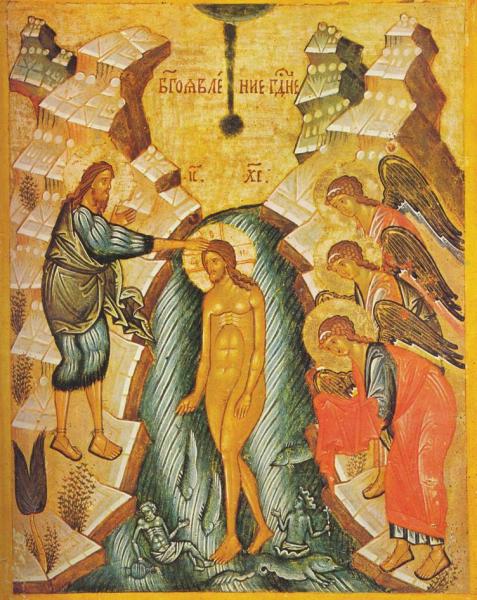
This fire was kindled in us, ironically, by water in our baptism. In that moment, when the benefits of Christ’s death and resurrection were applied to us, the Holy Spirit came to dwell in us in a way that cannot be undone. Baptism is not so much something that we do for God so much as something that God does in us. Baptism is the sign and seal of God’s pledge to save us and never leave nor forsake us.

Baptized Christians are part of Christ’s Body, and Christ loves us as dearly as we love the parts of our own bodies. He could not abandon us any more than one of us could cut off a hand or a foot. This is why John calls the fire “unquenchable.” We can resist the Spirit, but we cannot snuff her out entirely.

Application

The prophet invites us, in this Advent season, to “prepare the way” for Christ’s coming by cooperating with the energy of the Holy Spirit, who is already at work in us, separating the good wheat from the chaff we no longer need. We are invited to return to the roots of our faith and consider again what it means to be a member of Christ’s Body, the covenant community of God’s Church in the world.

This work is not something we do for God, but what God is doing in us. We cannot make Christ appear in our hearts any more than we can make the sun to rise in the morning. The good news is that Christ is already here, working God’s will in us through the power of the Holy Spirit. Our only choice is whether we will resist or cooperate with the work of the Spirit in our lives.

St. Paul writes, in his first letter to the Thessalonians:

“May the God of peace himself sanctify you entirely; and may your spirit and soul and body be kept sound and blameless at the coming of our Lord Jesus Christ. The one who calls you is faithful, and he will do this.” (1 Thess. 5:23-24)

This Advent, may we open our hearts to allow the fire of the Spirit to crack open our hard shells, and the wind of the Spirit to blow away that which we no longer need. May the water, wind, and fire of baptismal grace gather us once again into the barn of the Church, where we will dwell together in peace at Christ’s coming.

Telling Stories

This week’s sermon from North Presbyterian, Kalamazoo.

Click here to read the biblical text

Sermon text

One of the funnest (and funniest) parts of Thanksgiving dinner is when family and friends start sharing stories around the table. They often start with something like, “Remember that time Uncle Harvey…”

In our family, my wife and I have one that we never get tired of telling the kids. It’s the classic story of “How I met your mother… twice.”

I first met Sarah at a student conference in western North Carolina in the summer of 1999. We had a nice chat on a group hike, established that we had a mutual friend, shook hands, and parted ways. Four years later, I was getting onto a bus in Vancouver, Canada, having just moved there to begin seminary. The woman across the row from me struck up a conversation. We had a nice chat, established a mutual friend, and… suddenly both of us had a major case of déjà vu.

As it turns out, she was the very same person I had talked to four years prior. When life gives you a second chance like that, you take it. We began dating less than a month later and married before the end of graduate school.

People love to tell family stories like this, especially during the holidays, because they help to give our lives a sense of meaning and purpose. In a world that often seems so random and out-of-control, these stories give us a hunch that there is some other Will working itself out through our existence. They remind us that we are not alone in this universe and that life itself is meaningful and good. We never get tired of telling or hearing them.

Of course, these stories don’t just exist in our families. They are a major reason why we come to church. The Bible itself, even though it is a collection of many different stories, tells one Big Story that continues to shape and change our lives today.

The biblical story is that the infinitely loving God of the universe created the world and called it Good. When we humans, in our selfishness, turned away from God and each other and fell into slavery to sin, God did not abandon us. After centuries of reaching out to us through prophets and sages, God took on flesh and came to dwell among us in the person Jesus Christ. When we refused to listen to Jesus and tried to silence him by the violence of crucifixion and death, God summarily rejected our rejection by raising Jesus from the grave. Now, we who are baptized into Christ share the healing power of his resurrection and function with the world as his Body, his hands and feet, on earth until he comes again in glory. On that day, the dead will rise and the whole creation will be made new, as God originally intended, and governed with divine justice and mercy.

This is the story we Christians tell ourselves each Sunday in church. We hear it in the Scriptures and see it in the Sacraments. We leave the liturgy each week, fed with the Body and Blood of Christ, and are sent out into the world to be the Body of Christ. It cannot be understated just how important that mission is in this world, where life often seems so empty and meaningless.

Jesus talks about this Christian story in today’s gospel reading. Like any good story, this one has a beginning, a middle, and an ending. Today, Jesus is talking to us about the ending.

He starts by undermining two thousand years of Christian speculation about the end of the world. Look in the Religion section of any bookstore, and you will find multiple books claiming to have figured out the scoop on when and how the end times will take place. But Jesus says in this passage, “But about that day and hour no one knows, neither the angels of heaven, nor the Son, but only the Father.”

St. John Chrysostom, a bishop in the early Church, agrees with Jesus on this. He wrote that human beings “should not seek to learn what angels do not know.” Jesus does not give his followers any “insider information” on the end of the world. What he asks of them is far more difficult.

What Jesus asks of Christians is that we “stay awake” and “be ready” for history to reach its conclusion. This is important. Life on this planet often feels chaotic, empty, and meaningless. To the eyes of a person without faith, it seems like a random series of events that are just happening. Without a sense of purpose in life, we are wont to slip into a mindless pursuit of pleasure and avoidance of fear.

In Jesus’ mind, this state of existence is not unlike the condition of the world immediately before the great flood of Noah. He says, “For as in those days before the flood they were eating and drinking, marrying and giving in marriage, until the day Noah entered the ark, and they knew nothing until the flood came and swept them all away, so too will be the coming of the Son of Man.”

Another way of saying this is that it was “business as usual” for everyone until the moment when the rain began to fall. They were so caught up in their little plans and schemes, they didn’t realize that God’s great story was in the process of unfolding all around them. When the moment of truth came, they were not ready.

Jesus reminds us that the world does not revolve around us. The universe will not stop its ordinary operation to accommodate our plans, however great we think they may be.

The good news is that God has an even greater plan, and we are invited to play a part in it. Jesus invites us today to reorient our lives around God’s vision for the world. God’s dream is to renew the face of the earth so that it reflects the harmonious beauty that God intended for it to have at the beginning. God dreams of a world where the hungry are fed, the sick are healed, strangers are welcome, and sinners are forgiven. Jesus often referred to God’s dream as “the kingdom of heaven”. It is the one thing around which he oriented his entire life and ministry.

The work of the kingdom of heaven has been going on since the dawn of time. It began in earnest with the incarnation, life, death, and resurrection of Jesus Christ. It continues today through Christ’s Body on earth, the Church, and will draw to a conclusion at some unknown point in the future. It is God’s dream and Jesus is inviting us to be a part of it. We come to church each week and tell each other these stories in order to be reminded that this universe is no accident, and our lives are no random series of events.

This week, we begin the liturgical season of Advent, as we prepare to celebrate that beloved moment in God’s story when Jesus Christ, the Word of God, “took on flesh and dwelled among us.” But it is also a time when we look forward to Christ’s second coming at the conclusion of history. It is a time when we are invited to reorient our lives around the divine vision of a renewed creation, the vision for which Jesus lived, died, and lives again in us.

In this coming holiday season, let us not get caught up in our cultural patterns of materialism and greed. Let us also avoid the backward-looking nostalgia for the “good old days” of Christmases past. Let us instead look within and around us for the work that Christ is giving us to do in this world today. Finally, let us look forward to the day when God’s story finishes with a happy ending and all of creation joins in the song of unending praise to its Creator, Redeemer, and Sanctifier.

Let us pray.

“O Come, Desire of Nations, bind all peoples in one heart and mind; bid envy, strife, and discord cease; fill the whole world with heaven’s peace.” Amen.

The Unanxious Fig

The text for this week’s sermon is Luke 21:25-36

Do you ever feel anxious about the future?

That’s a silly question, I know. Everybody does.

What do you tend to get anxious about?

For some people, it’s the state of the country or the world-at-large. They wonder, “Where are we going and why are we in this handbasket?” For others, it’s particular circumstances that may or may not be arising in their future. Younger folks tend to ask questions like, “Will I get the job I want? Will I find true love? Will I have kids?” People at the middle of life’s journey ask, “Will I keep this job? Will my kids turn out okay? Will my marriage last?” Sometimes, they even have to jump back to the first set of questions as life, jobs, and relationships don’t turn out exactly as expected. Finally, people in the latter part of life’s journey ask, “What will happen to my spouse/kids/home after I’m gone? Will there be anyone left to care about the things I care about?”

I’m currently at the stage where I worry most about all the many things that need to get done at work or at home. It seems sometimes like there aren’t enough hours in the day for me to keep on top of every task that needs to be completed.

Whatever the object of our anxiety, the process remains the same. Furthermore, there will never come a time when all of our excessive worrying turns out to be the key that unlocks the solution to all of life’s problem. There will never be a day when the headlines on our newspapers read, “Local hero cures anxiety by thinking about it real hard.”

Thankfully for us, the problem of anxiety is nothing new for the human race. Ancient writings reveal that the battle with fear has been waged for thousands, if not millions, of years. In this morning’s gospel reading, Jesus describes a time when “dismay,” “confusion,” and chaos come upon the earth. He says that people will “faint from fear and foreboding of what is coming upon the world.” I don’t know about you, but that sounds like every age of human history to me.

It should be no surprise that doomsday prophets keep popping up in the media, year after year. Because every period of history has felt like the “end times” to those who lived in it.

In response to this “fear and foreboding of what is coming upon the world,” Jesus does something very interesting. If you remember, he has just described the shaking of entire planets and “the roaring of the sea and surging waves.” So, what symbol then does he use to conjure up hope in the midst of chaos and anxiety?

Jesus says, “Look at the fig tree and all the trees. When they sprout leaves, you can see for yourselves and know that summer is near.”

He goes back to one of those small, simple images from nature. This seems to be a favorite teaching strategy of Jesus. He draws his teaching illustrations, not from huge, dramatic happenings, but from the little things of this world. When people asked him to describe the kingdom of heaven, he pointed to flowers and birds, farmers planting crops and workers harvesting them, bakers kneading bread dough and merchants trading in the marketplace. When Jesus points out the fig tree in today’s reading, he’s giving people the smallest glimmer of hope in the midst of big anxiety. I can imagine scared people shouting back at Jesus, “Hey man, what gives? The whole world is coming apart and you want us to look at some little tree?! That’s ridiculous! You’ve got to give us a better sign of hope than that.”

The images Jesus uses are all very ordinary images from everyday life. There’s nothing particularly dramatic or profound about them, yet these little things, according to Jesus, are the things that reflect the glory of God’s kingdom on earth.

Jesus says, “Look at the fig tree and all the trees. When they sprout leaves, you can see for yourselves and know that summer is near. In the same way, when you see these things happening, you know that God’s kingdom is near.”

Jesus points out the sprouting of the fig leaves, not because they are a powerful sign of hope in themselves, but because they indicate a deeper, natural rhythm that pulses at the heart of the universe, like a heartbeat. This rhythm was put there by God. We can even see it with our own eyes if we stop to look… really look.

Day and night, summer and winter, new moon and full moon, childhood and old age, work and rest, breathe in and breathe out. These signs of hope are there. They tells us, in their own quiet way, that this universe is not just some random explosion of chaos into which we humans have accidentally stumbled for a few odd years of existence. The pulse of nature whispers to us that there is a divine plan unfolding within us and around us. The psalmist tells us, in Psalm 19:

Heaven is declaring God’s glory; the sky is proclaiming his handiwork. One day gushes the news to the next, and one night informs another what needs to be known. Of course, there’s no speech, no words—their voices can’t be heard—but their sound extends throughout the world; their words reach the ends of the earth.

Both Jesus and the psalmist are urging us to listen for nature’s silent voice. We can’t hear it with our ears, so we have to listen with our hearts. Unlike some other religious traditions, Christians don’t believe that nature itself is God, but we do believe that the created universe has the capacity to reveal something of God to us, provided that we have the ears to hear.

If we do listen to nature’s message, Jesus promises, we will “know that God’s kingdom is near.” Now, here’s something we’ve done together before. I’m returning to it again (and will continue to do so in the future) as a helpful reminder. The old King James Version of the Bible translates “God’s kingdom is near” as “the kingdom of God is nigh at hand.”

Hold out your hand in front of you. Think about that phrase, “the kingdom of God is nigh at hand.” Heaven is not far away. God is not far away. The place where God lives and reigns is “at hand.” God really is this close to us, “closer to us than our own hearts,” as St. Augustine would say.

Our lives in this universe are not some random accident, they are part of the divine purpose that is unfolding from the heart of all things. Jesus said, “Heaven and earth will pass away, but my words will certainly not pass away.” In other words, the individual, little parts of this universe (i“heaven and earth”) are certainly finite and temporary (“will pass away”), but God’s plan: the purposeful, underlying rhythm of the cosmos (Jesus called it “my words”), is eternal (“will not pass away”).

The image of the fig tree is meant to remind us of God’s plan, so that we might draw hope from it.

This hope we discover when we listen to creation’s heartbeat, according to Jesus, is not simply for our comfort; it asks something of us as well. In response to the nearness of God’s kingdom (manifested in the sprouting fig tree), Jesus gives us a Don’t and a Do.

The Don’t is this: “Take care that your hearts aren’t dulled by drinking parties, drunkenness, and the anxieties of day-to-day life.”

Now, we could easily take this command of Jesus as a simple condemnation of all alcohol (many Christians have done so), but I think that narrow interpretation misses the point that Jesus is trying to make. Jesus is not trying to say that alcohol itself is evil. It’s simply another substance on this earth. What concerns Jesus is our relationship with all the substances of this earth. Jesus is warning us against our very human tendency to want to numb ourselves against all the painful things that can happen in life. And we don’t just do this with alcohol either: we numb ourselves with drinks, food, sex, entertainment, work, even religion. None of these things are bad in themselves, but all of them can act like a drug to keep us from experiencing the true depths of life.

The problem is this: the anesthesia we use to numb ourselves from the pain of life also numbs us against the experience of deep joy and hope. If we refuse to feel the bad, we will not be able to feel the good either. Jesus said in John 10:10, “I came so that [you] could have life—indeed, so that [you] could live life to the fullest.” Staggering through existence in a numbed state until we die is less than the kind of full, rich life that Jesus intends for us.

The Do Jesus gives us is this: “Now when these things begin to happen, stand up straight and raise your heads, because your redemption is near.”

Jesus tells us, his followers, to “stand up straight” when the rest of the world is “faint[ing] from fear and foreboding of what is coming upon the world.” When we see the disturbing reports on the news, when we hear the end-time fanatics prophesying doom and gloom, the believer’s job is to remain still and calm, like the eye of a hurricane. The storm may rage around us, but we remain at peace in the center. We may not be able to do anything to change our circumstances, but we can remind ourselves that there is a divine purpose at work in the unfolding of this universe. Our spiritual disciplines, such as prayer and meditation, help us to stay in touch with that calm center.

When the rest of the world sees this difference in us, it will wonder why we do not fear what it fears. The people around us will ask, “Why aren’t you panicking with us? Don’t you realize the world is coming to an end?” And we can answer in the words of the old hymn:

My hope is built on nothing less than Jesus’ blood and righteousness;
I dare not trust the sweetest frame, but wholly lean on Jesus’ name…

When darkness veils his lovely face, I rest on his unchanging grace;
in every high and stormy gale, my anchor holds within the veil.

On Christ, the solid rock, I stand; all other ground is sinking sand,
all other ground is sinking sand.

Of Messes and Miracles

De Visitatie by Frans Francken (1618)

Have you ever felt the pressure to be perfect (or the pressure to appear to be perfect, even if you are not)?  This pressure comes down on us in many different forms.  For some, it might be related to performance at work or at school.  For others, it might be the pressure to have a perfect body.  It might also be the pressure to live up to a strict moral code or to be the perfect churchgoer.

For some strange reason, I think many of us have this vaguely-defined idea in our heads about what it means to “have it all” or “have it all together.”  We tend to think that if we want to be accepted, then we have to be acceptable according to some outside standard of beauty or performance.

I’d like to test this theory this morning as we examine the lives of two people whose lives were far from perfect.  The first is Elizabeth, the wife of Zechariah the priest, and the other is Mary, who we all know as the mother of Jesus.

Elizabeth, we know, was a good-hearted person, but she had a problem: she was getting on in years and she couldn’t have children.  While this can be devastating for families in any place and time, it was doubly-painful for women in first century Judea.  The most pressing concern for people in that society was the welfare of their nation as a whole.  They thought of themselves as the chosen people.  The most important thing, then, was to keep the chosen people going.  Anything that interfered with that process was most troubling.  So, if a woman was unable to bear children, people would see it as a sign that God had rejected her as a mother of the Jewish nation.  It wouldn’t have mattered that Elizabeth and her husband were honest people with good reputations, most people would assume that they had committed some kind of unspeakable act that brought this dreadful curse upon their family.  The village rumor-mill would have concocted all kinds of tantalizing tales of speculation over what that act might have been.  According to Jewish law at that time, Elizabeth’s husband, Zechariah, would have been well within his rights to divorce her because of this.  Elizabeth, because of her inability to have children, was certainly an object of shame and ridicule in the time and place where she lived.

Elizabeth’s life and family were about as far as one could be from perfect in first century Judea.  Yet, even in her old age, after all hope had been lost, the angel Gabriel appeared to Zechariah, Elizabeth’s husband, and informed him that they could soon expect the arrival of a son, who would be named John.  What’s more is that this was not to be any ordinary baby, but a prophet who would prepare the people of Israel for massive change.

As painful as the stigma of childlessness must have been for Elizabeth, it put her in the perfect position to help her cousin Mary, whose period of shame was just beginning.

As her story opens, Mary seems like she has it all together.  Biblical scholars estimate that Mary was probably about 13 or 14 years old at the time.  This was the typical age for young girls to get engaged in that society.  They believed that women should start having children as soon as they were biologically able.  We read elsewhere in the New Testament that her fiancé, Joseph, was a kind and just working man who loved her very much.  Mary’s entire life was in front of her and things were looking pretty good.

Than an angel named Gabriel showed up and informed Mary that she was about to have a baby, just like her cousin Elizabeth.  It’s ironic that the very news that took away the disgrace of Elizabeth would heap disgrace upon Mary.  While Mary herself knew that she had committed no indiscretion, she had a hard time convincing others of that fact.  Even Joseph didn’t believe her at first!  Not only could Joseph call off their wedding, but he could have her legally put to death as an adulteress for fooling around with another man.  As the weight of this news settled upon Mary’s shoulders, she packed up and made a hundred mile journey on foot as a lone, unwed, pregnant teenager to the only other person she knew would understand: Elizabeth.

Elizabeth knew what it was like to bear the disgrace of the community for no good reason.  Furthermore, Elizabeth also knew what it was like to be pregnant for the first time under unusual circumstances.  And so, sure enough, it was Elizabeth who was the first to greet Mary by speaking a blessing over her pregnancy.  Elizabeth was the first to realize that Mary’s baby was a miracle, not a mistake.  She said, “Blessed are you among women, and blessed is the fruit of your womb.”  In Mary’s darkest hour, when the rest of the world was ready to reject and stone her, Elizabeth called her “blessed.”  This blessing must have had a profound effect on Mary.  In the text, she immediately breaks out into a song of praise, just as if this was some kind of Broadway musical.  In the song she sings, Mary says, “Surely, from now on all generations will call me blessed”.  The support and acceptance she received from one person was enough to transform her entire experience of pregnancy into one of blessing.

During the next three months that Mary stayed with Elizabeth, the two women became a support network for each other.  Each of them was God’s gift to the other in the midst of messiness and chaos.

We can see the miracle of Christmas working itself out in their lives, but it looks nothing like we would expect in polite society.  We learn from Elizabeth that miracles don’t just come to those whose lives are seemingly perfect or put together.  We learn from Mary that miracles don’t necessarily turn our lives into inspirational success stories.  The message here is that ordinary miracles happen in the midst of ordinary life, however painful, broken, imperfect, or messed up it may be.

Here in the nostalgia of the secular holiday season, it can be easy for us to get caught up in illusions of having the perfect family, the perfect gift, the perfect Christmas dinner, etc.  Too often, the Christmas story itself gets presented with all of the messy parts carefully removed.  For example, you walk by a beautifully crafted crèche sitting on a church lawn and see the newborn Christ lying in a manger, but do you ever think about what stables really smell like?  Not very good.  In fact, they stink just about as much as our own messy lives sometimes stink.

The world into which Christ was born was this world, the same one we live in now, only two thousand years ago.  As Eugene Peterson writes, God “took on flesh and moved into the neighborhood”.  Your neighborhood, just as it is.  As we draw to the close of this Advent season, we are not just preparing to celebrate an event that took place “once upon a time”; we are preparing to celebrate the good news that Christ meets us right here in the midst of our messy and imperfect lives.  And what’s more is that our messiness does not prevent something good, beautiful, and miraculous from being born in us and through us.

Mary and Elizabeth knew that.  They accepted it.  What’s more is that they accepted each other in the midst of their mutual messiness.  That, more than anything else, is what put them in the perfect position to witness the miracle of the first Christmas.  They were a safe place for each other, a community of acceptance.

When I dream about what it is that our church is meant to be and do in this community, I think about Mary and Elizabeth.  I dream about a safe place, a community of acceptance that is truly open to all and reaches out to the world in love.  I dream about a church of people who are so accepting of themselves and their own mess that they can’t help but be gracious toward the messiness of those others who come looking for a place to belong.

There is so little of that in the world today.  Every authority figure, from teachers to bosses to the police car in the rearview mirror, seems to be looking over our shoulders, just waiting for us to mess up at something.  So, we mind our P’s and Q’s, dot the T’s and cross the I’s, and make sure to keep an eye on the speedometer.  On a less official level, we also feel like we’re constantly being evaluated by our peers for what we wear, what we drive, how we look, and who we know.  That pressure is enough to drive us crazy.

Sadly, our churches are not immune to this judgmental tendency.  In fact, we’ve developed something of a reputation for it over the years.  Too many churches have turned the gospel of Christ into just another system for judging people based on dogma and morality.  Too many churches have become houses of exclusion rather than communities of acceptance.

But our Presbyterian heritage teaches us that we are saved by grace: the unconditional love and unmerited favor of God.  There is nothing we can do to earn our salvation or get ourselves on God’s good side.  Not a single one of us has any grounds for looking down on or passing judgment over anyone else, even if we disagree with their opinions or disapprove of their behavior.  We are all sinners, saved by grace, loved by God, and welcome in this church.

This faith in grace as unconditional and unmerited acceptance is the biggest gift I believe our church has to offer our local community.  Ours is a church of grace, a community of acceptance: “open to all and reaching out to the world in love,” as it says in our church mission statement.  We have many neighbors in this town who need to hear this good news.  Their hearts are yearning for a place to belong, a place where none are judged and all are welcome.  We can be that place.

What we need to do in order to help that dream come true are three things:

  1.  Accept ourselves as we are.  We are not perfect.  We never will be.  We are full of faults and fears.  We don’t always live up to the values we espouse.  We need to recognize and accept this messiness in our own lives.  We need to get comfortable in our own scarred and wrinkled skin, knowing that we are loved in spite of our many messes.
  2. Extend that grace to others.  When you are able to accept yourself as you are, it’s only natural that you gradually start to become more tolerant and accepting of other people.  Their successes no longer threaten you.  Their failures give you no pleasure.  Their opinions were once the yardstick by which you measured yourself, but once you’ve stopped measuring yourself, you don’t need the yardstick anymore.  You are free to see and accept them as they are, faults and fears included.
  3. Spread the good news.  Let folks know about us.  I can’t tell you how many times I’ve heard people from places all over this country say to me that they’re looking for a church like ours.  I refuse to believe that none of these people live in Boonville.  Souls here are hungry for acceptance and a gospel that really is “good news.”  Our job is to share that good news with them in word and deed.  Just as you’ve often heard me say before: “Preach the gospel always, use words when necessary.”

This Christmas, don’t worry about finding the perfect tree, the perfect gift, or the perfect ham.  Instead, focus on cultivating this kind of self-acceptance based on your faith in the immeasurable, unconditional love that holds us from birth to death and beyond.  This acceptance of self and others is ultimately what makes for a happy home, a growing church, and a merry Christmas.

The Dark Side of Joy

Image
Image by SolLuna. Retrieved from Wikimedia Commons

You can listen to a recording of this sermon by clicking here.

Last week, I told you that we would be looking at the life and message of St. John the Baptist today.  I assure you that I had planned a brilliant and eloquent sermon that would have surely expanded your minds and lifted your hearts to heaven.  However, last Friday’s news headlines of a school massacre in Connecticut led me to set aside that work-in-progress.

By the end of the day, I knew that I would not be able to read the words of this week’s Epistle Lesson with any integrity and not comment on them.  This brief passage comes to us from St. Paul’s letter to the Philippians.  It’s short, so I’ll read it again here in its entirety for the sake of those who are listening to this sermon online or on the radio:

Rejoice in the Lord always; again I will say, Rejoice. Let your gentleness be known to everyone. The Lord is near. Do not worry about anything, but in everything by prayer and supplication with thanksgiving let your requests be made known to God. And the peace of God, which surpasses all understanding, will guard your hearts and your minds in Christ Jesus.  (Philippians 4:4-7)

“Rejoice in the Lord always…”

“How in the world,” I thought to myself, “can I (or any minister) have the audacity to stand in a pulpit 48 hours after the mass murder of children (two weeks before Christmas, no less) and utter the word ‘Rejoice’?”  It almost seems vulgar.

Joy is a big theme for Paul in his little letter to the Christians at Philippi.  The book is only four chapters long.  Reading out loud, you could get through the entire letter in about fifteen minutes.  However, in those few minutes, you would hear the words “joy” and “rejoice” sixteen times altogether.  Philippians is sometimes referred to as “the Letter of Joy” because of this persistent theme.  Paul can’t seem to say enough about it.

The fact that Paul emphasizes the theme of joy so strongly becomes especially curious when you realize that Paul wrote this letter from a Roman prison, which would have looked and felt more like a medieval dungeon than a modern penitentiary.  So, joy seems like an odd topic for him to focus on at that particular time and place.

“Rejoice in the Lord always; again I will say, Rejoice.”

We Americans are used to associating joy with happiness, an emotional condition brought about by favorable circumstances, but real joy, in the sense that Paul means it, must be something else entirely.  I think joy has to be deeper and wider than mere happiness if it can survive in a Roman dungeon.

I think joy, in the sense that Paul meant it, is something that arises from our experience of harmony in the universe.  Joy can, and often does, bring a smile to your face.  You can feel it surging up inside when you get lost in a sunset or a clear night sky, when you hold your newborn child for the first time and your heart feels like it’s about to leap outside your chest, or when some piece of art or literature touches something deep within your soul.  In such moments, we experience joy.  We marvel at the wonderful and beautiful way in which the universe is put together.  Joy.

Joy is easy to recognize in such moments.  It really does feel like happiness.  We feel the touch of beauty and harmony in the universe and that touch makes us want to smile, laugh, jump, or even weep for joy.

However, there is another side to joy.  This side is not so easily recognized.  I believe the shock, sadness, and anger we have all been experiencing since Friday are also, in their essence, expressions of joy.  These unhappy feelings come from the same places in our hearts that gave rise to our experience of wonder.  Something within our hearts instinctively embraces harmony when it is present and yearns for it when it is absent.  Last Friday, the harmony of the universe was violently shattered and our hearts have been screaming inside ever since.  That scream is the scream of joy, the dark side of joy to be sure, but joy nevertheless.

I call this pain “the dark side of joy” because it would mean that our hearts were dead if we didn’t feel a stinging outrage at what happened.  If we anesthetize ourselves to joy’s dark side, we will also be numb to joy’s light side: the happiness and wonder at the world I mentioned before.  The truly cynical people in this world are not those who are mad at the world, but those who have ceased to care altogether.  They are the ones who heard the news on Friday, shrugged their shoulders apathetically, and went on with their lives as if nothing had happened.  Such people have been so wounded by life that, in order to protect themselves from experiencing more pain, they’ve had to close themselves off to all emotions whatsoever.  If you are angry about this, it means that you care.  So long as you are still able to feel the anger, you are still able to experience joy.

Joy then, in this sense, in the sense that Paul meant it, is an act of defiance.  “Rejoice in the Lord always,” is a call to action.  We, the angry joyful ones, declare ourselves to be in open rebellion against the powers of chaos, hatred, and violence.  In the spirit of Gandhi and Martin Luther King, we will resist you nonviolently.  In the Spirit of Jesus, we will kill you with kindness.  We walk in the shadows of joy’s dark side.  Victory is ours: for we know that, so long as there remains even a single soul that still feels outrage at the murder of children, then joy is still alive.  Therefore, even in our anger and pain, today we celebrate the Sunday of Joy.

We who worship in the Christian tradition have come to identify the harmony we observe in the universe with the hand of God.  We believe that all joy has its origin in the presence of infinite love at the heart of reality.  We further believe that the person Jesus of Nazareth is, for us, the paradigmatic embodiment of that selfsame love in a human life.

We, as Christians, seek to follow him by honoring harmony and embodying love in our lives in whatever way we are able.  The late Rev. Fred Rogers, a Presbyterian minister who was better known as the host of the children’s TV show Mister Rogers’ Neighborhood, once said:

When I was a boy and I would see scary things in the news, my mother would say to me, ‘Look for the helpers. You will always find people who are helping.’ To this day, especially in times of ‘disaster,’ I remember my mother’s words, and I am always comforted by realizing that there are still so many helpers – so many caring people in this world.

In order to help us be better “helpers,” as Mr. Rogers said, I would like to share with you some good advice I came across this week in an article in the Huffington Post by the Rev. Emily C. Heath, a pastor in the United Church of Christ.  The title of her article is:

 Dealing With Grief: Five Things NOT to Say and Five Things to Say In a Trauma Involving Children. 

Click here to read Rev. Emily’s article at Huffington Post.

I hope you will keep these suggestions in the back of your mind and find them helpful in this crisis and whenever you are called upon to care for someone who has lost a child under any circumstances.

As Christians, our first duty is to love like Jesus and thereby testify to the truth that love is the heart of reality.  As Christmas approaches, we prepare to celebrate the presence of love, not enthroned in some far-away heaven, but embodied in our midst.  This infinite love, the harmony we observe in the universe, is here: within us and among us.  The Light of the World, the little Christ Child, reigns from a feeding trough in a stable, from whence his little light is passed from candle to candle, soul to soul, person to person, in all the little ways that we are able to embody that same love in our own lives.

This morning, I’m calling for a temporary suspension of the liturgical calendar.  Christmas is coming early this year, because we need it more than ever.  I proclaim to you the good news that Christ is here: in you and in me.  His love, the wonderful harmony at the heart of the universe, is embodied in our acts of love and compassion.

This morning, on this Christmas before Christmas, I call out to you from the dark side of joy.  I call upon you to rise up and rejoice as an act of defiance and resistance against the carnage we witnessed on Friday.  Proclaim with me the truth, as it says in John’s gospel, that “the light shines in the darkness, and the darkness has not overcome it.”  The very pain we feel this morning is the sure sign that joy is not dead, that Christ is alive, and that God is love.

So, sing with me now.  Sing, “Joy to the world!”  Proclaim with me, in this hymn of radical, revolutionary defiance: “No more let sins and sorrows grow, nor thorns infest the ground,” for Christ “comes to make his blessings flow far as the curse is found.”  Sing out loudly, confident in the knowledge that God loves you and there is nothing you can do about it.  Let us sing…

[youtube:https://www.youtube.com/watch?v=r1EE2ySVArc%5D