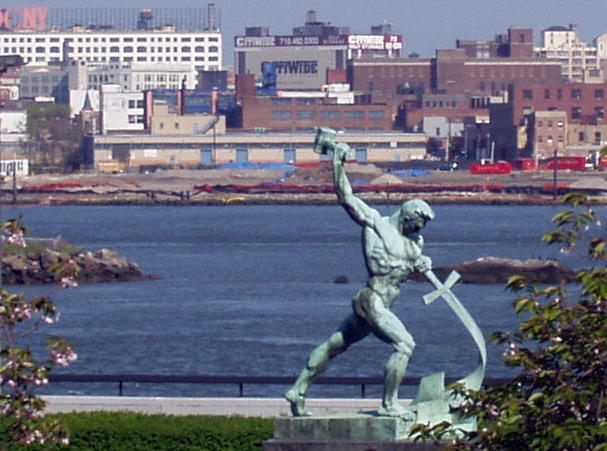
Raise Your Head

There is no sermon text, since I preached from an outline this week.

Click here to listen to a recording of the sermon at fpcboonville.org

Here is the scripture text:

Luke 21:25-36

[Jesus said,] “There will be signs in the sun, the moon, and the stars, and on the earth distress among nations confused by the roaring of the sea and the waves. People will faint from fear and foreboding of what is coming upon the world, for the powers of the heavens will be shaken. Then they will see ‘the Son of Man coming in a cloud’ with power and great glory. Now when these things begin to take place, stand up and raise your heads, because your redemption is drawing near.”

Then he told them a parable: “Look at the fig tree and all the trees; as soon as they sprout leaves you can see for yourselves and know that summer is already near. So also, when you see these things taking place, you know that the kingdom of God is near. Truly I tell you, this generation will not pass away until all things have taken place. Heaven and earth will pass away, but my words will not pass away. “Be on guard so that your hearts are not weighed down with dissipation and drunkenness and the worries of this life, and that day catch you unexpectedly, like a trap. For it will come upon all who live on the face of the whole earth. Be alert at all times, praying that you may have the strength to escape all these things that will take place, and to stand before the Son of Man.”

It’s Time for Love to Get Loud

This week’s sermon from First Pres, Boonville.  Blog fans will notice some similarity with my previous post, Get Loud.

There is considerable congregational participation toward the end, so it would be better to listen at fpcboonville.org

The text is Mark 1:1-8.

First impressions are funny things.  They have a way of setting the tone for what comes next.

This is true for stories:

Who doesn’t remember the opening scene of Star Wars, when Princess Leia’s starship races across the screen, relentlessly pursued by Darth Vader’s menacing Star Destroyer?  George Lucas had audience members on the edge of their seats from the beginning to the end of that film.  How about the first line of the novel, A Tale of Two Cities?  “It was the best of times.  It was the worst of times.”  I particularly like the opening line of my favorite novel: Neuromancer by William Gibson.  “The sky above the port was the color of television, tuned to a dead channel.”

It’s also true in relationships:

My over-eager self-introduction to a professor on my first day of seminary effectively ended my career in academic theology before it started.  On a more positive note, my propensity for sharing too much information made an impact on my friend Matt, who works at a bagel shop in Utica.  At first, he was taken aback by my apparent lack of tact and subtlety, but those same qualities came to shape our future friendship as one characterized by intense honesty and trust.  He is one of my closest companions today.

This morning, we’re taking a look at the opening scene of Mark’s gospel.  Right off the bat, Mark sets the tone for what comes next in the story.  This gospel has a powerful opening line that often gets overlooked: “The beginning of the good news of Jesus Christ, the Son of God.”

That sounds pretty straightforward and innocuous, right?  Wrong.  There are three terms I need to unpack before we can come to a full understanding of what this verse is saying.  Those three terms are good news, Christ, and Son of God.

Good news.  The Greek word we’re looking at here is euangelion.  It’s a term that comes from the world of imperial politics.  An euangelion was a joyful announcement sent out by royal courier to the farthest reaches of the empire.  It usually announced big news, like the birth of a new heir to the throne or the victory of the emperor over his enemies.  Anyone else who proclaimed an euangelion that didn’t have to do with Caesar could be found guilty of treason.  Mark’s use of euangelion in the very first sentence of his gospel is an extremely radical and subversive move.  It’s the kind of thing that could get someone arrested by the Department of Homeland Security.  It says something important about the way Mark looks at the world and, more importantly, the way he looks at Jesus.

Christ.  Most people these days are used to thinking of this word as Jesus’ last name.  Well, it’s not.  Christ is a title.  It’s a Greek translation of the Hebrew word Messiah, which means “Anointed”.  When first century Jews talked about the Anointed, they imagined this Che Guevara kind of person who would rise up and liberate the Jewish people from Roman tyranny.  In short, the Anointed/Messiah/Christ was supposed to be a terrorist.

Son of God.  This is another title that was reserved for the emperor.  Caesar was worshiped as a god in ancient Rome.  People were required to make regular sacrifices to his statue as a sign of loyalty.  It was kind of like pledging allegiance to the flag, only more so.  When Mark proclaims Jesus as divine, he is implying that Caesar is not.  This is a bold statement to make in an occupied country.

With a fuller understanding of what these words mean, let’s hear them again: “The beginning of the good news of Jesus Christ, the Son of God.”  In American terms, we might say, “The inauguration of President Jesus, our real commander-in-chief.”  Anyone who walked around this country seriously talking like that would probably earn a one-way ticket to Guantanamo Bay.

Mark goes on from that opening sentence to paint a picture of the person who first ran through the countryside, shouting this euangelion at the top of his lungs.  His name was John.  He, like the message he preached, was a radical.  Later in the story, John is arrested and eventually executed for exposing the hypocrisy of Herod, the puppet king set up by the Roman government to maintain order.  Like the opening sentence of Mark’s gospel, John is subversive of the established status quo.  He looks instead to the way things ought to be, the way they will be, in God.  John is not satisfied with mere Roman order; he longs for the divine harmony that God intends for all creation.

John is not alone in his task.  He stands in the shadow of another outspoken reformer.  When John first shows up in Mark’s gospel, he is “clothed with camel’s hair, with a leather belt around his waist” and eating “locusts and wild honey”.  That might not mean much to us, but it would mean a lot to first century Jews.  Dressed in those clothes, they would immediately recognize him as the prophet Elijah, as surely as we would recognize a fat man in a red suit coming down the chimney on Christmas Eve as Santa Claus.

Elijah was another subversive radical from Israel’s history.  Like John, he exposed and confronted the powers that be.  He was constantly challenging the corrupt government of King Ahab and Queen Jezebel in his day.

Mark seems to be going out of his way to drive the opening point home: the gospel of Christ is a subversive message preached by radicals.  Those who want safe, predictable religion should stay away from Jesus at all costs.

What made John live his life as a “prisoner of hope” who never stopped questioning the way things are?  What is this radical message that turns the whole world upside down?  Mark spends the rest of the book answering that question.  It’s the story of Christ, a never-ending story that includes John, you, and me in its eternal plot.  There’s no way to fully capture its message in a single sermon, book, or library.  That being said, I’ll try to sum up one small part of it like this: God is with us, God is Love, Love wins.

This, in part, is the message of Christmas: God is with us, God is Love, Love wins.    Therefore, all that is not Love is destined to fade away like dust in the wind or a bad dream after you wake up.  There is hope in this.  And that hope gives us the strength to stand up and speak out loud and clear against all that would stand in Love’s way.

John believed in this Love (i.e. God’s Love, the God of Love, the God who is Love).  That’s why it bothered him to see so much un-Love in the world around him.  I call John a realist because he confronted the reality of the world as it is.  However, I also believe he trusted in a deeper reality that is more real than what he saw with his eyes.  I think John’s faith in that deeper reality is what gave him the strength to stand up and get loud.  His is not a voice of rage or hate.  There is no call to arms or partisan propaganda.  When John gets loud, it’s the voice of Love getting loud.

Here in this room today, we believe that God is with us, God is Love, and Love wins.  But, like John and Elijah, we live a world that is deaf to Love’s call because Love has been drowned out by the white noise of apathy and injustice.  What does that mean for us?  It means it’s time for Love to get loud.

What does that mean for us?

It’s time for Love to get loud.

God is with us, God is Love, and Love wins.  But somewhere this week a boy got his face slammed into a locker at school just because he likes other boys.  What does that mean for us?  It’s time for Love to get loud.

God is with us, God is Love, and Love wins.  But somewhere this morning a girl looks into a mirror and cries because what she sees there doesn’t look like what she sees on the cover of a magazine.  What does that mean for us?  It’s time for Love to get loud.

God is with us, God is Love, and Love wins.  But somewhere there’s a local shopkeeper who is fretting about how to keep the family business open for another generation.  What does that mean for us?  It’s time for Love to get loud.

God is with us, God is Love, and Love wins.  But somewhere today someone is mourning the death of a beloved parent, spouse, or sibling.  What does that mean for us?  It’s time for Love to get loud.

God is with us, God is Love, and Love wins.  But in 2011, there are still churches in this country where the Bible is used as a weapon and people can be denied membership just because of the color of their skin.  What does that mean for us?  It’s time for Love to get loud.

God is with us, God is Love, and Love wins.  But Oneida County is still eliminating daycare funding for children already living below the poverty line.  What does that mean for us?  It’s time for Love to get loud.

It is indeed time for Love to get loud.  How will Love get loud in you?

It’s time to raise your voice, like John the Baptist, in the name of Love.  It’s time to lift every voice and sing!

“Stay Thirsty, My Friends”

The Most Interesting Man in the World

This week’s sermon from First Pres, Boonville.

The text is Mark 13:24-37 with reference to Daniel 7:9-14.

Click here to listen to this sermon at fpcboonville.org

It’s almost always a dangerous thing to mention presidential politics from the pulpit.  At no time in recent history has this been truer than it is right now, when sanity and civility are so conspicuously absent from all ends of the political spectrum in our country.  I sometimes fear that our centuries-old commitment to a democratic government “of the people, by the people, and for the people” is quickly degenerating into a spectator sport where each side cheers for their favorite team and boos at the other side whenever they score a goal.  Accordingly, I will choose my words carefully.  I begin with a disclaimer: this is not a sermon about presidential politics, nor is it a political speech that should be misconstrued as an endorsement or denouncement of any particular party or candidate.  I’ll be using some of the buzzwords that factored highly in the last presidential election, but I do so in order to draw attention to the words themselves, not to the people with whom those words were associated.

Now, with that awkward business aside, the buzzwords to which I want to draw your attention are hope and change.  We heard a lot about hope and change in 2008.  Some people got really excited about those words.  They liked the idea that things could somehow be different (i.e. better) than they already were in this country.  In the years since then, some of the people who were initially excited have begun to feel frustrated because things still seem to be pretty much the same as they were before.  We’re still living in the same country with the same old problems.  This frustration has led other public figures to ask (cynically), “Hey America, how’s all that hopey-changey stuff working out for you?”  The hard lesson that people are (re)learning is this: without real change there is no real hope.  And the change necessary to inspire hope is beyond that which any political candidate, party, or ideology can offer.

In the absence of real hope, there are basically two responses that people can make.  First, they can jump on board the bandwagon with whatever big idea comes along next with flashy presentation and inspirational rhetoric.  Like bumblebees, they float from flower to flower, collecting whatever small grains of hope they can find to sustain their meager faith in the system.  Second, people can give up hope entirely.  They can sit back and cynically fold their arms saying, “Nothing ever changes.  Just give me what is rightfully mine and then leave me alone.”  I would argue that neither of these responses is wholly adequate to ease the pain we feel when our hopes are frustrated (in life as well as politics).  There has to be another way to preserve hope, even when our favorite human institutions have failed us.

The earliest Christians, just as much as (if not more so than) us, lived in a time of extreme political tension and unfulfilled hopes.  The land of Judea was occupied by the Roman Empire.  The people longed for some sign of hope that things might someday be different, but they were divided amongst themselves over what that hope should look like.  Some Jews, like the Zealots, picked up swords and sought to take back their homeland with divinely inspired military might.  Other Jews, like the Sadducees, worked with the Roman government to maintain order and preserve whatever religious and cultural freedoms they could.

Eventually, these tensions came to a head in the year 66 when war broke out between the Jewish people and the Roman Empire.  The government dedicated itself to crushing this rebellion and eventually did so with its might as a military superpower.  The ultimate symbol of Jewish defeat came in the year 70 when the Roman forces invaded Jerusalem and their sacred temple, the ultimate symbol of their national and religious life, was burned to the ground.

It was around this same time that Mark’s gospel was first written.  The Christian Church was just emerging as an independent movement within Judaism.  Christians wondered among themselves, “What should we do?  Should we fight the Romans or try to work with them?  Should we put our hope in each new self-proclaimed revolutionary leader that comes along or throw our hands up and admit that nothing (not even God) can defeat military juggernaut of the Roman Empire?”

The author of Mark’s gospel saw both of these options as deficient.  Neither the false hope of revolution nor the cynicism of collaboration embodied a faithful response to the very real hope that was made manifest by God in Christ.  So the author of Mark’s gospel made sure to include in chapter 13 of this book a particular story about Jesus that might provide some helpful guidance for the Christian Church in that day.

It begins as Jesus and his disciples were walking out of the great Jewish temple one day.  One of the disciples stopped to admire the architecture of the building.  Jesus responded in words that would ring eerily true to the Christians in Mark’s day, who would see this very thing happen in their own lifetime: “Do you see these great buildings?”  Jesus said, “Not one stone will be left here upon another; all will be thrown down.”

He was speaking of the temple of course, the cultural icon and center of religious devotion.  Jesus’ own ancestors had fought and died to preserve everything for which it stood.  How could he, a Jew, speak so glibly about its destruction?  He didn’t stop there either.  He went on to speak so insightfully about the coming crisis that some later regarded his words as a prophetic prediction.  Instead of glorious victory and freedom, he spoke of war, earthquake, famine, and persecution.  What’s even worse is that Jesus then told his followers to do the exact opposite thing that their brave and faithful ancestors had done when Israel was threatened.  “[W]hen you see the desolating sacrilege set up where it ought not to be,” he said, “then those in Judea must flee to the mountains.”  In other words, Jesus ordered them to run and hide rather than stand and fight to protect that which their nation held most dear.

How could Jesus be so offensive toward his patriotic Jewish audience?  The answer lies in verse 26 of the passage we read this morning.  He makes reference to “’the Son of Man coming in clouds’ with great power and glory.”  This would have been a familiar image to his educated Jewish audience.  This phrase is taken from the book of the prophet Daniel.  In 7:13, Daniel describes “one like a human being (i.e. ‘son of man’) coming with the clouds of heaven.”  According to the vision, God would one day take the corrupt and destructive empires of this world and place them under the authority of this human being (son of man).  The powers that be would be divinely transformed and made to serve real human interests rather than their own animal-like greed.  Real change was bound to happen in this world, not because of violent revolution or political cunning, but because God wills it.  God will establish true “liberty and justice for all” regardless of what goes on in the halls of power.  The temple could be destroyed and the battle lost and God would still see this vision through to its fulfillment.  This is the source of Jesus’ hope.  It is a prophetic vision embedded deep within his Jewish heritage.  It transcends ideology, victory, even history itself.  Prophets and visionaries in every age have held onto this inexorable and eternal vision.  Many have laid down their very lives because of its promise.  Dr. Martin Luther King reiterated its core principle when he said, “The arc of the universe is long but it bends toward justice.”  Archbishop Oscar Romero proclaimed, “If they kill me I shall rise again in the Salvadoran people.”  Jesus himself willing went to his cross while trusting in the final victory of God’s vision over the powers that be.

Change is coming, therefore there is hope.  Real change, lasting change, God’s change.  It won’t come through any particular candidate, party, or ideology.  It won’t come through military might or violent revolution.  It won’t come about through our diligent plans or valiant efforts.  God’s kingdom will come and God’s will be done on earth as it is in heaven.  We pray for this and proclaim our faith in this vision every Sunday.  Jesus had faith in this vision.  He was willing to stake his life on it.  That’s why the thought of Jewish defeat or the temple’s destruction didn’t bother him that much.

The author of Mark’s gospel was impressed with Jesus’ faith in God’s ultimate vision.  The early Christians needed that faith as well.  The Church needed an anchor that would hold them steady while the storms of war and persecution blew over the deck of their boat.  If they cut the line, they would drift and drown with their neighbors.  So it was that the early Christians took these words to heart and refused to fight in defense of Jerusalem or the temple.  They ran for the hills when the invasion came.  This was an unforgivable sin to their Jewish neighbors.  Christians were branded as cowards and traitors within the Jewish community.  Relations had been strained up to that point, but from then on, Christianity was cut off from the rest of Judaism.

As we meditate on these events this morning, we find ourselves at the first Sunday of Advent.  Thanksgiving and Black Friday have passed and so we now begin our preparations for Christmas.  For most people, this takes on a decidedly nostalgic tone as Bing Crosby dominates the radio waves.  There is a lot of talk about “peace on earth”, “the light of the world”, and “hope”.  But we start this season on an intentionally apocalyptic note.  We know that hope cannot exist without change, yet we know that change is coming, therefore we have hope.  None of the powers that be in Washington or on Wall Street can claim to be the fulfillment of God’s vision, yet neither can they stop God’s vision from being fulfilled.

In the absence of real hope, people tend to embrace false hopes or else bitter cynicism.  I believe that Jesus offers us a third way.  We can hold onto hope that transcends the fleeting promises of ideology and history.  We can live as prophets of hope in a hopeless world.  Like Jesus, we can look deep into the heritage of our faith and cling to God’s vision of a world that can be changed… that will be changed.

There is currently a beer commercial on TV that features “the most interesting man in the world”.  At the end of the advert he looks into the camera and says, “Stay thirsty, my friends.”  As he said to them, so I say to you: Stay thirsty, my friends.  I can think of no better way to sum up the call to action that arises from Jesus’ vision of hope and change.  While other people are dying of their thirst for hope and cursing the sky in cynicism, I say to you, “Stay thirsty, my friends.”  While others around you are desperately trying to slake their thirst for hope with things that will only lead to more despair, I say to you, “Stay thirsty, my friends.”  Stay thirsty for hope.  Stay thirsty for change.  It’s coming.  God will not let us down.  “Stay thirsty, my friends.”

God’s Dream

Here is this week’s sermon from First Presbyterian Church of Boonville, NY.

The text is Isaiah 2:1-5.

Click here to listen to the podcast.

This week, we begin our journey toward Christmas.  Decorations are going up at home and shopping has begun in stores.  As the music of Bing Crosby invades our radio waves, nostalgia mixes with anticipation and the smell of freshly-kindled wood stoves.  In church, candles are lit one by one and purple vestments are hung in honor of our coming king.  We call this season “Advent”.

Beyond the commercialized holiday bliss, there is another side to this season.  It is the time of year when the weather really starts to turn bitterly cold.  Here in Boonville, we’ve just had our first real snowfall.  The daylight hours are the shortest they will be all year and darkness seems to hover over everything.  Perhaps the early Christians chose to celebrate the birth of Christ at this time of year because they needed a pick-me-up?

In a spiritual sense, I tend to think of myself as being more of an Advent person than a Christmas person.  I spend most of my time in the cold and dark places of the soul, waiting for God to show up.  And when God finally does arrive, it almost never happens how I expected.

I feel this way, not only during Advent, but year-round.  This is why Advent (not Christmas) is my favorite time of the church year.  It describes my own spiritual journey so well.

I imagine that “dark” and “cold” is how many people must have felt during the lifetime of the prophet Isaiah, in the 8th century BC.  It was a time of extreme unrest and political upheaval.  The great Assyrian Empire lurked on the borders of the Holy Land.  Nations sought security in numbers, making alliances with each other or with the Assyrian superpower itself.  At home, rulers were becoming more and more corrupt, building their kingdoms on the backs of the poor and oppressed.  Rather than trusting in the mysterious and unseen God of Israel to deliver them, many people sought solace in the practices of magic and idol worship.  They felt safer putting their trust in gods that could be seen and controlled through arcane rituals, even if those rituals demanded the sacrifice of their own children.  These were dark and cold times indeed.

It was into this cold and dark environment that God first called Isaiah son of Amoz to speak.  Isaiah had a lot of harsh things to say about the culture in which he lived.  He criticized them for their hypocrisy and cynicism.  They pretended to be faithful and religious Jews while taking advantage of the poorest and most vulnerable members of society.

But Isaiah’s message wasn’t entirely negative: God also gave Isaiah a vision of the way his country could be.  This is the passage from which we read this morning.  In this passage Isaiah envisions his community of Jerusalem as an international center for education and spiritual renewal.  People would go there as soldiers and leave as farmers.  Death-dealing swords would be transformed into life-giving plows for the fields.  From there, the whole world would learn a new way of living and relating to one another that would transform the face of creation forever.

The people had a long way to go before this vision could become a reality, but Isaiah held onto it for dear life.  He believed that this dream would come true, not through human ingenuity or goodwill, but because God willed it, and nothing (not the hypocrisy and cynicism of the people, not the corruption of their leaders, not even the military might of the world’s greatest superpower) could prevent God’s dream from coming true.

Believing in God’s dream must have been a tall order in a time as cold and dark as Isaiah’s.  To this day, rather than being a center for peace and education, Jerusalem remains one of the most violence-ridden cities on the planet.  Almost 2,800 years later, our headlines mock Isaiah’s dream for Jerusalem as the fantasy of an idealistic fool.

Our time is no less dark and cold than Isaiah’s was.  News of international conflict continues to make us nervous.  People still grow cynical as they read headlines of corrupt politicians and hypocritical religious leaders.  While outright idol worship is not as common as it once was, we are still tempted to put our trust in objects of our own making, such as our investment portfolios, our insurance policies, our educational system, our nuclear arsenal, our political parties, or our religious institutions.  It’s comforting to trust in these things because we can see them and we think we can control them.  But the cold, dark fact of history is that none of these idols can provide us with the peace and security we seek.

The challenge of Advent is for us to look past these idols, these objects of our own making.  God is calling us to rise above our cynicism and hold onto hope: Hope that the cold and darkness will not have the last word in history; Hope that the way things could be is the way things will be; Hope that God’s dream will come true.

The dream did not come true in Isaiah’s lifetime, nor did it come true in the earthly lifetime of Jesus, nor will it probably come true in our lifetime, but rest assured: God’s dream will come true.  There have already been signs of this happening in history: wherever enemies make peace, wherever oppressed people go free, wherever healing triumphs over sickness, there we find a partial fulfillment of God’s dream and Isaiah’s vision.

God has graciously invited us to be a part of the fulfillment of this dream.  This should radically change the way we live our lives here and now.  Isaiah called the people of his community to live changed lives, saying, “O house of Jacob, come, let us walk in the light of the Lord!”

God may call some of us to be prophets, shaking the very foundations of idolatry and cynicism in our society.  I think of heroes like Martin Luther King, who dreamed God’s dream out loud.  Others of us will be called to “brighten the corner where we are”.  But let us not be deceived: our little acts of human compassion and forgiveness, no matter how small, have divine and eternal value because they are part of God’s great plan for this earth.  Every “thank you”, every “I’m sorry”, and every “I love you” spoken in word or deed is a ray of light that pierces the darkness of this cynical world.  Not one of these rays will ever be wasted or lost.  Do you believe this?

Advent does not prepare us for a nostalgic commemoration of a one-time event in history.  Advent propels us toward the revolutionary culmination of history in the fulfillment of God’s dream for this world.  O people of Boonville, come, let us walk in the light of the Lord!