A middle aged man goes to see his doctor for a physical. At the end of the examination, he asks, “Well Doc, do you think I’ll live to be a hundred years old?”
“Let’s see,” the doctor said, “do you smoke?”
“No,” the man said, “absolutely not. Never.”
Doc: “OK then, do you drink?”
Man: “Not a single drop in my entire life.”
Doc: “Do you eat a lot of sugary or fatty foods?”
Man: “No way! I’ve always been very careful about what I eat.”
Doc: “Do you drive very fast?”
Man: “Never! I always drive 5 miles an hour below the speed limit, just to be sure.”
Doc: “I don’t quite know how to ask this one, but have you had a lot of girlfriends?”
Man: “Absolutely not. I’m celibate and I’ve been celibate for my entire life.”
Doc: “Then why on earth would you want to live to be a hundred?!”
Why indeed. You and I live in a culture that has mastered the art of denying death. Everything from anti-aging cream to plastic surgery is designed to keep us from facing the reality of our own mortality. Consumer advertising and commercial television keeps us distracted from thinking about death until we absolutely cannot avoid it anymore. At that point, if we so choose, they can give us drugs that will “make us as comfortable as possible,” effectively tuning us out until our bodies stop functioning. Our culture’s goal, it would seem, is to first ignore and finally numb the dying process so that we won’t ever have to come to grips with it.
Of course, the wisest among us don’t wait until that point to reflect upon their own mortality. They find their own way to accept it and even make peace with it. For these people, thinking about death doesn’t have to be something dark or morbid. In fact, it can give their lives a sense of meaning and purpose. People who know and accept the fact that they are going to die live with a conscious awareness that they have a finite amount of time on this earth and it’s up to them to make the most of it.
If you knew that you only had a week, month, or year to live, how would you choose to spend that time? What do you want your life to stand for? When other people look back at your life, what would you want them to remember about you? These are the questions that a wise person asks in the face of mortality.
When we accept that this life will not last forever, we realize that it cannot be an end in itself. Like the man in the joke, we have to ask ourselves: what’s the point of living to be a hundred years old if all you’re going to do is eat Brussels sprouts? The truly wise among us realize that life cannot last forever, therefore the truly wise among us also realize that each life must be lived for something larger than itself. Every mortal life, it seems, is a means to an end.
In spite of our culture’s death-denying attempts to distract or numb us, each of us has probably known, met, or heard about at least one person who made his or her mortal life meaningful by dedicating it to something larger than himself or herself. We tend to respect or admire such people when we meet them. Their examples might even inspire us to look more deeply at our own lives, face our mortality in new ways, and discover meaningful possibilities within us that we hadn’t noticed before. It’s a beautiful thing when that happens.
However, it’s at this point that our cultural programming kicks back in and tends to shut us off toward the next step in our development. Our culture is so individualistic that we don’t even think about the larger social bodies of which we are a part. We tend to stop with ourselves and not notice how it is that an awareness of mortality applies to larger realities.
People are mortal. We know that. We accept that fact, at least theoretically, even if we choose to ignore it for our entire lives. However, not many of us stop to think about other things that share our mortality. These things might last much longer than we do, but they too will one day fade from existence. Families are mortal. Surnames and lineages come to an end through a lack of offspring. Churches and other faith communities are mortal. There comes a point when dwindling membership and a lack of funds causes an institution to close its doors. The same thing is true of entire religions at large. There are very few people on this planet who continue to worship the gods of Mount Olympus in the same way that they were worshiped by Greeks in centuries past. Nations are mortal. The Roman Empire was once the dominant superpower in the world, unlike anything else that had come before it. Where is the great Roman Empire today? Buried under the rubble of history and preserved in ruins frequented by tourists in Bermuda shorts. Species are mortal. Dinosaurs no longer roam the earth like they did 65 million years ago. Finally, even the planets and stars are mortal. One day, our very own sun will burn up all of its hydrogen fuel and explode into a violent supernova, momentarily becoming the brightest star in some distant sky.
If coming to grips with our own individual mortality is difficult, accepting the mortality of families, churches, species, and stars feels almost impossible. Yet, the same truth applies to these larger mortal beings that first applied to mortal human beings: it is in facing mortality that we find meaning.
Let’s look at this idea in relation to this morning’s reading from Mark’s gospel. The story opens as Jesus and his disciples are leaving the great Jerusalem temple, the epicenter of Jewish worship in the first century CE. Jesus, as usual, is walking away from yet another fight with the established religious leaders of his day. In the previous chapter, chapter 12, you can read about Jesus butting heads with representatives from almost every major Jewish sect and community: Pharisees, Sadducees, Herodians, and temple scribes. The conflict between Jesus and the organized religion of his day had reached such a boiling point that Jesus, in his frustration, was about ready to give up on it. When this morning’s passage opens with him leaving the temple, he’s not just out for a stroll, he’s right in the middle of storming out in a huff.
It’s at this point that Jesus’ disciples, in their usual tactless and somewhat dimwitted manner, decide to stop and admire the lovely architecture of this religious icon and national monument of Judaism. They say of the temple, “Look, Teacher, what large stones and what large buildings!” Jesus is unimpressed. He says, “Do you see these great buildings? Not one stone will be left here upon another; all will be thrown down.”
He’s talking about mortality of the temple: this central symbol of religious and national identity for the Jewish people. They were under the impression that this sacred building would stand forever under divine protection. For them, the temple was immortal. It was an end in itself as a center of worship. The idea had never occurred to them that it might not be there one day.
As it turns out, Jesus’ prediction was spot-on. The Jerusalem temple, like any human being, was mortal. It was eventually burned to the ground by the Romans during an uprising in the year 70 CE. It was never rebuilt. The site where it once stood is now occupied by the Dome of the Rock, one of the most sacred places in Islamic religion.
The destruction of the temple was unthinkable to the average Jew, but to Jesus it was inevitable. The wisdom of Jesus did not stop with an awareness of his own individual mortality, but extended to embrace the mortal and finite nature of all things. Just as it was for individuals, so it is for temples, religions, countries, species, planets, and stars: to face mortality is to find meaning.
If our great struggle in life is limited to ensuring the continued existence of particular people, places, institutions, or things, then we have already doomed ourselves to failure. Nothing lasts forever. We need to accept that. What Jesus said about the Jerusalem temple, we could say about anything: ““Do you see these? Not one stone will be left here upon another; all will be thrown down.” All things are mortal.
The sooner we realize this truth, the sooner we can get on with the business of asking the really important questions about existence in reality. Concerning our individual selves, we can ask: “What am I living for? What will people remember about me when I’m gone? What will be my lasting contribution to the world around me or the universe as a whole? What is the meaning of my life?”
We can ask these same questions about our mortal families or this mortal country. The day will come when the United States, like the Roman Empire, will only exist as a chapter in a history book. Accepting the inevitability of this fact, we need to ask ourselves as Americans: “When that day comes, what will that chapter say?”
As Christians, we can also ask these same questions about our church, our denomination, and our religion as a whole. We need to get over this ego-centric idea that God will protect and preserve us from our own collective mortality. Just look at the way Christianity itself has changed over the last two thousand years. We shouldn’t kid ourselves into thinking that the Christianity we practice is identical in faith and form to the Christianity practiced by the Apostle Paul or St. Augustine of Hippo. We identify ourselves as Presbyterians, but if John Knox and John Calvin (the founders of Presbyterianism) were sitting in this church right now, they would be horrified by much of what they would see. Likewise, if a Christian from the year 2412 were to time travel into this sanctuary right now, that person’s faith would likely seem so foreign to us that we wouldn’t even want to call it ‘Christian’ at all. Just as Paul and Calvin have shaped us, our faith will shape the future long after we are gone and the pressing crises of our era have ceased to be relevant concerns. What will be our lasting contribution to that future?
Finally, as members of this church, I think we need to ask these questions about our mortal congregation. This little church has been in Boonville for over two hundred years. We take great pride in our history and our building. Maintaining the integrity and beauty of this place is a chief concern for many people in this room. But all of us together need to hear Jesus saying to us what he said about his own temple: “Do you see these great buildings? Not one stone will be left here upon another; all will be thrown down.” This place, this building, and this congregation are all mortal. They will not last forever. “All will be thrown down,” as Jesus said. If our only motivation in coming here week after week is to keep the doors open and the lights on, then we’ve already failed. We’re like the man in the joke at the beginning of this sermon: we have no reason to live for another hundred years. Wise individuals live with a conscious awareness of their inevitable death and then adjust their lives accordingly, so as to make them as rich and meaningful as possible. It is no different with wise churches.
This church will die eventually. Whether it’s in ten years or another hundred years, it will happen. We need to remember that. We need to embrace that truth for ourselves so that we, as a church, can make the most of the time we’ve been given right now. Knowing that this church will one day die and “not one stone will be left here upon another,” we need to ask ourselves, “Why are we here? What is this church living for? What will be our lasting contribution to the life of this community after our doors are closed and our lights shut off forever? What is the meaning of our life together, as a church?” Those are the real questions that we need to be asking, not just once for a special project or a mission study, but continually. We need to set these questions before our eyes like a carrot dangling in front of a horse during a race. These are the questions that need to drive us, propel us, or perhaps lure us forward into the future.
As we explore these questions within the conscious awareness of our church’s impending death (whenever that will happen), I believe we’ll start to see a slow-motion miracle in progress. Even as we are facing and embracing death, I believe that we will also start to experience a kind of resurrection. It’s been my experience and observation that the most vibrant, active, and growing churches are the ones who have found their reason for being, the meaning of their existence, outside themselves. These churches are passionate about spiritual growth and community service. Their members gather together, Sunday after Sunday, not to maintain what they have, but to seek what they desire. There is a yearning deep within such people for “something more.” They are hungry for silence, prayer, scripture, and sacrament. They long to deepen their connection with the sacred mystery of divine love. This love, in turn, leads them out, away from the church and into the streets of this community where love demands to be shared with hurting people through compassionate word and deed. This is my vision of a church that faces mortality and finds meaning. When the day comes that “not one stone will be left here upon another,” such a church will live on in a state of resurrection, even if our doors are closed, our lights shut off, and our roof caved in. Even then, even if our church dies, it will live.
As a church, as individuals, as a country, and as a species, may we be people who live with a consciousness of death. May we face mortality and find meaning. In the midst of these piles of rubble, where stones have been thrown down from the broken remnants of our sacred temples, may we walk together the path of our own, continual, slow-motion resurrection, following in the footsteps of the Living Christ, the Risen One in our midst, the faithful friend who abides with us and guides us on our way.
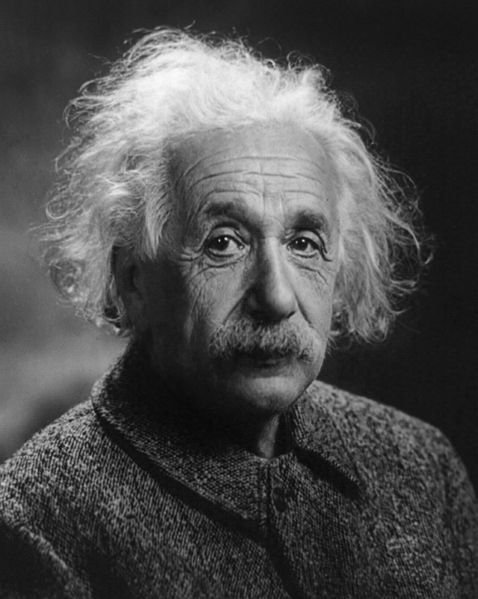
By Photograph by Oren Jack Turner, Princeton, N.J. Original image cleaned/leveled by User:Jaakobou. [Public domain], via Wikimedia Commons
My wife sent me this brilliant piece this morning. The original author is Aaron Freeman. It first appeared on NPR’s All Things Considered in 2005. As you’ve probably figured out by now, I tend to identify myself as a somewhat religious person. The professional language used here is not the one in which I’m trained, but I nevertheless find it beautiful and inspiring. I would even go so far as to say that the physicist and the minister (this one, anyway) are describing, each in their own way, the same grand mystery of ultimate reality, in which we all live, move, and have our being.
“Space: the final frontier. These are the voyages of the starship Enterprise. Its continuing mission: to explore strange new worlds, to seek out new life and new civilizations, to boldly go where no one has gone before.”
These words were a mantra to me during my childhood. For those who might not recognize them, they come from the opening credits of the TV show Star Trek. And every Saturday night at seven, I could be found in the living room with our family television set tuned to channel 12. And for the next hour, I would be transported (“beamed up”, if you will) into the 24th century and onto the bridge of the USS Enterprise, where Captain Picard would be my guide as we faced crises of galactic importance (but none so complicated that they couldn’t be resolved by the end of the hour). This weekly ritual was like a Sabbath to me. Star Trek gave me comfort and it gave me hope. It restored my faith in the power of the human spirit.
One of my favorite things about Star Trek is its constant theme of exploration. The crew of the starship Enterprise spent a lot of time in distant and uncharted regions of the galaxy. They existed on the growing edge of human experience that led to new discoveries and new insights. Something about that spoke to me. At ten years old, I knew that was how I wanted to live my life.
Initially, my hunger to explore was directed outward to the stars. I wanted to travel into outer space. To be honest, I still do. Whenever humans get around to colonizing Mars, I figure they’ll eventually need pastors up there. And you know what? I’d put in for that call! I’m just sayin’…
In the meantime, I’ve turned my attention to exploring the “inner space” of spirituality. The territory is different, but that drive to explore is the same. I still want to “boldly go where no one has gone before.” That’s what motivates me to keep going and keep growing as a human being. I can’t say that I’ve ever explored completely new ground for humanity, but I’m constantly discovering plenty of territory out there that’s new to me. It’s exciting and I love it.
Some of us explore because we want to. Others explore because they have to. One of my hardest moments as a pastor came last year when my wife and I co-officiated at a funeral for a baby. In that moment, every bit of conventional wisdom, biblical scholarship, and theological understanding went right out the window. We were forced to explore completely new territory. It wasn’t fun or exciting but we had to go there because the parents of that little girl were depending on us. We had no answers for them. There is no bumper sticker slogan in the world that will make that kind of pain easier to deal with. So, we were forced to explore new territory.
As hard as it was for us, it was a million times harder for the parents. They said it felt like they had been initiated into a club that no one wants to be a member of. They would have given anything to be anywhere else in that moment. That kind of exploration is nothing but torture.
That’s the kind of exploration the Thessalonian Christians were forced into in today’s scripture reading. We’ve been learning a lot about the Thessalonian church during these past few weeks. They were a dynamic, loving, and spiritually vibrant church. When the apostle Paul came through town as a missionary, these folks were particularly and remarkably open to what he had to say. Their reputation as people of faith had spread all over the region. But they also had some hard questions that they were struggling with.
You see, a big part of Paul’s message had to do with the return of Christ. When he preached, he made it sound like Jesus might be coming back as soon as next Thursday, certainly within the lifetimes of his audience members! From what we can tell, it seems like Paul himself truly believed that was the case. He wasn’t trying to pull the wool over anyone’s eyes.
The problem came as time went by. Jesus was nowhere to be seen. What happened? Did they miss it? Was Paul wrong? The point when they got really REALLY nervous is when people in their community started dying. What would happen to them? If they weren’t here when Jesus got back, would they be lost forever? The Christian church never had to ask these kinds of questions before. They didn’t have any answers to fit the mold. What were they supposed to do now?
It was a moment of necessary spiritual exploration. They were asking questions that no one had thought to ask before. What will happen to our deceased Christian friends? What will happen to us if Jesus doesn’t return during our lifetime?
It must have been a difficult moment for Paul as a pastor. He had taught his flock in the best way he knew how. Had all of that ministry been in vain? Was there any hope left? Paul was forced into some pretty heavy-duty spiritual exploration.
He begins with the assumption that there is hope. He may not know much else, but he believes that God in Christ can be trusted. That’s number one. Next, he thought about what he already knew he believed. In verse 14, he talked about how they already believed that “Jesus died and rose again”. To him, this meant that the dead are not beyond God’s care. Inspired by further reflection and a powerful visionary experience, Paul presented the Thessalonian Christians with an image of “meet[ing] the Lord in the air.” In other words, Paul was saying that there is a place (i.e. “in the air”) where heaven and earth come together. In this place, we have communion with Christ, each other, and all of those who have died before us. They are not gone. We will be together again.
Paul gives the Thessalonians this inspirational exploration as a source of strength and encouragement. It’s something to hold onto in dark and uncertain times so that they might also hold onto hope. It’s a mental image that arises out of questions they’ve never had to ask before. In one sense, it represented a shift away from what they had initially been taught. Jesus might not physically return within their chronological lifetime. On the other hand, it points to much deeper truths that do not change. Hope does not change. God’s faithfulness does not change. God’s love, which is stronger than death itself, does not change.
In the same way, we who live in the 21st century are forced into constant exploration. Society around us is changing on a scale and at a rate that is heretofore unknown in the history of our species. We are asking questions that have never been asked before. What are appropriate Christian responses to evolution, human cloning, or same-sex marriage? There are many people of faith who claim to know the answers already, but the reality is that those are questions that Jesus and Paul never had to ask in the time and place in which they lived. It is left to us to faithfully explore these questions and try to answer them in a way that affirms those things that don’t change: God is faithful. There is hope. God loves you.
We’re probably going to disagree with one another in the answers we come up with. That’s okay. It’s all part of the process of exploration. It’s a lot of trial and error. In fact, I think we’re more likely to get at the (capital T) Truth if we go ahead and assume that each of us is probably going to get the answers wrong somewhere along the line. Remembering that will keep us humble.
There is a wonderful hymn that is not in our hymnal. It was written in the 1850s by a man named George Rawson who based the words off of the last sermon preached to the Plymouth Rock pilgrims before they left Europe for the New World. It goes like this:
“We limit not the truth of God to our poor reach of mind —
By notions of our day and sect — crude partial and confined
No, let a new and better hope within our hearts be stirred
For God hath yet more light and truth to break forth from the Word.”
So, go out from this place today and back into the final frontier. Remember your continuing mission: to explore this strange new world, to seek out new light and new revelations, to boldly go where no one has gone before! Remember, above all else, those truths that don’t change: God is faithful. There is hope. God loves you.
This is a sermon I recently preached for a funeral in my church. The text is Ephesians 1:3-14.
As I was preparing this message for today, I asked around for stories about Ruth that people might like to tell. When we gather together to celebrate the life of someone we love, telling stories often happens naturally. We look for those moments that were particularly tender or funny. Something inside of us reaches out for those “big” memories when we remember someone. However, I should thank you, Emily, for reminding me that it’s not the big memories but the little ones that really stick with us. I asked if she had a story she would like me to include in the message and Emily told me, “You know, it’s actually those little things that I remember most: things like Christmas Eve and apple pie… her apple pie.” Likewise, I was looking through photos with Donna and Carleen the other day, and we came across one where Ruth was obviously mid-sentence and had her hand out in a characteristic gesture. And they said they could just hear her saying, “And let me tell you something…”
It’s the little moments that we remember most. It’s the little moments that define a person. As it turns out, Emily agrees with the famous, ancient Roman biographer Plutarch, who said,
“I am not writing histories but lives, and a man’s most conspicuous achievements do not always reveal best his strength or his weakness. Often a trifling incident, a word or a jest, shows more of his character than the battles were he slays thousands… so I must be allowed to dwell especially on things that express the souls of these men, and through them portray their lives, leaving it to others to describe their mighty deeds and battles.”
So today, I’m going to focus on those little moments in Ruth’s life. As Emily and Plutarch tell us, these moments tell us the most about who Ruth is. Also, I think those little moments illustrate best the truth that Ruth herself wanted us to hear today.
Ruth herself picked out this passage from the New Testament book of Ephesians that we read a few minutes ago. It took a little research, because she told us the page number, but not the exact chapter and verse where she wanted us to start. Donna, Carleen, and I looked together at Ruth’s Bible, looking specifically at the little notes she made for herself in the margins. We don’t know why, but something about these words struck Ruth in a particular way. The three of us got to bear witness to those “little moments” that Ruth had while reading her Bible and something struck her as meaningful. As I was preparing my message this morning, I had a keen sense that I wasn’t just researching another passage of the Bible, but I was having a kind of second-hand conversation with Ruth herself. There was something that she wanted to tell us through this passage from St. Paul’s letter to the Ephesians. Let’s see if we can figure out what it is that she wanted us to hear…
If you asked the average person on the street, they would probably tell you that religion is something we do: there are particular beliefs that we accept, certain rituals that we participate in, and certain ethical rules that we follow. But you know what’s really interesting about this passage that Ruth chose for us to read today? It’s a quick summary of important spiritual ideas, but it says almost nothing about beliefs, rituals, or morals. This passage says almost nothing about what we’re supposed to do!
However, it has a lot to say about what God is doing. In this passage, it says that God has “blessed us with every blessing”, “chosen us to be his own”, God is “making us holy” (“holy” means “special”), and has “covered us with his love.” It also says that God “adopts us into his own family” and has “showered down upon us the richness of his grace”. Finally, it says that God “understands us” and “gathers us together from wherever we are”. That’s quite a list! And it’s all about what God is doing.
You and I are surrounded by this incredible mystery of infinite love. In the Christian churches, we call this mystery “God”. And when we say that we “believe in God”, we’re expressing our trust in that mystery. We trust that good is stronger than evil, life is stronger than death, love is stronger than hatred, and life is stronger than death.
Philosophically, we can say that we “believe” any old fact that we observe:
“I believe the sky is blue.”
“I believe the grass is green.”
“I believe that the Packers won the Superbowl this year.”
But when we say, “I believe in you” to someone, we’re saying something about trust. We’re saying something personal. In a way, we’re committing a part of ourselves to what we trust in.
When we trust in this mystery of Love (when we trust in God), that commitment makes a difference in the way we live our lives. Sometimes, it makes a difference in big ways. But most of the time, we can see the difference in those little things. Ruth trusts in the God who loves her, and we can see that trust and that Love flowing through her in that smile, that laugh, that look, that apple pie, that Christmas morning, those little notes in her Bible, and the kiss goodbye.
You, and I, and Ruth are surrounded by this Love that will not let us go. It holds us together in life and in death. It’s bigger than the universe and older than time. Today, I want to invite you to trust in that Love. Let it shine through you in those little things you do, just like it did in Ruth. That’s what it means to be a spiritual person. That’s what it means to be a person of faith. Ruth understands that and I think she wants us to understand that as well.



 Hopping Hadrian's Wall