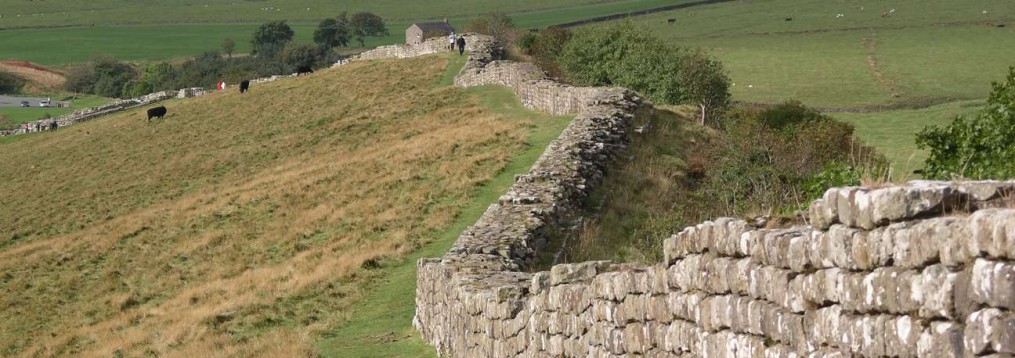
Sermon for the Fourth Sunday in Lent
I heard a story about a physics professor who began the first day of his quantum mechanics class in an unusual way:
He looked out at the room full of students and said, “Right now, the difference between you and me is that you understand quantum mechanics and I do not.
But if you study hard and pay attention this semester, by the end of this course you too will not understand quantum physics—just as I do not.”
The deeper someone studies the universe, the more they discover how strange it is.
In fact, the physicist Richard Feynman once said, “I think I can safely say that nobody understands quantum mechanics.”
The more you learn, the more you realize how much you don’t know.
Which is interesting, because most of us tend to assume the opposite.
We assume that knowledge leads to certainty.
But sometimes knowledge leads to humility.
⸻
Psychologists have a name for this: the Dunning–Kruger effect. People who know the least about a subject often feel the most confident about it. And the more someone actually learns about something, the more aware they become of how much they still don’t understand. In other words, the first step toward wisdom is realizing that we don’t know as much as we thought we did.
But our culture doesn’t reward that kind of humility. Our culture assumes that mature opinions are strong ones, that faith equals certainty, and that clarity means figuring everything out. The only problem is that the social pressure—to have the answers—can keep us from seeing what’s actually in front of us.
⸻
Today’s gospel is about being able to see what’s right in front of us.
In it, Jesus heals a man who was born blind.
But the healing itself turns out not to be the main point of the story.
The real story is about how people interpret what they see.
In fact, the story begins with a question from Jesus’ own disciples.
They see the blind man and ask, “Rabbi, who sinned—this man or his parents—that he was born blind?”
It’s an understandable question. But notice what they are doing.
They are trying to explain what they see by fitting it into a neat category. In that culture, people saw any kind of suffering as divine retribution for sins.
Someone must be to blame. Someone must have caused this.
That instinct—to explain things quickly, to sort the world into clear black & white answers—is something all of us share.
After the man receives his sight, the religious leaders begin questioning him. They want to know how it happened, who did it, and what it means.
And very quickly, three very different responses begin to emerge.
First, there are the Pharisees.
They keep repeating the same phrase:
“We know.”
We know this man is not from God.
We know this man is a sinner.
We know that God spoke to Moses.
They are certain.
Their minds are already made up.
Then there are the man’s parents.
When the authorities question them, they say something different:
“We do not know.”
But the Gospel tells us why they say this: They are afraid.
The religious authorities have already announced that anyone who openly supports Jesus will be expelled from the synagogue. So the parents step carefully. They avoid taking a stand. They say just enough to protect themselves.
“We don’t know.”
And then there is the man who was healed.
He speaks differently from both groups.
At one point he says, “I do not know.”
He admits he doesn’t understand everything that has happened.
But he doesn’t stop there.
He also says,
“One thing I do know: though I was blind, now I see.”
Do you hear the difference?
The Pharisees claim certainty about things they cannot see.
The parents retreat into uncertainty because they are afraid.
But the healed man holds two things together at the same time.
He is honest about what he does not know and truthful about what he does know.
Real faith often lives in that tension.
“I don’t know whether he is a sinner,” he admits.
“But one thing I do know: I was blind, and now I see.”
And as the conversation continues, something remarkable happens.
The more certain the Pharisees become, the harder their hearts grow.
The parents remain cautious and quiet.
But the man who stays honest about both his knowledge and his ignorance begins to see more clearly.
You can watch his understanding grow as the story unfolds.
At first he simply refers to “the man called Jesus.”
Later he says, “He is a prophet.”
Then he goes further and says,
“If this man were not from God, he could do nothing.”
His faith is developing.
Not because he started with perfect understanding.
But because he stayed honest about what he had experienced.
Eventually the religious leaders lose patience with him. They say, “You were born entirely in sins, and are you trying to teach us?”
And then the Gospel says something that would have been devastating in that world.
They drive him out.
Being expelled from the synagogue was not just embarrassing.
It meant being cut off from the center of life. It meant exclusion, isolation, and possibly even the loss of family relationships.
All because he refused to deny what he had seen.
And for a moment, the story becomes very quiet.
The man who was once blind now sees.
But he stands outside the community.
Alone.
Then the Gospel says something very simple.
Jesus heard that they had driven him out.
And then he found him.
That line is easy to miss.
But it is the turning point of the entire story.
The man does not go looking for Jesus.
Jesus goes looking for him and finds him.
And when they meet, Jesus asks him,
“Do you believe in the Son of Man?”
The man answers with the same honesty he has shown all along.
“Who is he, sir, that I may believe in him?”
He still does not pretend to know.
And then Jesus says something extraordinary:
“You have seen him.”
And when the man hears this, the Gospel says,
“Lord, I believe.”
And he worships him.
Think about the irony of that moment:
The people who insisted that they could see clearly remain blind.
And the man who admitted that he did not know is the one who finally sees.
That brings us to the promise at the heart of this story:
We see more clearly, not when we have all the answers, but when we’re honest enough to admit we don’t.
That can sometimes be a lonely place to stand, but it is exactly where Jesus meets us.
⸻
The willingness to be both honest and humble, even when we don’t have all the answers, makes a practical difference in the real world, as well as in our spiritual lives.

There was a doctor who lived in Vienna in the 1840s named Ignaz Semmelweis. His name is not widely known today, but he laid the groundwork for huge medical advances that continue to save lives.
While working in the maternity ward, Dr. Semmelweis noticed a disturbingly high mortality rate due to postpartum infection, known at the time as “Childbed Fever.”
These were the days before humans understood what germs are, so the prevailing medical theory was that diseases were caused by the body’s four humours being out-of-balance.
As a man of his time, Dr. Semmelweis did not understand the true cause of his patients’ deaths.
But as a man of science, he knew to trust the evidence of his eyes. He noticed that the patients in the ward run by midwives had a much lower mortality rate than the patients in the ward run by the doctors.
His best guess, after examining the evidence, was that his student physicians were coming into contact with some kind of toxic particles while working on cadavers before coming to the maternity ward.
So, he came up with a creative solution that would go on to revolutionize the practice of medicine and save lives in the future: he had the doctors wash their hands with disinfectant before examining their patients.
Today, we would look at this simple solution and say, “Well, duh!“ but at the time, it was highly controversial. Dr. Semmelweis’ idea flew directly in the face of established medical theory and practice for the time. He was reviled and insulted by his fellow doctors until he had a nervous breakdown.
But years later, Dr. Semmelweis would be vindicated by Dr. Louis Pasteur, who discovered germ theory and made it central to the practice of medicine, as it is today.
Like the man born blind in today’s gospel, Dr. Semmelweis was ostracized from his community for questioning the established orthodoxy of his day, but in so doing, he saved lives. Not just in his own day, but in ours as well.
I invite you to give thanks to God for Dr. Semmelweis the next time you use a bottle of hand sanitizer.
Even though he paid a price for his honesty and bravery, I believe that Jesus was with him, just as Jesus was with the formerly blind man after he was expelled from the synagogue.
Kindred in Christ, I invite you today to stand with Jesus, in the company of those who have been exiled from their families and homes, because they have dared to question the way things have always been, and trusted instead in the evidence of their own eyes.
I invite you to share in the honesty and humility of the man born blind in today’s gospel. I invite you to share in the courage and curiosity of Dr. Semmelweis, who changed the practice of medicine.
I invite you to stand also with President Thomas Jefferson, who rejected the divine right of kings and proclaimed instead: “We hold these truths to be self-evident: That all men are created equal: That they are endowed by their Creator with certain unalienable rights.”
I invite you to stand with the Rev. Dr. Martin Luther King, who had a dream that his children would “one day live in a nation where they will not be judged by the color of their skin but by the content of their character.”
Each and every one of these people had the humility and curiosity to say, “I don’t know,” to the prevailing prejudice of their day. And they had the honesty and courage to say, “one thing I do know,” to the evidence of their own faith and experience.
From the perspective of this world, they stood alone, but we the people of faith know in our hearts that Jesus stood with them, as he stands with us still, in the faithful tension between what we know and what we don’t know.
When the world demands certainty from us, we answer with humility: “I don’t know.”
When the world demands silence from us, we answer with courage: “One thing I do know, that though I was blind, now I see.”
Amen?
 Hopping Hadrian's Wall