
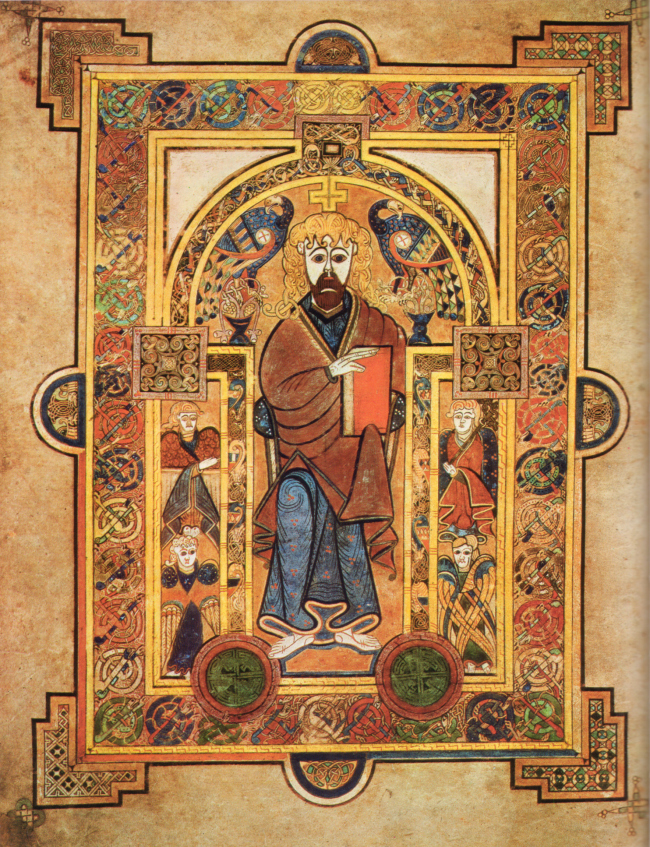
The Merciful King

Sermon for Christ the King Sunday (Proper 29), Year C.

Click here for the biblical readings.

Back when I was newly ordained in my previous denomination and serving my first congregation, the time came for me to request a Sunday off in order to attend a friend’s wedding. Not wanting to be too forceful, I intentionally phrased my request very gently. And one of the board members commented, “Gosh, you sound like a kid asking for candy.” I was a bit taken aback by this comment because the board member had obviously mistaken my kindness for weakness. Looking back, what I wish I’d said was, “Ma’am, if you think this is me asking for candy, then you have seriously underestimated just how much I love candy!”

It’s funny how often people mistake kindness for weakness. In this world we live in, it’s the blustering, strong-man style of leadership that tends to get the most attention: leaders who are loud, decisive, never apologize or admit when they’re wrong, who rule by force, fear, and the power of sheer will. Such leaders are not confined to any particular political party, country, or era of history; even going back to biblical times, they’re everywhere — even inside our own heads. Who among us doesn’t sometimes hear that harsh voice in the back of our minds, yelling at us when we struggle?

“Suck it up, Buttercup. Quit your crying, loser. Forget about your feelings. You don’t need a break. You need to push harder.”

If we listen to that voice in our heads day in and day out, we become our own tyrants. And society rewards us for it. The message we hear again and again is: “That’s just how you get things done. You may not like it, but reality doesn’t care about your feelings.”

But let me share something with you that I have learned from reading up on leadership science. Strong-man and fear-based leadership styles are useful in the midst of a sudden crisis because they’re very good at achieving fast results in the short term. But in the long term, they’re subject to the law of diminishing returns. Over time, fear-based environments become less and less effective because they lose talent by stifling creativity and causing burnout among their best performers. Mercy-based environments, on the other hand, foster resilience, creativity, and loyalty. They have lower turnover and higher productivity.

So if we’re going by the numbers, it’s not about feelings at all. It’s about results. Compassionate leadership is more effective than fear-based leadership. Mercy isn’t a feeling. It’s a method — a strategy for transforming the world from the inside out.

Which brings us to our Gospel reading for today. Today we celebrate the Feast of Christ the King, which was added to our liturgical calendar exactly 100 years ago, in 1925, by Pope Pius XI. The Pope created this new festival in direct response to the rising tide of fascism in Italy at that time. By establishing this new liturgical feast, Pope Pius was declaring that Jesus Christ is Lord and Benito Mussolini is not. It was a direct challenge to the authoritarian strong-man style of leadership that was so prevalent in the culture at that time.

In today’s Gospel for Christ the King, we get to see firsthand what Jesus’ merciful style of leadership looks like. His throne is not a majestic chair of gold, but an old rugged cross. His crown is not made of jewels, but of thorns. Beside him are not trusted advisers, but criminals.

Traditionally, one of them has been labeled as “the good thief.” But here’s the thing: he was neither good nor a thief. The Romans didn’t crucify pickpockets. Crucifixion was too slow and too expensive for such petty crimes as that. Crucifixion was reserved for the most severe crime of sedition against the authority of the empire.

So the man commonly known as the “good thief” was not like Jean Valjean, who was thrown into prison for stealing a loaf of bread. He was most likely a religious zealot who believed that God had called him to overthrow the Roman Empire by violent force. He was probably a killer, an extremist. In modern-day terms, we might even call him a terrorist. So you can imagine the kind of person to which that term might apply today.

That’s the person to whom Jesus says, “Truly I tell you, today you will be with me in Paradise.” That one line exposes every lie that we have ever been told about what true power looks like. Jesus doesn’t say this line to someone who has proved his worth through good deeds or correct theology. He says it to the least likely and most despicable person imaginable. By speaking words of forgiveness to the terrorist on the cross next to him, Jesus demonstrates that his only method is mercy. It is the entire basis of his kingship and authority.

William Shakespeare said it well in The Merchant of Venice, Act IV, Scene 1:

“The quality of mercy is not strained.
It droppeth as the gentle rain from heaven
Upon the place beneath.
It is twice blest:
It blesseth him that gives and him that takes.
’Tis mightiest in the mightiest;
It becomes the throned monarch better than his crown…
And earthly power doth then show likest God’s
When mercy seasons justice.”

Mercy is the foundational principle of Christ’s kingdom, just as equality of all persons is foundational to the American system. Mercy is a direct challenge to the strong-man style of leadership in any age, because there is always another strong man waiting in the wings somewhere who promises salvation, saying, “Fear me, follow me. I will protect you, and I will punish your enemies.”

But Christ doesn’t promise those things.
Jesus Christ says, “Father, forgive them, for they do not know what they are doing.”
Jesus says, “Blessed are the peacemakers, for they will be called the children of God.”
Jesus says, “Love your enemies and pray for those who persecute you.”
Jesus says, “Truly I tell you, today you will be with me in Paradise.”

If God wanted the world to be saved by force, Jesus would have come with an army of angels. But instead he broke bread with outcasts and forgave sinners like you and me. He led with mercy — not because he is soft or weak, but because mercy is the strongest force in the universe.

Some people imagine that when Christ comes again in glory, he will drop the mercy act and behave like the conquering king we all expected. That apocalyptic idea suggests that mercy was just a temporary mask, and violence is the true nature of God. But I wholeheartedly disagree with that sentiment.

The Christ who will come again is the same Christ who came before, who broke bread with outcasts and sinners, and forgave the unforgivable. Mercy isn’t the exception — it is the essence of who Jesus Christ is as the King of kings and Lord of lords.

During World War II, a Dutch woman named Corrie ten Boom hid some of her Jewish neighbors in her attic from the raiding parties of the Nazis. Eventually, she was discovered, arrested, and sent to a concentration camp, where her sister, Betsy, eventually died. Several years later, she was preaching in a church on the subject of forgiveness when a man approached her whom she recognized. He confessed to her that he had been a guard at the concentration camp to which she and her sister had been sent.

“Since that time,” he said, “I have become a Christian. I know that God has forgiven me for the cruel things I did there, but I would like to hear it from your lips as well. Fräulein, will you forgive me?” And he extended his hand.

Corrie ten Boom said,

“It could not have been many seconds that he stood there, hand held out, but to me it seemed like hours as I wrestled with the most difficult thing I had ever had to do. For I had to do it — I knew that. I knew it not only as a commandment of God, but as a daily experience. Those who were able to forgive their former enemies were able also to return to the outside world and rebuild their lives, no matter what the physical scars. Those who nursed their bitterness remained invalids. It was as simple and as horrible as that.

“And still I stood there, with the coldness clutching my heart. But forgiveness is not an emotion; forgiveness is an act of the will — and the will can function regardless of the temperature of the heart. ‘Jesus, help me!’ I prayed silently. ‘I can lift my hand. I can do that much. You supply the feeling.’

“And so, woodenly, mechanically, I thrust my hand into the one stretched out to me. And as I did, an incredible thing took place. The current started in my shoulder, raced down my arm, sprang into our joined hands. And then this healing warmth seemed to flood my whole being, bringing tears to my eyes.
“I forgive you, brother,” I cried, “with all my heart!”

For a long moment we grasped each other’s hands — the former guard and the former prisoner.

“I had never known God’s love so intensely as I did then.”

Kindred in Christ, what does this mean for us? It means that sometimes our kindness will be mistaken for weakness. But each time we choose to lead with mercy instead of fear, the kingdom of Christ comes a little bit more on earth as it is in heaven.

Leadership is not about getting people to do what you want — it is about helping them grow into the kind of people they were always meant to be. And that applies just as much to our leadership of ourselves as it does to the way we relate to other people. Many of us know the voice of the inner tyrant, who expects perfection and punishes us when we fall short. But that voice is not the voice of Christ.

Christ did not come to replace one tyrant with another — including the tyrant that lives in your own head. Let Christ’s mercy reign in you. Be patient with your own healing. Forgive yourself for the mistakes you keep making. Speak to yourself as Christ spoke to the terrorist on the cross next to him: “Truly, I tell you, today you will be with me in Paradise.”

Today. Not someday. Not when you’ve cleaned up your act. Not when you’ve fixed everything that’s wrong with you. Not when you’ve come up with airtight answers to the doubts and the questions that plague your mind.

Today — because mercy begins here and now.

This is where the kingdom of Christ begins: in you. But it doesn’t stay there. It flows out. It changes how you speak to your spouse, how you raise your kids, how you treat your neighbors and your coworkers, how you handle difficult people — and the people who find you difficult.

This is how the kingdom comes on earth as it is in heaven: not by brute force or fear, but by mercy, dropping like the gentle rain from heaven, as Shakespeare said.

So today, on the centennial anniversary of the Feast of Christ the King, you and I stand together beneath the old rugged cross — the throne of grace — and we hear Christ saying to us, as he did to the penitent terrorist:
“Truly, I tell you, today you will be with me in Paradise.”

Not someday, but today.
Here and now — let mercy reign in you.
Let it flow out from you.
And let it change the world through you.
One little bit at a time.

The Prodigal Father

Sermon for the fourth Sunday in Lent.

Click here to read the biblical texts.

In his brief novel, The Great Divorce, Anglican author C.S. Lewis writes about an imaginary bus tour of heaven and hell. One of the many interesting things about this book is how he imagines hell. For Lewis, hell is not a realm of fire and brimstone where the wicked are eternally tortured for their sins on earth. Instead, he depicts hell as a place where people live in huge mansions and get whatever they want, whenever they want it. Sounds like heaven, doesn’t it? Well, the catch is that, with so much space and instant gratification available, people don’t need each other, so they just pack up and move farther away whenever anyone upsets them for even the slightest of reasons. This leaves vast tracts of empty cities where no one roams. Instead, everyone has locked themselves inside their own mansions and pace the empty halls alone all day, muttering about their “rights” and complaining that everything bad that has ever happened to them is not their fault. The real kicker is that the gates of this hell aren’t even locked; people can get up and go to heaven any time they want, except that nobody wants to. They would much rather stay stuck in their mansions, totally alone, and utterly convinced of their own self-righteousness. The souls of the damned in The Great Divorce bear a striking resemblance to the elder son in today’s gospel reading. I begin today’s sermon with this story because I too have a tendency to act like the self-righteous elder son in Jesus’ parable.

Here is my honest confession: Earlier this week, someone greatly offended me with something they said.

(PLEASE NOTE: If you are hearing this and wondering whether it was you, I want you to be assured that it was not. It had nothing to do with anyone in this room, this parish, or this town. I won’t tell the whole story here because it’s not important to this sermon. All you need to know is that my feelings were hurt and I was very angry about it).

I spent much of the week stewing in my self-righteous indignation, replaying the conversation over and over in my head, and losing sleep over it.

When I sat down to write this sermon, I read the passage and froze stiff when I got to the part about the elder son. I realized that, after my week of angry pouting, I could not, in good conscience, stand in this pulpit on Sunday morning and preach about the good news of God’s amazing grace without being a complete and total hypocrite (because that’s exactly how I’ve been acting). Like the elder son in Jesus’ parable, I wanted my enemies to be punished for what they had done to me; I wanted the scales of justice to be set right, only to realize, when I was confronted by the words of Jesus in Scripture, that I am, as my mother used to say, “full of bologna.”

“Holding onto resentment,” as the Buddha once said, “is like drinking poison and waiting for someone else to die.” That was me this week.

What struck me so hard is that Jesus’ parable of the prodigal son is not really about the prodigal son. It has more to do with the elder son. Jesus tells this story in response to a group of upstanding and religious citizens who were offended that Jesus was “hanging out with the wrong crowd.” In response to their complaints, Jesus tells three stories. The first and second stories are about a lost sheep and a lost coin, respectively. The third and final story was about a lost son who ran home with his proverbial tail between his legs after going on a bender and waking up face-down in a pigsty.

The part of the story we know best begins with the younger son asking his father for his share of the family inheritance. Normally, this sum of money would only be given out after the father had died, so this request was the equivalent of the younger son saying to his father, “You’re dead to me.” I can only imagine the pain that the father felt in that moment. But, instead of berating his son for saying something so stupid, the father honors the request and divides his wealth between his two sons.

As we know from the story, the younger son squandered his inheritance by partying hard until the money ran out and he fell on hard times. When he finally hit rock bottom, the younger son came to his senses and decided to return home. It’s important to note that this decision was not based on any sense of remorse for his actions, but out of the base desire for self-preservation. The younger son concocted a rehearsed speech, through which he hoped to con his way back into his father’s good graces.

When the younger son gets within sight of his family home, Jesus tells us, in what I think is one of the most comforting passages in the entire Bible, that “while he was still far off,” his father got up and ran to meet him. I love this verse so much. The father did not wait for the son to make it all the way home, but ran to him “while he was still far off.” This verse should be a great comfort for those of us who realize that, even after years of following Jesus, we are still very far away from where we ought to be, spiritually.

The father was not standing on the front porch with arms crossed, tapping his foot and waiting for his son to finally crawl his way up the driveway. No, Jesus says that “while he was still far off, his father saw him and was filled with compassion; he ran to him and put his arms around him and kissed him.”

The younger son, probably taken aback by this extravagant display of affection, nevertheless starts into his rehearsed speech, but his father doesn’t let him finish. He interrupts the speech with an enthusiastic call to start a party. This interruption should call into question everything that Christians have come to believe about the proper order of confession and forgiveness. The father does not wait to see if his son is sincere about his change of heart. He does not even let him finish his prepared speech.

(I wonder what it would be like if the priests in our church were to interrupt the congregation’s prayer of confession during the Sunday service and pronounce the absolution before they had even finished!)

The son is already forgiven before he even finishes confessing his sins, so great is his father’s love for him. So great is God’s love for you and me, as well, according to Jesus.

God does not forgive us because we repent; God forgives us before we repent. God’s amazing grace is what gives us the strength to repent and amend our lives in the first place.

So, a celebration ensues at the house. But, as we know, all is not well with the elder son, who had stayed home to work dutifully on his father’s farm. We learn a lot from the elder son’s reaction to the news that his brother had returned home. Unlike the father, the elder son was not happy to see him. We learn even more about the elder son’s misconceptions about who his father is.

He says to his father, “Listen! For all these years I have been working like a slave for you.” This is our first clue that something is off about the elder son’s perception of his relationship with his father: he thinks of himself as a slave, not a son. He thinks that his father is only interested in obedience, not love. He sees their relationship as merely transactional, not personal. He assumed, quite wrongly, that their relationship would end if the son was not perfectly submissive to the father’s power. The younger son’s return to a celebration would have completely upended the elder son’s faith in a morally-balanced world.

The next thing the elder son says is, “I have never disobeyed your command; yet you have never given me even a young goat so that I might celebrate with my friends.” Now, this is a very puzzling statement. Earlier in the story, Jesus remarked how the father had “divided his property between [his two sons],” at the younger son’s request. Presumably then, the elder son would have already received his share of the family estate which, according to the inheritance laws of that time, would have been a double-portion of that which was given to his younger brother. So, when the father tells his eldest son, “All that is mine is yours,” he was not just speaking metaphorically or hyperbolically; he meant it literally. The fact that the elder son still sees himself as a slave, who has never received anything from his father, is incontrovertible proof that the elder son has entirely misjudged the character of his father.

In the end, this is not actually a parable about a lost son, but about two lost sons. The younger wandered away and wasted what had been given to him; the elder stayed home and forgot that he had been given anything at all. The elder son, by Jesus’ account, is the one who is in the more spiritually precarious position.

The real story, however, is not about either of the sons, but about the father. The father comes out to meet both of his lost sons where they are, in the midst of their self-made mess. Traditionally, this story has been known as “the parable of the prodigal son.” The word “prodigal” comes from a Latin word meaning “lavish or extravagant.” The most lavish and extravagant thing in this parable, as I see it, is not the younger son’s wastefulness, but his father’s graciousness and love toward both of his sons. For this reason, I would like to suggest that we rename this story, “the parable of the prodigal father.”

Kindred in Christ, the good news of this story is that our Father in heaven, as revealed in his Son Jesus Christ, loves us more than we deserve, more than we expect, and even more than we understand. God’s amazing grace and unconditional love annihilates all of our manufactured misconceptions about who God is and who we are, in relation to God.

The truth is that we are loved and we are forgiven by God. Full stop. No provisos, addenda, or quid pro quo. It is a free gift; we did not earn it, so we cannot lose it. Nothing is required.

The only thing God requests of us, out of love, is that we trust in that love and pass it along to others, through our words and actions. Even this meager request is more for our benefit than God’s.

In a world torn by self-righteous violence, the humble testimony of those who know that they are loved, in spite of our best efforts to prove otherwise, has the power to undo the shackles of our own self-righteousness and liberate us from the hell of our own making.

May each of us trust that we are forever held by this love and do our best to demonstrate it to others, to the end that they too might join us in proclaiming the good news of God’s amazing grace.

Loving Hard in a Hard World

Sermon for the Seventh Sunday after the Epiphany.

Delivered at St. Mark’s Episcopal Church, Coldwater

Click here for the biblical texts.

Sermon recording:

Photo credit: Image of Archbishop Desmond Tutu by Elke Wetzig (Elya), CC BY-SA 3.0 http://creativecommons.org/licenses/by-sa/3.0/, via Wikimedia Commons

There is no manuscript this week. Here is my outline:

I. Introduction – “I love Jesus, but sometimes he makes me mad.”

1.                 “That’s not what I said”

(1)                You be nice to me and I’ll be nice to you
(2)                I’ll try to be nice to people who aren’t nice to me, but there’s a limit
(3)                Be nice to terrorists and racists, approve whatever they do
  • Being nice doesn’t enter into it
    • Nice is a tool
(4)                Like your enemies

II. What Jesus actually said:

1.                 “Love your enemies.”

(1)                Love is a choice, not a feeling

2.                 “Turn the other cheek”

(1)                Cultural context: Walter Wink
  • Insult, not injury
    • Open right hand only
      • Left hand too degrading (used for sanitation purposes)
        • Turning face gets nose in the way, assailant liable for damages
        • Closed hand (fist) reserved for equals
(2)                Nonviolent resistance
  • Make them hit you like an equal
    • Take the power back, but don’t return violence for violence

III. The heart of the Gospel

1.                 In a hard world of violence, God loves even harder

(1)                Radical love, impractical love, offensive love

2.                 When humanity turned away from God and fell into sin, God did not turn away from us.

(1)                God took on flesh and dwelt among us in the person of Jesus Christ, who taught and demonstrated love in every moment of his life
(2)                When the political and religious powers-that-be tried to shut Jesus down, he spoke up and acted out even louder
(3)                When that didn’t work, they unleashed all their powers of hate and violence at Jesus in order to silence the voice of love, once and for all
(4)                But even that didn’t work, because Love Itself cannot be contained, even by death, which is why Jesus rose from the grave on Easter morning, conquering the power of death, and bursting open the gates of hell from the inside
  • Easter Sunday is the biggest jailbreak of all time

3.                 Eucharistic Prayer D in the Book of Common Prayer sums it up beautifully (p. 373)

“When our disobedience took us far from you, you did not abandon us to the power of death. In your mercy you came to our help, so that in seeking you we might find you. Again and again you called us into covenant with you, and through the prophets you taught us to hope for salvation. Holy God, you loved the world so much that in the fullness of time you sent your only Son to be our Savior. Incarnate by the Holy Spirit, born of the Virgin Mary, Jesus lived as one of us, yet without sin. To the poor he proclaimed the good news of salvation; to prisoners, freedom; to the sorrowful, joy. To fulfill your purpose Jesus gave himself up to death; and, rising from the grave, destroyed death, and made the whole creation new.”

The Book of Common Prayer, p. 373-374

IV. As Gospel people, we ought to love with the same wild and reckless abandon: radical, impractical, offensive

1.                 Archbishop Desmond Tutu, Truth and Reconciliation Commission

(1)                Mother of murdered son, to his murderer:

“I am very full of sorrow. So I am asking you now – come with me to the place where he died, pick up in your hands some of the dust of the place where his body lay, and feel in your world what it is to have lost so much. And then I will ask you one thing more. When you have felt my sadness, I want you to do this. I have so much love, and without my son, that love has nowhere to go. On turning to the policeman she said ‘So I am asking you from now on – you be my son, and I will love you in his place.”

2.                 On a smaller, more personal/local scale

(1)                Nonviolent Communication Strategies (Marshall Rosenberg)
  • “When you did ____.”
  • “I felt ____.”
  • “Because I value/need/want ____.”
  • “I request that you ____.”

V. Conclusion

“Goodness is stronger than evil,
Love is stronger than hate,
Light is stronger than darkness,
Life is stronger than death.
Victory is ours,
Victory is ours,
Through God who loves us.”

Prayer by Archbishop Desmond Tutu

She Has A Name

Image
JESUS MAFA. Jesus absolves the pentitent sinner, from Art in the Christian Tradition, a project of the Vanderbilt Divinity Library, Nashville, TN. http://diglib.library.vanderbilt.edu/act-imagelink.pl?RC=48384 [retrieved June 16, 2013].

When she walked into the party, they were sizing her up like a piece of meat.  She was that girl: the one with a reputation

They had all kinds of ideas about her.  Who knows if any of the rumors were actually true?  It didn’t matter.  Somebody had to occupy the bottom rung of the social ladder and it might as well be her.

Those religious folks, the upstanding citizens, made a good show of cutting her down in public.  They said people like her were the problem with society these days: no morals and values, no respect for the law. 

They said this world would be a better place without people like her.  But secretly, she knew: they needed people like her to exist.  Without the scumbags and lowlifes, who would they have to look down upon?  Their self-righteousness was built on appearances and comparisons.  They only seemed high and holy next to people like her because they did a better job of hiding their faults.  They put on a fancier show, that was all.

The problem was that everyone else in town accepted the reality of their show.  Heck, she almost accepted it herself.  That’s the problem with labels: when you hear them enough, you eventually start to believe them yourself.

Maybe I am worthless, she thought.  Maybe no one will ever love me.  Maybe this world would be better off without me in it.

That’s a pretty thick mental fog to get lost in.  It can lead to some pretty severe and irreversible rash decisions.  For all we know, she might have been on the verge of one such decision herself.

But then she met Jesus.

No, I don’t mean to say that she found religion, saw the light, or got born again.  That’s too easy.  Too cut and dry.  Besides, those folks in the “upright citizens’ brigade” love that stuff.  They eat it up like candy: the wayward sinner reforms her ways and comes back home where she belongs.  Classic redemption story.  Good propaganda.  It reinforces their assumptions about the world and makes them look like loving and gracious heroes to welcome someone so despicable as her.

But this Jesus guy was different.

They didn’t seem to like him very much either.  At first, he seemed like one of them: he was a religious teacher, people called him Rabbi, and he had a lot to say about God.  He knew the Bible pretty well too.  He was always quoting from it, but every time he did, all the religious folks in the crowd would get real red in the face and start clenching their jaws, like he had just said something to annoy them.  Didn’t they love that stuff?  Wasn’t the Bible kind of their “thing” after all?  Then why would they get so mad when Jesus recited parts of it in their presence?  I guess they didn’t like what he had to say about it.

Maybe he was making them uncomfortable.  After all, he was a rabbi, but he didn’t act like other rabbis.  For one thing, he hardly ever went to synagogue.  Most of the time, he was hanging out in the streets with folks who wouldn’t be caught dead in a synagogue on the Sabbath… people like her.

Nobody knows how it happened.  They just seemed to come from everywhere.  Jesus said it was God drawing them, but that didn’t even make any sense.  What would God have to do with people like them?  Still, something inside of her made her stick around on that first day.  She couldn’t quite put her finger on what it was.  That same feeling kept her coming back around for as long as he was in town.

The things he had to say made sense to her.  He certainly knew the Bible but he didn’t throw it in her face.  He knew all about the Temple and its elaborate rituals, but he didn’t seem to care much about it.  He kept saying the day would come when “not one stone would be left on top of another” in that place.  He seemed pretty irreligious for a religious teacher.

He said, “The place where God lives is within you and around you.”  He spoke from the heart and didn’t bother with all of that fancy philosophy and theology that the other rabbis used.  When people asked Jesus about God, he usually pointed to whatever happened to be in his line of sight at the time:

“Do you see that woman baking bread?  That’s what God is like.  Do you see those crops growing in that field over there?  God is like that.  Do you see that farmer sowing seed, that woman sweeping out her house, or those merchants in the market?  God is like all of those.”

He even saw signs of God’s presence in the lilies of the field and the sparrows of the air.  That didn’t sound like any rabbi she had ever heard before.  What’s even weirder is that he didn’t seem to be bothered by all the freaks and misfits who kept gravitating toward him.  In fact, whenever zealous devotees came up to pledge their allegiance to him, Jesus kept turning them back to those very same freaks and misfits.  “These people are my family,” he would say, “Whatever you do for them, you do for me.”

Family? Did he mean her?  Nobody had ever talked to her like that before.  People called her a lot of things, but never “family.”  She hadn’t even spoken to her own family in years…

Why would anyone want her of all people in his family?

All the same, she kept coming back, drawn by that inexplicable something.  Who knows?  Maybe Jesus was right and it really was God that was drawing her?

She loved listening to him.  She loved the way he stuck it to those religious hypocrites, using their own Bibles against them.  She loved his stories and the way he looked at the world: finding God everywhere in it.  But most of all, she loved the way he looked at her.

Men often looked at her, but not like that.  They usually looked at her with some perverted combination of disgust and desire.  Regardless of whether or not the rumors about her were true (some were and some weren’t), they believed them all and treated her accordingly.  But Jesus called her family.  He saw what she was capable of, not just what she was (or what she represented to everyone else).  When he taught, his eyes would sometimes momentarily lock with hers, as if he was speaking directly to her.  She would swell with pride and sit up a little straighter, imagining that he really was talking to her. 

He wasn’t of course.  She was just a woman, and a bad one at that.  Women weren’t allowed to study under rabbis in that day.  Even socially respectable women would only be allowed to sit in and listen to his lectures.  But then why did he keep looking at her?  Why did his words make so much sense?  She was getting it!  Could it be possible that maybe (just maybe) he really was speaking to her?  I don’t know… but she kept coming back.

And something was happening inside of her.  She was looking at the world in a whole new way.  It was as if she had been blind all along and was really starting to see things clearly for the first time ever.  It was almost as if she had been some lame beggar by the roadside and Jesus was taking her hand, lifting her up onto her own two feet, and teaching her how to walk her own path.  For the first time in a long time, she felt like a person again, a real human being.  It felt like those cold, numb, dead spaces inside of her were coming alive again when she was around Jesus.  Who knew that was even possible?

Earlier that afternoon, she was hanging around town as usual and she heard some folks talking.  They said Jesus would be moving on tomorrow, headed to another town.  She felt her stomach jump with fright.  Leaving?  He was leaving?  To where?  Would he be back?  Was this the last chance she would ever have to see him and feel that amazing feeling?

She had lost track of time those last few days.  They seemed like an eternity to her.  She was so caught up in everything he was saying, everything that was going on, it didn’t occur to her that Jesus wouldn’t be staying there forever.  What was she supposed to do?

Something inside her heart told her she should do something, but she didn’t know what.  Shouldn’t there be some kind of religious ritual for thanking or blessing a rabbi who was leaving?  It seemed like there should be.  After all, those religious folks had prayers, and blessings, and rituals for just about every other occasion, why not this one?  But what would it be?  She wished there was someone she could ask, but certainly no other rabbi would ever give her the time of day, much less let her ask a question.  Besides, most of those blessings and rituals could only be performed by men.  She would only get to sit out and watch, if she was lucky.

But that didn’t sit right with her.  That didn’t do justice to the kind of person Jesus was.  She might not know the correct thing to do, but she had to do something.  It was getting late.  The sun was almost down.  There wasn’t time to plan anything elaborate.  Besides, she heard that Jesus already had plans.  He was invited to dinner at some big shot Pharisee’s house.  They would have all kinds of fancy food and entertainment there.  Nothing she could do would measure up to that.  They would never even let her in the door, anyway.  It was a hopeless cause… unless…

Nah, that’s too crazy… it would never work… but then again…

She had this jar.  It had been with her a long time.  Nobody knows how she got it.  It was the only thing she had that was worth anything.  It was filled with a very rare and expensive perfume, worth about as much as a full year’s salary for a working man.  Once upon a time, that jar of perfume was worth more than her life, but not anymore.  Jesus had showed her that she was worth so much more than that.  The dignity she had discovered through him made that jar seem cheap and worthless by comparison.

It was right then that she knew what she had to do.  Maybe she didn’t know the proper ritual for blessing a rabbi, but she would make one up to demonstrate to Jesus and everyone else what it was that he meant to her.

She went home, grabbed that jar, and made a bee-line for the house where Jesus was having dinner.  Her heart was pounding and her adrenaline was pumping as she got closer.  Right up to the front door she walked.  And right through.  The bouncer happened to look the other way for a second and so he didn’t notice her until she was already inside.  He shouted and tried to grab her, but it was too late.  She had already made it to the place where Jesus was sitting: reclining actually, with his feet stretched out behind him.

She looked down at those feet.  Just like everyone else’s, they were disgusting.  Without paved roads or organized sanitation, city streets in the ancient world were cesspools of filth.  A person’s feet would get caked with mud and excrement just from walking around.  Nobody liked to touch feet or wash them.  It was the worst job, even for a slave.  Feet were gross.

The woman looked down at Jesus’ feet.  Then she looked back at the jar in her hand.  After pausing for a second, she broke the jar open and dumped its precious contents onto Jesus’ feet.  The pungent smell of lavender filled the room.  She had never opened the jar before.  She always wondered what its contents might smell like.  Now she knew.  It was beautiful.  It reminded her of the way that Jesus made her feel inside.  Through him, she had come to be aware of her own inner beauty for the first time ever.  She was like that jar of perfume: broken open, poured out, precious, and beautiful.

As the weight of this truth hit home for her, she began to cry for joy.  Her tears dripped down off her cheeks, chin, and nose and onto Jesus’ feet.  Looking down, she realized the tears mixed with the jar’s contents were washing away the layer of filth left from the long, hard road.  She could see his beautiful, soft, brown skin showing through.  Bending down even further, she took each foot in her hands, undid her long, dark hair, and used it like a towel to wipe away those last remnants of slime, continuing to weep as she did it.  This felt right.  It was all she had: the only thing she could think of to do.

The host of the party was, predictably, indignant.  He pulled out all those nasty names and labels that people called her.  But somehow, those names didn’t phase her as she ran her fingers over Jesus’ smooth, clean, sweet-smelling feet.  In that moment, she was prepared to let him talk and say whatever he wanted, but Jesus wasn’t.  Jesus interrupted the Pharisee’s tirade with a single word: Simon.  That was his name, the Pharisee that is.  Jesus called him by name, not by his status or position.  “Simon,” he said, “I have something to say to you.”

You better believe that shut him up quick.  Jesus then told another story about debts being forgiven.  “Do you see this woman?”  Obviously, Simon didn’t.  All Simon saw was another sinner, another woman who didn’t know her place, another scumbag lowlife.  Simon didn’t really see her but Jesus saw her, so he asked Simon, “Do you see this woman?  I tell you, her sins, which were many, have been forgiven; hence she has shown great love.”  Did she just hear him right?  Did he just say forgiven?

Seeing the shock and confusion on her face, he said it again just to drive the point home.  He spoke her name… she didn’t even realize that he knew her name, but he called her by it.  She looked up and their eyes met again.  He repeated, “Your sins are forgiven.”

Forgiven.  She never thought she would hear that word spoken to her, but somehow she knew he was right.  That was what she had been feeling all along.  Forgiven.  Restored.  The shame and stigma washed away.

And Jesus wasn’t just making it happen for the first time either.  He was announcing a reality that had already come true.  She was already loved, forgiven, and clean.  Jesus’ words were only sealing the deal and making it real to her.  She was a person with a name and dignity, no matter how hard society might try to take that away from her.

Almost as soon as Jesus had said this, the room erupted into theological debate over who has the authority to announce such forgiveness.  The religious machinery was hard at work, already pumping out Bible verses and quoting rabbinical commentaries on the matter.

Jesus just rolled his eyes, shook his head, and looked back at her smiling.  And then, leaning down to whisper in her ear while the debate raged on around them, Jesus spoke her name again and said, “Your faith has saved you; go in peace.”

This woman, whose name has been lost to history but was known to Jesus, was not the only one who experienced such wholeness at the feet of Jesus.  There were other women among his disciples as well.  We read about some of them this morning: Mary Magdalene, Joanna, and Susanna.  They were an integral part of his ministry, contributing a vital part.  There were men too, of course.

And the amazing thing is that all of them together… all of us… from first century Palestine to twenty-first century New York, are still hearing in our hearts and proclaiming with our lives that same message of forgiveness that continues to resound through the halls of history:

“I love you, God loves you, and there’s nothing you can do about it.”

Be blessed and be a blessing!

Forgiving God

I’ve been invited by my friend Jodi Haier, a Methodist pastor, to contribute a column to a soon-to-be published group study book on Forgiveness.  I have permission to publish my contribution here as a foretaste of the upcoming book.  I’ll let you know when the whole study comes out.  Thanks!

I’ve been asked to write this meditation on the subject of Forgiving God.

I have until the end of the month to finish it, but I want to get it done today, not because I’m efficient like that, but because today is April 16, 2013, the day after the bombing of the Boston Marathon.

The main religious question that arises in times like this is: How could a loving, all-powerful God allow something like this to happen?  On days like today, it seems that God owes us an explanation (if not an outright apology) for standing by, silently, while some person(s) blew up the Boston Marathon.

As bizarre as it may sound, I’m going to argue that what we need to do in this moment is forgive God.  What I mean by this is that we need to adjust some of our ideas about who God is and how God works if we’re going to make sense of situations like the bombing of the Boston Marathon.

Now, it just so happens that I am both a pastor and a philosophy professor, so I’ll construct my argument from both of those perspectives.

Philosophically speaking, we’re dealing with the Problem of Evil, which says, “Any two of the following statements can be true at the same time, but not all three: (1) God is all-powerful.  (2) God is good.  (3) Evil exists.”  While many wise believers have tried to solve this problem over the years, none have fully succeeded.  Personally, I choose to remove the first statement: “God is all-powerful.”

I believe God ceased to be all-powerful when free will was created.  God could have made us like robots that always do what they are told, but God chose instead to make conscious beings that can freely choose to love.  It is a logical necessity that, if one can freely choose good, then the capacity for choosing evil must also exist.  God gave us freedom because God wanted love in this world, and there is no love without freedom.

Hence, God’s power is limited.  God is not able to create a free world where the bombing of the Boston Marathon cannot happen.  We have to create that world.  It’s up to us.  We are co-creators with God.

Honestly, I’m not sure that we’ll ever evolve to the point where we have a perfect society.  Something will probably always be wrong.  We cannot control what happens to us, but we can control how we respond.  Will we use our God-given freedom to bring more love or more darkness into the world?  Will our unjust suffering embitter or ennoble us?  Will we stand together or fall apart?

I think we can (and should) forgive God for what happened yesterday by letting go of our idea of an all-powerful deity who controls everything that happens.  That God doesn’t exist.  What we have instead is a loving God who gives us freedom and invites us to be partners in the ongoing creation of the world.

God Loves Your Enemies

This week’s sermon from Boonville Presbyterian.
Excerpt from chapter 4 of the book:

Dear child of God, if we are truly to understand that God loves all of us, we must recognize that He loves our enemies, too.  God does not share our hatred, no matter what the offense we have endured.  We try to claim God for ourselves and for our cause, but God’s love is too great to be confined to any one side of a conflict or to any one religion.  And our prejudices, regardless of whether they are based on religion, race, nationality, gender, sexual orientation, or anything else, are absolutely and utterly ridiculous in God’s eyes.

This past week was one of those weeks for me when current events caused me to rethink my entire Sunday sermon.  We’ve been making our way through this book, God Has A Dream by Desmond Tutu, and I was already planning to preach this week on chapter 4: “God Loves Your Enemies”.  I had planned on using historical figures and events in order to illustrate my points about justice and forgiveness, but then we all woke up yesterday morning to news reports about a brutal massacre at a movie theater in Aurora, Colorado.  With 71 people wounded or killed, some of them children as young as 6, this is now being called the worst shooting spree in U.S. history.

Integrity prevents me from ignoring this awful headline while I extol the virtue of forgiveness in your presence.  I’m a firm believer that anything we talk about, sing about, or pray about “in here” (i.e. in this sanctuary on a Sunday morning) has to matter “out there” (i.e. in places like Aurora, Colorado) or else it just doesn’t matter.

In moments like this, I think justice and forgiveness matter now more than ever.  However, unlike some other preachers you might hear, I won’t be offering you Bible verses or bumper-sticker slogans designed to help you get around or get over horrible tragedies like this.  Instead, just like we’ve been doing these past few weeks, we’ll be talking today about the kinds of spiritual values that can help us get through the horror.

The main value I want to talk about today is one that guided Archbishop Tutu and the Truth & Reconciliation Commission in their work of rebuilding South Africa after the fall of the racist Apartheid regime.  They knew that if they were going to create a new society where people of all races could live together in freedom and equality as “the rainbow nation”, then they would need a different model of justice than the one most commonly associated with western culture.

You see, the model of justice to which we westerners are most accustomed is technically referred to as retributive justice.  You might not have heard that term before, but you are almost certainly familiar with the concept.  Retributive justice is built on the principle of crime & punishment.  “You do the crime, you do the time” is one example of retributive justice.  “An eye for an eye” is another example of the same principle.  The idea behind retributive justice is that, if a perpetrator suffers to the same extent that he or she has caused others to suffer, then justice has been served.

On the whole, this isn’t a bad starting point for thinking about justice.  It’s based, first of all, on the principle of reciprocation.  “You scratch my back and I’ll scratch yours” is a positive example of the principle of retributive justice in action.  Many of our professional and business relationships are solidly built upon this idea.  The promise of reciprocation provides people with an incentive for cooperation, since they can accomplish more together than they can alone.  Reciprocation works out pretty well for most people, most of the time.

When it comes to crime and punishment, this same principle seems to apply as a good foundation for fairness: “If you give me something, then I owe you something of equal value; If you take something from me, then you owe me something of equal value.”  All in all, it sounds pretty fair.

Over time, we’ve managed to build a complex criminal justice system around this basic idea of fairness.  The development of governments means that some offenses aren’t committed just against individual people, but against society as a whole.  We’ve come up with multiple ways for offenders to pay back the debt they owe to society: through paying fines, performing mandatory acts of community service, serving time in prison, or (in extreme cases) paying with their lives.  Some other cultures who operate with a retributive model of justice still make use of physical suffering as a means of restoring the balance of fairness.  In those societies, thieves have their hands cut off and delinquents are publicly whipped, although most people in our country find the ideas of maiming and torture distasteful, to say the least.

So, while the basic principle of retributive justice tends to work pretty well for most people, most of the time, it does have its limits.  There comes a point when we need to go beyond it in order to serve the causes of real peace and justice.

For example: what do you do when a perpetrator commits a crime so heinous that no amount of retribution can restore the balance of fairness?  I think we’re all finding ourselves in just such a situation this weekend as headlines pour in about the massacre in Colorado.  12 people are dead and dozens more wounded.  Even if James Holmes (the shooter in Colorado) was to receive the death penalty, there’s no way for him to be killed 12 times.  It’s just not possible for the balance of fairness to ever be restored through retribution in a case like this one.

Here is another example: what do you do when retribution brings no peace?  Larry Whicher, whose brother Alan was killed in the Oklahoma City bombing of 1995, was present for the execution of Timothy McVeigh, the man responsible for that attack.  After it was over and McVeigh was dead, Larry said, ”I expected more of a sense of closure and relief than I had. It was weird.”  “An eye for an eye” was not enough to serve justice and bring peace to Larry Whicher.

Jesus seemed to have an inner sense that retribution was not enough to right all the wrongs of this world.  In defiance of his own culture and religious tradition, he called upon his followers to move beyond the “eye for an eye” principle of justice.  He seemed to indicate that something more is needed if people truly want to find peace in the wake of injustice.  What could that “something more” be?

Desmond Tutu ventures a guess, drawing on his own cultural traditions.  He says:

We have a had a jurisprudence, a penology in Africa that was not retributive but restorative.  In the traditional setting, when people quarreled the main intention was not to punish the miscreant but to restore good relations.  For Africa is concerned, or has traditionally been concerned, about the wholeness of relationship.  That is something we need in our world, a world that is polarized, a world that is fragmented, a world that destroys people.  It is also something we need in our families and friendships, for restoration heals and makes whole while retribution only wounds and divides us from one another.

The end-result, the goal, of the justice process, according to Desmond Tutu, is not punishment but forgiveness.  Justice is served and peace is found when genuine friendship between victim and offender is able to emerge.

This is difficult.  Forgiveness is far more difficult than mere punishment.  Some might even call it impossible.  But if we are going to call ourselves Christians and followers of Jesus, then we have to at least allow for the possibility that he was onto something when he said what he said about moving beyond “an eye for an eye.”  The call to Christian peacemaking is a call to trust that forgiveness is much more foundational to the fabric of the universe than retribution.  We might even say that forgiveness lies at the very heart of God.  Therefore, when we mere mortals choose to walk the hard road of forgiveness, we aren’t just laying the foundation for greater peace in our hearts and justice in the world, we are drawing near to God.  In fact, I would venture to say that we are never closer to God than when we find it in our hearts to forgive those who have sinned against us.  Forgiveness is the single hardest, yet most worthwhile, calling of the spiritual life.

While I was preparing for this sermon, I came across the story of Rais Bhuiyan, a gas station attendant from Bangladesh, living in Texas in 2002.  One day, he was working behind the counter when a man came in and pointed a shotgun at his face.

The man with the gun asked him, “Where are you from?”  Before Rais could answer, the man shot him in the face at point blank range.  Miraculously, he survived, although he was horribly scarred and lost his right eye.  The man with the gun, Mark Stroman, had already killed two other men in the same way.  Mark called himself “the Arab Slayer” and claimed to be carrying out these killings as vengeance for the 9/11 terrorist attacks.

While he was recovering in the hospital, Rais Bhuiyan promised Allah that he would make a pilgrimage to the holy city of Mecca if he was allowed to live.  As it turned out, Rais lived and made good on his promise to Allah.  During his pilgrimage, Rais came to the conclusion that God was calling him to forgive the man who shot him.  From then on, Rais formed a relationship with Mark Stroman and tried to stop his execution.

“This campaign is all about passion, forgiveness, tolerance and healing. We should not stay in the past, we must move forward,” Rais said, “If I can forgive my offender who tried to take my life, we can all work together to forgive each other and move forward and take a new narrative on the 10th anniversary of 11 September.”

In response to this, Mark Stroman had this to say, “”I tried to kill this man, and this man is now trying to save my life. This man is inspiring to me.  Here it is, the attacker and the attackee, you know, pulling together. The hate has to stop – one second of hate will cause a lifetime of misery. I’ve done that – it’s wrong, and if me and Rais can reach one person, mission accomplished.”

Ultimately, Rais Bhuiyan’s attempts to stop Mark Stroman’s execution failed and Mark was put to death by lethal injection.  The article I read was published on the day he died and I was shocked when I looked up at the date it was published: July 20, 2011.  Exactly one year to the day before James Holmes opened fire on a movie theater full of people in Aurora, Colorado.

This is what restorative justice looks like.  This is what we get when we move beyond “an eye for an eye”.

I’m not saying that it comes easily or quickly.  The road to forgiveness is a long one.  It’s full of twists and turns and pot-holes along the way.  Sometimes, it feels like you’ve been traveling it forever with no end in sight.

When I think about the struggle to forgive, I think about the closing scene from the movie Dead Man Walking, starring Susan Sarandon and Sean Penn.  The scene takes place at the funeral of Matthew Poncelet, a young man who has just been put to death for murder.  Sister Helen, the main character of the film, looks up to see Mr. Delacroix, the father of the murder victim, standing on the outskirts of the cemetery during the service.  After it’s over, she walks up and talks to him.

He says to her, “I don’t know why I’m here.  I got a lot of hate.  I don’t have your faith.”

Sister Helen responds, “It’s not faith.  I wish it were that easy.  It’s work.  Maybe we could help each other find a way out of the hate.”

“I don’t know,” he says, “I don’t think so.”  And then he walks away.

But then, in the very last shot of the movie, we see Sister Helen walking into a church.  The camera peers through one of the windows from the outside.  Inside the church, we see Sister Helen and Mr. Delacroix kneeling together in prayer.  I love this final image.  Here we have a man who is not there yet, when it comes to forgiveness, but is walking the path and working through the problems.  I love this image because I think it’s a perfect analogy for where we are today: you and I, together in this church.

Only two short days since a brutal massacre, you and I are not there yet when it comes to forgiveness.  Yet, we have come together this morning because we choose to have faith in “that which is within each of us and yet greater than all of us.”  We have come here today because we suspect that there is more to this universe than senseless violence, that life itself has meaning, and that the powers of death and hatred will not have the final word.  We have come here today following a “holy hunch” that there is more at work within us and around us than the blind forces of reciprocation and retribution.  When it comes to forgiveness, we may not be there yet, but we are walking the path, participating in the process, and working through the problems.

We are here today, we are together, and we are not alone.  That fact, by itself, gives me hope and strength enough to keep going on the journey toward forgiveness.

I love you.

God loves you, God loves each and every person who was in that movie theater on Friday, God even loves James Holmes, and there is nothing we can do about it.

Be blessed and be a blessing.

Elements of Worship: Relationship

This week’s sermon from First Presbyterian, Boonville.  Part 5 in a series of 5.

The text is Matthew 5:23-26.

I saw a thing online this week that was kind of funny and cynical all at the same time:

“Marriage: Betting someone half your stuff that you can put up with them forever.”

Kind of harsh isn’t it?  It makes me want to laugh and cry at the same time.  That hasn’t been my experience of marriage (for the most part).  Marriage isn’t supposed to be like that.  I think most of us would probably agree that any person who takes that sentence as his or her main idea about marriage is probably pretty confused about what love really is.

Then again, I think it’s more than fair to say that you and I live in a society that, as a whole, is also pretty confused about what love really is.  The evidence you can gather in a single hour of primetime television or pop radio would be more than sufficient to demonstrate what I’m talking about.  We might all laugh at the idea that marriage is “betting someone half your stuff that you can put up with them forever” but there are some other fairy tale proverbs out there that people in our society buy into hook, line, and sinker without even thinking.  At no time of year is this insanity more apparent than Valentine’s Day.

For example, when two people are in a relationship (let’s just assume they’re young) and one of them says to a parent, “Mom/Dad: how will I know when I’m really in love?  How will I know when I’ve found the one?”  What do people usually tell them?  “You’ll just know.”  What kind of malarkey is that?  I don’t know about you, but when I was trying to decide about asking Sarah to marry me, I was a nervous wreck!  I didn’t know anything!  On the one hand, I had this great relationship with someone I really cared about.  On the other hand, I was so scared that I couldn’t even see straight.  And it’s not like one outweighed the other or one canceled the other out.  Love in one hand.  Fear in the other.  Both existing in the same place at the same time.  “You’ll just know”?  There was no “knowing” about it.  Just a choice: Love or Fear.

Here’s another crazy one that you hear sometimes: “Love means never having to say you’re sorry.”  Who in the world came up with that?  Well, I did a little homework.  As it turns out, that line comes from a 1970 movie called Love Story.  The main character (whose name just so happens to be Barrett), played by the actor Ryan O’Neal, says it at the very end of the movie.  What I find particularly funny is that this same actor, Ryan O’Neal, was in another movie called What’s Up, Doc? With Barbara Streisand.  Barbara repeats the line and Ryan O’Neal, in a beautiful moment of self-parody, responds, “That’s the dumbest thing I’ve ever heard!”  I couldn’t agree more.

If anything, real love should make us more ready to say “I’m sorry.”  Real love is a choice, not a feeling.  It’s a choice that we make once, accepting the reality that we will have to make that same choice again and again for the rest of our lives.  A big part of choosing love over fear (in marriage, church, work, or family) involves our willingness to seek and offer forgiveness when things go wrong.  It’s easy to talk about love when everything is going great, but it’s something else entirely to love someone when everything has gone wrong.  The process of seeking and offering forgiveness is more broadly referred to as reconciliation.  Reconciliation is love in action.  It’s what happens when the rubber meets the road in real life and real relationships.  Anyone who has really experienced it can tell you that reconciliation is the single most miraculous event that can happen in any human relationship.

I have a hunch that that’s why the ancient Jews and Christians zeroed in on reconciliation as their primary metaphor for describing what happens in the relationship between God and creation.  They called it redemption or salvation.  The early Christians thought of this relationship as taking place in and through this person named Jesus.  Jesus was more than just an inspirational philosopher to them.  They saw something unique in him that they identified with the God of their Jewish ancestors.  This identification was so strong that the early Christians would say that to look at Jesus was to look at God.  If you want to understand what God is like, they said, just look at Jesus.

They used all kinds of poetic metaphors to describe the relationship between God and creation that was happening through Jesus: it was like being healed from a sickness, raised from the dead, or freed from captivity.  It was like being blind, and then being able to see.  It was like being hopelessly lost, but then finding your way again.  These were all valid metaphors for describing their experience of the relationship between God and creation that was happening through Jesus.  But the mental image they used most often was that of reconciliation.  It was the most amazing and miraculous thing that could happen between two people, to be at odds with one another and then make peace, so it made sense for that idea to quickly rise to the top and become the dominant metaphor for describing what was happening in their new and growing relationship with God.

This was and is a beautiful thing.  Christians to this very day tend to think of their relationship with God in the same way.  The only problem is that, when forgiveness and reconciliation becomes the only metaphor for describing our relationship with God, it can easily become twisted into something it was never meant to be.  The sole emphasis on forgiveness as a metaphor for salvation led, over the centuries, to an obsession with guilt and sin.  Salvation, they thought, was all about getting your sins forgiven.  In other words, it’s all about getting back on God’s good side so that nothing bad will happen to us after we die.  Christians began to think of themselves as “sinners in the hands of an angry God”.  Theirs was an unhealthy obsession with guilt and fear that, I think, led to a gross distortion of who God is and what salvation is really all about.

I don’t think we’re “sinners in the hands of an angry God”.  I think our ancestors in the faith took the most beautiful moment in a human relationship and applied it to their relationship with God.  If we’re going to recover reconciliation as our primary metaphor for salvation, I think we need to let go of our baggage of guilt and fear.  We need to remember that reconciliation begins with God, whose love is unconditional.  Our trust in that love is what gives us the strength to be honest about who we really are and what we need to work on.

That’s why we confess our sins at the beginning of worship each week.  It’s not about guilt and fear; it’s about honesty and trust.  Knowing that we are loved (no matter what) is the key to owning up to our faults.  We have nothing to hide and nothing to be afraid of.

As this great love gives us the power to make peace with ourselves, we are also commissioned and ordained as peacemakers in the world.  Once we have experienced that love for ourselves, we are called upon to pass it on.  Have you ever noticed how the passing of the peace in our service is supposed to happen right after our prayer of confession?  That’s no coincidence.  We receive God’s love and then we immediately give it away.  Love begets love.  Grace begets more grace.  Jesus told his followers, “Love your enemies and pray for those who persecute you, so that you may be children of your Father in heaven; for he makes his sun rise on the evil and on the good, and sends rain on the righteous and on the unrighteous.”

Jesus took the idea of reconciliation quite seriously.  For him, it even trumped the importance of a worship service.  As we heard in today’s gospel reading: “So when you are offering your gift at the altar, if you remember that your brother or sister has something against you, leave your gift there before the altar and go; first be reconciled to your brother or sister, and then come and offer your gift.”  This call to peacemaking and reconciliation is so important that Jesus was even willing to interrupt a worship service for it.  Real love should be able to say “I’m sorry” and “I forgive you”.  This is love in action, not just feeling.

It’s worth mentioning that this peacemaking is not always easy.  It gets complicated.  Nowhere is it more difficult than it is for those who find themselves in physically or psychologically abusive situations at work or home.  The call for forgiveness can too often be manipulated by abusers who merely want to maintain power over their victims.  “C’mon,” they say, “can’t you just forgive me?  Don’t you believe in forgiveness?  What would Jesus do?”  They might even quote scripture to back up what they’re saying.  If you’re dealing with that kind of person: get out of the relationship.  You can’t work toward forgiveness and reconciliation if you’re still in a position where you or others are in danger of being hurt.  You can’t forgive that person until you’re safe.  Get to safety first, then work on forgiveness.

What’s more is that forgiving does not mean forgetting.  I don’t know where “forgive and forget” came from, but I can guarantee you that it’s not in the Bible.  God would never want you to put yourself or your dependents back into a dangerous situation.  Sometimes, the best way to forgive is from a distance.  Don’t put yourself in jeopardy.  Make peace in your heart as best you can.  I promise you: it still counts.

Real love is able to say “I’m sorry” and “I forgive you.”  Real love is a choice, not a feeling.  Each week in worship, we re-enact a powerful ritual of redemption.  In our prayer of confession, we are empowered by God’s unconditional love to honestly face ourselves (warts and all), trust that we are loved anyway, and then go back out into the world as peacemakers and agents of reconciliation.  God is not concerned about guilt and fear-mongering over what particular sins you may have committed last week.  The quality of our relationship with God is measured by the quality of our relationships with one another.  One surefire way to measure the actual quality of our relationships with one another is to look at how willing and able we are to say things like “I’m sorry” and “I forgive you” to one another.  This is love in action.  It raises us above our culture’s twisted ideas about love and brings us back to a place where we can experience what real love between people is all about.  And that, of course, points us right back to God’s infinite and unconditional love, in which we live, and move, and have our being.

The Politics of Grace

A 375-Year-Old French Bank Forgives Debts of Paris’ Poorest

Link to article in Good Magazine

For all you theological types out there, reflect on this article in conjunction with this passage from the Torah:

You shall count off seven weeks of years, seven times seven years, so that the period of seven weeks of years gives forty-nine years. Then you shall have the trumpet sounded loud; on the tenth day of the seventh month—on the day of atonement—you shall have the trumpet sounded throughout all your land. And you shall hallow the fiftieth year and you shall proclaim liberty throughout the land to all its inhabitants. It shall be a jubilee for you: you shall return, every one of you, to your property and every one of you to your family. That fiftieth year shall be a jubilee for you: you shall not sow, or reap the aftergrowth, or harvest the unpruned vines. For it is a jubilee; it shall be holy to you: you shall eat only what the field itself produces.

In this year of jubilee you shall return, every one of you, to your property. When you make a sale to your neighbour or buy from your neighbour, you shall not cheat one another. When you buy from your neighbour, you shall pay only for the number of years since the jubilee; the seller shall charge you only for the remaining crop-years. If the years are more, you shall increase the price, and if the years are fewer, you shall diminish the price; for it is a certain number of harvests that are being sold to you. You shall not cheat one another, but you shall fear your God; for I am the Lord your God.

You shall observe my statutes and faithfully keep my ordinances, so that you may live on the land securely. The land will yield its fruit, and you will eat your fill and live on it securely. Should you ask, ‘What shall we eat in the seventh year, if we may not sow or gather in our crop?’ I will order my blessing for you in the sixth year, so that it will yield a crop for three years. When you sow in the eighth year, you will be eating from the old crop; until the ninth year, when its produce comes in, you shall eat the old. The land shall not be sold in perpetuity, for the land is mine; with me you are but aliens and tenants. Throughout the land that you hold, you shall provide for the redemption of the land.

– Leviticus 25:8-24

My September 11th Sermon

Bulletin cover from this morning’s service. Presbyterian bulletin covers are not usually this cool.

I normally wait until after church to post my sermon, but I’m doing it early today, given it’s time-sensitive nature.  The recording will be up later.

My text is Matthew 18:21-35.

To be perfectly honest, I’ve been dreading this sermon all year, ever since I learned that today’s date would fall on a Sunday and I would have to get up into this pulpit and say something meaningful.  I wasn’t sure whether I should just ignore the day and preach the lectionary text from Matthew or cut whatever else we had planned for today and just focus on what I know is on everyone’s mind.  After agonizing over it all year, I can’t really think of any other way to begin except by coming right out and saying it:

Today’s date is the 11th of September.  And we’ve come together this morning to remember something important that happened.  Some of us remember exactly where we were and what we were doing when the news of this event first struck us speechless while others have simply grown up hearing about it.  It was a great injustice.  It was a horrifying spectacle that still leaves us in shock and awe.  For days afterward, people could do little else than huddle together behind closed doors and drawn curtains.  They held each other and sobbed, knowing that, whatever else they had hoped their future might be, it had now changed forever.  It was a watershed moment that defined who we are as people.  The very worst in the human race came face to face with the very best in the human race.  The events of that day brought us together as a community like nothing else ever could.  More than any other before or after it, this event taught us to admire and respect and love those individuals who lay down their lives and make the ultimate sacrifice for the benefit of others.  Because of that which we remember this morning, none of us will ever be the same ever again.

The event that I am describing here is not the attack on the World Trade Center, the Pentagon, and Flight 93 that took place ten years ago today.  The event that I’m describing here is the crucifixion of Jesus Christ.

Before I go on, I feel like I should pause and tell you that I’m not trying to be flippant or witty about the events of September 11, 2001.  Nor am I trying to disrespect the memory of a national tragedy by twisting it into an opportunity for religious proselytism.  What I’m trying to do is reflect on who we are as Christians and human beings on this particular day.  I want to take the smaller events of our personal stories and understand them in the larger context of God’s big Story.

The cross is one of the most universally recognizable symbols in the world.  Ask almost anyone, regardless of their religious affiliation, to name one Christian symbol and most people will probably mention the cross.  More than any other event in history, what happened on the cross shows us who we are as followers of the way of Christ.

On the night of his wrongful arrest, Jesus assured Peter that he had the power to call down legions of warrior angels to annihilate the world in his defense.  However, we know that Jesus didn’t do that.  Instead, Jesus looked down from the cross at his executioners and prayed, “Father, forgive them; for they do not know what they are doing.”

Most of us who read that story with the benefit of two thousand years’ distance find this gesture admirable but also pitiful.  “It’s a generous sentiment,” we say, “but you can’t live that way.  It wouldn’t work!  People would walk all over you!”  We don’t believe there is any actual power in Jesus’ prayer, so we dismiss this noble gesture as a product of his divinity and proceed to hide behind a comfortable curtain of systematic theology in which we benefit from the effects of that forgiveness without ever actually having to experience it.

But Jesus doesn’t let us off the hook that easily.  Teaching about forgiveness in today’s gospel reading from Matthew 18, Jesus assures us that the only way to remain assured of God’s forgiveness is to give forgiveness away.  “Blessed are the merciful,” Jesus says, “for they will receive mercy.”

The passage begins with a legitimate question from Peter about the reasonable limits of forgiveness.  He says, “Lord, if another member of the church sins against me, how often should I forgive?  As many as seven times?”  Jesus’ response is ridiculous and shocking, “Not seven times, but, I tell you, seventy-seven times.”  He then tells a cautionary tale about two people: one with an impossibly large debt and another with a trivial one.  The first debtor owes ten thousand talents to the creditor.  How much is that in today’s terms?  Well, a “talent” is a term of measurement.  The parable doesn’t tell us exactly what was being measured but, for the sake of argument, let’s assume that we’re talking about talents of gold.  Let’s use today’s gold price ($1,855.15 per ounce) times 16 ounces in a pound times 71 pounds in a talent times ten thousand talents, and we end up with a debt of $21,074,504,000.  That’s how much this first person owed.  That’s how much debt the creditor forgave!

The second debtor owed one hundred denarii.  A denarius was equivalent to a day’s wages for a laborer.  Let’s put that in today’s terms using New York state’s current minimum wage.  That’s $7.25 an hour times eight hours in a workday times one hundred days, and we get $5,800.  This person’s lending firm received a twenty-one billion dollar bailout yet foreclosed on a debt of less than six thousand dollars.  According to Jesus, those are some messed up priorities.

The unmerciful servant in this parable was a person who was adamantly unwilling to look at the smaller issue of the debt he was owed in relation to the massive debt he was forgiven.  He would not understand the smaller events of his personal story in the larger context of God’s Story.  Forgiven people have an obligation to spread their amnesty over as wide a field as possible.  Otherwise, they are only robbing themselves.  The paradoxical irony of heaven’s economy is that those who keep forgiveness for themselves will lose it while those who give it away will keep it forever.

But forgiveness is also a dangerous business.  It is demonstrably true that one cannot guarantee economic security or national defense on a consistent doctrine of forgiveness.  Just look at Jesus himself.  When he prayed, “Father, forgive them; for they do not know what they are doing” he did not speak from the comfort of heaven’s glorious throne.  No, he forced those words out as he hung from the cross, bleeding and dying.  Jesus was a failed revolutionary who was branded as a “terrorist” by those who were fighting to protect their own national security and traditional family values.  One can imagine the Centurions and the Pharisees laughing at Jesus when they heard him say this.  His position at the time would have served as incontrovertible proof that forgiveness “does not work” as a strategy.  A few may have admired him for it, but everyone still walked away shaking their heads after this forgiving Messiah finally fell silent.

But you and I know that’s not the end of the story.  That night, they laid his body in a tomb and rested on the Sabbath.  Then, on the first day of the week, early in the morning, a few brave women made their way to Jesus’ tomb and when they got there, they couldn’t believe their eyes!  The stone had been rolled away from the entrance, the soldiers had passed out from fright, and angel stood in the entrance and asked, “Why do you seek the living among the dead?  He is not here.”

Why not?  “He is risen.”  Today is the day that everything changes.  Death itself has begun to work backwards.  The dead come alive.  The blind see.  The deaf hear.  The mute sing.  The lame dance.  The weak are strong.  The foolish are wise.  The first are now last and last are now first.  The whole world is turning upside down.  Or is it right side up?

We know for a fact that forgiveness does not work.  Yet we believe in the truth beyond the facts.  We believe it when the Bible says that “mercy triumphs over judgment” and “love covers a multitude of sins.”  We believe it because that failed revolutionary who died in disgrace with forgiveness on his lips is now hailed as the most influential person in human history.  His ridiculous message of forgiveness outlasted the culture that gave it birth and the Roman Empire that tried to suppress it.  That message of forgiveness has now reached the shores of every continent on this planet and continues to spread as people like you and I choose to take our smaller personal stories and understand them in the larger context of God’s big Story.  We take the small debts that we must forgive and hold them up next to the huge debt that has been forgiven us.

It is true that September 11, 2001 changed us.  It was a horrifying spectacle and a tragic injustice.  It brought us together as a community.  We saw the very worst and the very best of humanity in action on that day.  Our future will never be the same because of it.  But September 11 does not dictate who we are.  If we take the events of that one story and look at them in the context of God’s big Story, then we will be able to see that it is the cross of Jesus Christ, seen and understood in the light of his Resurrection, that shows us who we really are.  As we move from our smaller stories to God’s big Story, which is what we do each week here in church, we will find all the strength we need for healing and yes, even forgiveness.