

Staying Awake

Sermon for Advent 1, Year A

Click here for the biblical readings.

We were supposed to gather at church today. Plans were made. Schedules were set. And now a storm has rearranged all of it. The roads aren’t safe. The building is closed. And here we are instead—in living rooms, kitchens, basements—still together, but not in the same place.

It’s not the end of the world. But it is the breaking open of the illusion that everything is under our control. We make our plans. We set our calendars. We line up our routines. And underneath it all is the unspoken hope that if we stay organized enough, life will stay predictable. But life rarely cooperates with our plans.

When Jesus says in today’s gospel, “No one knows the day or the hour,” that planning part of ourselves feels the tension right away. Not knowing feels dangerous. Change feels risky. We want a roadmap. We want signs. We want time to prepare.

But underneath that need for predictability is something even more tender: the fear of what might be revealed if the surface of things were ever to crack. Many of us carry the quiet suspicion that the order we see every day is fragile—that if it gives way, what’s underneath will be dark and dangerous. So we work hard to keep everything looking normal. And when the sense of normal is threatened, fear rises fast.

Most of us know that feeling. A weird sound coming from the car. The boss asking, “Can I see you in my office?” A phone call that begins with, “Your child has been in an accident…” A moment ago everything felt stable, and now suddenly it doesn’t.

That’s what Jesus points to when he talks about the days of Noah. People were eating and drinking, marrying and building their lives. Ordinary life. But ordinary life wasn’t able to hold together. It eventually fell apart, as all things do.

Was it the end of the world? In some ways, yes. It was the end of the world, as they knew it. But Jesus hints at a deeper truth. Not about the end of the world, but about what comes after it.

We often fear that if the surface of life ever falls apart, what comes next will be a nightmare. When our carefully constructed order gives way, what we meet first often feels like chaos. But after that first rush of chaos, there is something else.

Today’s gospel reading only hints at what that might be, but our first reading, from the book of Isaiah, dares to name it:

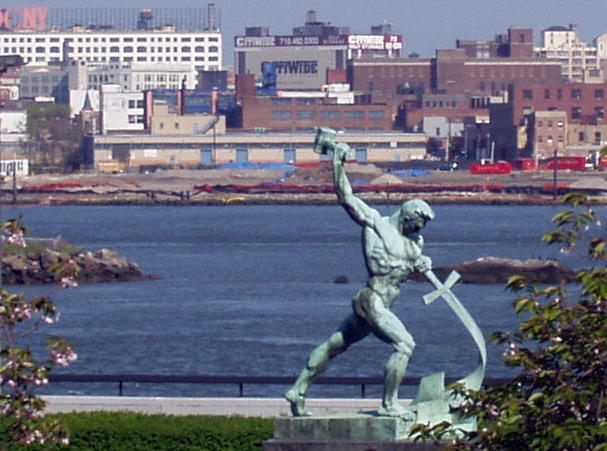
Isaiah sees the nations of the world gathering together instead of marching against each other. He sees people laying down their weapons because they have learned a better way to live.

Swords become plowshares. Spears become pruning hooks.
What once took life now gives life. What once drew blood now grows bread.

That is the apocalypse beyond the apocalypse. Not just the exposing of what happens when things fall apart—but the unveiling of what is trying to be born. A world no longer organized by fear, but by learning. By shared life. By the slow conversion of violence into nourishment.

We see the same pattern in the natural world all the time. In the hollow of a fallen log, an animal makes her home. From the remnants of a supernova come the building blocks of life itself.

We might wish for a world where everything is under control and nothing is chaotic. We might be afraid that, in reality, nothing is under control and everything is chaos. But the fact of the matter is that neither of those things is ultimately true. Life isn’t completely chaotic, but neither is it completely under control. Life grows in the creative tension between chaos and order. And over time, it keeps leaning toward connection. Toward relationship. Toward more belonging, not less. Faith dares to say that this same love is what’s holding the whole universe together.

That’s why Jesus can say, “Stay awake,” without meaning, “Be afraid.” Staying awake doesn’t mean scanning the horizon for disaster. It doesn’t mean planning for every possible contingency. Staying awake means paying attention to what really matters.

And that kind of waking up doesn’t just happen in dramatic moments. It happens in the small ones. It’s the pause before snapping back at someone. It’s the choice to listen instead of trying to win. It’s the moment when we decide whether we’re going to lead with fear—or with love.

Staying awake isn’t about knowing what’s coming. It’s about choosing how to live in alignment with what really matters.

So—here we are. Not in the same room. Not in the way we expected to be. The storm has interrupted “the best-laid plans of mice and men.” Our illusion of control has already cracked.

And still, beneath it all, we are being held.

Even here, in separate homes. Even on an altered Sunday. Even in uncertainty. Beneath the inconvenience, there is care. Beneath the disruption, there is still connection. Beneath what unsettles us, there is love doing its quiet, steady work.

So our invitation this season is simple. Don’t cling in fear. Don’t shut down in despair. Stay awake to what matters. Choose what grows life. Trust what is deeper than the storm.

Amen?
God’s Dream

Here is this week’s sermon from First Presbyterian Church of Boonville, NY.

The text is Isaiah 2:1-5.

Click here to listen to the podcast.

This week, we begin our journey toward Christmas.  Decorations are going up at home and shopping has begun in stores.  As the music of Bing Crosby invades our radio waves, nostalgia mixes with anticipation and the smell of freshly-kindled wood stoves.  In church, candles are lit one by one and purple vestments are hung in honor of our coming king.  We call this season “Advent”.

Beyond the commercialized holiday bliss, there is another side to this season.  It is the time of year when the weather really starts to turn bitterly cold.  Here in Boonville, we’ve just had our first real snowfall.  The daylight hours are the shortest they will be all year and darkness seems to hover over everything.  Perhaps the early Christians chose to celebrate the birth of Christ at this time of year because they needed a pick-me-up?

In a spiritual sense, I tend to think of myself as being more of an Advent person than a Christmas person.  I spend most of my time in the cold and dark places of the soul, waiting for God to show up.  And when God finally does arrive, it almost never happens how I expected.

I feel this way, not only during Advent, but year-round.  This is why Advent (not Christmas) is my favorite time of the church year.  It describes my own spiritual journey so well.

I imagine that “dark” and “cold” is how many people must have felt during the lifetime of the prophet Isaiah, in the 8th century BC.  It was a time of extreme unrest and political upheaval.  The great Assyrian Empire lurked on the borders of the Holy Land.  Nations sought security in numbers, making alliances with each other or with the Assyrian superpower itself.  At home, rulers were becoming more and more corrupt, building their kingdoms on the backs of the poor and oppressed.  Rather than trusting in the mysterious and unseen God of Israel to deliver them, many people sought solace in the practices of magic and idol worship.  They felt safer putting their trust in gods that could be seen and controlled through arcane rituals, even if those rituals demanded the sacrifice of their own children.  These were dark and cold times indeed.

It was into this cold and dark environment that God first called Isaiah son of Amoz to speak.  Isaiah had a lot of harsh things to say about the culture in which he lived.  He criticized them for their hypocrisy and cynicism.  They pretended to be faithful and religious Jews while taking advantage of the poorest and most vulnerable members of society.

But Isaiah’s message wasn’t entirely negative: God also gave Isaiah a vision of the way his country could be.  This is the passage from which we read this morning.  In this passage Isaiah envisions his community of Jerusalem as an international center for education and spiritual renewal.  People would go there as soldiers and leave as farmers.  Death-dealing swords would be transformed into life-giving plows for the fields.  From there, the whole world would learn a new way of living and relating to one another that would transform the face of creation forever.

The people had a long way to go before this vision could become a reality, but Isaiah held onto it for dear life.  He believed that this dream would come true, not through human ingenuity or goodwill, but because God willed it, and nothing (not the hypocrisy and cynicism of the people, not the corruption of their leaders, not even the military might of the world’s greatest superpower) could prevent God’s dream from coming true.

Believing in God’s dream must have been a tall order in a time as cold and dark as Isaiah’s.  To this day, rather than being a center for peace and education, Jerusalem remains one of the most violence-ridden cities on the planet.  Almost 2,800 years later, our headlines mock Isaiah’s dream for Jerusalem as the fantasy of an idealistic fool.

Our time is no less dark and cold than Isaiah’s was.  News of international conflict continues to make us nervous.  People still grow cynical as they read headlines of corrupt politicians and hypocritical religious leaders.  While outright idol worship is not as common as it once was, we are still tempted to put our trust in objects of our own making, such as our investment portfolios, our insurance policies, our educational system, our nuclear arsenal, our political parties, or our religious institutions.  It’s comforting to trust in these things because we can see them and we think we can control them.  But the cold, dark fact of history is that none of these idols can provide us with the peace and security we seek.

The challenge of Advent is for us to look past these idols, these objects of our own making.  God is calling us to rise above our cynicism and hold onto hope: Hope that the cold and darkness will not have the last word in history; Hope that the way things could be is the way things will be; Hope that God’s dream will come true.

The dream did not come true in Isaiah’s lifetime, nor did it come true in the earthly lifetime of Jesus, nor will it probably come true in our lifetime, but rest assured: God’s dream will come true.  There have already been signs of this happening in history: wherever enemies make peace, wherever oppressed people go free, wherever healing triumphs over sickness, there we find a partial fulfillment of God’s dream and Isaiah’s vision.

God has graciously invited us to be a part of the fulfillment of this dream.  This should radically change the way we live our lives here and now.  Isaiah called the people of his community to live changed lives, saying, “O house of Jacob, come, let us walk in the light of the Lord!”

God may call some of us to be prophets, shaking the very foundations of idolatry and cynicism in our society.  I think of heroes like Martin Luther King, who dreamed God’s dream out loud.  Others of us will be called to “brighten the corner where we are”.  But let us not be deceived: our little acts of human compassion and forgiveness, no matter how small, have divine and eternal value because they are part of God’s great plan for this earth.  Every “thank you”, every “I’m sorry”, and every “I love you” spoken in word or deed is a ray of light that pierces the darkness of this cynical world.  Not one of these rays will ever be wasted or lost.  Do you believe this?

Advent does not prepare us for a nostalgic commemoration of a one-time event in history.  Advent propels us toward the revolutionary culmination of history in the fulfillment of God’s dream for this world.  O people of Boonville, come, let us walk in the light of the Lord!