
The Slow Work of Love

Sermon for Proper 12, Year A

Matthew 13:31-33, 44-52
Romans 8:26-39

Rich Mullins is reported to have said, “I tend to think that success is overrated. It’s something that everybody goes after until they get it, but then nobody knows what to do with it.”

And I think he was right. Several years ago, I was talking with a very successful businessman that I knew. This person had been very successful in business, worked hard, made a lot of money, and had all the nice things that come along with that. And he said to me, “You know, none of it has actually made me very happy.”

Our world’s definition of success is centered around that which is flashy, that which is fast, and that which is cheap.

It’s flashy in that we like spectacle. We like bigger, better, faster, more.

It is fast in the sense that we like instant gratification. We like immediate returns on investment.

And it’s cheap, not necessarily in the monetary sense, but in the sense of being very convenient for us.

But all of that together, like my friend the businessman observed, doesn’t really create a sense of lasting joy or happiness.

It’s not that success is wrong or evil. It’s just that it doesn’t have the power to save us. One of my favorite authors, Richard Rohr, says, “After the age of 35, success has nothing more to teach you.”

But Jesus, on the other hand, comes to us with a very different definition of success.

In this series of five, short parables that we’ve heard today, there’s the parable of the mustard seed, the yeast, the treasure in the field, the pearl of great price, and the net catching fish.

There is a common theme running through each of these parables, all of which are about the kingdom of heaven, which I remind you, is not the place where we go when we die.

When Jesus talks about the kingdom of heaven, he is talking about the way that God is working in this world, transforming us from the inside out.

The kingdom of heaven, according to Jesus, is not flashy. It’s hidden.

So, you’ve got the seed, the tiny seed, hidden in the ground. You’ve got yeast, which is microscopic, and the treasure buried in the field.

It’s hidden. It’s not flashy.

Second of all, it’s not fast. It’s a growing thing. That seed isn’t going to blossom into a tree overnight. You have to wait and let the bread rise.

And the third thing is that it’s not cheap. It’s precious. It is worth the cost that comes with it.

There might not be an immediate return on investment. It might not be convenient for us. But, if you stick with it, it is worthwhile.

Jesus describes how the kingdom of heaven works, and Paul, in our second reading today, tells us why we can trust it.

We can trust it, Paul says, because the Spirit is at work, even when we can’t quite see it. Working often beneath the surface, like that seed in the dirt, or like that yeast in the bread. Working secretly, in a hidden way.

Paul says, all creation is groaning in expectation. Sometimes we feel so lost, we don’t even know what to pray for. But the Spirit is praying in us, “with groans too deep for words.”

Finally, he says, we can trust this work because there is nothing in heaven or on earth that will ever be able to separate us from the love of God.

Even though it is hidden. Even though it is slowly growing. And even though it comes at a cost.

The person in Christian history who embodied this lesson, better than anyone else, is St. Francis of Assisi.

St. Francis was born into success and into privilege. His father was a wealthy cloth merchant in the town of Assisi, Italy.

He had all the benefits that come with privileged childhood. He was a bit of a party guy. He would be what we might call a “nepo baby” in today’s terms.

When he came of age, he did what was expected of young men. He joined the army, went off to war, got captured, got deathly ill while he was in captivity, and his captors released him home, because they thought he was going to die.

But as it turns out, St. Francis didn’t die. He recovered. And during that time of recovery, he started to think about his inner life, his spirituality. He thought, “Gosh, what am I doing with my life?” And so he started putting some pieces together.

He says, well, you know, I’m a young guy. I’m a soldier. I guess if I’m going to be spiritual about it, I should join the papal army.

So, he sets out on his horse out to meet the pope’s army. But then he hears a voice say to him, “Francis, why were you deserting the Lord for his vassal?” And so then he turns around.

He says, “OK, I guess I’m not supposed to go fight for the pope. What am I supposed to do?”

He spent a long time kind of wandering the countryside. And he came across this abandoned, ruined chapel called the Church of San Damiano.

He would sit in the ruins and pray, “What is my life supposed to be about?”

And then one day while he was praying in there, he had this vision of the Christ speaking to him through the crucifix, saying, “Francis, repair my church.”

Francis goes, “Oh! OK, great! I know what I’m supposed to do now. I’m supposed to rebuild this church.”

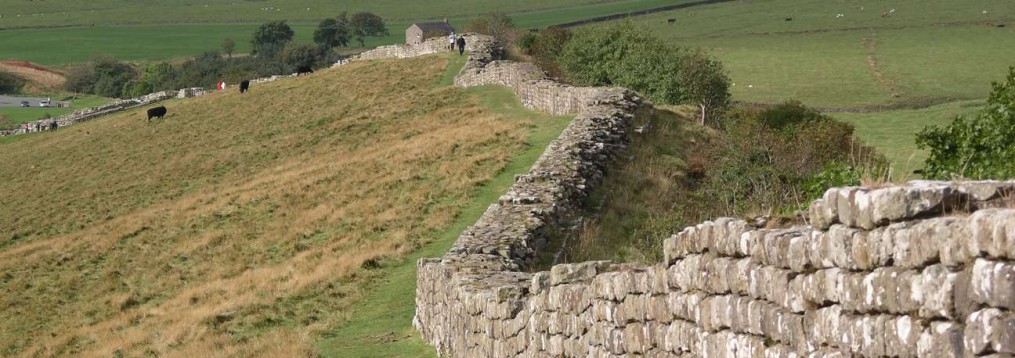
And so he goes and he starts picking up rocks and rebuilding the walls.

He talks to some of his friends around town, who join him in this work. And they’re building the church back up, piece by piece.

But even then, he didn’t quite have the full picture.

Over time, this community came together around the rebuilding of this chapel. They started talking about their deepest beliefs and commitments, as Christians. And they founded this community based on poverty and of service to the poorest members of their community, a community that respected all creation as members of their family.

Francis wrote some really beautiful hymns about “Brother Sun and Sister Moon.” And there’s wonderful stories about the ways that Francis was a great lover of animals. In time, this movement spread beyond the chapel and became a worldwide renewal movement that caught the attention of the global church.

So in the end, Francis figured out what his purpose in life was. But it didn’t happen all at once. There were a lot of false starts.

There were a lot of wrong guesses along the way. But bit by bit, it came together like a Polaroid picture, slowly developing.

That was how Francis’ sense of calling emerged. And I think that is how our sense of calling emerges. We, like Francis, probably are not going to get it right on the first try.

We’re not going to instantly know what the purpose of our life is. But if we stick with it, if we keep asking the questions like Jesus asked them in these parables, looking for:
that which is hidden beneath the surface,
that which is growing slowly, and
that which is precious and costly,
we’ll start to get a clearer and clearer sense of who it is that we are called to be and what it is that God is calling us to do with “our one wild and precious life,” as the poet Mary Oliver called it.

Looking around at your life, you might see the things that other people don’t notice. You might care about other people that folks want to give up on. But something in you draws you to them.

And I encourage you to ask yourself continually, not what is most convenient or what is most efficient, but ask what is most faithful and most loving.

And we’ll find the Spirit indeed is still at work within us and among us.
The seed is still growing.
The yeast is still rising.
The polaroid of your life is still developing, and finally,
that there is nothing in heaven or on earth that will be able to separate us from the love of God.

Do Not Be Afraid

They say growing up is hard to do.  And I think they’re right.  Because growing up involves change and kids generally like to have a regular, predictable routine.  I remember one time when life interrupted my routine and I had to adjust to a new way of doing things.  It happened at the beginning of fifth grade.  I was having a hard time adjusting to my new classroom, my new teacher, and more challenging homework assignments.

When I finally had all I thought I could handle, I made an appointment to see the school guidance counselor, Mr. Arnold.  I walked into his office with my mind made up.  I had a plan.  I thought I already knew the solution to my problem, so I told him: “Mr. Arnold, this fifth grade stuff is too hard.  I don’t like my teacher, I can’t keep up with the material, and I’m just not happy here.  I’m obviously not ready for this.  I think I just need to back to fourth grade.”

Well, you can imagine what Mr. Arnold’s response was.  When he finally stopped laughing, he told me in no uncertain terms that returning to the fourth grade was not an option.  Then he introduced me to a new word, one that I’ve carried with me ever since.  To be honest, I think he made it up, but it describes so well what I was doing by asking to go back to fourth grade.  Mr. Arnold’s word was awfulizing.  He said, “You’re awfulizing this situation, and no, you can’t go back to the fourth grade.”  And then he explained what he meant by that:  my ten-year-old self was choosing to see only the negative parts of fifth grade and blowing them out of all rational proportion until I convinced myself that the only solution was to go backwards and stay in my old comfort zone.

Growing up is all about facing the future.  We all have to do it: as individuals, as churches, as a society, and we Christians have a choice to make in that regard: we can either face the future with fear or we can face it with faith.

In this morning’s gospel reading, Jesus has a lot to say about the future.  As usual, he’s speaking metaphorically; he’s telling stories.  In the first story, he describes the coming future as a bridegroom coming back home after his wedding.  In the second one, he describes the future as a thief breaking into a house in the middle of the night.  What this says to me is two-fold: first, the future is full of the potential for great joy; second, the future is full of great potential for danger.  Both of these realities are true in the same place, at the same time.  Neither the joy nor the danger outweighs or cancels out the other.  Both are simply true.  That’s how reality is.

The only thing we have to decide is how we will respond to this dual-reality of joy and danger, which the future presents us with.  Again, ours is a choice between facing the future with fear and facing the future with faith.

We already have a pretty good idea of what it looks like to face the future with fear.  We see people do it every day because fear is the easier of the two choices.  When individuals choose fear over faith, it looks like despair, cynicism, sarcasm, and broken relationships.  People give up on themselves and each other in order to lead lives of “quiet desperation” as Thoreau said.  People give up on life because they’re scared that things might not turn out like they’d hoped or planned, so they’d rather just shrivel up and get cold and hard inside while life passes them by.

When whole communities like churches, businesses, or countries choose fear over faith, the consequences are far more dire.  The people in these communities turn inward and get defensive, circling their wagons against the onslaught of a hostile environment.  They build walls and weapons to protect themselves from anyone who might look, think, love, or pray differently than them.  In a world governed by fear, rather than faith, the best defense is a good offense.  It’s kill or be killed, eat or be eaten, so you’d better get it while the getting’s good and do unto others before they do unto you. 

That’s fear.  It gets you nowhere.  Whether we’re talking about people, churches, or countries, living in fear just perpetuates the cycle of violence over and over again for generation after generation until there is nothing left of this world but a smoldering trash heap.

Isn’t that what we see happening on the news every day?  People are scared; they’re hurting each other because they’re scared; they think that will keep them safe, but it won’t.  It’s just going to make the problem worse.  Mahatma Gandhi said, “An eye for an eye, and eventually the whole goes blind.”

But Jesus said there is another way.  We don’t have to choose fear.  We can choose faith instead.  Faith in what?  What is the basis for choosing faith over fear?  Jesus said, “Do not be afraid, little flock, for it is your Father’s good pleasure to give you the kingdom.”

Let’s break that sentence down and take a closer look.  First of all, who is Jesus talking to?  The “little flock.”  Who is that?  Who were the people who liked to hang around Jesus in his day?  The riff-raff, ragamuffins, tax collectors, sinners, outcasts, insignificant people, sick people, and poor people.  In a nutshell: people who don’t matter.  Jesus had a reputation for hanging out with these kinds of folks.  It made all those decent, church-going, uptight upright, law-abiding citizens sick to their stomach to see Jesus eating dinner with that “little flock” because, in that culture, people eating together meant that they accepted each other with no questions asked.  When Jesus did it with the most forgotten and outcast members of his society, he was saying, “I love you and I accept you, just as you are.”

Question: Who occupies that space in our culture today?  Who is the “little flock”?

Let’s keep going.  The next two words I want to look at are “good pleasure.”  What does that mean?  It means, “This is what makes God happy,” and “God gets a kick out of this,” and “This makes God laugh.”  Jesus is saying that God is playing a great big joke on us and here’s the punch line: “…it is your Father’s good pleasure to give you the kingdom.”

What is the active word there?  Is it God’s good pleasure to sell you the kingdom?  Is it God’s good pleasure that you earn the kingdom by how well you behave or by what you believe?  None of the above.  It is God’s “good pleasure to give you the kingdom.”

The active word is give.  It’s a gift, a free gift.  Theology-types have a word for this: grace.  Grace is unconditional love and unmerited favor.  Grace is God’s basic orientation toward us.  We didn’t earn it, so we can never lose it.  Furthermore, because we didn’t earn it, we don’t get to have any say in whether or not God extends that same grace toward anyone else (which she does).  It’s a free gift, given to all without discrimination.

Finally, what is being given?  The kingdom.  This is a very important idea for Jesus.  In fact, it’s the central idea of his ministry.  For Jesus, the kingdom of God (sometimes called the kingdom of heaven) is not some happy place where people go when they die.  No, for Jesus, the kingdom of God is a vision of this present world, not as it is, but as it should be: turned upside down and transformed from the inside out.

So, let’s put it all together now.  What Jesus is saying is that God, ever since the beginning of the world and continuing until its end, has been playing a joke on us.  While we have been fighting with each other in our rat race to protect what we think is ours, God has been working slowly and quietly beneath the surface and under the radar of the powers that be.  What really makes God laugh are those moments when true peace and justice are established on earth, not by the big shots with their bombs, bucks, and bureaucracies, but through the “little” ones, those forgotten lives who don’t matter to the powerful, working in small, local communities to actualize Jesus’ vision of the kingdom of heaven on earth.

That’s who God is, according to Jesus.  That’s how God works in the world: slowly, gently, never stopping, and never giving up.  The kingdom belongs to these little forgotten ones because God has freely given it to them.  That truth, according to Jesus, is our basis for choosing faith over fear when we face the future with all its potential for great joy and great danger.  We can choose to have faith in the laughing God who always works slowly and patiently through the little things of this world in order to turn it upside down and inside out.

God is doing this, God has been doing this for all time, and God will keep doing it for all time.  That’s why Jesus can say, “Do not be afraid, little flock, for it is your Father’s good pleasure to give you the kingdom.”

Facing tomorrow with this kind of faith has a profound effect on the way we live our lives today.  Because we believe it is God’s “good pleasure to give [us] the kingdom,” we are now ready to hear Jesus say, “Sell your possessions, and give alms. Make purses for yourselves that do not wear out, an unfailing treasure in heaven, where no thief comes near and no moth destroys. For where your treasure is, there your heart will be also.”

Fear seeks only to get things for itself; faith wants to give to others.  True believers are those who are able to trust in the reality of this mystery we call God and then live, in grateful response to that mystery, with open and generous hearts toward their fellow creatures.  That is what it means to be the church; that is what it means to possess Jesus’ kingdom of heaven on earth; that is what it means to face the future with faith, rather than fear; and that is all we need in order to turn the world upside down and transform it from the inside out.