Crossing the Impassible Chasm

Sermon for Proper 21, Year C

Click here for the biblical readings

Several years ago, I was working at a job for which I was particularly unsuited. I believed in the mission of the organization I was working for, but it became clear, as time went on, that my skills were not a good match for the skillset that was actually needed in the position I was filling.

The ever-increasing tension led to a concurrent increase in my depression. I would come home from work every night, drained and exhausted and hopeless. It felt to me like there was this huge chasm opening up between me and my coworkers and my family and my friends. Eventually, it got so bad that I felt like I just couldn’t carry on anymore.

Suffering, unfortunately, is an inescapable fact of life in this world, or so the Buddha taught in the first of his great noble truths. One of the hardest parts of suffering is not the pain itself, but the isolation that it creates between we who suffer and those around us. The paradoxical truth is that pain is a human universal, but it makes us feel like we are alone in the universe.

Maybe your pain is like mine was at that time, coming from dissatisfaction with a job or a relationship. Then again, maybe for you, that pain comes from grief at the loss of a loved one. Or maybe it’s the hopelessness you feel when you look at the world through the screen of an iPhone, doom-scrolling through social media as people respond to the nastiness of the world by getting nastier and nastier with each other.

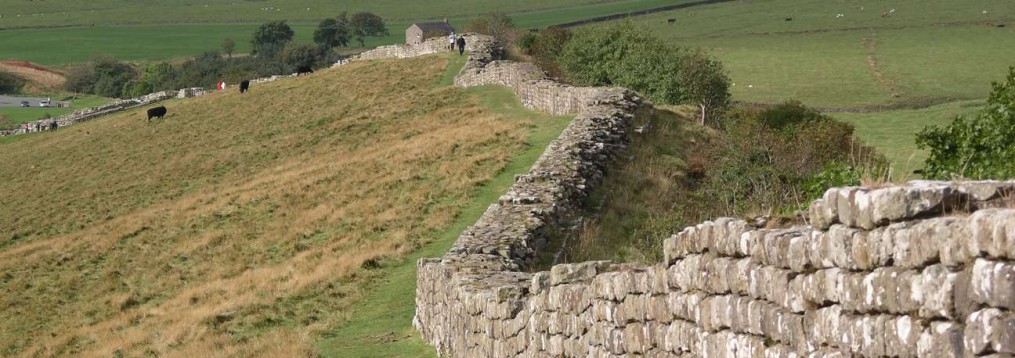
The causes are manifold, but the result is the same. We feel the chasm opening up between ourselves and our neighbors and widening to the point where it feels impassable. That chasm, that feeling of emptiness between us and our neighbors, is where I want to start as we look at our gospel for today.

The impassable chasm between one person and another factors highly in the parable that Jesus tells in today’s gospel. This is a parable about a wealthy man whose name we do not know and a poor man named Lazarus. On the surface, this looks like a story about the afterlife, but the main thing to understand is that it’s not.

Here’s how I know: This is a parable, and parables are never about the surface-level imagery in the story itself. Think about it: The parable of the lost sheep is not about animal husbandry. It’s about the joy that God experiences in each of us. Likewise, the parable of the Good Samaritan is not about highway safety; it’s about the care that each of us is called to give to one another. So, in the same way, the parable of the rich man and Lazarus is not about the afterlife. That’s just the surface-level image. So what, then, is it about? That’s what we’re here to talk about today.

I already talked about the isolation that I felt when I was going through my experience of suffering at my job. That experience of isolation, that depression, felt like an impassable chasm between myself and the people around me. In the same way, an impassable chasm appears in this parable between the rich man and Lazarus.

This chasm exists in the afterlife, where the fortunes of the rich man and Lazarus have been reversed: The rich man is suffering in Hades, while Lazarus is resting comfortably in the presence of Abraham, or, as some older translations have rendered it, in Abraham’s bosom. The rich man cries out for help, but Father Abraham tells him that there is an impassable chasm between them that no one can cross.

I think this chasm between them had always existed. It’s just that it couldn’t be seen before, when they were alive. The missed opportunity for the rich man was the opportunity to cross that chasm while it could still be crossed in this life. That, I think, is the point of this parable.

To drive the point home, let’s look at the name of the poor man: Lazarus. Lazarus is a Latinization of the Hebrew name Eleazar, and the name Eleazar translates into English as “God helps.”

God helps. That’s the true message of this parable. That’s the fundamental truth that Jesus was trying to communicate to his listeners through the symbols of heaven and hell, or Abraham’s bosom and Hades, as the parable presents them.

Where is God in the midst of suffering in this world? God is helping. That’s what God does because that’s who God is.

In the wake of the terrible events of September 11th, 2001, one of my spiritual heroes, Mr. Rogers, spoke to the families of America and gave them some solid guidance about what to do when terrible things happened. He said, “When I was a boy and would see scary things in the news, my mother would say to me, ‘Look for the helpers. You will always find people who are helping.’”

That is the wisdom of Jesus that we find in today’s parable. The name Lazarus literally means “God helps,” and that’s exactly what God does in the midst of suffering that separates us from one another. It’s the opportunity that the rich man missed in this parable, and it’s also the very thing that God did for us in the mystery of the Incarnation.

Christian theology tells us that in the Incarnation, God “took on flesh and dwelled among us.” When humanity was suffering in the isolation of sin and death, God in Christ became one of us — “just a slob like one of us, just a stranger on the bus, trying to make his way home,” as songwriter Joan Osborne told us in the 1990s.

In Christ, God crossed the impassable chasm between heaven and earth, between time and eternity, between sin and righteousness, between death and life. God crossed the impassable chasm. Therefore, according to Jesus in this parable, we are called to do the same with our neighbors.

Returning to my initial story about the job for which I was so ill-suited: My depression got so bad that my mental and physical health were in jeopardy, so I reached out to my priest, Father Randall Warren of St. Luke’s Episcopal Church in Kalamazoo, and Father Randall listened while I told him what was going on. He validated my feelings and gave me some unsolicited advice, which was rare for him.

He said, “You need to get out of there now.”

Thankfully, I listened to what he said. I quit my job and spent the next year at home with my kids. It transformed our relationship and helped me to become the kind of father that I had always wanted to be. After that, I entered a chaplain training program and spent the next six years as a healthcare chaplain.

During that time, I was able to get back the confidence I had lost while working in my previous job. At the end of that time, I was able to come back and resume my work in parish ministry as the rector here at St. Mark’s, Coldwater, where I am proud to serve you today and hope to do so for a very long time.

When I was younger, I used to say that I wanted to become a priest in order to be the kind of priest that I needed. But now, thanks to Father Randall, I can say that I want to be the kind of priest that I had — a priest who reaches across the impassable chasm of sadness and suffering with the arms of love. I can never pay back the gift that was given to me by my priest, so I will do my level best to pay it forward to others.

Kindred in Christ, that is what this parable is about. God reaches across the chasm of suffering to reach us with the arms of love and calls us to do the same for one another. This is not a calling only for priests, rabbis, imams, and pastors. It is a job for each and every one of us.

When you show up for a friend or a neighbor who is struggling, who is grieving the loss of a loved one or a job, who is going through a divorce, who is in the early stages of recovery from an addiction or a mental illness, who is suffering from the effects of racism, sexism, homophobia, transphobia, or any other kind of social injustice, you are crossing the impassable chasm that exists between the rich man and Lazarus while there is still time.

Friends, I don’t believe this parable is about the afterlife. It is about the way we care for each other in this life. It is about reaching across the chasm of suffering with the arms of love. It is about being the hands and feet of Jesus in the world today. That is what God has done for us in Christ, and that is what we are called to do for each other today.

Amen.

An Impact Beyond the Intent

Photo credit: Enrique López-Tamayo Biosca, CC BY 2.0 https://creativecommons.org/licenses/by/2.0, via Wikimedia Commons

Sermon for the Fifth Sunday in Lent.

Click here to read the biblical texts.

Back before my wife Sarah and I had started dating, we were in that awkward stage where we were both noticing each other, but neither one had worked up the courage to make a move, so we just kept dancing around the subject. One night, Sarah invited me to a party at her house, and we ended up talking on the couch long after everyone else had left. It was getting late, Sarah reached forward for her drink on the coffee table, I unconsciously stretched, and she accidentally sat right back into the spot where my arm was. Sarah was like, “That was smooth! Can we talk about this?” On the outside, I played it very cool and calm, but on the inside, I was like: “AAAAAAAAAAAAAAAAAAAAAAHHHHHHHHHHHHHH!!!!!!!!!!!!!!”

Anyway… to make a long story short: It went pretty well and we’ve been married for 20 years.

The moral of the story is that our actions sometimes have an impact beyond what we intended them to have. That was certainly the case with St. Mary of Bethany in today’s gospel.

Mary’s anointing of Jesus happens at a very important turning point in the larger story of John’s gospel. Up until this point, Jesus had been dropping hints about his true identity, but from this point forward, he would begin to speak more openly as the story moved toward its climax with his crucifixion and resurrection.

In the chapter just prior to this one, Jesus raised Mary’s brother Lazarus from the dead. This miracle, according to John, was the catalyst that caused the religious leaders to begin plotting to have Jesus killed. As this part of the story begins, Jesus is having dinner at the home of Lazarus, Martha, and Mary. The memory of Lazarus’ death and resurrection was very fresh. Mary would have been deeply moved by the miracle she had just witnessed. Not only had Jesus turned her grief into joy, he had also rescued Mary and Martha from a life of poverty and degradation, which would have absolutely happened to two unmarried women who no longer had a man to speak for them in their patriarchal society. Jesus had saved, not one life, but three lives in his raising of Lazarus from the dead. Mary probably felt that she owed Jesus her life at this point.

As a sign of her gratitude, the text tells us that Mary took “a pound of costly perfume.” The Greek word for “costly perfume” is myrrh, which was used for burial rituals. It is quite likely that Mary had bought this perfume to use for her brother’s funeral, which was no longer necessary, thanks to Jesus. By breaking it open and pouring it on Jesus’ feet, she was expressing her relief and gratitude for what Jesus had done for her and her family.

This, all by itself, would have been a powerful statement, but Jesus gives it an even greater significance that Mary herself could not have known. Jesus says, “She bought it so that she might keep it for the day of my burial.”

Jesus knew, whether through supernatural clairvoyance or just an insightful hunch, that his own death was impending. Mary’s act of devotion meant more than she could possibly have known. Just as Mary honored Jesus with her gratitude, Jesus honored Mary with the knowledge of what her gesture truly meant to him.

The moral of this story is the same as the one I told about my wife and me: Our actions sometimes have an impact beyond what we intended them to have.

Our individual lives are a part of a larger story. Like ripples in a pond, God’s grace expands the meaning of what we do to cosmic significance. If, as Jesus says, even the hairs on our head are numbered, then surely no small act of goodness or kindness goes unnoticed by the God who made the universe.

My favorite modern example of an action that has a greater impact than its intent is the story of Fr. Trevor Huddleston, an Anglican priest who ministered in South Africa in the early twentieth century. Fr. Huddleston was an outspoken activist against the apartheid policies that discriminated against people of color in South Africa. One of the many racist laws on the books at that time was that, whenever a darker-skinned person passed a lighter-skinned person in the street, the darker-skinned person had to step off the curb into the gutter and lift their hat in deference to the lighter-skinned person. Fr. Huddleston, who was himself a lighter-skinned person, thought this racist law was absolutely ridiculous. So, he made it his regular practice that, whenever he passed a person of color in the street, he would step off the curb and lift his hat in a gesture of respect to this fellow child of God. Technically, this was an act of civil disobedience against South African law, but Fr. Huddleston practiced this as an act of divine obedience to the higher law of God, which says that all people are created equal.

One day, Fr. Huddleston was walking down the street and saw a little boy and his mother coming his way. As was his usual practice, he stepped off the curb and lifted his hat in a gesture of respect as they walked by. The boy and his mother were people of color. The little boy asked his mother, “Mummy, who was that man?” And the mother replied, “Son, that man is an Anglican priest, and furthermore, he is a man of God.”

The little boy, telling this story years later, said, “That was the day that I decided I too wanted to be an Anglican priest, and furthermore, a man of God.” That little boy grew up to be Archbishop Desmond Tutu, who helped President Nelson Mandela dismantle the satanic apartheid system that kept God’s beloved children in chains for so many years. It is possible that Fr. Huddleston might have had no memory of that particular day, in which he acted with the same integrity that inspired his actions every day. Like St. Mary of Bethany, Fr. Huddleston could certainly not have known that his simple act of stepping off a curb would have a ripple effect that would eventually lead to the undoing of the twisted system against which he was protesting.

Kindred in Christ, I invite you today to consider how your own simple acts of compassion and courage may have a similar ripple effect on the world in which we live. One never knows when a word of kindness or a gesture of gratitude may have an impact far bigger than its intent. Many such acts are known to God alone, but rest assured that they are known. Jesus says, in his Sermon on the Mount, “When you give alms, do not let your left hand know what your right hand is doing, so that your alms may be done in secret, and your Father who sees in secret will reward you” (Matthew 6:3-4).

Dr. Martin Luther King, in his Letter from a Birmingham Jail, wrote, “We are caught in an inescapable network of mutuality, tied in a single garment of destiny. Whatever affects one directly, affects all indirectly.”

As witnesses of the gospel of Jesus Christ, I want to encourage you this day to speak up whenever one of our siblings in Christ has offered some small word or deed that has impacted your day. It is quite possible that the giver of this gift is unaware of what it meant to you. Be quick to offer thanks to them, and to God for them.

If you are on the receiving end of such recognition, I invite you to listen with ears of your heart, giving thanks to God, who has multiplied the impact of your small gift to mean more than you intended.

Dearly beloved, our lives are not our own and they are not lived alone. It is up to us to enlighten our neighbors with knowledge as they have enlightened us with the love of Christ in their hearts. Who knows whether that grateful acknowledgement might be the very encouragement needed by a weary soul who is secretly despairing of life itself? By adding our small gesture of thanks to the common wealth, we may provide the necessary means by which a life might be saved.

Like St. Mary of Bethany, our actions have an impact far beyond their intent. Let us remember this fact and draw strength from it. May we trust that our lives matter more than we know.

Amen.

Crossing Chasms

Image
‘The Poor Man Lazarus at the Rich Man’s Door’ by J.J. Tissot (circa 1890)


I’d like to say a few words this morning on the subject of chasms.

More specifically, I’d like to talk about crossing chasms.

People seem to have a kind of fascination with the crossing of chasms.  The wider, the better.  I saw this one guy on TV last year who walked on a tightrope across Niagara Falls.  He was like a slow-motion Evel Knievel.  People came out in droves to see him.  Personally, I think people like to put themselves in positions where they can be amazed at what the human mind and body can be capable of when they are put to good use.  In a physical sense, people like this guy broaden the horizon of what is possible for the rest of us.

Now, that’s not to say that we should all be trying circus tricks, but we like to know that it can be done, that it’s possible: because it’s that possibility that gives us hope.  I might never walk across Niagara Falls on a tightrope, but seeing somebody do it makes me wonder what I might be capable of in my life that I haven’t yet tried.

The crossing of chasms gives us hope for what might be possible.

I picked the subject of chasms because they factor rather highly in this morning’s reading from the gospel of Luke.  The story is well known.  It was a parable told by Jesus about an unnamed rich man and a poor man named Lazarus.  Jesus tells us that the rich man “dressed in purple and fine linen and… feasted sumptuously every day.”  Meanwhile, the poor man Lazarus was “covered with sores” and “longed to satisfy his hunger with what fell from the rich man’s table.”

Jesus said that Lazarus’ usual panhandling spot was right by this rich man’s front door, meaning that the rich man had to walk by him every single day on his way to work (or whatever it is that people of his stature do with their time).  Every day, he would walk by and see this man, this fellow child of God, living (not really), more like existing day to day in pain and poverty.  Lazarus was within reach and this rich man certainly had the means to make a difference, but he did nothing.

Later on, after the two men died, Jesus imagines Lazarus being “carried away by the angels to be with Abraham” while the rich man is being tormented in Hades, the mythical realm of the dead in Greek culture.  And then Jesus imagines a conversation taking place, not between the rich man and Lazarus, but between the rich man and Abraham, one of the founding fathers of the Jewish people.

The rich man cries out for help, but Abraham says, “No, I can’t help you.”  He says, “Between you and us a great chasm has been fixed, so that those who might want to pass from here to you cannot do so, and no one can cross from there to us.”

I don’t think Jesus, in this story, is trying to scare us with threats of hellfire and damnation.  I think he’s trying to get our attention and draw it toward a reality that we all experience every day in this life.  The reality I’m speaking of is the chasm.

In the story, there is a chasm between the rich man and Lazarus.  Taken metaphorically, I believe this chasm was there between them while they were still alive.  The rich man walked by Lazarus every day, but he never looked at him, never reached out to him, and never really got close to him.  They were so separated (i.e. segregated) from one another so efficiently that there might as well have been a physical chasm between them.

When I look around this world we live in, I see chasms all around us.

I see chasms when I hear people say, “I don’t want my tax dollars going to pay for these poor people to get a free ride through life.”  People who talk like that don’t know what it’s like to wonder where their next meal is coming from, how they’re going to make rent this month, how they’re going to get to their appointment, or how they’re going to pay for their medication.  If they did, they might have more compassion for those who struggle economically.

I see chasms between nations when our country has a conflict with Syria or North Korea and somebody says, “Let’s just drop some bombs on ‘em.  That’ll fix it!”  That’s a chasm, right there.  How about when people in one country are dying young from starvation while people in another country are dying young from obesity?  That’s another chasm. 

What kinds chasms do you see in this world?

I see chasms between black and white, men and women, gay and straight, Christians and Muslims, just to name a few.

Sometimes, I see chasms running through the middle of families: partners or spouses sitting next to each other in a pew who haven’t kissed or barely spoken to each other all week, parents sitting down to dinner and looking across the table at that empty chair where someone should be sitting, but she’s not because somebody can’t find the strength to say, “I’m sorry” or “I forgive you.”

These are the chasms we live with.  Sometimes, they run between us so effectively that we are left feeling all alone, stranded on our own little island, out of reach and out of touch with everyone and everything.  As Abraham said to the rich man, “Between you and us a great chasm has been fixed, so that those who might want to pass from here to you cannot do so, and no one can cross from there to us.”

People are cut off (i.e. isolated) by the chasms (i.e. the broken relationships) that run between them.  What Jesus is trying to tell us in this parable is that we, as his followers, are called by God to use the time we are given on this earth to cross those chasms in whatever way we are able.

We are called to this because that’s exactly what God does.  The God of Love is a crosser of chasms.  Christians believe that God, in Christ, has crossed the great chasm between heaven and earth, between sin and forgiveness, between divinity and humanity.  This crossing is a grace, a gift given freely to all.  And if God has crossed such a great chasm to be near us, then who are we to refuse to cross the relatively small chasms that run between us?  To refuse to cross these little chasms is to deny who God is and what God has done for us in Christ.  We become like the rich man in Jesus’ parable, who refused to cross the chasm between Lazarus and himself.  And, in doing so, he cut himself off, not just from Lazarus, but also from Abraham.  Abraham: who symbolically embodied the essence of Jewish identity.  Abraham: the Exalted Ancestor.  Abraham: the friend of God.  Abraham: the father of the covenant.  In turning his back on Lazarus, the rich man turned his back on what it means to be Jewish.  He was cut off from the meaning of life.  He cut himself off from God.  He was in hell.

Hell, I believe, is not a place where an angry God sends people after they die.  Hell is a place that we make for ourselves in this life when we refuse to cross the chasms that run between us.  But the good news is that the God of Love is a crosser of chasms, even the chasm between heaven and hell.  Christians believe, as it says in the Apostles’ Creed, that Christ “descended into hell,” which is to say that God meets us where we are (even in hell).  In the Bible, Psalm 139 says (in the King James Version), “if I make my bed in hell, behold, thou art there.”  Even in hell, God meets us.

Not only that, God refuses to let us stay in hell.  Christ said he came to establish the kingdom of heaven on earth.  God in Christ is invading the hell we have made for ourselves on this planet and setting up a new regime.  God is here.  The kingdom of heaven is at hand.

And we are invited to be part of it.  You and I are God’s secret agents: infiltrating enemy territory, crossing impassable chasms by night, and sabotaging the dominion of hell in order to make way for the reign of heaven.  Your assignment, should you choose to accept it, is to make peace with your enemies, to welcome the outcast, to forgive the sinner, to heal the sick, to feed the hungry, to clothe the naked, to visit those in prison, to set at liberty those who are oppressed, to cross the chasms that run between us. 

This is a lifelong assignment.  There can be no retreat, no resignation.  I promise you that this world, all the powers of hell, and even the lesser impulses of your nature will fight against you in this, but we shall overcome. 

I believe that we shall overcome because our commander-in-chief, who started this operation (heaven’s invasion of earth), has promised to remain with us and see it through to its end, when: “Every valley shall be exalted, and every mountain and hill shall be made low: and the crooked shall be made straight, and the rough places plain: and the glory of the Lord shall be revealed, and all flesh shall see it together.” 

This is our calling, our destiny, and our hope.  I want you to go out from this church today and take part in it, in whatever way you are able.  And remember that I love you, God loves you, and there’s nothing you can do about it.

Be blessed and be a blessing.