Sermon for Easter 3
Stories are how human beings make sense of the world. We do it all the time. We can’t help ourselves. It’s just how our brains are made.
From the earliest days of human history, children would sit around the campfire with their elders and ask, “Why are things the way they are?” And the elders would tell a story.
Across cultures and religions, one thing is always true: we tell stories.
And if I were to ask you who you are, you would tell me the story of your life.
Stories are how we make meaning.
Now, the most interesting stories are the ones where things don’t go according to plan. That’s where the good stuff happens.
Nobody wants to see a movie with no conflict. There’s no plot.
When that happens, we tend to fall into three kinds of stories:
The fix-it story,
The forget-about-it story,
And the figure-it-out story.
The fix-it story is the one we prefer. Something goes wrong, but we come up with a plan and get things back to the way they ought to be. And a lot of the time, that works.
But sometimes it doesn’t.
Sometimes there are situations we simply can’t fix, no matter how hard we try.
And that’s when we fall into the forget-about-it story.
When everything falls apart, we sit in the ashes and say, “Forget about it. What’s the point?”
But if we don’t give up entirely, if we keep going, we may begin to enter another story: the figure-it-out story.
This is the story that doesn’t fix the problem, but doesn’t give up hope either.
Out of the ashes of the old story, something new begins to take shape—a meaning we didn’t expect, a kind of good we never saw coming.
Not because the suffering was good, but because something real can still emerge within it.
I saw this often in my work as a hospice chaplain.
People would come to me after being told there was nothing more the doctors could do for them.
At first, many of them were living in that forget-about-it story—grieving the life they could no longer return to.
And my work was simply to walk with them.
I would ask about their lives, and I would listen.
And slowly, something would begin to shift.
As they told their stories, they began to see them differently.
They thought about the people they wanted to thank. The people they needed to forgive. The love that had shaped their lives.
And those final weeks or months often became deeply meaningful.
Not because anything was fixed, but because they were finally able to see what mattered.
That journey—from fix-it, through forget-about-it, to figure-it-out—is exactly where we find the two disciples in this morning’s Gospel.
They had hoped that Jesus “would be the one to redeem Israel.”
But things didn’t turn out that way.
Instead of victory, there was a cross.
And when Jesus died, it seemed like all their hopes died with him.
That was the end of their fix-it story.
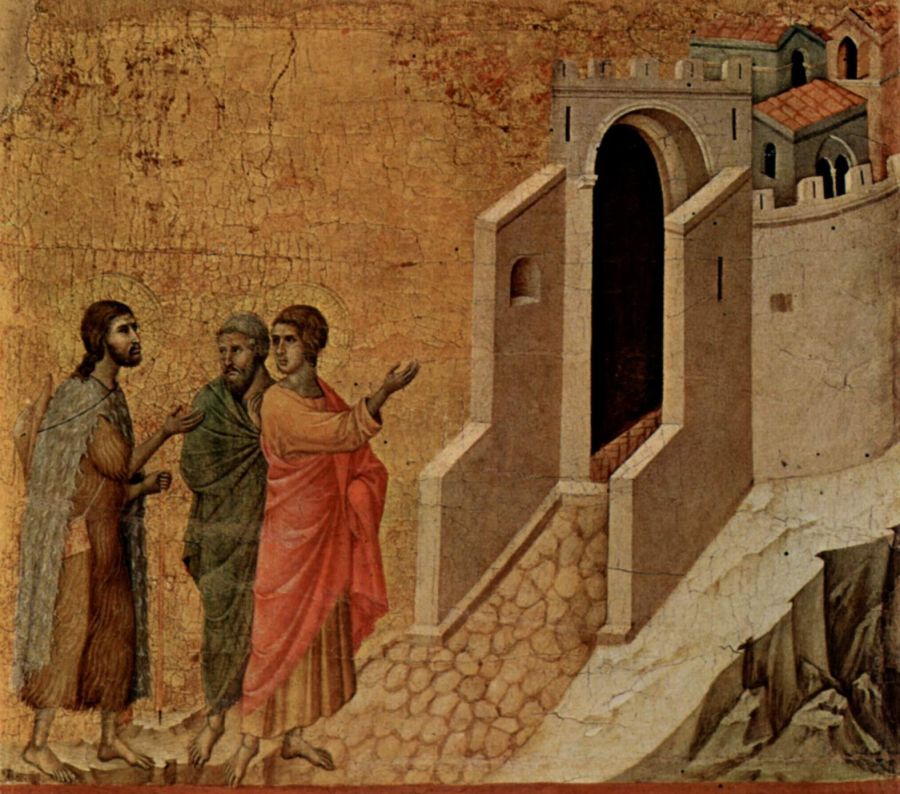
So when the stranger meets them on the road to Emmaus, they are living in the forget-about-it story.
“They stood still, looking sad.”
They say, “We had hoped that he would be the one to redeem Israel.”
And Jesus just listens.
And then he begins to reinterpret their story.
He shows them that suffering was not the end of the story, but somehow part of it.
And something begins to stir.
They say, “Were not our hearts burning within us while he was talking to us on the road?”
That’s the beginning of the figure-it-out story.
But it isn’t complete until they reach the table at the end of their journey.
There, Jesus takes bread, blesses it, breaks it, and gives it to them.
And suddenly, their eyes are opened.
They recognize him.
The story doesn’t go back to what it was, but reveals something deeper than they had ever imagined.
And then… just like that, he’s gone.
But Jesus is still there, in the blessed and broken bread.
And that’s when they run back to Jerusalem to tell the others.
Kindred in Christ, that same journey is the one we take every time we come here.
We come from weeks that did not go as planned, carrying burdens we cannot fix.
Sometimes we sit here wondering if any of this really matters.
And yet, here, our stories are reframed.
In the reading of Scripture.
In the prayers.
In the breaking of bread.
Sometimes, our hearts burn within us.
And sometimes, our eyes are opened.
We learn to see Christ here, in this bread and this wine, so that we can learn to see Christ everywhere else.
And we go back out into the world to tell the story:
That Christ is alive.
That he meets us in the middle of our stories.
And that somehow, even now, our stories are being drawn into the greater story of God.
And so, as we go back out into the world this week—a world where life rarely goes according to plan, and some problems are just too big to be fixed—when we are tempted to throw up our hands and say, “Forget about it,” I want to invite you to keep holding on.
Keep walking that road to Emmaus.
Keep listening to each other’s stories.
Keep trying to figure it out.
Trust that Christ is with you in the midst of the mess, working not to take things back to the way they were, but to bring forth a new story from the ashes of the old.
Go forth into this world, transformed by the power of Scripture and Sacrament.
And proclaim, not only with your lips but with your lives, the good news:
That the Lord is risen indeed. Alleluia.

