Blessing the Corners

Thank you to everyone who has offered prayers on behalf of Kalamazoo today. We are all exhausted.

As many of you know already, Jason Dalton went on a shooting spree last night, killing six and wounding two others in seemingly random acts of violence around our community.

I scrapped the sermon I had prepared for this morning and started over from the beginning. The text is Luke 13:31-35. Here is the sermon:

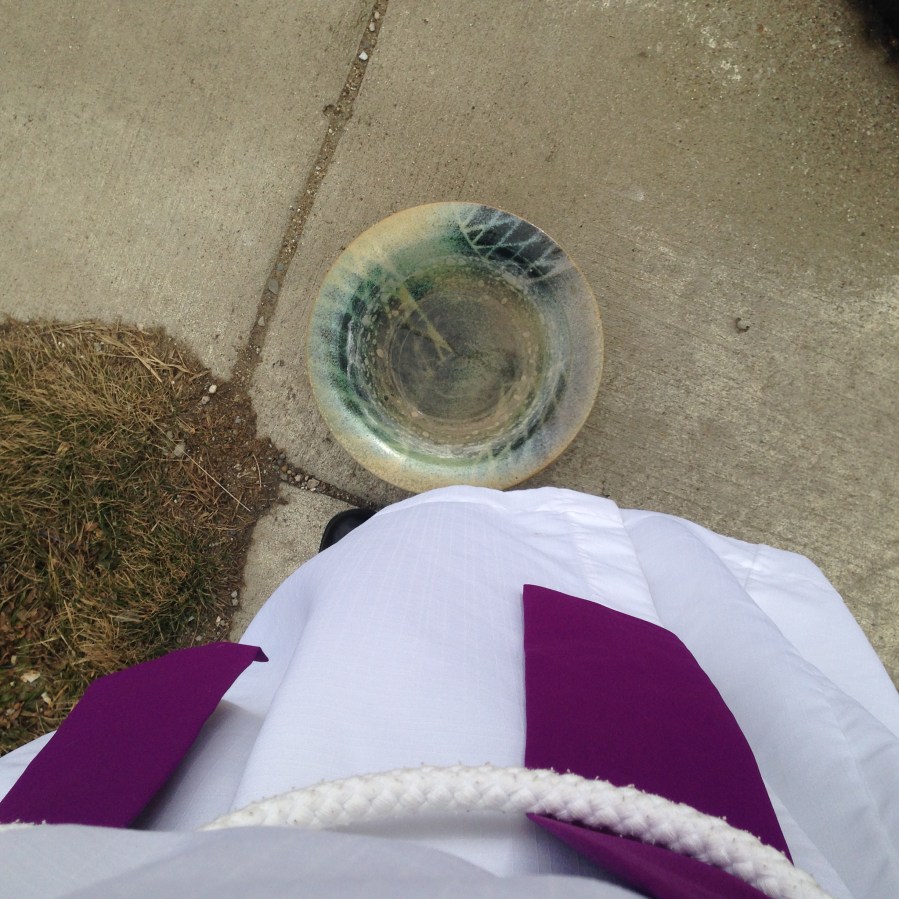
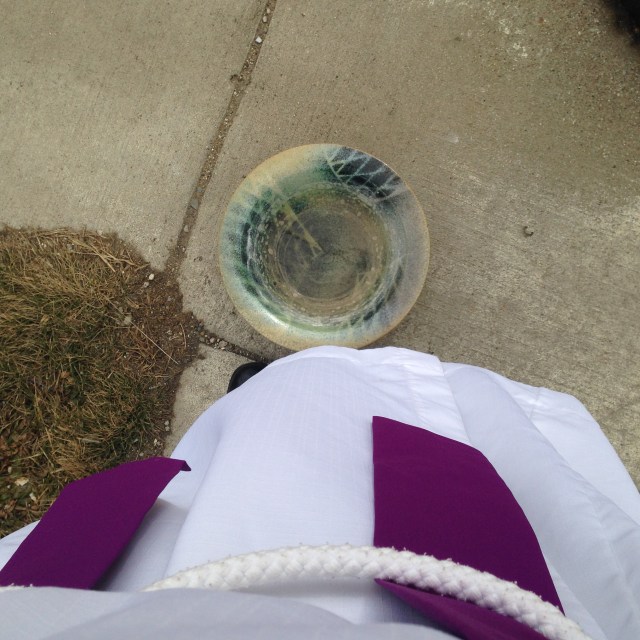
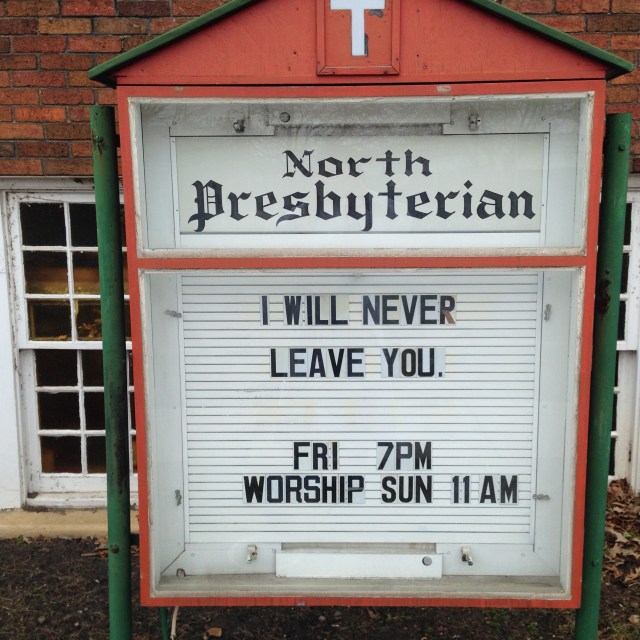
Jason (the suspected shooter) was arrested at the corner of Ransom and Porter, a scant three blocks from our church’s building at Ransom and Burdick. North Church is the closest Presbyterian congregation to the scene. After worship this morning, I took the water from our baptismal font and walked down to that intersection, sprinkling the four corners in an act of blessing. This ritual was done in your name and in the name of all who support Kalamazoo with their prayers today. Thank you. Your presence is felt.

Our closing hymn this morning was written by Archbishop Desmond Tutu and set to music by the Iona Community:

Goodness is stronger than evil.
Love is stronger than hate.
Light is stronger than darkness.
Life is stronger than death.
Victory is ours, victory is ours,
through God who loves us.

If you live locally, please come and join us at an interfaith community prayer vigil on Monday night (February 22), 6pm at First Congregational Church (345 W Michigan Ave).

IMG_0503
Water from the baptismal font.
IMG_0504
The corner of Ransom and Porter, where Jason was arrested.
IMG_0505
And the promise still holds true.

Lex Orandi

FullSizeRender(5)

Here, at long last, is a big project I have been working on this year:

Lex Orandi: An Ordo for the Divine Office based on the Rule of St. Benedict and the Book of Common Prayer (pdf file)

It is not a complete breviary that stands on its own, but a guide for praying the Office in a manner similar to the monks at St. Gregory’s Abbey, Three Rivers.

While not an exact replication of the Liturgy of the Hours at St. Gregory’s, Lex Orandi has been adapted to fit the schedules of people who live outside the monastery, but still want to pattern their prayer life after the Benedictine spirit.

While Abbot Andrew Marr​ and the brothers have helped me in this project and granted permission to reprint select portions of their Office (e.g. the Confraternity Prayers), Lex Orandi is an independent publication that has not been authorized or endorsed by St. Gregory’s Abbey, Three Rivers. Its use is not required.

Thank you to the community of St. Gregory’s Abbey, Three Rivers for your friendship, support, and guidance in this labor of love. It is my joy to make it available online for free to anyone who wishes to use it.

The Divine Office

This is a short introduction to the Liturgy of the Hours (a.k.a. the Divine Office) by Fr. Jeremy Driscoll, OSB of Mount Angel Abbey. It is beautifully and simply done. Very much worth a few minutes of your time, especially if you’ve ever wondered what monasticism is all about.

The Perilous Dark Path

As a culture, we have to be taught the language of descent. That is the great language of religion. It teaches us to enter willingly, trustingly into the dark periods of life. These dark periods are good teachers. Religious energy is in the dark questions, seldom in the answers. Answers are the way out, but that is not what we are here for. But when we look at the questions, we look for the opening to transformation. Fixing something doesn’t usually transform us. We try to change events in order to avoid changing ourselves. We must learn to stay with the pain of life, without answers, without conclusions, and some days without meaning. That is the path, the perilous dark path of true prayer.

Richard Rohr, Everything Belongs, p. 45-46

Praying Toward Yes

Image

I pray.  Regularly.

That probably won’t surprise anyone.  I’m a minister, after all.  Praying is kind of in my job description.

I’ve observed that there are a lot of misconceptions out about what prayer is and how it “works” (for lack of a better term).  When I mention the fact that I pray, I sometimes get funny looks from my skeptical friends who immediately imagine me writing letters to Santa and being good all year so that the new bike I wanted will be under the tree on Christmas morning.  They imagine me constructing an argument at least somewhat similar to the following formula: “I follow Religion X and prayed to Deity Y for Event Z to happen.  Event Z happened, therefore Deity Y must exist and Religion X must be the one true religion.”

But none of that bears any resemblance to how or why I pray.  For me, prayer is not an exercise in crossing items off my wish-list, justifying the exclusive validity of my religious tradition, or proving the existence of a supernatural God.  I could have none of those things and still maintain a robust prayer life.

I’m going to borrow a few ideas from others and then add a few of my own in order to express what it is that prayer means to me and why I still do it.  My sources will be listed at the end of the post.  I hoping to present prayer in terms that are relatable, even to those who do not believe in my concept of God (or any god whatsoever).  In order to keep it simple, I will summarize each of the five types of prayer with a single-syllable word.  Each new word builds progressively off the last one.  The five words are:

Wow, Thanks, Oops, Help, Yes and they correspond roughly to the five traditional types of prayer: Adoration, Thanksgiving, Confession, Petition, and Oblation.

Wow.  The prayer of Adoration.  This is where prayer begins: with the felt sense of awestruck wonder at life, the universe, and everything.  I mean, have you seen this place?  It’s amazing.  We’ve got protons, nebulae, the Big Bang, quantum mechanics, evolution, trees, mountains, sunsets, sex, Van Gogh, Shakespeare, Mother Teresa, single malt scotch, and the Beatles.  If you’re not saying “Wow” to life at some level, then you’re not really paying attention.  All of this stuff is really here and it’s connected.  The atoms of my body were forged in the furnaces of stars: I am stardust.  My DNA shares the same basic structure as the DNA of a Tyrannosaurus Rex, even after 67 million years.  I am part of everything that exists within and around me.  I wouldn’t be who, what, or where I am today if it hadn’t been for others.  Others could say the same about me.  We are real, we are here, we are connected, and we are part of each other.  We are caught up in the great mystery of existence.  We don’t understand how that works or why, but we experience it nonetheless.  In the Christian tradition, we personify this all-encompassing, interconnecting mystery and name it “God.”  Prayer begins when we step back and take the time to consciously place our little lives in this larger context.

Thanks.  The prayer of Thanksgiving (obviously).  Reflecting on the experience of awestruck wonder, I feel glad, even privileged, to bear witness and take part in reality.  I am here and I am alive.  More than that, I am healthy, I have enough food and a place to stay, I have known love.  It could have been otherwise.  The universe didn’t owe me that much; it is a gift, and for that gift I feel grateful.

Oops.  The prayer of Confession.  This is where things start to get dicey.  I mean, wonder and gratitude are understandable, but sin?  Confession?  C’mon, are you serious?  You might be wondering if we’re back to the image of Santa Claus at the North Pole, making his list and checking it twice, putting coal into the stockings of the naughty kids who masturbate and/or eat shellfish.  The answer is no, we’re not going back to that.  However, I still think there’s a place for sin and confession in one’s prayer practice.

The experience of wonder tends to elicit, not only gratitude, but also an awareness that we are not as we should be.  Nowhere is this more apparent than in those times when we are awestruck by those “great souls” whose courage, wisdom, and compassion have inspired the world.  Mother Teresa on the streets of Calcutta, Galileo at his telescope, Jesus forgiving his executioners, and Rosa Parks refusing to get off the bus.  My life, by comparison, seems awfully shallow and self-absorbed.  My awe at these heroes and heroines reminds me of what is lacking in myself.  Confession is simply the practice of honestly facing and naming this lack while also experiencing the desire to change, grow, and actualize the potential within us.

Help.  The prayer of Petition.  This is probably the most well-known type of prayer.  This is the part where we pray for stuff or people.  It’s not a cosmic vending machine or Christmas list, although lots of folks seem to treat it that way.  I think you can tell a lot about people based on what they pray for.  People whose prayers are primarily concerned with their own ego-centric needs and wants tend to be somewhat less enlightened than those who turn their attention toward the needs of others.  In our prayers of Petition, we continue to hold our lives in the context of the whole, just as we do in the prayer of Adoration.  From that place of awareness and perspective, we speak what is on our minds.  Standing before the infinite expanse of the Big Picture, do you still think it is critically important that your next car is a Lexus?  Does it really matter whether Attractive Person X agrees to go out with you?  It’s good to name these things because naming them brings our issues out into the open, where we can hopefully realize how silly our worries are in the grand scheme of things.

However, there are some things that certainly do matter in that context.  Some things really are that important.  For example, I cannot begrudge a person who prays for strength to overcome an addiction or endure chemotherapy.  That stuff is hard and, if it were me, I would take any help I could get, placebo or otherwise.  Sometimes we pray that we would be more patient, loving, courageous, or compassionate.  This is where we let prayer change us as well as our circumstances.  We take the lack we experienced in those “Oops” moments and focus our intentionality on growing as human beings.  The desire to be a better person is often the first and most critical step on the journey to being a better person.

Finally, there are those prayers of Petition that we make on behalf of the world at large.  When you see the news reports about missile strikes and suicide bombers, do you ever stop and pray for peace?  In a world where 30,000 people die daily from malnutrition, do you ever pray that the hungry would be fed?  Do you pray for sick people to get well?  Do you pray for justice and goodwill among our leaders?  Saying these prayers may not actually bring an immediate end to these problems, but they do sometimes lead us to make a beginning within ourselves.  The intention we express in prayer toward the issues that disturb us often lead us to “become the answer to our prayers.”  Sometimes, we eventually find ourselves in a position to take action and make a meaningful difference in the world.  Which leads me to our last type of prayer:

Yes.  The prayer of Oblation.  This is the prayer where we offer ourselves to the service of something beyond our own little ego-centric lives.  We say “Yes” to service, justice, compassion, and making a difference.  This is where we embody in our lives that which we have admired in our heroes and heroines and lacked in our own lives.  The same capacity for goodness that was in Jesus, Buddha, and Rosa Parks exists also in us.  Christians call it the Spirit of God, living in our hearts; others might just call it human potential.  Call it whatever you like, I don’t care.  Whenever you step outside yourself and into the service of others, when you volunteer at the shelter, when you bring that casserole to a grieving friend, when you call your senator’s office, when you pick up a sign and march on the picket line, you are praying the prayer of self-offering.  Whenever you come to the “Yes” in the process of inner transformation that begins with awe and moves through gratitude, confession, and petition, you begin to do in your life what Jesus and others did in theirs.  In your own small way, you become Jesus.  And that, in the end, is what prayer is really about: getting to “Yes”, following the path of awestruck wonder that leads to the transformation of yourself and your world.  That’s why I pray and that’s how I do it.

Bibliography

Anne Lamott.  Help, Thanks, Wow: The Three Essential Prayers.

Shane Claiborne & Jonathan Wilson Hartgrove.  Becoming the Answer to Our Prayers: Prayer for Ordinary Radicals

http://bycommonconsent.com/2009/11/20/thanks-gimme-oops-wow-a-guide-for-prayer/

The Book of Common Prayer, Catechism.
Call to Prayer for the Philippines

Reblogged from the Presbyterian Church (U.S.A.):

The Presbyterian Church (U.S.A.) deeply grieves the devastation and loss in the Republic of the Philippines in the wake of Typhoon Haiyan (also known as Typhoon Yolanda). The denomination is actively responding through Presbyterian Disaster Assistance and its partners, and also is calling for prayer.


The Creator of the world, the stiller of storms, our shelter and our strength:
We turn to You in this dire hour, of massive devastation and death.
Interceding for your people in the Philippines and in other parts of Southeast Asia,
Joining our hearts, our prayers, and our cries with theirs.
Hear us, dear God! We plead to You. See the suffering. Feel the tears. Come to Your
     people in a way that only You can, God of mercy and grace.
Be the shelter for the thousands whose homes have now become debris or washed with
     the waters;
Be the healer for the wounded;
Be the comforter for many who weep, for the many who sift through the trees, who
     wonder, “Where is my loved one? Why us?”
Feel the pain, dear Lord, because You know our inward parts, the heart and soul of Your
     people beat with anguish that You alone can bear, that You alone can hold in the
     shadow of your wings.

Click here to read the full prayer

Click here to donate to Presbyterian Disaster Assistance

Inheritance and Invention: Flannery O’Connor’s Prayer Journal

Reblogged from the New Yorker:

The journal is chiefly an interior one, a record of a Christian who hoped the rightful orientation of her own life would contribute to righting the orientation of the world. O’Connor yearns for prayer to come effortlessly, even while exerting great intellectual effort to understand and induce it. “Prayer should be composed I understand of adoration, contrition, thanksgiving, and supplication and I would like to see what I can do with each without an exegesis.” Confessing that her mind “is a prey to all sorts of intellectual quackery,” she asks for a faith motivated by love, not fear: “Give me the grace, dear God, to adore You, for even this I cannot do for myself.”

Click here to read the full article

Monica A. Coleman Prays with her Feet for Mental Illness

Image
Photo by quinn.anya. Retireved from Wikimedia Commons

Reblogged from the Rev. Dr. Monica A. Coleman:

Today is the National Day of Prayer for Mental Illness Recovery and Understanding. People often ask me how they can pray for people who live with mental health challenges.  I like prayer.  I pray.  I’m a minister who often prays for other people.  I believe that God can change our hearts and our lives through our attention and focus on God and others.  My colleague Susan Greg-Schroeder has some excellent resources for prayers and liturgies at Mental Health Ministries.  Check them out here.  But I keep thinking about how Rabbi Abraham Joshua Heschel talked about marching with Martin Luther King, Jr. in Selma, AL.  He said, “When I marched in Selma, my feet were praying.” So I was thinking about ways people can pray with their feet for mental illness.  Here are ten ways.

Click here to read her article

The Chaplain’s Voice

ImageRev. Dr. Barry Black, Chaplain to the United States Senate, is following in the prophetic traditions of Daniel and Joseph: speaking truth to power from within.  Knowing that these prayers are being offered by him from the Senate floor each morning gives me tremendous hope.  I say “well done” to this, my professional colleague and spiritual brother.

These are his words, most of which were spoken in the context of prayer:

  • “Save us from the madness,”
  • “We acknowledge our transgressions, our shortcomings, our smugness, our selfishness and our pride,” he went on, his baritone voice filling the room. “Deliver us from the hypocrisy of attempting to sound reasonable while being unreasonable.”
  • “Remove from them that stubborn pride which imagines itself to be above and beyond criticism,” he said. “Forgive them the blunders they have committed.”
  • “I use a biblical perspective to decide my beliefs about various issues,” Mr. Black said in an interview in his office suite on the third floor of the Capitol. “Let’s just say I’m liberal on some and conservative on others.”
  • “I remember once talking about self-inflicted wounds — that captured the imagination of some of our lawmakers,” he said. “Remember, my prayer is the first thing they hear every day. I have the opportunity, really, to frame the day in a special way.”
  • “May they remember that all that is necessary for unintended catastrophic consequences is for good people to do nothing,” he said the day of the shutdown deadline.
  • “Unless you empower our lawmakers,” he prayed another day, “they can comprehend their duty but not perform it.”
  • “I see us playing a very dangerous game,” Mr. Black said as he sat in his office the other day. “It’s like the showdown at the O.K. Corral. Who’s going to blink first? So I can’t help but have some of this spill over into my prayer. Because you’re hoping that something will get through and that cooler heads will prevail.”

Click here to read the full article from the New York Times


A Prayer by Howard Thurman

Image
Image by Jessie Eastland


Lord, open unto me

Open unto me — light for my darkness.
Open unto me — courage for my fear.
Open unto me — hope for my despair.
Open unto me — peace for my turmoil.
Open unto me — joy for my sorrow.
Open unto me — strength for my weakness.
Open unto me — wisdom for my confession.
Open unto me — forgiveness for my sins.
Open unto me — love for my hates.
Open unto me — thy Self for my self.

Lord, Lord, open unto me!

Amen.