
Love Has a Vision

Sermon for Proper 9, Year A

Genesis 24: 34-38, 42-49, 58-67

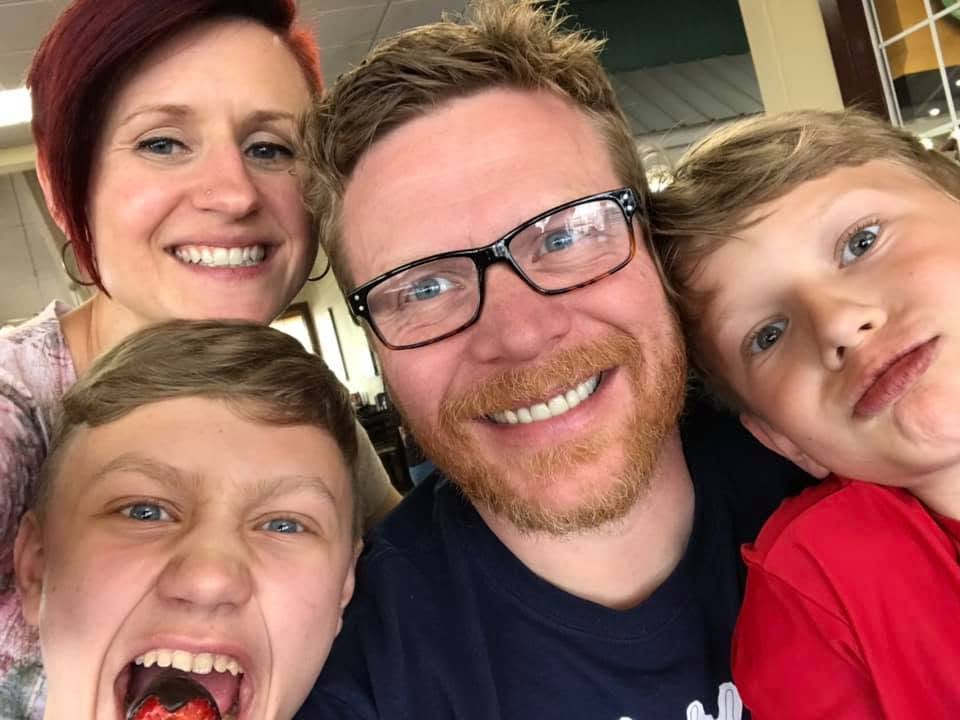
When people ask my wife and me about how we met, we have to ask them to please be more specific.

Because, here’s the thing: We met twice.

The first time was at a campus ministry conference in western North Carolina in the late 1990s. It was not unlike many of the brief encounters one has at a conference. We shook hands, exchanged pleasantries, established that we had a mutual acquaintance, and compared notes on what we were learning.

Then we said goodbye. And that was that. Or so we thought.

The second time we met was four years later, on a bus in Vancouver, Canada. I was a fresh-faced seminarian, and she was a year ahead of me. She had noticed me around campus and wanted to welcome me to the school. Once again, we exchanged pleasantries and established the same mutual acquaintance as before. In that moment, we both experienced a sudden case of déjà vu.

Hadn’t we had this exact conversation before?

Sure enough, we were the same two people who had met years prior, over three thousand miles away.

What are the odds of that happening?

To make a long story short, we started dating a month later and got married a year and a half after that. So that’s why, when people ask how we met, we have to ask them: “Which time?”

Stories like that raise interesting questions.

Was that God? Was that coincidence? Was it somehow both?

If life is nothing but random coincidence, we might wonder: Does that mean our lives are nothing more than accidents? But if every detail has already been planned out ahead of time, we might wonder something else: Are we really making choices at all, or are we just actors reading from a script someone else wrote?

Somewhere between meaningless accident and a rigid script, people of faith have always looked for another way.

Pastorally, I frequently sit with people who wrestle with this question, not as an abstract philosophy problem, but as a very personal one: “If God has a plan for my life, how do I know if I’m following it correctly?”

People ask this when they are deciding what to do about a job, a relationship, or any number of important decisions. Underneath all those questions is usually a deeper one: “What if I choose wrong?”

And that creates a lot of anxiety because sometimes we imagine God’s plan like a hidden treasure map. Somewhere out there is the one correct answer, the one perfect path, the one thing we are supposed to do. And if we make the wrong turn, we worry that we have ruined the whole story. But what if God’s plan is less about what happens to us and more about who we are becoming?

When I hear the words, “God has a plan,” I like to translate that in my head as: “Love has a vision.”

Scripture tells us that “God is love,” and love’s vision, I think, is less about predicting every event in our lives and more about shaping us into the kind of people we were created to be.

Love’s vision for my life is that I become more loving. Or, to put that in more traditional Christian language: God’s plan for my life is for me to become like Jesus, in my own particular way.

That is exactly the kind of mystery we encounter in today’s reading from Genesis.

The story of Isaac and Rebekah is one of the great romantic “meet-cutes” of the Bible. I like to think of it as Sleepless in Seattle for arranged marriages.

Abraham sends his servant on a mission to find a wife for his son Isaac. The servant prays that God will guide him to the right person, in the right place, at the right time. And then along comes Rebekah.

The amazing thing about Rebekah is that she does not wake up that morning saying, “Today I am going to participate in the divine unfolding of salvation history.” She goes to the well and sees someone who is thirsty, so she gives him water. That’s it.

She sees a stranger in need and does the next loving thing.

The servant sees providence. Rebekah sees a neighbor. And somehow, mysteriously, both are true. Maybe providence looks like ordinary people choosing compassion.

There is no booming voice from heaven. No angel appears to explain the plan. There is simply a person choosing compassion in the moment that is in front of her.

The Church has a word for this process of listening for God’s guidance. It’s called discernment.

Discernment is not easy. It is more art than science. It involves self-awareness, education, paying attention to our intuition, seeking guidance from wise people we respect, committing ourselves to prayer, and studying Scripture. But ultimately, discernment comes down to learning to ask the old question: “What would Jesus do?”

Because we may never know for certain whether God wants us to marry a particular person, take a particular job, or choose a particular path. But we do know the kind of people Jesus calls us to become: compassionate, courageous, and wise.

Yesterday, I got a phone call from one of our long-time parishioners, who has asked to remain anonymous. This person was passing by the church and saw several people and a dog sitting in our memorial garden. Knowing how hot it was outside, this person felt moved with compassion to buy lunch for the people and their dog. And when I heard that story, I immediately thought of Rebekah.

I don’t know whether this parishioner woke up yesterday thinking, “Today I am going to fulfill God’s plan for my life.”

Probably not.

They saw people who were hot and hungry. So they did the next loving thing.

So far as she knew, Rebekah was just being kind to a thirsty stranger and his animals. She could not have known the full story that was unfolding around her.

And maybe that is true for us too. Maybe God’s plan is less like a treasure map and more like a compass. We do not always know where we are going or how to get there. But we know if we are walking in the right direction—the direction of love.

In today’s gospel, Jesus says: “Come to me, all you that are weary and are carrying heavy burdens, and I will give you rest.”

That is who Jesus is: A safe place for the weary. A place of compassion in an often unkind world. And that is who we are called to be.

We may not always know what the future holds. Maybe it’s not even our place to know. But we can trust that whenever we choose compassion, whenever we offer kindness, whenever we become a place of rest for those carrying heavy burdens, we are stepping into love’s vision for our lives.

We are becoming more like Jesus, doing the next loving thing. And maybe, without even realizing it, we are exactly where we need to be.

A Well in the Wilderness

Sermon for Proper 7, Year A

Genesis 21:8-21

In today’s first reading, we got to hear about some of the people of God: Abraham and Sarah, our ancestors in faith, whom we’ve been meditating on these last several weeks.

But today, unfortunately, God’s people are not acting very much like God’s people.

We heard last week about Abraham and the incredible hospitality he showed to the three mysterious visitors on his doorstep. This week, we’re seeing very much the opposite.

The central figure in this story is the woman whose name we are told is Hagar.

This is her backstory:

Hagar was an enslaved woman from northern Africa. And her name was not actually Hagar. “Hagar,” in Hebrew, literally translates as “the foreign thing.” Abraham and Sarah took her humanity away and replaced her name with a label: “the foreign thing.”

She was a person who understood what it meant to be demeaned, to be told that she was less than, to be treated as property.

We know also, from the stories we’ve read up to now, that God had promised Abraham that he would have many descendants, that he would become the father of a great nation, and that his descendants would be a blessing to all the families of the earth.

As we’ve also noted, Abraham and Sarah were in their nineties, past the age when Sarah could naturally bear children.

So, Sarah came up with a plan.

She said, “Look, I’m probably not going to be able to have any babies in my nineties. So why don’t you take this woman that we have enslaved, get her pregnant, and have a baby with her? That can be the means through which God will make of us a great nation.”

Hagar, you may notice, did not have any say in that process. She did not have any autonomy over her own body. She became pregnant by Abraham and gave birth to Ishmael without her consent.

Later on, God miraculously enabled Sarah to get pregnant and give birth to another son, Isaac, which brings us to today’s reading.

Sarah sees her son Isaac and Hagar’s son Ishmael—both sons of Abraham—playing together and suddenly becomes consumed by jealousy.

She says, “I want to make sure that this other boy, Ishmael, does not inherit along with my son. So, Abraham, you’d better cast them out into the desert.”

Abraham is distressed about this. He feels bad. But ultimately, he goes along with what Sarah says. And Hagar and her son Ishmael are sent into the desert with only a little bit of water, presumably to die.

So God’s people were not acting in a very godly manner in their treatment of Hagar. This is a story of their failure as the people with whom God was in relationship. But God is more faithful than Abraham and Sarah.

God cares about human dignity. God recognizes that Ishmael also was a son of Abraham.

When they are out in the desert and the water runs out, Hagar puts her son Ishmael under a bush and walks away. She just can’t bear to watch him die.

The text says that God heard the voice of the child crying out and met them there.

God said, “Hagar, this is not where your story ends.”

And God opened her eyes to show her a well of water, from which she was able to fill the waterskin and give her son a drink.

They managed to survive, moved back to Egypt, and from there Ishmael grew up, became a “wild ass of a man,” as Scripture says, and went on to have many descendants.

So we can see that, yes indeed, Abraham became the father of many nations: through Ishmael and Isaac.

What strikes me about this story is how God took care of people, even those who had been cast out by God’s people.

This reminds me of a story about a young man named Kenneth.

Kenneth was an African American man who was dating a young woman named Dorothy. This was during the 1940s, when Jim Crow segregation laws were in force. Dorothy was an Episcopalian, and she invited her new boyfriend to come to church with her one Sunday.

Now, The Episcopal Church is a predominantly white church.

So Kenneth was concerned about how it would feel to be in this church where people looked so different from him, and where, legally, people at that time were expected to remain separate.

He decided not to receive Communion that first Sunday he was there. But he watched as Dorothy came up and knelt at the altar rail for Communion.

Kenneth wondered, “What’s going to happen here?”

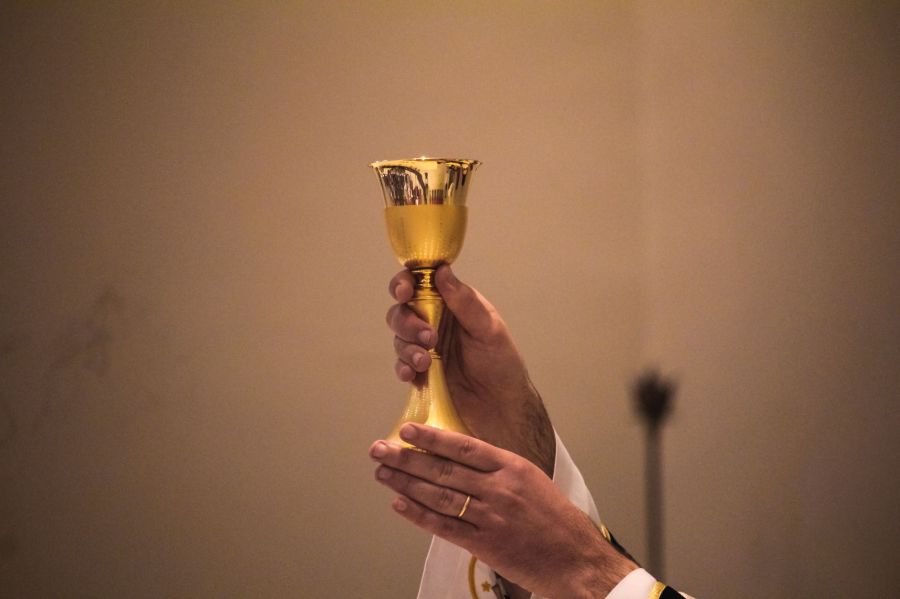
According to the laws of the land at that time, people of color and people of lighter skin were not allowed to drink from the same water fountain, much less the same chalice at the celebration of the Holy Eucharist.

So what was this priest going to do?

He saw the priest come to the people before her:

“The Blood of Christ, the Cup of Salvation.”

And then he came to Dorothy and lowered the common cup:

“The Blood of Christ, the Cup of Salvation.”

Kenneth, watching this from the pew, was astonished.

He said to himself, “A church that allows black people and white people to drink from the same cup understands something about the Gospel, and I want to be a part of that.”

And that’s exactly what happened.

Kenneth ended up joining the Episcopal Church. He and Dorothy got married and had children.

And their son grew up to become the first person of color to serve as Presiding Bishop of The Episcopal Church: The Most Reverend Michael Curry.

God provided a well for those who had been excluded and cast out when the people of God failed to live up to their calling.

And the name of the well that God provided, in the case of Kenneth and Dorothy, was The Episcopal Church.

We have the privilege of being a center of care and rest for so many people who have felt cast off and cast out by other churches—whether it is because of the color of their skin, or maybe because they ask too many tough questions, or maybe because of their gender identity or sexual orientation.

I’ve noticed that people who feel excluded often end up coming to the Episcopal Church. I am one of them, as are 70% of currently practicing Episcopalians in the United States. We found a place of rest, a well of water in the midst of a spiritual desert.

What a privilege that we get to share, as God’s people!

And yet, there are still ways in which we can continue to take the next step toward becoming a welcoming refuge for others who have been cast out, or who feel cast out, for any number of reasons.

Many of our fellow parishioners here at St. Mark’s, and in many Episcopal churches, are people in recovery from the disease of alcoholism.

The Episcopal Church, from the earliest days of the Alcoholics Anonymous movement, has been a supporter of that work.

To this day, including here in our own parish, twelve-step recovery groups continue to meet because we, as a church, believe in supporting people in their recovery from a disease they did not choose and against which they are fighting with tremendous courage.

One way in which we have an opportunity to take the next step in supporting them is in the choice of the elements we use when we celebrate our most central ritual: the Sacrament of the Eucharist.

It has been a longstanding tradition to use wine, which of course contains alcohol.

And that is something that can be potentially dangerous for our brothers and sisters who are in recovery. Someone spoke to me recently and said:

“When you lift the cup on Sunday and bless it as the Blood of Christ, I look at that and I think: what’s in that cup, to me, is poison. Why would anyone bless poison?”

That question really stayed with me.

Starting today, we’re going to do something a little bit different:
We are going to be using alcohol-free wine.

It’s a way that we can continue to be a well in the desert, a place of safety, a place of refuge.

I know it’s going to require something of us, because it’s a change in the way we’ve done things for a long time. And I know that we Episcopalians are not big fans of change. But you know what we are big fans of?

Loving people the way Jesus does.

And if Jesus knew there was something in the midst of his community that was harming the people he came to save, I think Jesus would do whatever he could to make his community a safer and more welcoming place for all people.

So beginning today, we are going to be using de-alcoholized wine in the celebration of the Eucharist, while we explore our long-term options for how to do this in a sustainable way.

For those of you who are in recovery: I invite you to consider, in your own mind and heart, what is best for you in your own recovery.

If even de-alcoholized wine feels too triggering for you, I want to encourage you to protect your sobriety, first and foremost.

Up to now, many of these folks have chosen to receive only the Bread and not the Cup.

Theologically, we believe that receiving just the Bread is full participation in the Communion of Christ’s Body and Blood.

But psychologically, we also know that receiving one element and not the other can sometimes feel less complete.

I just want you all to know that the option is available, should you choose it.

It is my hope that we, here in The Episcopal Church, may continue in God’s faithfulness to Hagar and to people throughout history from all nations—to be “a well in the wilderness,” and a church where absolutely everyone is welcome to participate fully in the life of the Body of Christ.

While You Wait…

Sermon for Proper 6, Year A

Genesis 18:1-15, 21:1-7

It was the great American, Thomas Paine, who said, “These are the times that try men’s souls.”

And among the many trials and tribulations of modern life, there is one that stands out as particularly vexing to the spirit, testing the limits of human endurance to their utmost:
The mandatory software update.

There are times when I’m on the phone saying, “Yes, Mr. Treasurer, I will email that PDF to you right away.”
I open up the laptop, and it says:

Update downloading: 10%.

And it creeps, inch by inch, toward that promised land of 100%.

20%.

And I start to pray.
“Lord Jesus, help me.”

30%.

That makes enough time for a conversation.
“How are you doing? How are the kids? How’s the family? Everybody good?”
“Oh, good. That’s great.”

40%.
50%.

I start praying even harder.
“Jesus, you’ve got to give me peace, because if you give me strength right now, I’m going to need bail money with it.”

60%.
70%.

At this point, I don’t know if I need to call an IT guy or an exorcist, but it’s one of those two.

80%.
90%.
100%.

And then…

Update installing: 10%.

And there’s nothing you can do, right?
Just wait it out.
And eventually, we’ll get there.

Of course, there are other situations in life where that’s true.

When we look around the world, we can see situations of national and global import that seem so far away, we feel like we can’t do anything about them.

Sometimes it’s a little closer to home: people we love going through a crisis of health, relationship, or job. We want to fix it for them, but all we can do is be there for them.

And then there are those times when it gets even closer than that:
It’s the crisis happening within our own bodies and our own minds.

Those are the moments when we really do pray:
“Jesus, help me. I want to be better, but I don’t know how.”

These are the times that try human souls.

Abraham and Sarah, in our first reading today, were in one of those times.
They longed to be parents, but had been unable to conceive.
If you or someone you love has ever been through that crisis of infertility, then you know exactly how painful and disappointing it is to continually get your hopes up and then have them dashed again.

But there was even more to it than that.
This wasn’t just a personal hope of Abraham and Sarah. It was also a larger promise they felt God had given them:

“I will make of you a great nation. Your descendants will outnumber the stars, and all the families of the earth will be blessed through them.”

They believed this.
And yet here they were in their nineties, Abraham pushing one hundred, and still no baby.

So I don’t blame Sarah one bit for laughing when some random stranger shows up on her doorstep and says, “Hey, you’re going to have a baby.” I’d laugh too.

I imagine her saying, “You men just don’t get it, do you? That’s not how this works.”

They were holding on to what was, at this point, a distant hope.
All they could do was wait, hope, pray, and—as we read in the text—laugh about it.
The text doesn’t say this, but I’d bet dollars to donuts they cried about it too.

But here’s the thing:
There was more going on in that moment than either of them realized.
Because these three random strangers were not just anybody.

The text is delightfully ambiguous about who exactly these people are.
Are they angels?
Is it God?
We don’t really know.

But there’s something more happening in this moment.
And that, I think, is the good news for those of us who are living in that territory of unfulfilled promises, like Abraham and Sarah were.
There is more going on in your life, in your heart, and in who you are right now than meets the eye—maybe even more than you yourself realize.

Still, all they could do was wait.
But there was something else they could do.

When these three strangers show up, Abraham and Sarah roll out the red carpet for them.
They are just falling over themselves in this extravagant display of hospitality.

Abraham says, “Let me bring you a little bread.”
But what he actually brings is not a little bread.
It’s a feast of Thanksgiving-level proportions.

They go completely over the top with this hospitality.
And that’s really intentional, because it’s the exact opposite of what happens in the next chapter, when those same visitors go to the town of Sodom and Gomorrah. There they are not met with hospitality, but with an angry mob that wants to take advantage of them, do violence against them, and exploit them.

In the ancient world, hospitality wasn’t just about being nice or being a good host, although those are lovely things.
It was a survival practice.
There was no AAA.
There was no state highway patrol.
Travelers were vulnerable people.
They could be robbed, exploited, even killed, and nobody would know the difference because they were strangers.

Which is why, in the Torah, we have all these laws about being kind to strangers, immigrants, refugees, and people from other places.
Lives depended on it.

That’s why the extravagant welcome that Abraham and Sarah offer these three visitors matters so much.
They could not control what was happening with the unfulfilled promises in their lives or in their world.
What they could choose was who they were going to be in the midst of that waiting.

And they decided:
“We are going to look out for our neighbors, even the ones we don’t know.”
“We are going to roll out the red carpet and welcome them.”
Because you never know: You just might be welcoming God himself.

And I think that holds true for us today.

When we think about the unfulfilled promises in our own lives and in our world, there is so much we cannot change, even though we wish we could.
But we can hold on through it, moment by moment.
We can decide what kind of people we are going to be in this moment.
Am I going to be a person who acts from fear or from love?
Am I going to reach out to strike or to serve?

Who do we choose to be in the midst of the waiting?
That is ours to decide while we await the fulfillment of God’s promises—however, and whenever, God works them out.

Bless Your Heart

Sermon for Proper 5, Year A

Genesis 12:1-9

St. Mark’s parishioner Tom Greenburg standing up for Pride

When I lived down South, we used to have this saying.

It was pretty common—or at least I heard it a lot:
“Bless your heart.”

People would say this to me quite frequently. Every time I heard it, I would think, “What a nice thing to say. This person thinks I have a good heart. Thank you so much.”

It wasn’t until many years later, after I had moved away from the South, that someone finally explained to me:
“Barrett, that wasn’t a compliment. That’s just the polite Southern way of calling you stupid.”

I had misunderstood the meaning of the word “blessing.”

That’s a common thing that happens.

Often, when something good happens in someone’s life, or someone experiences success, material wealth, or prosperity, they might say, “I’ve been blessed.”
And that’s a really beautiful thing.
Because what I think most people are trying to say is, “I’m grateful for the good things in my life, and I want to give thanks.” Whether they are giving thanks to God, to the people around them, or simply expressing gratitude for life’s gifts, they are grateful and they want to express it.

But as with so many things in this world, there’s a flip side.

If material wealth and success become identified as blessings from God, then, if we’re not careful, we can start to think that they are signs of God’s approval.

And if we have God’s approval, then it’s only one more step to saying that whatever we say or do must be right.

And from there, it’s only one more step to saying that we cannot be criticized.

And there, I think, we can see the danger.

Because anyone who claims to be beyond criticism, and uses the Bible to justify that stance, is abusing Scripture.

There is a situation in our world today where I think this danger is present.

Our first reading today, Genesis chapter 12, is often quoted in relation to the tragic situation in the Holy Land between Israelis and Palestinians.
There is a longstanding argument over who gets to be in charge, who belongs there, and who has claim to the land.
Our Jewish neighbors—and we Christians as well—trace our spiritual lineage through Isaac, the son of Abraham.
Our Muslim neighbors trace their spiritual lineage through Ishmael, also the son of Abraham.
And both groups can point back to Abraham and say, “We are descendants of Abraham.”

Anyone who has followed the news at any point during the last fifty years can see that this has been the source of incredible tension and conflict.

I am not going to resolve that today.

It is a complex political problem that requires a complex political solution.
And anyone who claims the solution is simple is probably part of the problem.

But I do think some of that conflict arises from a misunderstanding of what blessing means.
God blessed Abraham and promised land to Abraham and his descendants.

We’ve already noted other ways in which people can misunderstand the meaning of blessing.

As Christians, we have a duty to pray for the leaders of all nations, that they would exercise their authority with justice, wisdom, compassion, and peace for the sake of the common good.

Insofar as our own nation is involved in that situation, let us continue to write letters and make phone calls to our elected officials, advocating for diplomacy, so that all of God’s children might live together in the peace and wholeness that God created them for.

So we’ve talked a little bit about what blessing is not.

Let’s talk now about what blessing is—and what it is for.

A blessing is a recognition of the inherent goodness that resides within someone or something.

When someone or something is blessed, we are saying:

“This person/thing is good.”

Our Hasidic Jewish neighbors have blessings for almost everything.

Like us, they often say a blessing before a meal.
But they also have blessings after meals.

They have blessings for waking up in the morning and blessings for going to sleep at night.

They have blessings for children.

They have blessings for using the restroom.

They even have blessings for seeing a particularly beautiful person.

The reason why our Hasidic Jewish neighbors do this is because there is a belief that a spark of divinity resides within everyone and everything.

When a blessing is spoken over that person or thing, that spark is recognized and reconnected to its source in God.

And this becomes a joyful and holy duty.

I think that’s beautiful.
And I think it captures something essential about what blessing means.

Blessing is the recognition and affirmation of the inherent goodness in someone or something.

It is recognizing that goodness as coming from God and returning to God.

This month, as many of you know, we are celebrating Pride Month.
This is a time of celebration for our lesbian, gay, bisexual, transgender, and queer siblings.
Theirs is a community that has often been demeaned by the language of others, sometimes by people misusing Scripture in order to do so.

People have called them names.

They have been described as abominations, unnatural, inherently disordered, or perverted.

As we have grown as a society, and as many Christians have grown in our understanding of Scripture, we have come to recognize some of those past mistakes.

Pride has emerged, in large part, as a counterargument to those demeaning messages.

It is a way for a community to bless itself.
It is a way of saying:
“There is a spark of divinity in us, too.
And we’re going to gather together and celebrate that.”

That’s what blessing is.

Now let’s talk about what blessing is for.

When God blesses Abraham in our first reading today, God says:

“I will bless you, and make your name great, so that you will be a blessing.”

And a little later:

“All the families of the earth shall be blessed through you.”

What Scripture is saying here is that the purpose of blessing is not ownership or possession.
The purpose of blessing is a calling.

Just as the inherent goodness—the divine spark—exists in me and in each of you, so it exists in everyone and everything else.

Our joyful calling as people of faith is to speak that blessing, to recognize that goodness in everyone and everything.

This is our joyful duty.

So as we go out into this week, as we continue to celebrate Pride Month, and as we continue to carry the burdens of the many problems in our world today, let us remember our calling to be a blessing to others.

And let us recognize that the inherent divine goodness within us is also present in everyone and everything else.

Amen.

Holy and Human

Sermon for Trinity Sunday

Genesis 1:1-2:4a

I’ve got this phone. You may have one similar to it. And this thing tracks a lot of my data.

It can tell me how many steps I’ve taken today. It can tell me how much screen time I had last week (answer: too much). It can even track my weight and my blood pressure, so my doctor can keep an eye on it. It can tell me how productive I’ve been by checking things off a to-do list.

It knows a lot about me.
But it doesn’t really know me in the way that my family and my friends do.

There’s a big difference between knowing about someone or something and knowing them as a person.

We experience this in other parts of our lives, too.

At work, there are all kinds of productivity trackers. Even here at our church, where I work, once a year I’ve got to gather statistics: What was the attendance like on Sunday? How much came in through the offering plate? How many weddings and funerals did we do this year?

This data is useful.
But there’s a lot about this church that that data can’t tell me.
Can it tell me how much you love God and love each other?
The answer to that is no.

Same thing with the government. Every ten years it takes a census and writes down things like our ethnicity, our gender, our age, our address, how many people are in our household—lots of data points.

But they can’t really capture the essence of you and your family.
It’s just data.

The data is useful.
But it’s tempting sometimes to reduce complex, mysterious human beings to data.

Data points can’t capture who you are, because people are not statistics. People are not cogs in a machine.

The ancient Jewish people in the sixth century BCE understood intimately what it felt like to be treated as parts of a machine.
What had happened to them was that they had a war with the Babylonian Empire, which was the great superpower of that day, and they lost.

And the elite and the leaders among the people were taken off as slaves in Babylon.
And the Babylonians did their best to erase who they were—erase their religion, erase their culture, erase their language.

But here’s the thing:
The Jewish people resisted.

They accepted the fact that they had lost the war and were now obligated to work as a slave class.
But they did not accept the conclusion of the empire—that they were just cogs in a machine, that they were just property.

And our first reading today, from Genesis chapter 1, is a statement about that.

It is not a science book about the origin of life.
It is a poem about the meaning of life.
It is a song of human dignity in the face of oppression.

The language we hear in the text is very rhythmic and repetitive.

“God said, “Let there be light,” and there was light. And God saw that it was good. And God called the light day and the darkness night. And there was evening and there was morning, the first day.”

And that pattern repeats itself again and again for each of the six days.

Now, there’s a form of language that uses a lot of repetition and rhythm: Poetry.

Within that poem, if we read carefully, we see something really fascinating happening.

There is a thematic match-up between the first six days:

  • Day one and day four.
  • Day two and day five.
  • Day three and day six.

In those first three days, God creates a habitat in which beings will dwell.

And in the second group of three days, God creates beings to live in those habitats.

  • On day one, God creates light and darkness.
    Match that up with day four, and God creates the sun, the moon, and the stars.
  • On day two, God creates the sky and the sea.
    And on day five, God creates the fish and the birds, which live in the sea and the sky.
  • On day three, God creates the land and the vegetation.
    And on day six, God creates the animals and the humans.

In each case, there’s a habitat and the beings that live in that habitat.

And the interesting thing about those beings is that they’re all Babylonian deities.
Except that, in this story, they’re not called gods and goddesses.

The sun and the moon, for example, were major features of Babylonian religion.
The Babylonians were telling the Jewish people, “You’d better bow down. Our gods are stronger than your God because we beat you in the war.”

And the Jewish people say, “No.”
These are not gods at all.
In the language of the text, they’re literally just “the big light” and “the little light.”

They’re not even given proper names.

According to the view of humanity that the Babylonian Empire held, humans were created to be servants of the gods. Humanity existed for them.

But in this biblical passage, the Jewish storytellers say:
Actually, we are created to be stewards of creation.

God made us in the divine image and said, “Rule over and care for” all these other creatures.

So it’s exalting human dignity above these so-called deities.

And finally, most of all, is the last day of creation, the seventh day, which came to be known as the Sabbath.

“On the seventh day, God rested and sanctified a day of rest for all creatures.”

Just imagine the Jewish people who were working as an enslaved class in Babylon at that time.

Their culture is being erased.
Their faith is being erased.
But they practice the Sabbath.

A day of rest, one day a week, when everybody goes on strike.

They say, “Six days a week we will do our jobs. We will work hard for you.
But one day a week, we all stop working.
And we’re going to take that time to pray, to be with our families, and to remember that we are not your machines.
We are not your property.
We are the beloved children of God.
That is who we are.
You cannot erase that from us.”

That’s powerful.
It gets me every time.

And it makes this message so meaningful.

This is a poem about human dignity.
It’s about people who refuse to be dehumanized, who refuse to be pushed aside and reduced to productivity statistics.
No matter what data was collected about them, they knew they were always going to be more than that.

Their faith gave them the strength to make it through that season known as the Babylonian Exile.
To endure.
To resist the erasure of who they were.
And to remember their own human dignity.

And when they would go back to their work, they would go back in a new way.
They weren’t serving merely the Babylonians who won the war.
They said, “Our daily lives are about serving God and each other.”
And that’s a much more meaningful way to work.

I can think of several examples—one from history and three that are a little closer to home.

First is the historical example: Dr. Jonas Salk.
He was the doctor who invented the polio vaccine.
And this obviously was a dramatic scientific accomplishment.
But the interesting thing is that he refused to patent it.
He could have made a lot of money.
But after he invented this vaccine, he said, “This belongs to humanity.”
This vaccine was going to be distributed freely to the world, to eradicate polio and ease the suffering of human beings.
That is holy and human work.

That’s a historical example from the past.
But we don’t just have to look at history to find examples of meaningful work that honors human dignity.

Chris Russell runs a game every other Sunday night at a comic shop here in town.
I’m part of this game.
It’s very silly. A bunch of nerds get together and pretend to be the crew of a spaceship, and we have a grand old time.
It’s a fun hobby.

But let me tell you something:
It is so much more than just a game.

The place where we meet is so much more than just a local business.
This is a place where people have formed a community of support.
Many of the members of this group have been through crises—hospitalizations, family members passing away.
Time and again, the members of this group have gathered around each other to offer support, helping one another buy cars, find jobs, and get through difficult times.
It’s become so much more than just a comic book shop.
It’s become something deeply holy and deeply human.

I think also of Patti Fosdick and Joanne Grigg, who took a shoe store on Chicago Street and turned it into an animal rescue.
A place where cats who have no home can receive care.
Where they can be introduced to families.
Where they can be there for anybody who wants to come in on a random Friday, and play with them, and feel a little better.
Through caring for animals, they too are doing holy and human work.

This is a sacred thing.

The last example I’ll mention is our dearly beloved departed sister, Mary Dally.
She worked for decades in our local schools.
And yes, she had a job to do.
There were children to educate and benchmarks to meet.
But the essence, the soul of her work as a teacher in this town, was the way she loved multiple generations of students.
The week that she passed away, I was having lunch over at the diner, and the waitress said, “You know, I was one of Mary’s students. And years later, my daughter was too.”
The testimony to her holy and human work came during her funeral service, when this church was standing room only.

All of these are snapshots from our local community of people living from that essence of human being that God gives us—the image of God.
And I think it can lead us as we go about our lives and our work.

Yes, our data continues to be collected.
It’s useful.
But I invite you to consider the essence and soul of who you are as God’s child.
Your soul, loving the souls of other people—is a part of God’s work in this world.

When God had made the world, he didn’t say, “This is very productive.”
He said, “It is very good.”

Many Gifts, One Spirit

Sermon for Pentecost Sunday

1 Corinthians 12:3b-13

When I was in high school, I built my identity around being a “nice church kid.”

There’s a lot that was good about that:
I was earnest and well-mannered.
I cared a lot about doing the right thing.
And my parents didn’t have to worry much about what I was getting up to.

I was, as a friend of mine recently put it, “a good noodle.”

But there was a not-so-good aspect to this, as well:
I could be very judgmental toward my fellow Christians, who didn’t always live up to the high standard of conduct I set for myself.

I created a ranking system in my head, based on where they went to church, how often they attended, and most of all, whether they did any cussin’, drinkin’, or smokin’.

That last one loomed particularly large in my mind, because I was sure that no good Christian would ever be caught with a cigarette in their mouth.

And that’s the one that eventually got me in trouble, but I’m going to come back to that in a few minutes.

I was too polite to ever say anything out loud about this ranking system of good Christians and bad Christians, but I was definitely keeping it in my head at all times.

The Corinthian Church, during the time of St. Paul, was doing the same thing.

They had turned spirituality into a hierarchy.
They ranked themselves, and each other, along socioeconomic lines.
They ranked themselves according to which one of the apostolic leaders in the early church was their favorite.
They ranked themselves according to which of them had had dramatic spiritual experiences and which ones hadn’t.

Just like I did in my youth, they had ranked themselves, and each other, into a hierarchy of what they thought were “good Christians” and “bad Christians.”

Human beings are very talented at sorting people into categories.

We do it with politics, education, economics, and even religion.

Successful people and failures.
Winners and losers.

And usually, once those categories harden, we stop seeing each other as actual human beings. We just see the labels we attach to them.

Paul steps into all of that chaos in Corinth and says:

“No one can say ‘Jesus is Lord’ except by the Holy Spirit.”

Now that phrase, ‘Jesus is Lord,’ can sound almost ordinary to us because we’ve heard it so many times. We see it on billboards and bumper stickers every day. It seems like a generic Christian slogan.

But in St. Paul’s day, “Jesus is Lord” was a very dangerous thing to say.

The Roman empire was, by and large, willing to let conquered peoples keep their own culture and practice their own religion, so long as they also continued to honor the authority of Caesar.

The problem, for Christians, was that Caesar was honored with titles like, “Son of God, Lord, and Savior,” all of which were titles that Christians applied exclusively to Jesus.

So, when Christians proclaimed, “Jesus is Lord,“ the Roman authorities interpreted it as them saying, “Caesar is not.”

What Christians intended as an act of spiritual devotion was received as an act of political disloyalty.
Therefore, any Christian who said, “Jesus is Lord,” in public was risking serious consequences, possibly including imprisonment or even death.

And Paul’s point is essentially this:

If someone has enough courage to risk those kinds of consequences because they proclaim the name of Christ, then who are we to rank them spiritually?

And then Paul begins this beautiful rhythm:

“Now there are varieties of gifts, but the same Spirit; and there are varieties of services, but the same Lord; and there are varieties of activities, but it is the same God who activates all of them in everyone.”

Many gifts.
One Giver.

Paul is trying to dismantle the whole ranking system.

The Holy Spirit does not enter our hearts to create individual superheroes.
The Spirit is incorporating various individuals into the one Body of Christ.
And bodies are complex things.

A healthy body contains all kinds of different parts doing all kinds of different work.

Your lungs are not trying to become kidneys.

Your ears are not competing with your elbows.

And thank goodness for that.

Imagine if your pancreas woke up tomorrow morning and decided it wanted to become an eyebrow.

That is not personal growth.
That is a medical emergency.

Living things remain alive not by eliminating complexity, but by learning how to hold complexity together.
No two parts are exactly the same, but neither is one better than another.
A body without a heart is just as dead as a body without lungs.
That’s why the whole ranking system of “more spiritual” and “less spiritual” Christians makes no sense, according to Paul.

“No one can say “Jesus is Lord” except by the Holy Spirit.”

And that’s how I got myself in trouble, back when I was younger.

After several years of privately ranking fellow Christians in my head, I came to find the weight of perfection to be burdensome.

I was tired of looking down on my fellow Christians and holding myself to a higher standard of holiness.

I came to realize that there was more to being me than just being a “good church kid.“

Like the Corinthian church, I was beginning to realize that I was more complicated than I wanted to admit.
There was more than one part of me.
And somehow, the Spirit was still moving through all of it.

In a misguided attempt to shed my “perfect Christian” image, I started to do the very thing that I had judged so many others for doing: I started smoking cigarettes.

Now, this was a very stupid thing to do. Everyone knows that nicotine is addictive and smoking is very harmful for the body.

I thought it made me look cool and edgy, but cigarettes are not cool; they’re just expensive.

As a wise person once told me, “A cigarette is like a squirrel: perfectly harmless until you stick one in your mouth and light it on fire.”

I eventually managed to quit the “cancer sticks” and manage my nicotine habit, but the irony is that I had become the very thing I judged.

That was a humbling experience for me.
No longer could I claim to be the “perfect Christian,” who followed the rules and always did what was proper for “good Christians.“

Getting addicted to nicotine forced me to confront something uncomfortable about being human:

The parts of ourselves we repress do not disappear.
They come back sideways.

The fear we refuse to acknowledge becomes control.
The shame we bury becomes judgment.
The insecurity we hide becomes arrogance.

And sometimes the qualities we judge most harshly in other people reveal something unresolved inside ourselves.

Human beings do this kind of thing all the time.

We pass judgment on others and then become the very thing that we judge.

The good news is that, if we find the grace to face ourselves honestly, we gain the ability to extend that same grace toward other people.

We may even discover that the thing we are so ashamed of contains an important truth that we need to hear.

For me, it was the truth that there is more to me than just the “perfect Christian“ image that I display to the world.

Mercy is the one thing in this universe that has the power to help us see beneath the surface of outward complexity and recognize the one Spirit that holds us all together.

And maybe that is what Pentecost is really about.

Not the elimination of difference.
Not the creation of perfect people.
But the grace to recognize one Spirit moving through many complicated human lives.

Many gifts.
One Spirit.

Believing in Jesus

Sermon for Easter 5

John 14:1–14

Jesus said, “Do not let your hearts be troubled. Believe in God, believe also in me.”

Now, that’s a tall order…
Because, I don’t know if you’ve been paying attention to the world lately, but it’s kind of a mess out there!

I mean… My gosh!

I doom-scroll through the news, and it starts to look like the things that win, in this world, are power and money. The people who get ahead are the ones who can dominate and accumulate, at all costs.

And, when I see that, part of me is tempted to wonder: What if they’re right? What if that really is how the world works? What if love is just a nice feeling, but not the truth about reality?

And that’s when Jesus says to us: “Do not let your hearts be troubled. Believe in God, believe also in me.”

But what does that even mean?

Because “believing in Jesus” can mean different things to different people.

For some people, “believing in Jesus” means accepting the historical fact that, once upon a time, there was a guy named Jesus who lived in a land far away, and inspired a lot of people.

Most historians agree that much is probably true.
So whatever Jesus means by ‘belief,’ it has to be something more than that.

We church folks, on the other hand, often think that “believing in Jesus” means believing certain things about Jesus—agreeing with the traditional ideas that the Church talks about in the Nicene Creed: That Jesus is the Son of God, was born of a virgin, rose from the dead, and will come again in glory.

There’s nothing wrong with any of these. They are theological statements, which can be neither proved nor disproved by science. Traditional Christians call them “revealed truths,” which can only be accepted on the basis of faith.

But, here again, we encounter a problem:
There are plenty of Christians who say they believe all of that—and live in ways that look nothing like Jesus.
We have a word for that:
It’s hypocrisy.

So, here again, we see that “believing in Jesus” must mean something more than simply believing that Jesus existed and accepting certain theological beliefs about Jesus.

So, what then does it mean to “believe in Jesus?“

And if that question—what does it really mean to believe?—feels a little unclear, we’re actually in good company.

Because the disciples are just as confused as we are.

Jesus said, “You know the way to the place where I am going.”

And Thomas says, “Lord, we do not know where you are going. How can we know the way?”

But Jesus doesn’t give him a map. He gives Thomas himself.

He says, “I am the way, and the truth, and the life. No one comes to the Father except through me. If you know me, you will know my Father also.”

That is a staggering claim.

Because Jesus is not just pointing to God—he’s revealing God.

If you want to know what God is like—look at Jesus.

If you want to know what really matters in this world—look at Jesus.

And what do we see, when we look at Jesus?

We see someone who chooses compassion over control. Someone who serves instead of dominating, who forgives instead of retaliating, who gives himself away rather than grasping for more.

We see a life defined by love.

And that brings us back to belief.

Belief, in the sense that Jesus means it, is more about alignment than agreement.

The Greek word for “believe” is pistis—it means trust or allegiance.

To believe in Jesus is not just to say, “I agree with these ideas about him.”

It’s to say, “I trust that the way he lived reveals what is actually real—and I’m going to live like that’s true.”

When we look at Jesus, we see what ultimately matters.

And that’s where this becomes both beautiful and difficult.

Because if love is ultimate, then a lot of what the world tells us starts to fall apart.

The world says: power is what matters.
Jesus says: love is what matters.

The world says: get all you can for yourself.
Jesus says: give yourself away.

The world says: win.
Jesus says: serve.

And the reason this is hard is because it doesn’t always look like Jesus is right.

It doesn’t always look like love wins.

So we live in this tension.

We feel the pull of one reality—the one we see on the news.

And we hear Jesus pointing to another—the one revealed in his life.

Believing in Jesus means choosing which of those realities we are going to trust.

It means saying, “Even though it might cost me, I trust that love is more valuable than money.”

That’s not just an idea. It’s a way of life.

Toward the end of the passage, Jesus says, “The one who believes in me will also do the works that I do and, in fact, will do greater works than these.”

What does that mean: “Greater works?”

I don’t think he means more spectacular miracles.

I think he means more and more people living in alignment with the reality that he preached and lived—choosing love over power, compassion over control.

The works are “greater” because they spread out wider.

And I’ve seen glimpses of that.

St. Maximilian Kolbe was a Catholic priest who lived in Poland during World War 2.

When the Germans invaded, he had an opportunity to escape, but chose instead to remain behind. He hid Jews and other refugees fleeing persecution inside the friary.

When the Nazis arrested him, they offered him an opportunity to sign his name on a list that would have given him the same rights as a German citizen, but he refused and was sent to the Auschwitz concentration camp.

Finally, when the Nazis decided to execute ten prisoners in retaliation for one prisoner who had escaped, St. Maximilian Kolbe volunteered to take the place of another prisoner who had a wife and children. He died at Auschwitz in 1941 and was canonized as a saint in 1982.

St. Maximilian Kolbe was a man who believed in Jesus.

We know this, not because he was a priest who recited the Nicene Creed, but because of the way he lived his life.

That’s what Jesus is inviting us to do when he says, “Believe in me.”

Don’t just believe things about Jesus, but trust in Jesus himself.

Trust that the way Jesus lived reveals what actually matters.
And live like that’s true.

What would it look like, this week, for us to “believe in Jesus” in that sense?

Maybe it looks like a moment when we choose compassion over control.

When we choose the way of Jesus over the way that seems easiest.

When we choose to listen. To forgive. To act with kindness.

Not because it guarantees a certain outcome—

But because we trust that what Jesus showed us is what matters most.

Jesus says, “Do not let your hearts be troubled. Believe in God, believe also in me.”

In other words:

Don’t let your hearts be shaped by a false vision of reality.

Trust what you see in Jesus.

And live like that’s the world you actually inhabit.

Because it is.

The Patron Saint of Critical Thinkers

Sermon for Easter 2 A

Text: John 20:19–31

This is one of the most defensive sermons that I preach in a given year.

Because, every year on this week, the gospel reading is the story of Saint Thomas, often called “doubting Thomas,” because he would not believe in the resurrection until he saw Jesus and touched his wounds.

And every year, I want to say:
“Hey now. That’s not fair.”

And I wanna say this for two reasons:

First of all, because doubt is not a sin. Doubt means that you’re taking something seriously enough to ask tough questions. So if anything, St. Thomas the Apostle is not a “Doubting Thomas,” but the patron saint of critical thinkers.

And second of all, Thomas is not the only person in this story who has doubts.

St. Mary Magdalene goes to the tomb and sees actual angels. They tried to explain the situation to her, but she doesn’t believe them.

Later on, she sees Jesus and goes back to tell the disciples—but they don’t believe her either, until Jesus finally shows up and shows them his hands and his side. That’s when they believe.

So when Thomas comes along and says, “Unless I see the mark of the nails… I will not believe,” he is not asking for anything special; He is simply asking for the exact same thing that the others had already received.

So why is he the only one who gets stuck with the label, “Doubting Thomas?” It’s not fair.

So no, I don’t think that Thomas deserves the bad reputation he gets by asking to see the marks of the nails in Jesus’ hands. That’s why I want to come to Thomas’ defense.
He’s not a doubting Thomas; he’s the patron saint of critical thinkers.

But here’s the thing:
I don’t think this story is actually about Thomas. I think it’s about all of us who came late to the party of the resurrection.

Like Thomas, we don’t get to see what the other disciples saw on that first Easter Sunday. We don’t get the luxury of absolute proof; we have to live with the uncertainty.

Because of that, it’s easy to sometimes feel like we are second class citizens in the kingdom of heaven. We were late to the party, so we don’t get what the others got.

I don’t know about you, but I feel like that a lot of the time. I look around the church and wonder if maybe everyone else understands something that I’m missing.

Other people seem so confident in their faith, but I know that I am riddled with doubt.
Other people seem so peaceful, but I know that I am overwhelmed with anxiety.
Other people seem so kind and loving, but I feel the fire of anger within me.

It makes me wonder: am I missing something?

If I’m not alone in that feeling, if you’re feeling it too, then Thomas is our guy.

Because Thomas knows what it feels like to be late to the party, to feel like you missed something important, and now everyone else gets something that you don’t.

Thomas is right there with us, in the middle of that angsty feeling, and so is Jesus.

Behind the locked doors of fear and doubt, Jesus appears again: Speaking not judgment, but peace.

Another interesting detail is that the risen Jesus keeps his wounds, even in his resurrected body. Whatever resurrection means, it does not erase the pain we have endured.

He shows us his wounds, not just as proof of the miracle, but as signs of compassion. He says, “Are you hurt? Look: So am I. You are not alone in your pain.”

That tender place is where the encounter happens that inspires Thomas to proclaim his great statement of faith: “My Lord and my God!“

And then Jesus says something that “breaks the fourth wall.”

If you’re not familiar with that term, it comes from television and movies. “Breaking the fourth wall“ is what happens when a character on screen looks into the camera and speaks directly to the viewers at home. It’s a way of including the audience in the story itself.

And that’s exactly what Jesus is doing when he says, “Have you believed because you have seen me? Blessed are those who have not seen and yet have come to believe.”

When Jesus says that last line, he’s no longer speaking just to Thomas; he’s speaking to all of us as well: “Blessed, are you who have not seen and yet have come to believe.”

Kindred in Christ, what this means is that you are not late to the party. You have not missed out on something that everyone else gets.

You are blessed. Because you have not seen and yet have come to believe.

This is a bold statement. What I’m going to say next is even bolder:
That if this blessing applies to us, “who have not seen and yet have come to believe,” then it also applies to those who have not believed, and yet have come anyway.

Blessed are those who keep showing up, even though they’re not sure about what they believe.

When those who stand outside traditional faith choose to do the right thing, they do it for its own sake, not in hope of eternal reward or fear of eternal punishment. They do what’s right out of the goodness of their hearts and we Christians could learn a thing or two from that.

“Blessed are those who have not seen and yet have come to believe.” Blessed are those who have not believed and yet have kept showing up anyway.

Kindred in Christ, there are no second class citizens in the kingdom of heaven. The blessing is bigger than we think. The Holy Spirit is already at work in the lives of those who don’t even have words for it.

So then, the message for us in today’s gospel is actually very simple:
Go easy on Thomas.
Go easy on yourself.
And go easy on each other.

Faith is not a finish line;
it’s a process.
And sometimes that process looks like asking a lot of tough questions.

Sometimes it looks like showing up week after week, not because you have it all figured out, but because something in you has a hunch that something here is worth holding onto, even if you can’t yet identify what that “something” is.

And the good news is this:
Wherever you are in that journey of faith and doubt, Jesus shows up.
Behind the locked doors of fear and doubt.
In the middle of our questions and uncertainties.

And the words that he speaks are not words of judgment, but of peace.

“Peace be with you,” he says.

So, don’t be afraid of being called a “doubting Thomas.”

Keep asking those tough questions.
Keep showing up.

Because it turns out…
that’s exactly where the blessing is.

How God Handles Rejection

Sermon for Easter Sunday

“The same stone which the builders rejected has become the chief cornerstone. This is the Lord’s doing, and it is marvelous in our eyes.” (Psalm 118:22-23)

“The same stone which the builders rejected has become the chief cornerstone. This is the Lord’s doing, and it is marvelous in our eyes.” (Psalm 118:22-23)

These two verses from Psalm 118, which we read this morning, have something to teach us about how God handles rejection. And they are absolutely perfect for Easter Sunday.

Most of us have some funny ideas about God and rejection. Maybe because we’ve been taught them, or just picked them up from human relationships, but we have this idea that if we reject God, then God will reject us. That we have a kind of constant level of anxiety with that assumption in our minds.

We think, well, what does rejecting God entail? And often the answers people come up with are believing the wrong things, doing the wrong things, saying the wrong things. That, oh, you know, if I leave this church, then I’ve rejected God. If I don’t believe this or that doctrine, or if I commit some circumstance, then I turn from God, and therefore God will reject me right back. Do not pass go. Do not collect $200. Go directly to hell.

Again, we assume this based on human relationships, because humans, as we know, have needs. Humans have egos. A lot of our relationships are built on that mutual exchange where we help one another out. I’m nice to you, you’re nice to me, but if I’m not nice to you, maybe you’re not so nice to me.

And we project that onto God.

But the thing is, God doesn’t have any needs. And God doesn’t have an ego to bruise. So that kind of creates a question mark over our assumption that if we reject God in some way, that God will reject us.

But that’s where this verse comes into play:

“The same stone which the builders rejected has become the chief cornerstone.”

I was reading a story earlier this week that illustrated this really well.

There was a five-year-old kid in a store who wanted his mom to buy him a toy, and she said no. And the five-year-old kid, as five-year-olds sometimes do, lost it and just shouted, “I hate you!”

And the mother—her mom was so great in this moment. Mom didn’t freak out, didn’t punish, did not reject the kid who had rejected her, and said, “Okay, you hate me. But I love you. And your hate doesn’t change my love.”

That’s how good parents are.

And when we think of our image of God in the Christian tradition, that parental imagery is a big part of that. And so if our human parents can understand that rejection is not mutual—that the parent’s love is not undone by the child’s hate or the child’s momentary tantrum—how much more does God understand that?

Here on Easter Sunday, of course, we are celebrating the resurrection of Jesus. Our first reading outlines this handling of rejection a little more concretely.

They say Jesus came among us doing good, healing those who were sick. And people didn’t like that, for some reason. And they killed him by hanging him on a tree—a euphemism for crucifixion.

But then God raised him up on the third day.

That is the ultimate way of rejecting rejection, which is what God does.

God does not reject those who reject God.

God is love itself, and therefore love itself rejects rejection itself. That’s just how love works. And it is the fundamental truth of our entire existence—of your existence.

You are loved. Full stop.

That’s it. You are loved, and there’s nothing that you can do about it. Absolutely nothing.

We think that oftentimes our doubts about theology or faith or belief get in the way of our relationship with God. We think that our sins have that power. We get anxious about that. And we’re anxious, and, oh no, my doubts, my sins, can keep God from loving me.

But then sometimes these fancy preachers tell us, “Oh, God is loving and God will forgive you,” but we’re still feeling anxious. So now I’m anxious about the fact that I’m anxious, and I’m just spiraling.

And it is in that moment that it’s worthwhile to remember that fundamental truth of your existence: that you are loved. There’s absolutely nothing you can do about it.

God rejects your rejection, but does not reject you.

So when those feelings are arising in you—your doubts, your sins, your anxiety, your anxiety about your anxieties—just take a breath and let it be there in that moment.

Because that’s the raw material of your own resurrection that’s happening.

You know, if you’re experiencing doubt, that just means you’ve got a really good, critical-thinking brain. If you’re wrestling with sinful desires of whatever kind, all that means is that you have some legitimate needs that you’re trying to get met. If you’re anxious, that just means you’re trying to keep yourself safe. If you’re anxious about being anxious, what that means is you care about what’s right.

And all of those are good things that God will work with in the building—perhaps the rebuilding—of your world.

You are not rejected. You don’t have that much power.

You know what? This isn’t even theology—it’s just math.

Think about it: a finite creature does not have the power to out-sin the love of an infinite God. It’s just math.

So if you’re experiencing any of those anxieties, or your anxiety is about your anxiety, if you live with that fear that something you’ve said or believed or done is going to separate you from God, I invite you to let that go and return to the fundamental truth of your existence:

That you are loved, and there’s absolutely nothing you can do about it.

That is how God handles rejection.

And that is the truth that the Church proclaims on this and every Easter Sunday:

That the Lord is risen indeed.

Alleluia.

God in the Hands of Angry Sinners

Sermon for Good Friday

John 18:1-19:42

When I was in high school, we had to read a famous sermon called Sinners in the Hands of an Angry God.

It’s a sermon that many people know about—even if you’ve never read it. And it has often come to represent a certain image of God: a God who is angry at sinful human beings, a God whose wrath must somehow be dealt with before we can be saved.

There’s just one problem with that:

When we read the Passion Gospel—as we just did—that is not the image of God we see there.

In this Gospel, Jesus is not handing out wrath.

In fact, one of his disciples tries to do that, and Jesus rebukes him. In an older translation, this is where we get the phrase, “Those who live by the sword shall die by the sword.”

Again and again, Jesus chooses nonviolence.

Compassion.

Forgiveness.

Love—even for those who wish him harm.

That is the image of God we are given on Good Friday.

Andrew Marr, the abbot of St. Gregory’s Abbey—Three Rivers, puts it this way:

“What we see on the cross is not sinners in the hands of an angry God, but God in the hands of angry sinners.”

That is the image of God we are given on Good Friday:

A God who takes on flesh and dwells among us in the person of Jesus.

A God who endures violence… and does not return it.

A God who does not require violence in order to forgive.

A God whose wrath does not need to be satisfied before humanity can be brought back into relationship with God.

Now, the sermon Sinners in the Hands of an Angry God does, in many ways, represent an image of God that has been communicated by the Church for much of its history—at least in the West.

But it is not accurate to the image of God that is revealed in the person of Jesus.

And what we see here instead—God in the hands of angry sinners—is not only something we see in Scripture…

It is also something we recognize because it feels familiar.

If you think back to your own school days, you may remember how this works:

Kids growing up, feeling awkward about themselves—about their bodies, about who they are, about where they fit in the world.

And what often happens?

They find someone else to carry that discomfort.

Someone who is different.

Someone who doesn’t fit the mold.

Someone who can be singled out.

And that person becomes the scapegoat.

All of the insecurity, all of the fear, and all of the confusion gets projected onto that one person.

And that person is bullied… excluded… sometimes even tormented.

But what’s really happening is that everyone else’s insecurity is being acted out on them.

And this isn’t just something kids do.

We know that the politics of the locker room can become the politics of the boardroom.

Too often, people don’t grow out of this.

They continue to project their own self-hatred onto others.

They continue to bully.

They continue to enact violence—sometimes physical, sometimes emotional, sometimes systemic—in order to make themselves feel more secure.

That is the way of the world.

But it is not the way of God.

And we are reminded of that every year on Good Friday.

Because what we see here is a God who says:

“I am not here to overpower you.

I am not here to force you into submission.

And if this is what you need to do—if you need to reject me, if you need to harm me—then I will not resist you.”

“I will offer myself willingly.”

That is the God we meet in Jesus.

A God who is willing to be handed over into the hands of angry sinners.

A God who bears our sins—our fear, our violence, our self-hatred—and responds not with retaliation, but with love.

And if this is who we believe God to be…

Then there is a response that God calls forth from us:

We are called to go out into the world and look for those who are being scapegoated.

Those who are excluded.

Those who are made to carry the weight of everyone else’s fear and anger.

And we are called to stand with them.

In the name of Jesus.

In the name of the God who is love.

And this, as we know, is not the end of the story.

Because today is Good Friday.

And in just a few short days, we will celebrate something more.

We will celebrate the truth that violence does not have the final word.

That hatred does not have the final word.

That God continues to love while falling into the hands of angry sinners.

And that God’s love is stronger than death itself.

But that is a story for another day.