Home By Another Way

Sermon for the Feast of the Epiphany

The text is Matthew 2:1-12.

When I was younger, I used to believe that there was one specific right way, and a whole lot of wrong ways, to practice spirituality. I thought I had to believe all the right doctrines and follow all the rules perfectly, or else God would get mad at me and punish me accordingly.

Now, to be fair to my younger self, there were a few upsides to this way of thinking. For one, it gave me a very strong moral compass, which is a good thing for a young person to have. And number two, it gave me a strong sense of community with others who were trying to practice their spirituality in the same way. And that’s also a good thing.

The downside, however, was that I lived with a constant sense of dread—that if I asked too many tough questions, or failed to live up to my moral code, I would be in deep yogurt with God, who watched everything I did, listened to every word I said, and knew every thought I thunk, and was keeping a meticulous record of all of it, for which I would one day have to answer.

I knew very well just how much I failed to live up to the high standard I set for myself, and I figured that God was looking at me in just the same way—only more so, because God could never forget.

I’ll be honest. Living with that kind of fear, 24 hours a day, seven days a week, was crazy-making. I was told that I needed to trust in God, but the God I believed in—the all-seeing and all-knowing micromanager—wasn’t trustworthy. That kind of God was less like the lover of our souls and more like an abusive ex-boyfriend. No matter how hard I tried, nothing I did would ever be good enough.

I believed these things about God because I thought that’s what it said in the Bible. But then I made one fatal mistake: I actually read the Bible. And what I found there was something more complex, more nuanced, and more loving than the abusive ex-boyfriend I had been in a relationship with up to that moment.

It’s funny, isn’t it, how the Bible is a central source of our theology, but actually reading it can completely wreck that theology?

The gospel for the Feast of the Epiphany is one of those biblical passages that absolutely wrecked my theology. But it didn’t just break me down—it broke me open. This story opened my eyes to the reality that God is both bigger and more loving than all my narrow ideas about God.

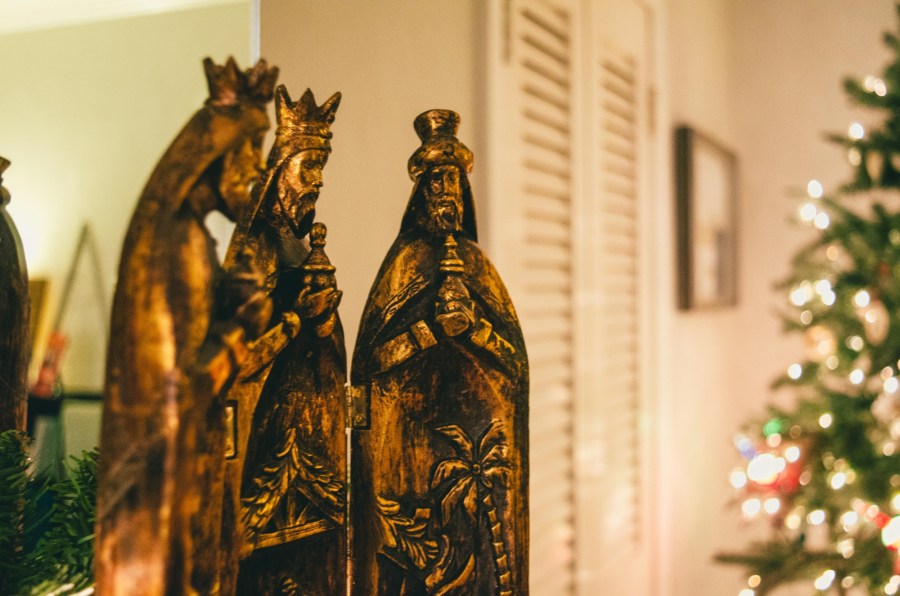
This story—the visit of the magi, or wise men from the East, as our translation renders it—is one of the best-known and least-understood stories in the New Testament. The magi themselves were not Jewish. In all likelihood, they were Persian, from somewhere around the modern-day city of Baghdad in Iraq. The dominant religion in that area at that time was not Judaism, but Zoroastrianism. And these magi were astrologers.

And that’s the first place where the Bible starts to mess with my theology. Because I had always been told that astrology was fake and bad, and that I should stay away from it. But here was this famous story in the Bible, no less, where spiritual seekers are using astrology to find their way to the presence of Jesus. That made me go, wait, what?

And it didn’t stop there. It gets weirder—so hold on to your seats.

These Persian astrologers determined, by practicing their craft, that a great king was being born in the land of Judea, so they figured they should go and pay their respects. And if you’re looking for a newborn king, where else would you go except to the king’s palace in the capital city, right?

So they ring the doorbell and say, “Hey, congratulations.” And King Herod is just standing there like, “What? There’s no newborn king here. What are you talking about?” So he goes and consults with the bishops and the theology professors, and they tell him, “Yeah, it’s not happening here. It’s supposed to happen in Bethlehem, according to the ancient prophecies.”

So Herod sends the magi back out to find this new king—not because he wants to pay his respects, but because he wants to eliminate any possible threat to his power. But the magi don’t know that. So they set out again.

And another really interesting thing happens. The text of Matthew’s Gospel specifically says that the magi didn’t follow the directions the clergy had given them from the Bible. It says that they set out, and they saw the star again, and they followed that instead—and lo and behold, it led them to the exact same place the clergy had told them to go.

They weren’t following the “right” way that was prescribed by the Bible. They were following the light they knew, and it led them to the same place.

It’s hard to be a fundamentalist when you actually read the Bible.

So they get there, to the presence of Jesus, Mary, and Joseph. They pay their respects. They offer their gifts. And just as they’re getting ready to go home, they have a dream. And in this dream, God warns them not to return to Herod, but to return to their own country by another road.

Other translations render this sentence as “they went home by another way.” And I really like that turn of phrase.

The magi were going home by another way—not just at the end of the story, but the whole way through. They were not members of the God Squad in the traditional sense. And they didn’t follow the guidance of the Bible. They walked by the light of their own star and ended up exactly where they needed to be anyway.

That says something to me about the God we believe in today—not the abusive ex-boyfriend god, not the all-knowing micromanager, but one who is not afraid of people who ask questions, make mistakes, and travel by their own light. God was with the magi in ways that broke the rules. And that same God is still with us today and has been all along.

One of the many things that I love about the Episcopal Church is that we have a theological tradition where diversity is baked in. Our theology is not about obedience to a single infallible authority. It’s an ongoing dialogue between scripture, tradition, and reason. There is room in our theology for differing viewpoints, and the God we believe in is bigger than all of it.

No book or person or institution is capable of having the last word, because we believe that word hasn’t been spoken yet.

Like the magi, God is still guiding us closer to the presence of Jesus by many and various paths. So none of us has the right to pass judgment on another, or say with absolute certainty, “You’re wrong, and I am right.”

We might think we’re right, but God is usually standing off to the side with a little smirk, going, “Are you sure about that?”

If God could lead the magi to where they needed to be by the light of a star, then surely it’s no big problem for God to lead you wherever you need to be by means of whatever light you follow—no matter the size of your questions, the severity of your mistakes, or the strangeness of your personal beliefs.

Kindred in Christ, that’s the good news of Epiphany for us. What that good news asks of us is the courage to ask the big questions, the humility to make mistakes, and the confidence to trust that we are still loved, even when we don’t get it right.

That is the light that will lead us home by another way.

Amen?

Hope First

Sermon for the second Sunday of Christmas

The biblical text is Jeremiah 31:7-14.

Sermon recording:

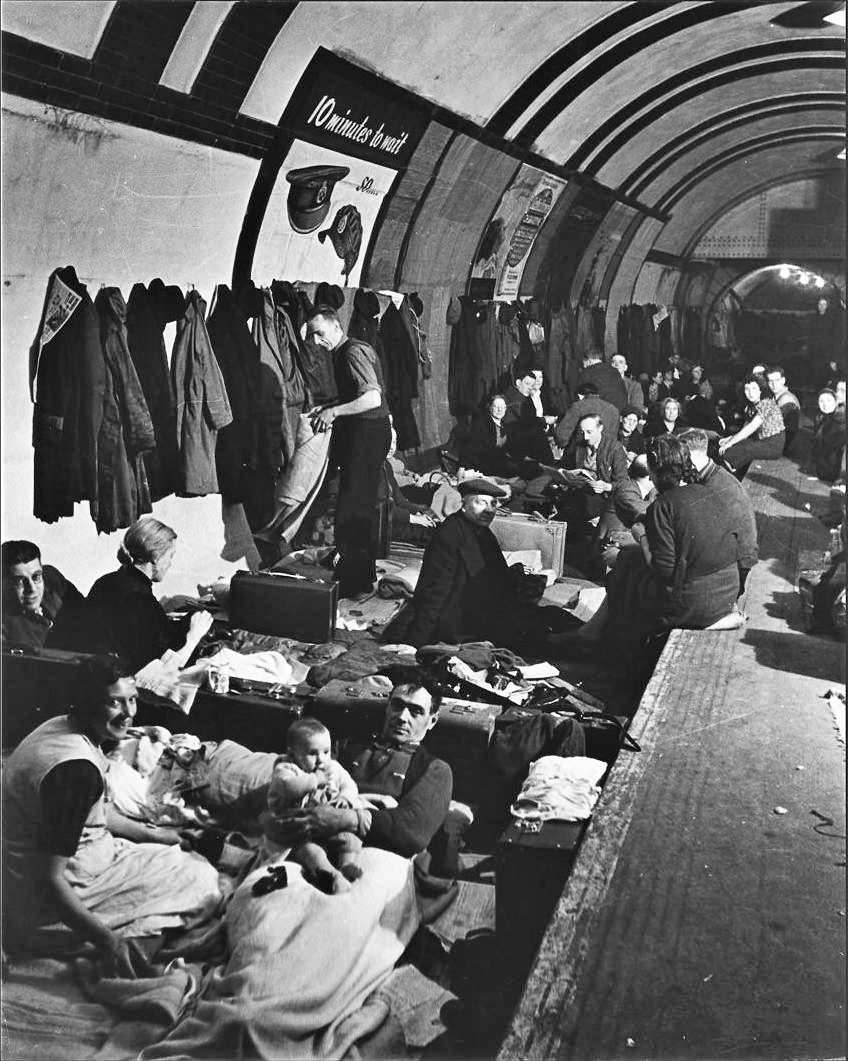
In September 1940, at the height of World War II, the German Luftwaffe began a sustained bombing assault on the British capital that eventually became known as the London Blitz.

As the city burned above them, the people of London gathered and slept in the underground subway tunnels for safety.

And yet, even as the city was being bombed night after night, something remarkable happened: Concerts continued, drama troupes put on plays, teachers taught classes, and an inter-shelter darts league formed. One pianist, Myra Hess, organized daily concerts at the National Gallery. People would come on their lunch breaks, not because the war was over, not because things were safe again, but because something in them knew this mattered.

They didn’t sing because the bombing had stopped.
They sang because without beauty, without meaning, without joy, they wouldn’t survive the bombing at all.

And that human instinct — to cling to hope before everything is fixed — is exactly what we hear in today’s reading from the prophet Jeremiah.

This passage comes from one of the bleakest books in the Bible. Jeremiah is not an easy prophet. He doesn’t offer quick comfort. He doesn’t soften his message. He spends much of the book warning his people — the people of Judah — that a crisis is coming.

For the first large section of the book, Jeremiah is doing one hard thing over and over again. He is speaking the truth about his nation’s injustice, exploitation, and unfaithfulness to God’s covenant, even though he knows the king won’t listen. He keeps telling the truth anyway, even though it gets him ignored, mocked, threatened, and eventually imprisoned.

And the truth he speaks is this:
“If we have lost faith in the core principles that make us who we are as a nation, then no amount of wealth, power, or political strategy will be able to shelter us from the consequences of our own actions.”

Jeremiah is not speaking as an outsider. He is speaking as a concerned citizen. He loves his people. That’s why he tells the truth.

Later in the book, the tone shifts again. By that point, his warnings have gone unheeded. The moment of truth has come and gone. The disaster Jeremiah spoke about has arrived. Jerusalem has fallen to the Babylonians. The people have been carried off into exile.

So, for Jeremiah and the people of Judah, the question is no longer, “How do we avoid this?”
The question is, “How do we live now that it’s here?”

That final section of Jeremiah is about acceptance — not resignation, but the sober recognition that what’s done is done, and all that remains is to make the best of it.

But right in the middle of those two sections, between the warnings and the acceptance, we get a third section that scholars call the Book of Consolation. Chapters 30 through 33. This is the section where today’s first reading comes from.

What’s striking about the Book of Consolation is that Jeremiah offers hope before the exile is resolved. Consolation comes before acceptance. Not because everything is okay, but because Jeremiah knows that, without hope, the people will not be able to survive what lies ahead.

Listen again to the imagery Jeremiah uses. This is not quiet, private reassurance. This is public celebration. Singing. Shouting. Gathering. Grain, wine, and oil. A watered garden.

And notice who’s invited:
The visually impaired.
The mobility impaired.
Those who are pregnant.
Those in labor.
The people who cannot move quickly. The people who cannot carry much. The people who are exhausted, vulnerable, and easily left behind.

If you step back and picture it, what Jeremiah is describing looks less like a church service and more like a street party.

This is not a party for the strong. This is not a celebration of victory or success. This is a gathering that moves at the pace of the most vulnerable. No one is told to wait until they’re healed. No one is told to come back later when they’re stronger.

Everyone belongs.

Jeremiah even says, “I will give the priests their fill of fatness” — as a priest myself, I’m trying not to take that one personally.

But the most important thing to notice is this: the party happens before anything is fixed.

The exile is still real. The losses are still fresh. The future is still uncertain. And yet — the singing continues.

Just like the music during the Blitz, this isn’t a celebration because the danger is gone. It’s a celebration because without joy, without meaning, people won’t make it through what’s coming.

What’s fascinating is that psychology tells us something very similar.

Viktor Frankl, who survived the Nazi concentration camps, noticed that people didn’t endure suffering because it stopped. They endured because they found a reason to keep going. Meaning came first. Relief came later — if it came at all.

Or as Frankl famously put it, those who have a “why” to live can bear almost any “how.”

In other words, hope comes before acceptance. Without it, people collapse.

Developmental psychology tells us something similar from the very beginning of life. Erik Erikson wrote that hope is the first human virtue, formed not through explanation or reasoning, but through trust.

You don’t argue a baby into trust.

You don’t sit down with a newborn and say, “Now listen here, if you’ll just consider the evidence, you’ll see that you have been fed and changed, that your parents love you very much, and that it’s in everyone’s best interest that you lay down and go to sleep…”

Obviously, you don’t do that. You hold them.

Trust comes before understanding. Hope comes before explanation.

That explains why Jeremiah doesn’t wait until the exile is over to offer hope. He offers it first — because without it, the people won’t survive the truth they’re about to face.

The kind of hope Jeremiah is talking about is not mere optimism or denial, but something tougher.

I read a Tweet online that illustrates this kind of hope perfectly. It was written by someone named Matthew @Crowsfault and says:

“People speak of hope as if it is this delicate, ephemeral thing made of whispers and spider’s webs. It’s not. Hope has dirt on her face, blood on her knuckles, the grit of the cobblestones in her hair, and just spat out a tooth as she rises for another go.”

I absolutely love that. That’s the kind of hope you need when you’re living in exile.

And that kind of hope matters not just for us as individuals, but for us as communities.

When communities come under strain, they tend to split into two instincts. Some respond by saying the only faithful thing to do is expose every failure, until there’s nothing left but despair. Others respond by saying the only faithful thing to do is protect what’s good, even if it means refusing to see what’s broken.

Jeremiah refuses both extremes.

He loves his people too much to flatter them — and too much to abandon them.

That’s why hope comes first. Accountability without hope turns into cynicism. Hope without accountability turns into denial. Jeremiah offers hope not to erase the truth, but to make it possible for the people to face it.

And this isn’t just about nations or communities. It’s about individual lives, too.

I once read about a mother whose child was born with a severe and terminal disease. There were no long-term plans. No grand ambitions. None of the milestones people usually imagine for their children.

From the outside, many would have called that situation hopeless.

But the mother wrote about discovering a different kind of hope — not hope that things would be different, but hope rooted in love, presence, and fierce attention to the life in front of her. She described learning to delight in small moments, celebrate what was real, even though the future looked nothing like what she had imagined.

That’s the hope Jeremiah is pointing toward.

Not hope that skips over suffering.
Not hope that waits for everything to be resolved.
But hope that shows up anyway — and holds us together while the story is still unfinished.

The music during the Blitz didn’t stop the bombs. But it reminded people who they were.

Jeremiah’s street party didn’t end the exile. But it reminded the people that their story wasn’t over, that God wasn’t done with them, that life itself still carried the possibility of renewal.

So the invitation in this passage is not to pretend that everything is fine. It’s to accept the fact that things are pretty messed up and practice hope anyway. To create moments of joy. To notice what is good and celebrate what is being born, even though the ending is still unclear.

Kindred in Christ, as you look around at our troubled world today, gape in horror at the latest news reports, and wonder what it’s all coming to, I dare you to practice hope as a spiritual discipline.

Not a vague optimism that everything will work out fine, not a distraction from the real problems that we are facing, but a defiant commitment to keep hoping in the face of despair. An unshakable faith that God is not done with us yet, so we owe it to ourselves and each other to keep holding on and keep looking for opportunities to do what good we can, where we can, with whomever we can, and for as long as we can.

Like the people who lived through the London Blitz, we too have a need to sing before the war is over.
We too have a need to gather before the exile ends.
We too have a need to hold tightly onto one another, not because everything is okay, but precisely because it isn’t!

Because hope isn’t what comes after we heal the world.
Hope is what makes healing the world possible.

Amen?

The Winnowing Wind

Sermon for the Second Sunday of Advent, Year A

Click here to read the biblical passages.

So, we are now into that time of year when everybody hunkers down to watch their favorite holiday movies. Some people like It’s a Wonderful Life. Some people like the Hallmark Channel, but I only count that one as one movie because they all have the same plot. (No offense, I’m just preaching the truth.) Some people like Die Hard with Bruce Willis. Instead of deck the halls, he likes to deck the terrorists. But for me personally, there can be only one. And it’s The Muppet Christmas Carol. If you haven’t seen it, I highly recommend it. Because not only is it absolutely hilarious because of the Muppets, but Michael Caine, as Ebenezer or Scrooge, is just (*) chef’s kiss perfection. And finally, it’s actually one of the more faithful renditions of the classic novel by Charles Dickens. Most of us know the story already. Ebenezer Scrooge is a grouchy old miser, who gets visited by three spirits on Christmas Eve. The ghosts of Christmas past, present, and future. And through these visits, Ebenezer comes to a greater understanding of himself in order to make some necessary changes in his life. It’s a story about personal transformation, and that’s the exact same theme we find in today’s gospel.

The passage focuses on the ministry of St. John the Baptist, and as you may know, John could be more than a little intense, like camping. He walks in screaming,

“Repent, for the kingdom of heaven has come near,”

calling people names, and talking about pitchforks and unquenchable fire. That’s why he’s called John the Baptist (because if he was John the Episcopalian, he would have been much more polite about the whole thing). But he wasn’t polite. He was a prophet. And the message that God spoke through this prophet was a pretty direct one.

I think it might help if we were to unpack that message just a little bit. So, first of all, we hear that word repent, which makes a lot of us think about those angry preachers we see screaming and waving a Bible around on TV. We think that to repent means to feel guilty or ashamed, but that’s not actually what it means. In Greek, the word is metanoia, coming from meta, meaning “change,” and noia, meaning “mind.”

So in the language in which the New Testament was written, the word repent actually means, “to change your mind.” Anybody here ever change your mind about something? It happens.

It makes sense to change your mind when you get new information. The poet Maya Angelo said it beautifully,

“Do the best you can until you know better. And then, when you know better, do better.”

That’s what repent means. It’s not easy, but it also has nothing to do with guilt or shame. And that’s the core of John the Baptist’s prophetic message.

He tells people to

“bear fruit worthy of repentance.”

This has to do with how they live their lives. This is what Maya Angelou was talking about: “When you know better, do better.” No need to wallow and shame. Just learn from your mistakes.

After that, John starts to get really deep, but we miss what he’s saying if we get stuck on that idea of punishment and shame. John says,

“I baptize you with water for repentance, but one who is more powerful than I is coming after me. I am not worthy to carry his sandals. He will baptize you with the Holy Spirit and fire.”

Okay. I want you to remember those words: “Holy Spirit and fire.” They’re important. Specifically, I want you to remember that the Greek word for spirit is the same word they use for wind. So what John just said to the people is that the one coming after him (that’s Jesus) will baptize them with sacred wind and fire. I know that sounds weird, but stay with me because it’s about to become important.

John says,

“his winnowing fork is in his hand, and he will clear his threshing floor and will gather his wheat into the granary, but the chaff he will burn with unquenchable fire.”

Couple of unfamiliar terms in that sentence. They are agricultural terms, and I’ll deal with them in reverse order. First for us, and second for John, is the term chaff.

Chaff is a part of the wheat plant. It’s a kind of husk that protects the grain while it’s still growing on the stalk. It’s very important, because without it, the grain would be vulnerable to predators and the elements. So the chaff isn’t bad, it’s necessary.

The only problem is that it’s not very tasty or nutritious. So, if you want to harvest that wheat and bake bread, you have to get rid of the chaff first. That’s where winnowing comes in.

Winnowing is another agricultural term. After the farmers would harvest the wheat, they would heat it up over a fire, which would crack open the husks that surrounded and protected the grain. And then the farmers would take their winnowing forks and sift the wheat by tossing it up into the air, letting the wind blow the tough husks away and allowing the delicious and nutritious grain to fall back to the earth, where it could then be collected into baskets, and later baked into bread.

So, the thing to remember about chaff is that it’s the part of the plant that protects the grain while it’s still growing, but no longer serves the purpose of what the grain is meant to become. That’s the winnowing process, if we’re talking about wheat, and it’s also the repentance process if we’re talking about us, and using the word repent in the way that it was originally intended.

That’s what I see happening in Ebenezer Scrooge, throughout the story of A Christmas Carol. Our friend Ebenezer was taken on a journey through his childhood and youth where he saw how he had used study, work, and money as a shield to protect himself from the rejection that he experienced from his family and friends.

His skills made him very successful as a financial manager, but they left him empty when it came to the really important and valuable things in life. Miserliness for Ebenezer was like the chaff that protected the grain while it was still growing, but it was also the very thing that kept him from becoming the person he was meant to be. The work of the Holy Spirit in his life, the wind and the fire, was to help him let go of his old protective shell and embrace the truth of who he really was in God’s eyes, and I think the same thing is true for each and every one of us.

We all have old habits or beliefs that hold us back from living authentically as our truest and best selves. We might think that staying thin and beautiful is the key to a long and happy marriage. We might believe that next drink might make us the life of the party. We might wonder whether we will finally feel acceptable in God’s eyes if we could just pray the gay away. But none of these things are true. They are all chaff, and the work of the Holy Spirit in your life is the work of God, helping you to like yourself just the way you are and living that truth boldly and bravely in the world, just as God intended for you.

That’s what winnowing means. That’s what repentance means. And that is the message of St. John the Baptist for us in today’s gospel and in this season of Advent.

Kindred in Christ, I pray that you will come to know this message more fully for yourself during this holiday season, and that you will bear fruit worthy of changed minds by loving yourself, your neighbors, and God more authentically. When we finally come to that blessed celebration of Christmas, I pray that you will see the light of Christ being born in you in a new way, so that you can be that light for others and let your light shine for all to see.

Staying Awake

Sermon for Advent 1, Year A

Click here for the biblical readings.

We were supposed to gather at church today. Plans were made. Schedules were set. And now a storm has rearranged all of it. The roads aren’t safe. The building is closed. And here we are instead—in living rooms, kitchens, basements—still together, but not in the same place.

It’s not the end of the world. But it is the breaking open of the illusion that everything is under our control. We make our plans. We set our calendars. We line up our routines. And underneath it all is the unspoken hope that if we stay organized enough, life will stay predictable. But life rarely cooperates with our plans.

When Jesus says in today’s gospel, “No one knows the day or the hour,” that planning part of ourselves feels the tension right away. Not knowing feels dangerous. Change feels risky. We want a roadmap. We want signs. We want time to prepare.

But underneath that need for predictability is something even more tender: the fear of what might be revealed if the surface of things were ever to crack. Many of us carry the quiet suspicion that the order we see every day is fragile—that if it gives way, what’s underneath will be dark and dangerous. So we work hard to keep everything looking normal. And when the sense of normal is threatened, fear rises fast.

Most of us know that feeling. A weird sound coming from the car. The boss asking, “Can I see you in my office?” A phone call that begins with, “Your child has been in an accident…” A moment ago everything felt stable, and now suddenly it doesn’t.

That’s what Jesus points to when he talks about the days of Noah. People were eating and drinking, marrying and building their lives. Ordinary life. But ordinary life wasn’t able to hold together. It eventually fell apart, as all things do.

Was it the end of the world? In some ways, yes. It was the end of the world, as they knew it. But Jesus hints at a deeper truth. Not about the end of the world, but about what comes after it.

We often fear that if the surface of life ever falls apart, what comes next will be a nightmare. When our carefully constructed order gives way, what we meet first often feels like chaos. But after that first rush of chaos, there is something else.

Today’s gospel reading only hints at what that might be, but our first reading, from the book of Isaiah, dares to name it:

Isaiah sees the nations of the world gathering together instead of marching against each other. He sees people laying down their weapons because they have learned a better way to live.

Swords become plowshares. Spears become pruning hooks.
What once took life now gives life. What once drew blood now grows bread.

That is the apocalypse beyond the apocalypse. Not just the exposing of what happens when things fall apart—but the unveiling of what is trying to be born. A world no longer organized by fear, but by learning. By shared life. By the slow conversion of violence into nourishment.

We see the same pattern in the natural world all the time. In the hollow of a fallen log, an animal makes her home. From the remnants of a supernova come the building blocks of life itself.

We might wish for a world where everything is under control and nothing is chaotic. We might be afraid that, in reality, nothing is under control and everything is chaos. But the fact of the matter is that neither of those things is ultimately true. Life isn’t completely chaotic, but neither is it completely under control. Life grows in the creative tension between chaos and order. And over time, it keeps leaning toward connection. Toward relationship. Toward more belonging, not less. Faith dares to say that this same love is what’s holding the whole universe together.

That’s why Jesus can say, “Stay awake,” without meaning, “Be afraid.” Staying awake doesn’t mean scanning the horizon for disaster. It doesn’t mean planning for every possible contingency. Staying awake means paying attention to what really matters.

And that kind of waking up doesn’t just happen in dramatic moments. It happens in the small ones. It’s the pause before snapping back at someone. It’s the choice to listen instead of trying to win. It’s the moment when we decide whether we’re going to lead with fear—or with love.

Staying awake isn’t about knowing what’s coming. It’s about choosing how to live in alignment with what really matters.

So—here we are. Not in the same room. Not in the way we expected to be. The storm has interrupted “the best-laid plans of mice and men.” Our illusion of control has already cracked.

And still, beneath it all, we are being held.

Even here, in separate homes. Even on an altered Sunday. Even in uncertainty. Beneath the inconvenience, there is care. Beneath the disruption, there is still connection. Beneath what unsettles us, there is love doing its quiet, steady work.

So our invitation this season is simple. Don’t cling in fear. Don’t shut down in despair. Stay awake to what matters. Choose what grows life. Trust what is deeper than the storm.

Amen?