Sermon for the Third Sunday in Lent.
Click here for the biblical readings.
Hi, my name is Barrett and I make poor life choices.
Back in 2013, my family and I moved from upstate New York to western Michigan. We figured it would take a couple of days to pack up our stuff, load the truck, and get on the road. After all, we had made a similar move just a few years earlier, coming from the west coast of Canada to New York.
What we failed to account for, though, is that our previous move involved two broke seminarians in a one-room apartment. Everything we owned fit in the back of a modest U-Haul. Over the course of the intervening years, we had amassed a much larger collection of furniture, books, and kids (with all their accompanying accoutrements). A couple of days and a U-Haul wouldn’t be nearly enough to get the job done this time.
A visitor to my house asked, “Hey, aren’t you moving to Michigan next week?”
“Sure,” I said, “I figure I’ll just throw some stuff in boxes and hit the road.”
My friend very wisely took that opportunity to gently talk some much-needed sense into me, “Listen, you’ve got a lot more stuff in this house than you did when you got here. I don’t think a couple of days is going to be enough time.” Thank God for good friends, because this blessed soul organized a whole cadre of neighbors who descended upon my messy house for the entire week that it took the lot of us to get things packed and cleaned before moving day. In the end, everything came together right on time, but there’s no way it would have if it hadn’t been for the love of these people who rescued me from the mess of my own making. All in all, the stakes were relatively low in this crisis, but I was very grateful for the community that made a safety-net for me, when I needed it.
For other people, the stakes aren’t so low and a safety-net is not always there when they need it. Most of us have made regrettable decisions, of one kind or another, in our lives. Tragedy often strikes when unfortunate circumstances combine with our poor choices to leave us in a real pickle. Some of our unhoused neighbors, for example, could tell us heart-rending tales of woe about how they ended up living on the street, through no fault of their own. Others who have never experienced housing insecurity might be tempted to dismiss such stories as mere excuses. “The poor are poor,” some might say, “because of their own fault. If they had made better choices, they wouldn’t be in this mess.”
Thinking this way is tempting because it provides a false sense of security. Some might think, perhaps unconsciously, that they can protect themselves from disaster by being smart enough, good enough, or careful enough. But the reality is that life is rarely so simple. All of us have known good and hardworking people who nevertheless suffer hardship. The scary fact is that all of us are more vulnerable than we would like to think. Moralizing about the causes of disaster will not protect us when bad things happen to good people, especially since good people are also prone to making mistakes, from time to time.
So then, the real question for us Christians is not, “Why are the poor poor,” but, “What will we do about it?” That is the question that Jesus addresses in today’s gospel.
At the opening of the passage, Jesus talks about two terrible events that had happened in recent memory for his listeners. The first was a violent attack on worshipers at the temple by the Roman governor Pontius Pilate. The second was a building collapse in which eighteen people had been killed. Jesus answers the question about blame in a very straightforward manner: “Do you think that they were worse offenders than all the others living in Jerusalem? No, I tell you.”
Jesus typically asks more questions than he answers and often responds to questions with figurative stories, but this is one of the few times when he gives a direct and unequivocal answer: Did these people deserve what happened to them? No, they did not.
What he says next, however, almost undermines what he just said. Jesus says, “Unless you repent, you will all perish just as they did!” In this moment, Jesus almost sounds like an old-timey southern preacher, screaming through a megaphone while standing on streetcorner soap box. But that’s not what Jesus intends.
It helps to understand that the word “repent” has very little to do with feeling guilt or fear. The Greek word translated as “repent” is “metanoia,” which literally means, “change your mind.” Likewise, the word used for “perish” is not just referring to physical death, which eventually happens to everyone, but spiritual death. The best definition of “perishing,” in the spiritual sense, was given by Dr. Martin Luther King when he said, “Our lives begin to end the day we become silent about things that matter.”
Jesus’ warning about “perishing” is about this kind of spiritual death that we are in danger of experiencing, if we do not change our way of thinking about the misfortunes that befall our fellow human beings.
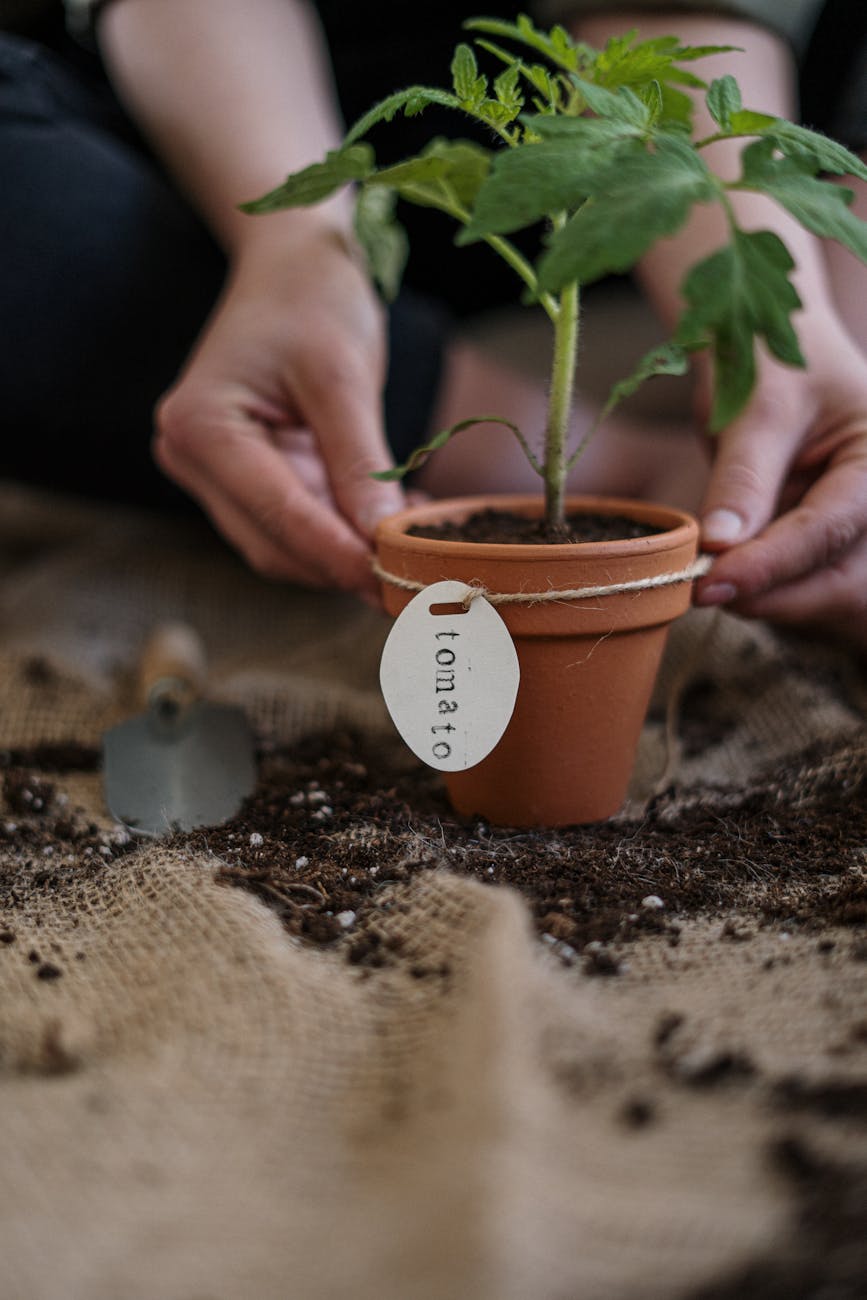
What then is the alternative that Jesus recommends we follow? To answer this, we need to look at the parable Jesus tells in the next part of the passage. It’s the story of a fig tree that is not performing as expected. The owner of the field wants to tear up the tree and throw it away to make room for other, more productive plants. But the gardener recommends patience and care instead. He says, “Sir, let it alone for one more year, until I dig around it and put manure on it.” He recommends that more attention, not less, be given to the plant. He doesn’t give up, but gets involved. God, according to Jesus, is more like the gardener than the owner of the vineyard.
Jesus presents us with the image of a God who does not give up on us, but is willing to get the divine hands dirty with hard work. The implication is that, if God doesn’t give up on us, then neither should we give up on each other.
What I find most interesting about this parable is the unresolved ending. We, the audience, don’t get to find out how the story ends. Did the owner agree to the gardener’s suggestion? Did the extra effort pay off, in the end? Jesus doesn’t say, so we just don’t know. The open ending of this parable does not leave us with certainty, but with hope. There are no guarantees in this life, but the stance of getting involved, rather than giving up, is the best hope we have for making a future that is better than the status quo we are enduring at this moment. The ending of this parable is Jesus’ way of telling us, “The ball is in your court. What are you going to do?”
When I failed to adequately plan for my big move from New York to Michigan, my friends could have easily shrugged their shoulders and said, “Well, that’s just what happens when you fail to plan ahead!” They could have rightly left me stewing in a mess of my own making. I am so grateful they did not do that. Out of their great love for me, they made my problem their problem and turned a moment of crisis into a moment of grace.
Kindred in Christ, the uncertainties of life and imperfections of human nature mean that we are all in the same boat together. We can choose to give up on each other and say, “It’s every man for himself,” or we can get involved with each other, get our hands dirty, and lean into the hope that we can make a better next year than we had last year.
In Matthew 25:31-46, Jesus gives us some practical advice on the kinds of things we can do to show up for each other. The Church has traditionally called them, “The Corporal Works of Mercy.” They are: To feed the hungry, to give water to the thirsty, to shelter the homeless, to visit the sick, to visit the imprisoned, and to give alms to the poor.
Like the gardener’s suggestions in Jesus’ parable, the Corporal Works of Mercy are not a guaranteed plan of social reform; they are a list of virtues that Christians ought to be practicing, for their own sake. We cannot solve the world’s problems, nor can we protect ourselves from the dangers of calamity and our own stupid mistakes, but we can show up for each other in a spirit of care and concern, willing to get our hands dirty with the kind of work that Jesus Christ calls us to do. By following Jesus, and practicing the virtues he taught us, we bear witness to the loving presence of the God who does not give up on us, who gets involved in helping each of us clean up the messes of our own making, and gives us hope for a better tomorrow than we had yesterday.
Friends, our God does not give up on us, so let us not give up on each other. Let us work together in hope, because it is a hope worth working for. Amen.
 Hopping Hadrian's Wall