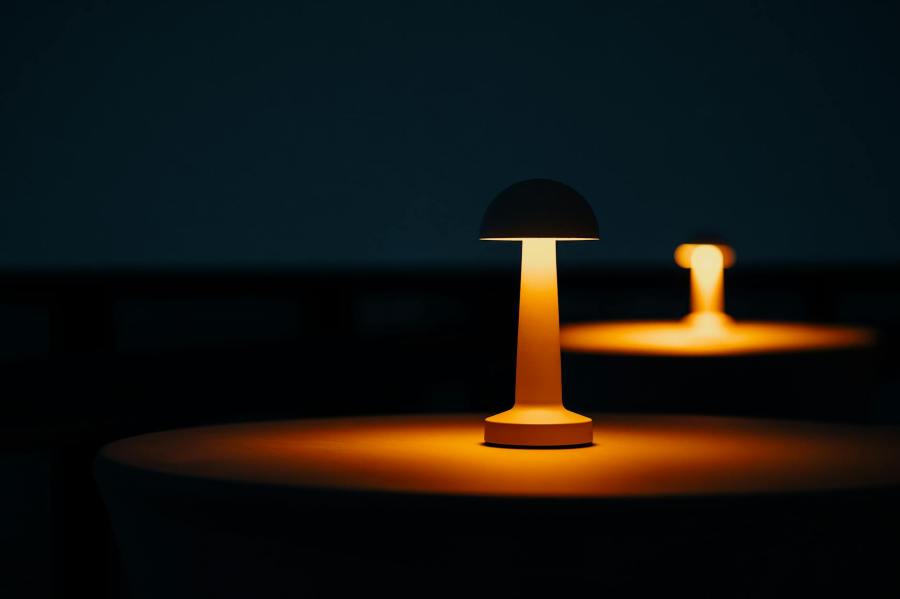
Sermon for the 3rd Sunday of Epiphany.
The biblical text is Isaiah 9:1-4.
Back when I was a little kid, I would sometimes wake up in the middle of the night, maybe after a nightmare, and I would look around my room in the dark.
And this place that felt so comfortable and so familiar to me in the daytime suddenly felt very foreign and strange in the nighttime. I was certain that there was danger in the darkness. And some of it, to be fair, was real. I never did a good job of keeping my room clean—either then or now—so it was entirely possible that I might trip and fall over something without the lights on. But some of that danger, I now know, was imaginary—like the monster under the bed or the boogeyman hiding in my closet.
But either way, whether I was thinking about real danger or imaginary danger, the feeling of fear was real.
I think we’ve all felt that way at some point or another in our lives—whether it was back when we were kids or maybe even now that we’re grown-ups. The things we’re afraid of might be different, and they too might be real or imaginary. But the fear itself stays the same.
The people of the kingdom of Judah in the 8th century BCE felt that fear too—the terror of a kid waking up in the middle of the night and not recognizing their own bedroom—Except that the people of Judah were feeling it about their country.
They didn’t recognize it anymore. There was trouble brewing at home and abroad. Their leaders had become self-absorbed and inhumane. And the prophet Isaiah—the one person in the capital city who was making any sense at all—wasn’t being listened to by anyone.
The Assyrian Empire was lurking on their borders, threatening invasion, and meanwhile Ahaz, the king of Judah, was busy flirting with their king and trying to impress him in any way that he could. It was as if a deep darkness had settled over their country, and the familiar landscape had suddenly become unrecognizable.
These were scary times for the people of Judah. And that’s where our first reading, from the book of Isaiah, picks up today.
And the prophet Isaiah doesn’t beat around the bush: He gets straight to the point, saying, “The people who walked in darkness have seen a great light; those who lived in a land of deep darkness—on them light has shined.”
Light is a funny thing. It doesn’t change much, but it makes all the difference.
For that kid who wakes up in the middle of the night, turning on the light is the one thing that can assuage that overwhelming fear. When the light is on, you can see a path through the messy room to the door. When the light is on, you can see that there are no monsters under the bed or in the closet. When the lights are on, you can remember that the place where you are now is the same place where you felt so at home before—you were just temporarily blinded by the darkness.
Turning on the lights doesn’t bring the night to an end any quicker, and it certainly doesn’t cause the room to be any less messy than it was before, but it makes it possible for you to see a way through the mess to the other side, and it gives you the comfort and strength you need to make it through the night until a new day dawns.
That’s the hope that the prophet Isaiah was giving to the people of Judah during their time living “in a land of deep darkness.”
The candle in the night was a sign of better days to come.
The word Isaiah uses to describe this new day—the word he repeats over and over again—is joy. He says, “You have multiplied the nation; you have increased its joy… They rejoice before you, as with joy at the harvest.”
It’s joy, joy, joy.
Isaiah says to his people, “I know things are tough right now, and in the darkness, you don’t recognize the country that once felt so familiar to you. But I promise you that a new day will dawn—a day of joy. And it will come when you least expect it, and in a way that you didn’t see coming.”
He said to the people that, “the yoke of their burden… the bar across their shoulders… and the rod of their oppressor,” would be broken “as on the day of Midian.”
And that’s a very interesting phrase.
When Isaiah talks about “the day of Midian,” he’s talking about a very specific scene from the book of Judges.
In Judges, chapter 7, the hero Gideon defeats a vast army in battle with an impossibly small force of underdogs. By the numbers, it should not have worked. But God was with them, and they stood up for what was right anyway, in spite of the overwhelming odds. And in the end, they were victorious.
So when Isaiah says that “the rod of the oppressor will be broken as on the day of Midian,” he’s saying to the people of Judah, “Just as God was with our ancestors in their struggle for what was right, so God will be with us too in ours.”
And I believe that message applies not just to the people of Isaiah’s day in the 8th century BCE, but to us too in our own day.
It’s easy to look around at the way things are today and see the darkness.
It’s easy to feel the fear and want to lash out in anger.
But what God asks of us instead is to be the light and let that light shine for all to see.
As we already talked about, light doesn’t change much—but it brings clarity. It allows the truth of our present moment to be seen for what it is. Light beats back the darkness of fear with the brightness of perspective. When we look around the room with the lights on, we see what’s really going on, and we are not afraid.
With the lights on, we can say to the monster under our bed, “You’re not really there. You have no power over me.” With the lights on, we can say to the mess on the floor, “I’m going to clean you up tomorrow, and you will not cause me to stumble and fall during this temporary time of darkness.” With the lights on, we can say to our fears—both real and imaginary—“You don’t scare me anymore.”
So, kindred in Christ, my message to you today is this:
Let your light shine. Now more than ever.
When the darkness of this world threatens to overwhelm you with fear, answer with light—light that brings truth and clarity, light that refuses to let you deny the evidence of your eyes, light that exposes monsters for the illusions that they are, light that dispels the darkness of fear for the brightness and warmth of home.
Because that is where we are.
Scripture tells us, in the Gospel according to John, chapter 1, verse 5, “The light shines in the darkness, and the darkness has not overcome it.”
My dear, beloved kindred in Christ, I proclaim to you today, in this season of Epiphany, that the scripture is true: The darkness has not overcome the light.
In fact, darkness is simply the absence of light. So, wherever the light shines, the darkness flees in terror.
You need not fear the monster under your bed, because the truth is that the monster is afraid of you.
So, let your light shine, my friends. Say to yourself, “This little light of mine, I’m gonna let it shine.”
Let it shine through the cameras of your cell phones.
Let it shine in your posts on social media.
Let it shine in your conversations with friends and family.
Let it shine in the acts of mercy and justice that you share in solidarity with your neighbors.
Let it shine.
Let it shine.
Let it shine.
Because, “the people who walked in darkness have seen a great light; those who lived in a land of deep darkness—on them light has shined.”
“The light shines in the darkness, and the darkness has not overcome it.”
Amen?
 Hopping Hadrian's Wall