Aperetif

Lookout Mountain, Alabama
Second Tuesday in Easter 2016

They tell me i died
in a head-on collision.

i was southbound;
it was waiting.

i saw life
flash before my eyes,
not just mine.

Green and Purple,
white and red,
drawing me in
and up
and out.

i press it to my tongue,
and bite down hard.
Bone of my bone,
flesh of my flesh,
within me
and without,
myself
and other.

Foretaste
of what is
to come.

Spinning
end over end,
inebriated,
bits flying off
in every direction.
It’s okay,
it wasn’t mine.
Just a rental.

Whose blood is this?
It’s everywhere.
Gets into my eyes
so i can’t see.

All of this,
could have been
nothing:
particles gathered,
clumped dust,
but You
stretched out Your hands,
spoke the word,

and everything happened.

Easter Vigil Sermon

Many thanks to Fr. Randall and the people of St. Luke’s Episcopal Church, who invited me to preach tonight at their Easter Vigil.

The text is Luke 24:1-12.

My seven-year-old had her first crisis of faith at an early age. It happened a couple of years ago, just after our family moved to Michigan, when she found out that the little girl next door didn’t believe in God. This possibility had never occurred to her before. She asked my wife and me, “Is God real or just pretend?” After some deliberation, she decided that things she could see are real, while things she could not see are pretend, so God must be pretend.

At first, I thought, “Hey, I’ve got this! I used to teach philosophy, my daughter is very bright, and kids are rational creatures, after all (I know: Rookie Mistake). So, I set to work with my finest reasonable arguments for the existence of God, but none of them worked on this precocious five-year-old.

My wife and I were not particularly worried about our kindergartner’s burgeoning atheism. As clergy, we understand that faith is a journey that looks different for each person that undertakes it. As believers in the ancient Christian doctrine of apokatastasis (Gk. ‘Universal Reconciliation’), we believe that God finds a way to reach every heart, each in its own way, in God’s own time.

But we had also made a promise, at her baptism, to raise her in the Christian faith, in hopes that she, at her confirmation, would one day make those promises her own. So, we continued to take her to church each Sunday and practice our daily devotions at home.

One night, as we finished reciting the Apostles’ Creed, my daughter asked about that one line: “I believe… in the resurrection of the body”. And I told her that the Christian Church has always taught that, one day, Jesus will return to earth and each and every person who has ever lived will rise from the dead, just like Jesus did on Easter.

She replied, “What?!!! You mean, some day I’M GOING TO RISE FROM THE DEAD TOO?!!!”

I said, “Yes, that’s what Christians believe.”

She said, “Oh my goodness! That’s AMAZING!!! I had no idea! EVERYBODY should know about this!”

Where my finely-tuned, well-reasoned arguments had failed, the gospel story itself had succeeded. And that’s the most amazing thing about this conversation.

Faith, in today’s world, has come to mean “belief in a series of propositions that cannot be proved by rational means.” Faith, so we’re told, is by its very nature opposed to reason and doubt. Faith, so we’re told, is about accepting that certain implausible events happened two thousand years ago. That’s what faith is, according to radical skeptics on the one hand and radical fundamentalists on the other. But that is not how most Christians have understood or practiced their faith over the last two thousand years.

For us, faith is a story. It is a story that has been unfolding since the beginning of time and is still unfolding today. It is the story which we find in ourselves and it is the story in which we find ourselves. Faith is a story of new life and transformation. It changes everything. That’s the vision of Christian faith that has brought us together to celebrate tonight.

We heard the major points of this story tonight as they were laid down in the Torah and the prophets of ancient Judaism. We listened to the witness and the commentary of Christ’s apostles as they struggled to make sense of the life-changing transformation they had just undergone. We listened to the words of Luke’s gospel, where the evangelist tries to explain that which defies all explanation.

When I listen to the words of tonight’s gospel reading, I cannot help but relate to St. Mary Magdalene and St. Peter. For them, the first experience of the resurrected Christ was not one of certainty or elation at the fulfillment of prophecy. The text of Luke’s gospel tells us they were perplexed, terrified, and amazed. Even the angel’s announcement begins with a question: “Why do you look for the living among the dead?”

For Peter, faith began with what seemed to him “an idle tale,” told by Mary Magdalene and her companions. He rejected the absurdity of it outright, as well he should, but something kept gnawing at him inside. I think it must have, because he “got up and ran to the tomb; stooping and looking in, he saw the linen cloths by themselves; then he went home, amazed at what had happened.”

This is what Christian faith is. It is not knowledge, in the factual sense. It is not certainty about doctrinal propositions handed down infallibly from ancient times. Faith, in the Christian sense, is perplexing; it is terrifying; it is amazing, as we heard tonight from the first witnesses of Christ’s resurrection. Faith is a question. Faith is a hunch, and that hunch changes everything.

We desperately need that kind of faith in this day and age. We need a faith that believes enough to doubt and doubts enough to “doubt even its doubts,” in the words of the Rev. Harry Emerson Fosdick.

You and I live in a society where we are inundated with a relentless onslaught of guarantees and certainties from advertising slogans, political campaigns, and religious ideologies. And each time one promise collapses under its own weight and proves itself to be a lie, another one is waiting to jump up and take its place. Each ideological idol promises to give us the world, if only we will bow down and worship its golden image. Faith, in this context, is the ability to question these promises, doubt these certainties, and refuse to bend the knee to anything less than the mystery of God’s own self.

This faith, the faith of the Church, is freedom from tyranny and idolatry. This faith is not preserved in unchangeable dogmas, but is passed down as a story told in poetry and prophecy, in water and oil and light, in bread and wine. This story is ongoing: unfolding and expanding over the ages, surprising us as it grows in us and we grow in it.

This is the story that brings us tonight to the empty tomb where, with Mary and Peter, we begin our encounter with the living Christ, not with a shout of certainty, but with the angel’s question, “Why do you look for the living among the dead?”

You and I are invited tonight, to take our place next to our brother Peter as we stoop down and squint into the mysterious darkness of the empty tomb, uncertain of what we will find there, but curious enough to come and see for ourselves.

Friends, welcome to the empty tomb. Welcome to the faith of the Church. Welcome to the unfolding story and the ongoing journey. I dare you tonight to walk with us on this journey, to believe enough to doubt, and to doubt enough to question your doubts. I dare you to be perplexed, terrified, and amazed. I dare you to allow yourself to be embraced by the mystery that causes this world’s exclamation points to bow down into question marks before its grandeur.

Friends, this is the faith of the Church. Welcome to the story that is more inspiring and more informative than any dogmatic or rational argument. Welcome to the journey that never ends. Welcome to the empty tomb.

Worship: What Is It Good For?

The text for this week’s sermon is John 12:1-8.

I love that 70s song by Edwin Starr that goes:

“WAR! What is it good for? Absolutely nothing!”

I think that’s a great question to ask: What is it good for?

It’s a question I think we could easily ask of ourselves, simply by changing the first word:

Church… Faith… Prayer… Worship… What is it good for?

There are many who have asked that very question over the centuries, and not a few of them have come back with the same answer: Absolutely nothing!

Historically, one well-known philosopher who asked that question (and came up with the same answer) is Karl Marx, who co-wrote the Communist Manifesto in 1848. He wrote, quite famously:

“Religion is the sigh of the oppressed creature, the heart of a heartless world, and the soul of soulless conditions. It is the opium of the people.”

Years later, the Soviet leader Vladimir Lenin expanded on Marx’s idea by saying:

“Those who toil and live in want all their lives are taught by religion to be submissive and patient while here on earth, and to take comfort in the hope of a heavenly reward. But those who live by the labour of others are taught by religion to practise charity while on earth, thus offering them a very cheap way of justifying their entire existence as exploiters and selling them at a moderate price tickets to well-being in heaven. Religion is opium for the people. Religion is a sort of spiritual booze, in which the slaves of capital drown their human image, their demand for a life more or less worthy of man.”

More recently, a group of three, young, Christian pastors have written a book called Never Pray Again: Lift Your Head, Unfold Your Hands, and Get To Work. In this book, they say:

For many people, Christian discipleship is sleepwalking. We inhabit a world of dreams and imagination, of theology and interpretation, of jargon and tradition. Worship services follow the same pattern week after week, and we can just coast through. Christian leaders can, and do, phone it in. We stand, we sit, some of us kneel, we turn to face the cross, we bow our heads, we take a morsel of bread and a sip from a cup, and we proclaim our work done.

Now, what each of these authors is trying to say is that any religion, any church, or any spiritual practice that does not lead humanity toward a transformed world is good for absolutely nothing. That kind of religion is like a drug: it makes people feel good by numbing them to the pain of the world. People use that kind of faith as an escape. It’s a drug and it’s good for absolutely nothing. Marx and Lenin would say that it’s better to have no faith at all. And I agree with them… to a point.

To all of the above authors, I would say, “Yes, but..”

I would say “Yes” to Marx and Lenin because the kind of religion we learn from Jesus, the prophets, and the apostles is firmly based in God’s desire for a world that has been transformed for good. Nowhere in orthodox Christian theology do we find the notion that God doesn’t care about this world.

Instead, we hear God say through the prophet Amos:

I hate, I despise your festivals,
and I take no delight in your solemn assemblies.
Even though you offer me your burnt offerings and grain offerings,
I will not accept them;
and the offerings of well-being of your fatted animals
I will not look upon.
Take away from me the noise of your songs;
I will not listen to the melody of your harps.
But let justice roll down like waters,
and righteousness like an ever-flowing stream.

In other words, God is sick and tired of their religion and wants them to work for justice instead. This is a profoundly biblical idea. Likewise, God says through the prophet Isaiah:

Announce to my people their rebellion,
to the house of Jacob their sins.
Yet day after day they seek me
and delight to know my ways,
as if they were a nation that practiced righteousness
and did not forsake the ordinance of their God;
they ask of me righteous judgments,
they delight to draw near to God.
“Why do we fast, but you do not see?
Why humble ourselves, but you do not notice?”
Look, you serve your own interest on your fast day,
and oppress all your workers.
Look, you fast only to quarrel and to fight
and to strike with a wicked fist.
Such fasting as you do today
will not make your voice heard on high.

In the Epistle of James in the New Testament, the apostle writes:

What good is it, my brothers and sisters, if you say you have faith but do not have works? Can faith save you? If a brother or sister is naked and lacks daily food, and one of you says to them, “Go in peace; keep warm and eat your fill,” and yet you do not supply their bodily needs, what is the good of that? So faith by itself, if it has no works, is dead.

So, this is where I say “Yes” to Lenin and Marx. If our Christian faith is just a way for us to escape the pain of life instead of working to make this world a better place, then our faith is just a drug that’s good for absolutely nothing. Better to have no faith at all, than that kind of faith.

However, my “Yes” to Marx and Lenin is not unqualified. It’s a “Yes, but…”

Yes, “faith without works is dead,” but empty escapism is not all there is to Christianity. As we have already observed, the core message of both Testaments in the Bible is the God who is “making all things new” in Christ. God’s dream is for “a new heaven and a new earth” and God has invited you and I to help make that dream come true by living our lives as “the hands and feet of Jesus” on earth today. The fact that some Christians have distorted or forgotten that fact does not negate its truth one iota. The solution to bad Christianity is not no Christianity, but better Christianity. That’s where Marx and Lenin go wrong.

In this morning’s gospel, Mary of Bethany, that wonderful mother of all contemplative saints, performs an extravagant act of beauty and service for Jesus. The text tells us she “took a pound of costly perfume made of pure nard, anointed Jesus’ feet, and wiped them with her hair. The house was filled with the fragrance of the perfume.” We soon find out that this perfume was worth almost a year’s salary for the average working person.

Judas Iscariot, ever the practical Marxist, laments, “Why was this perfume not sold for three hundred denarii and the money given to the poor?” (NOTE: Of course, we also learn in the next sentence that Judas’ motive for saying this was somewhat less than pure.)

Judas saw Mary’s act of worship as nothing more than a giant waste of resources. Many critics continue to accuse Christians of the same thing today.

Why do we get up and go to church on Sunday? Wouldn’t it be better to spend that time volunteering at a soup kitchen or homeless shelter? Why wake up early for prayer and Bible study before work? Do we think our prayers will magically come true like wishes upon a star? Why practice Christian spirituality at all? Why not just work hard as an activist, fighting for peace and justice? Like Mary’s anointing of Jesus, isn’t it all just a big waste of precious resources?

I would say no, it’s not a waste, and here’s why:

The biblical text tells us that, after Mary had broken open this expensive jar and anointed Jesus with its contents, “The house was filled with the fragrance of the perfume.”

In other words, the act of worship transformed the place where it happened and, by extension, the people who witnessed it. Even Judas was affected.

In the same way, our worship transforms us. It empowers us to do the work of being the hands and feet of Jesus in the world. Without being taught by the Word of God in Scripture, it never would have occurred to us to look for the presence of Christ in “the least of these” and serve them as if they were Christ himself (as indeed they are, as Christ said). Without being fed by the Sacrament of the Body and Blood of Christ, it never would have occurred to us that our broken and suffering neighbors are actually our brothers and sisters, fellow members of the Body of Christ, who eat from the same bread and drink from the same cup as us. Without the experience of dying and rising with Christ in the Sacrament of Baptism, we would not have the courage to face death and risk our lives for the sake of what we believe is right. But we have all these lessons because we have received them through the symbols, myths, and rituals of the Christian tradition. These tools shape us, so that we can then go out and shape the world. Without them, many of us would be utterly incapable of making a positive difference.

That’s what St. Mary of Bethany understood and the Communists didn’t. Worship makes a difference. Marx and Lenin were right that faith is worthless if it doesn’t make a difference in way we live our lives in this world. But they were also wrong, because the Spirit-filled worship of God in Word and Sacrament has the power to transform us from the inside out and then send us out into the world, where we can be agents of transformation in the revolutionary coming of the kingdom of God, on earth as it is in heaven.

Letter to Kalamazoo City Commission from the Christian Clergy

February 1, 2016

Dear Mayor Hopewell, Vice-Mayor Cooney, and City Commissioners of Kalamazoo:

The moral imperative to welcome refugees, migrant workers, and other strangers in need can be found throughout the pages of the Bible. In the book of Genesis, God called the patriarch Abraham, “Go from your country and your kindred and your father’s house to the land that I will show you.” Several generations later, severe famine forced Abraham’s descendants to relocate to the land of Egypt. While they were initially welcomed into that country, Abraham’s descendants were eventually labeled as a threat to national security by a racist government that subjected them to policies of forced labor and genocide.

In response to these crimes against humanity, God raised up Moses as a liberator, who led the people of Israel to a new life in a land of freedom. Along the way, God gave the Israelites a new command to ensure that the atrocities of Egypt would never be repeated by Abraham’s descendants. God said, “You shall not oppress a resident alien; you know the heart of an alien, for you were aliens in the land of Egypt.” (Exodus 23:9)

In the New Testament, Jesus Christ continues this ethical tradition in his teaching:

Jesus said, “I was a stranger and you welcomed me.”
His followers asked, “Lord, when was it that we saw you a stranger and welcomed you?”
Jesus replied, “Truly I tell you, just as you did it to one of the least of these who are members of my family, you did it to me.”
(Matthew 25:31-46)

Based on these and many other passages of sacred scripture, we the clergy of Kalamazoo believe it is our bounden Christian duty to open the doors of our community to offer hospitality and assistance to these our fellow human beings. They are now arriving on the shores this country, fleeing death by violence or starvation. They come to us from many directions, bringing with them a brilliant rainbow of many different languages, skin tones, cultural traditions, and religious beliefs. They come asking only that we acknowledge their inalienable right to exist.

Sadly, there are many voices at work in this country and in the state of Michigan who would use this humanitarian crisis as an opportunity to garner power for themselves. They use the same slanderous political tactics employed by Pharaoh in the book of Exodus. They manipulate the fears of the general populace with the specter of terrorism. Their xenophobia and lust for power has led them to blatant disregard for the lives of fellow human beings in need.

As Christians, we call upon the leadership of Kalamazoo to resist these lies, heeding instead the cry of the poor and the biblical command: “You shall love your neighbor as yourself.” (Leviticus 19:18; Mark 12:31)

Congregations stand ready to work together in sponsoring, welcoming, and assisting refugee families of all ethnic and religious backgrounds. We need the support of this city’s leadership in order to fulfill our Christian calling and honor the inclusive values that make our city, state, and country so great. We strongly urge the City Commission of Kalamazoo to adopt the attached resolution.

Sincerely,

The Rev. J. Barrett Lee, Presbyterian Church (USA)

The Rev. Nathan Dannison, United Church of Christ

The Rev. Sarah Schmidt-Lee, Presbyterian Church (USA)

The Rev. Andrew Tengwall, Evangelical Lutheran Church in America

The Rev. Matt Weiler, United Methodist Church

Pastor Strick Strickland, Sr., Second Baptist Church

The Rev. Dr. Randall Warren, The Episcopal Church

The Rev. Mary VanAndel, Presbyterian Church (USA)

The Rev. Dr. Seth Weeldreyer, Presbyterian Church (USA)

The Rev. Elizabeth Candido, Presbyterian Church (USA)

The Rev. Sara Dorrien-Christians, Presbyterian Church (USA)

The Rev. Dr. John Best, Presbyterian Church (USA)

The Rev. Ruth Moerdyk, Christian Church (Disciples of Christ)

The Rev. Kurt Kremlick, Presbyterian Church (USA)

The Rev. Nelson Lumm, Presbyterian Church (USA)

The Rev. Kathleen Robertson King, Presbyterian Church (USA)

The Rev. David Moffett-Moore, United Church of Christ

The Rev. Bob Bond, Metropolitan Community Church

The Rev. Lawrence Farris, Presbyterian Church (USA)

The Rev. David Nichols, American Baptist Churches

RESOLUTION AFFIRMING THAT THE CITY OF KALAMAZOO
IS A WELCOMING COMMUNITY AND RESPECTS THE INNATE DIGNITY OF ALL PEOPLE

January 2016

WHEREAS, the City of Kalamazoo community remembers, honors, and values our immigrant and migrant roots, and embraces the values of family, faith, and hard work; and,

WHEREAS, the City of Kalamazoo has long been home to immigrants from around the world, who come seeking opportunity, stability, prosperity, and a better life for their families. The City of Kalamazoo is home to many immigrants who come from regions such as the Middle East, Latin America, Africa, Europe, and Asia. The city’s diverse communities consist of first and second generation immigrants as well as African-Americans who have historically migrated from the southern United States; and,

WHEREAS, the Welcoming Kalamazoo initiative aims to build cooperation, respect, and compassion among all in our community, including immigrants and non-immigrants alike; endeavors to create an atmosphere in which international students, immigrants, and refugees have increased opportunities to integrate into the social fabric of their adopted hometowns; and seeks to embrace diversity while retaining unique cultural identities; and,

WHEREAS, the City of Kalamazoo community has long been recognized as a hospitable and welcoming place, where people, families, and institutions thrive and the contributions of all are celebrated and valued. Residents of the City of Kalamazoo live up to our highest American values of acceptance and equality, and treat newcomers with decency and respect, creating a vibrant community for all to live in; and,

WHEREAS, the City of Kalamazoo community is committed to building a diverse, inclusive, and global city and will continue to provide a neighborly and welcoming atmosphere, where all are respected and accepted. NOW, THEREFORE, BE IT

RESOLVED, by the Kalamazoo City Commission on [DATE] that the City of Kalamazoo is affirmed as a place where all foreign-born and native-born Americans can live, work, and play together; share in each other’s customs and ideals, and appreciate and promote cultural diversity.

We urge residents and stakeholders of the City of Kalamazoo community to join with the efforts and spirit of the Welcoming Michigan initiative and join in lifting up the City of Kalamazoo as a welcoming environment for all.

This Welcoming Resolution is put forth and supported by:

Members of the Welcoming Michigan Kalamazoo Leadership Committee

Eliminating Racism & Claiming/Celebrating Equality (ERACCE)

The mission of ERACCE is to dismantle systemic racism and build antiracist multicultural diversity within Southwest Michigan institutions by providing education, networking, technical assistance and supportive resources to the region.

FAIR FOOD MATTERS

The mission of Fair Food Matters is to improve access to healthy, local food by educating, connecting, and empowering the Kalamazoo community.

Hispanic American Council

The Hispanic American Council is a nonprofit community organization established to advocate for the well-being of the Hispanic population in Southwest Michigan.

Welcoming Michigan

Welcoming Michigan is a statewide initiative of the Michigan Immigrant Rights Center working to promote mutual respect and cooperation between foreign-born and U.S.-born Americans.

Fellow Community Partners

It is NOT Okay

“I can no longer hide behind the flag of “I don’t want to be political”; rather I have to state the obvious and say, “This is not about politics. This is about human decency and I, for the sake of my children and all future generations who are seeing these things, must say, ‘I am not okay with this because this is NOT okay.’”

Christina Embree's avatarr e F o c u s

I’m sure by this point you’ve seen the video. The one of the young African-American woman being removed from a presidential campaign rally in Louisville, being pushed and prodded by numerous campaign supporters while others pummel her with insults or capture the whole incident on their phone. Not one person, not one, steps in and says, “Hey now, this is a human being. Show a little respect for the human race.”  Not one defends. Not one speaks out. Not one.

And I’ve refrained from posting anything about this here because I didn’t want this blog to be political. I’ve kept this place free from politics and campaigns and opinion on government and court decisions and I was determined to do so, until today.

Because today, I realized, THIS IS NOT POLITICAL. 

It’s not about politics. It’s about humanity.

As I watched that girl get pushed and shoved all I could think was…

View original post 902 more words

Afraid of the Dark

The text for this week’s sermon is Luke 15:1-3, 11-32.

I was super-excited last year when the gods of TV Land saw fit to resurrect one of my beloved shows from my teenage years: The X-Files.

Oh, how I loved that show! (Full disclosure: Gillian Anderson was one of my high school crushes.) For those who haven’t seen it, The X-Files is a show about two FBI agents who are routinely sent to investigate cases that involve some kind of paranormal activity, like aliens, ghosts, and werewolves. Each episode typically involves some kind of monster, several members of the supporting cast meeting their untimely demise, and lots and lots of people walking down dark staircases with flashlights.

People love The X-Files, and other horror films like it, because they enjoy the experience of being momentarily frightened in a safe environment. It’s an adrenaline rush that sets us on the edge of our seats. But even more than that, I think people like to be scared by horror films because those stories give us a safe place, upon which we can project some of the deepest fears we humans hide in our subconscious minds.

The monsters on the screen are symbolic of our deep anxiety that, beneath the surface of our lives, there is nothing of substance. We are scared to death that we are alone in this universe and, when our time comes, this little light of hours will simply fade to black and become nothing.

Or, worse than nothing, we are terrified that we might look into the great mystery of existence and find a malevolent force that hates us and actively wishes us harm.

Even without the symbolism of monsters in the movies or on TV, those fears live within us. So, we humans build up defenses to keep the darkness at bay and ensure that we never have to look under the bed or in the closet. We live our lives with the covers pulled over our heads and our eyes squeezed shut. If you think about it, none of us ever really grew out of being afraid of the dark.

We may throw ourselves into work, surround ourselves with money and possessions, adopt fanatical ideologies about politics or religion, compulsively seek to control and manipulate others, or numb our fears with drugs, sex, or entertainment. We are frightened of what the truth might be, so we hide behind these false selves we construct for ourselves and identify with these things that are not truly us.

In this morning’s gospel, Jesus tells the story of two brothers, both of whom fell victim to this deep anxiety about life and reacted in very different ways. In the story, as Jesus tells it, their fears are symbolically represented in the person of their father, whose character the brothers have misjudged.

The younger brother is the one we’ve heard the most about over the past two thousand years. This is the one we have come to refer to as “the prodigal son.” The story begins with this younger brother saying, “Father, give me the share of the property that will belong to me.”

He’s asking for his inheritance, which would normally only come to him once his father had passed away. By demanding it now, the younger son is basically saying to his father, “You’re dead to me.” His father’s death is symbolic of his fear that, beneath life’s surface, there is nothing but darkness and emptiness. So, the son has concocted a plan through which he thinks he can keep those fearful feelings numbed. Jesus tells us that he, “traveled to a distant country, and there he squandered his property in dissolute living.” He’s living it up today because he’s afraid that tomorrow might never come. So, he makes himself the center of his own little world and declares his personal, momentary pleasure to be his highest good.

Now, as most of us already know, his plan doesn’t work out so well. Circumstances and consequences conspire against him and his whole house of cards comes crashing down in a very short period of time. Alcoholics and addicts call this “bottoming out.” When things were at their worst, this guy has a moment of clarity, in which he is finally able to see that his plan for happiness has not worked out so well for him. Yet, even then, this clever son has come up with his own plan to obtain security and prosperity for himself. He remembers how good people have it back on the family farm, so he decides to go home. And on the way, he comes up with a darn good apology and sales pitch that’s sure to land him a job and house with three square meals a day. Not the worst day ever for a washed up business man.

But then, something unexpected happens on the way home. He doesn’t even make it up the driveway. His father sees him and comes running up to throw his arms around him. He puts a robe on his back, a ring on his finger, and kills the fatted calf for a party. Ironically, this is exactly the kind of experience the younger son was hoping to have when he left home earlier; he just never expected it to come from his own father!

This young man was afraid that, beneath the surface of life, reality was just an empty shell and dark void. His fear of the dark was symbolized by the lie he tells himself: that his father is dead.

Well, it turns out that his father is not dead, but is in fact “the life of the party.” Even after all the wastefulness and the scheming, the father welcomes the son home with a celebration that goes far beyond anything he could have asked or imagined. Such is the abundant life to be found in God, the heart of reality.

Now the other brother (remember that there were two) has a very different story to tell. He is dutiful, loyal, responsible, and respectable. This son is everything we parents hope our kids grow up to be. But remember that this is a story about two lost boys, not just one. As we will find out, this older brother is not “the good son” that he appears to be at first.

Like his younger brother, the older son lives his life on the surface of reality because he is afraid of what might lie beneath. The younger brother was afraid that there was nothing but emptiness beneath the surface of reality, but the older son is terrified that the true nature of reality is malevolent and actively hostile. This attitude is reflected in the way he talks to his father. The younger son said, “You’re dead to me.” The older son says, “Listen! For all these years I have been working like a slave for you, and I have never disobeyed your command; yet you have never given me even a young goat so that I might celebrate with my friends.”

The older son has severely misjudged his father’s character and painted him as a cruel, unfair miser. In order to protect himself from this monster under the bed, the older brother has come up with a plan for appeasing that hostile energy. He says to himself, “If I just play by the rules, everything will be okay. If I can just stay on that crotchety old miser’s good side, I will eventually be rewarded for my hard work.” This, by the way, is the strategy employed by so many good, religious people in our world today. We tell ourselves that God is out to get us, so we have to protect ourselves from God by way of meticulous religious observance, moral behavior, and sound doctrine.

But then, all of that changes one day when he comes home from work to find a party going on, all because his good-for-nothing younger brother has come back from an extended vacation in Las Vegas!

Well, this poor young fellow’s preconceptions about reality were unfortunately shattered in that moment. Where was the outrage?! Where was the justice?! Where was the punishment that he was so certain would be visited upon him, if he were to act so irresponsibly?!

So, he storms off in a huff and refuses to go in and join the party. I like to imagine him angrily banging around in the garage (if they had garages in those days), pretending to work some project, throwing his tools down loudly enough that he can be head inside the house.

And what does his father do? He goes out to him, just like he did for the younger brother when that son got home from his bender. And he blows his older son’s misconceptions about reality out of the water when he says, “Son, you are always with me, and all that is mine is yours.”

Now, the father isn’t just waxing poetic here. Remember that, at the beginning of the story, he divided his wealth between his sons. In fact, the older son probably got the bigger share in this deal. Yet this same son, in the blindness of his anxiety, says to his father, “you have never given me even a young goat.” This son lives his life with the covers pulled over his head, afraid of the monster under his bed. And the monster (so he thinks) is his miserly father.

But, oh, how he has misjudged his father’s character. The welcome-home party for his younger brother, while earth-shattering for the older son’s worldview of a universe that is perfectly morally balanced, is the sign of his father’s true nature: extravagant generosity (one might even call it amazing grace).

Both of these boys were lost in their misconceptions about reality, so both of them chose to live their lives on the surface. One believed there was nothing but emptiness and loneliness, so he tried to fill that void with pleasure and numb the pain with entertainment. The other believed that reality was a monster that was out to get him, so he threw himself into hard work and religious observance in an attempt to appease the malevolent force that lies beneath the surface of life.

Both brothers were wrong. Both were lost in the lies they told themselves. And the most amazing thing is that their father responds to both of them in the same way: by coming out to meet them where they are. This father, who is symbolic of God for us, does not wait for his children to get their act together before welcoming them home. The invitation to this party is always open: to saints and sinners, sacred and secular, good kids and bad, alcoholics and workaholics.

We humans, like the brothers in this story, live our lives in the midst of a horror movie. We sense the mysterious darkness closing in around us and we are afraid. Sometimes, we are afraid that there is nothing there beneath life’s surface and we are destined to be utterly alone forever. So, we try to fill that void with momentary pleasures that lack the joy of true satisfaction. But when the movie ends and the keg runs out, and we wake up to find ourselves in a mess of our own making, God runs out to meet us with the revelation that there is, in fact, something substantial beneath life’s surface. God is not dead, but runs out to meet us with open arms, a royal robe, and a fatted calf. God says, “I am the God of abundant life.

At other times, we are afraid that life is out to get us, that there is a monster whose wrath must be appeased if we want to survive. So, we throw ourselves into hard work and good deeds, hoping that following the rules will be enough for us to earn security for ourselves. But when our worldview is turned upside down by God’s refusal to punish flagrant sinners, when someone else is freely offered the welcome we’ve been working for all our lives, when we are so scandalized by this injustice that we sulk outside, refusing to condone such immorality, God runs out to meet us with the revelation: “I am the God of amazing grace.

Abundant life and amazing grace: that’s what lies beneath the surface of life. Though it may sometimes feel otherwise, we don’t have to be afraid of the dark anymore: we are not alone and we are not unloved. The heart of reality is God: the God of abundant life and amazing grace. And this God is running out to meet us all today with the words that will forever be tattooed on our consciousness:

“I love you and there’s nothing you can do about it.”

New Musical Setting for Easter Vigil

At a house blessing last autumn, my friend the priest asked me if I composed music. I replied in the affirmative, with the caveat that I have no formal or professional training in music. My background is mainly in the contemporary folk genre. But that didn’t seem to bother him. He has been looking for someone who could produce a lively, participatory musical setting for the Exsultet, to be sung at this year’s Easter Vigil in his parish. By the end of the night, the priest and I were crowded around the family’s dining room table with the deacon, laying out preliminary ideas for this new piece.

For those who may not be familiar, the Exsultet forms the bulk of the Lucernarium (Service of Light) that begins the Great Vigil of Easter, sometime between sunset and sunrise on Easter Sunday. It is an ancient chant, in which the priest and people of the parish dedicate and light a new Paschal Candle each year.

This part of the service is haunting and beautiful. In the midst of a completely dark church, the Light of Christ burns brightly. It is the first spark of resurrection as the power of death begins to come undone. My favorite part is when the candle passes through the columbarium in procession. I imagine the eyes of the dead following the light as it goes by… waiting.

When the procession reaches the front of the church, the deacon dedicates the new Paschal Candle by chanting the Exsultet and the celebration of Easter begins.

I am happy to report that I have finished my work on this piece in time for it to be used in the Easter Vigil at St. Luke’s Episcopal Church, Kalamazoo. The simple tones composed for this setting alternate between exuberant and mysterious. They include several original refrains for congregational participation.

While this piece has been composed for and dedicated to the people of St. Luke’s, I am making it available for free to all congregations who would like to make use of it. Blanket permission is granted to make as many copies as necessary for use by congregations or choirs. I ask only that credit (for the music and refrains) be given somewhere in the bulletin. The text of the verses is taken directly out of the Book of Common Prayer, which is already in the public domain.

The .pdf file can be downloaded by clicking below:
Exsultet (St. Luke’s Setting)

I am grateful to Fr. Randall Warren and the community of St. Luke’s Episcopal Church for this opportunity to offer something of beauty to the liturgical life of the parish. I hope this piece serves to make their Easter celebration (and yours) very special.

Pax,

J. Barrett Lee

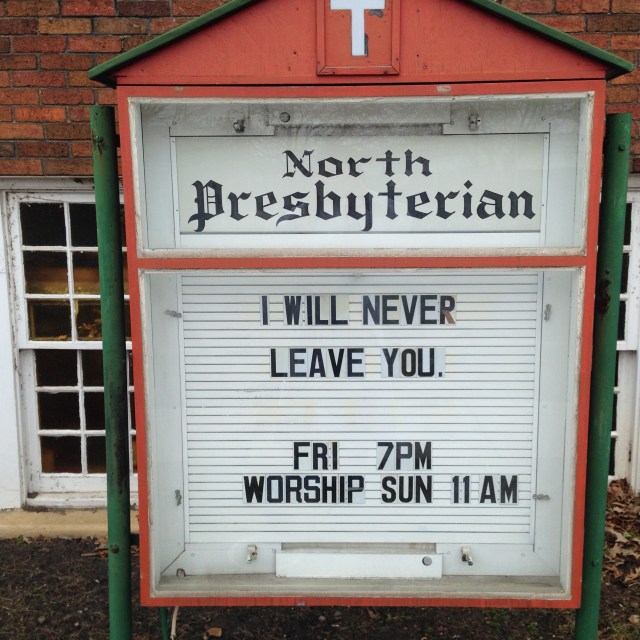
North Presbyterian Churck, KZ-86
Photo by Larry Braak-Palmer


Peace! Be Still!

Mark 4:35-41
Lectio Divina

35On that day, when evening had come, he said to them, “Let us go across to the other side.”

Jesus, help us to hear and heed your call to do great things: Help us to leave familiar shores behind and cross into the unknown territories with you.

36And leaving the crowd behind, they took him with them in the boat, just as he was.

Jesus, help us to take you as you are and accept life on life’s terms. Save us from our own delusions and dreams.

Other boats were with him.

Jesus, everyone we meet is fighting a secret battle. Though we may often feel alone, we are never alone. You are with us always, and you also give us the gift of each other. Help us to reach out and ask for help when we need it.

37A great windstorm arose, and the waves beat into the boat, so that the boat was already being swamped.

Jesus, blowing wind and living water are common symbols for your Holy Spirit. Sometimes, you do things that are inconvenient for us and lead us into situations where we would rather not go. Help us to trust you, even when the wind and the waves threaten to break our little boats. And when these boats finally sink, show us how to walk on water.

38But he was in the stern, asleep on the cushion;

Jesus, you show us that faith sometimes looks like sleep, that the most convincing speech is silence, and that stillness is the most effective course of action. Help us to rest in you, as in the eye of the storm.

and they woke him up and said to him, “Teacher, do you not care that we are perishing?”

Jesus, we are so prone to panic that we forget who we are and who you are. Forgive us when we malign your character and strike the rocks to which we should speak. Help us to see that you do not actually care about the fate of our little, inconsequential boats, our false selves, our ego-attachments. SOS, Jesus: Save our souls, our true selves, and bring us safe and sound to the place you have prepared for us, where you are working in us greater things than we can ask or imagine.

39He woke up and rebuked the wind, and said to the sea, “Peace! Be still!”

Jesus, I wonder whether you are speaking to my circumstances or to me? Sometimes you calm the storm and sometimes you calm your child.

Then the wind ceased, and there was a dead calm.

Jesus, you speak your Word into the substance of the universe and creation takes on the qualities you carry within yourself: Shalom, Stillness. Speak, not only to the winds and waves of my life, but to me also. Make me more like you. Let me be the change I wish to see in the world.

40He said to them, “Why are you afraid?

Jesus, you are the great diagnostician. Your incisive questions cut to the heart of the matter and expose the sicknesses within us. Faithful are the wounds of a friend. You ask us these questions, not because you require information, but so that we might see ourselves more clearly. Help us to explore these difficult questions with you, that we might gain wisdom and insight. May your questions show us how our attachment to (and identification with) these little boats is keeping us from the peace we so desperately cry for.

Have you still no faith?”

Jesus, your questions are the surgeon’s scalpel. You cut straight to the heart of the matter. We are too caught up and identified with things that are not us. In spite of all the time we have spent sitting at your feet, we still have no faith. We still have no clue who you are, and therefore, we haven’t the faintest idea who we are.

41And they were filled with great awe and said to one another, “Who then is this, that even the wind and the sea obey him?”

Jesus, sometimes the beginning of faith looks like a really good question. Lead us, by the power of your infuriating sleepiness and the cutting of your questions, to ask better questions. Instead of “Do you not care?” let us ask, “Who then is this?” And may your silent response be all the answer we need.

Blessing the Corners

Thank you to everyone who has offered prayers on behalf of Kalamazoo today. We are all exhausted.

As many of you know already, Jason Dalton went on a shooting spree last night, killing six and wounding two others in seemingly random acts of violence around our community.

I scrapped the sermon I had prepared for this morning and started over from the beginning. The text is Luke 13:31-35. Here is the sermon:

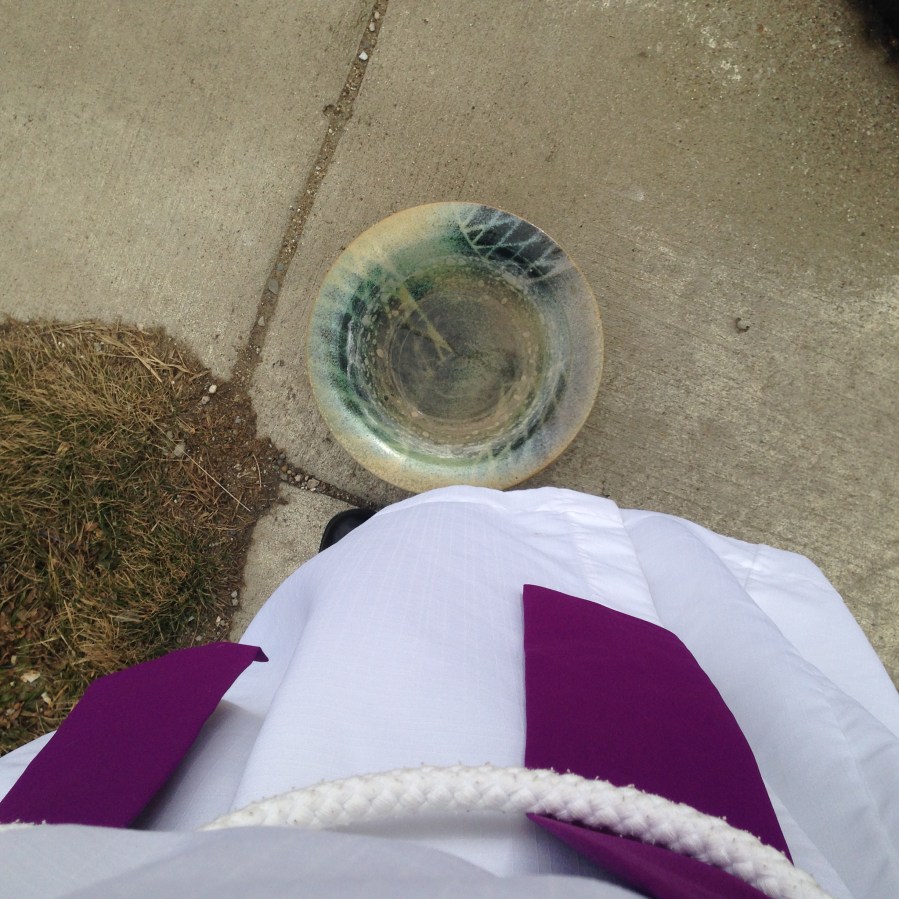
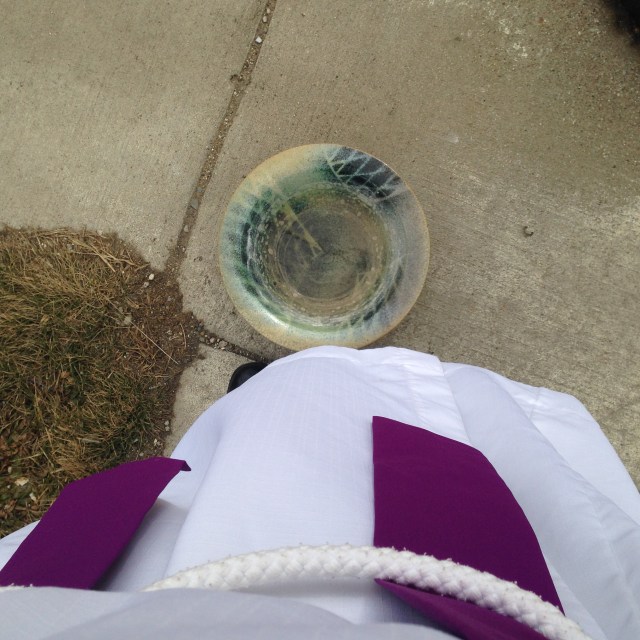
Jason (the suspected shooter) was arrested at the corner of Ransom and Porter, a scant three blocks from our church’s building at Ransom and Burdick. North Church is the closest Presbyterian congregation to the scene. After worship this morning, I took the water from our baptismal font and walked down to that intersection, sprinkling the four corners in an act of blessing. This ritual was done in your name and in the name of all who support Kalamazoo with their prayers today. Thank you. Your presence is felt.

Our closing hymn this morning was written by Archbishop Desmond Tutu and set to music by the Iona Community:

Goodness is stronger than evil.
Love is stronger than hate.
Light is stronger than darkness.
Life is stronger than death.
Victory is ours, victory is ours,
through God who loves us.

If you live locally, please come and join us at an interfaith community prayer vigil on Monday night (February 22), 6pm at First Congregational Church (345 W Michigan Ave).

IMG_0503
Water from the baptismal font.
IMG_0504
The corner of Ransom and Porter, where Jason was arrested.
IMG_0505
And the promise still holds true.