Judd on Body Image and Sexism

Here’s a link to a fantastic article by Ashley Judd that was sparked by recent discussion about her appearance.

She does an incredible job of shining the light where it belongs: on structural injustice in the sexist orientation of our society.

She also offers the best three-sentence summary of patriarchy that I have ever read.  This is a much needed contribution to contemporary conversations on gender where the related-but-separate problems of misogyny and sexism are so often confused for one another.

Judd’s words:

“Patriarchy is not men. Patriarchy is a system in which both women and men participate. It privileges, inter alia, the interests of boys and men over the bodily integrity, autonomy, and dignity of girls and women.”

Special thanks to my friend and congregant, Jaime Dudajek-Burgdoff, for posting this article on Facebook.

Ashley Judd Slaps Media in the Face for Speculation Over Her ‘Puffy’ Appearance

New Hymnal

The Presbyterian Church (USA) is in the process of publishing a new hymnal!  It’s due to be out in 2013.

OK, I realize that most of you just rolled your eyes at me, but I’m still excited about it.

Today, the contents of said hymnal have been made public for the first time.  Here is a link to the page:

CONTENTS OF THE 2013 PRESBYTERIAN HYMNAL, GLORY TO GOD

I’ve only given the list a brief once-over, but here’s my initial “best and worst” (one of each):

Best: Gather Us In by Marty Haugen

Love this song.  Don’t know why it wasn’t in the last one.  Good tune, good lyrics, reaches across the theological divide.  Good pick, committee!

Worst: Kum Ba Yah

Seriously?  Who is still singing this?  If it’s you, then STOP.  Right now.  I mean it.  Maybe I watch too much Walking Dead, but I’m convinced that this song is an infected zombie who has risen up to feast upon the flesh of the living.

The only way to stop it is to shoot it…

in the head…

without mercy.

OK, I said I was only going to do one of each, but someone once told me that you should give two compliments for every criticism, and this hymnal deserves it:

Another Best: Glory to God, Whose Goodness Shines On Me

A great new Gloria Patri that Katie Boardman pulled out for us at a Presbytery meeting last year.  More rhythmic and energetic than our classic plodder, you might actually believe that the people who sing this are glad they’ve been redeemed.

That’s all for now!  Since the contents were released today, I’m sure the Presbyterian Internet (do we have one of those?) will be abuzz with everybody whining about what they don’t like.  With that in mind, say a prayer for the committee that put it together.  I’m guessing they might be feeling rather anxious, since all their hard work is going on display.

With that in mind, let me be among the first to thank and congratulate the Presbyterian Committee on Congregational Song for their hard work and the fine product they’ve given us!

For more on the theological rationale used by the committee, check out this document:

Theological Vision Statement & A Statement on Language

The Empty Tomb

Easter sermon from Boonville Presbyterian.

The text is Mark 16:1-8.

Click here to listen to this sermon at fpcboonville.org

A Wall Street executive once hired a consultant from the Czech Republic to come and advise him on business matters.  After a highly productive and successful series of meetings, the time had come for the consultant to return to his home country.

“I want to thank you for all you’ve done to help our company.”  The executive said, “Before you return to the Czech Republic, is there anything you would like to see or do here in America?”

“Well,” the consultant said, “I have always heard such wonderful things about the zoos in America.  We don’t have anything like them back home in the Czech Republic.  I would really like to go to the zoo.”

So the executive makes arrangements and takes the rest of the day off in order to escort his new friend to the zoo.  While they are there, the consultant is fascinated by the lions’ den.  He leans as far as he can over the railing to get a good look at them.  But suddenly, the unthinkable happens: he loses his balance and tumbles headfirst into the lions’ habitat!  The lions are on him in a flash and devour him so quickly that there is nothing left by the time the zookeeper arrives with the police.

“Okay,” the authorities say to the executive, “You were the only eyewitness to this tragedy.  Did you happen to see which lion actually ate your friend?”

The executive gives it some thought and says, “Yes.  It was the male lion with the large furry mane.  I’m absolutely certain that he was the one who ate my friend.”

So they shoot the male lion and open him up.  Alas, the lion’s stomach was empty!  So they proceed to shoot the female lion and open her up.  Sure enough, there was the poor consultant in her stomach.

Now, there are two morals to this story:

The first is that you should never trust the word of a Wall Street executive who tells you, “The Czech is in the male.”

The second moral to this story is that you should never be too certain about certainty.

As a society, we tend to put a lot of stock in certainty.  We buy products that come with a “guarantee.”  We buy all kinds of “insurance” to protect us from anything bad that might happen.  We trust the words of our political and religious officials as if they were gospel truth.  But just take a minute and think about all the times in history when people lost their lives over a certainty that later turned out to be completely false?

Several years ago, there was a science fiction movie called Men In Black starring Will Smith and Tommy Lee Jones.  In one scene of this movie, Will Smith has just found out that there are aliens from outer space living on Earth in disguise.  Tommy Lee Jones tries to comfort him with these words about certainty: “Fifteen hundred years ago everybody knew the Earth was the center of the universe. Five hundred years ago, everybody knew the Earth was flat, and fifteen minutes ago, you knew that humans were alone on this planet. Imagine what you’ll know tomorrow.”  Certainty, it seems, is a very fickle thing.

Certainty is also something that is commonly associated with people of faith.  Preachers, theologians, and church goers often speak with great passion and conviction about things they know to be true, beyond any shadow of a doubt.  On the other hand, those who struggle with faith are often called “agnostic” which can be translated as “not knowing” or “uncertain.”  Agnostic people sometimes ask religious people questions about certainty like:

  • “How can you be so sure that God exists?”
  • “How can you be so sure that there’s life after death?”
  • “How can you be so sure that everything will turn out for the better in the end?”

In the minds of average people (agnostic and religious alike), certainty and faith seem to go hand in hand.  This association is so firmly ingrained that religious people are often made to feel a deep sense of guilt whenever they question some or all of their beliefs.  Likewise, agnostic people are often made to feel like there’s no place for them communities of faith (like church).  So many of them feel like they have to choose between the intellectual integrity their minds long for and the sense of reverence and belonging their hearts long for.  If faith and certainty are permanently associated with one another, you have to make a choice.  There is no room for questions or doubt.  It’s black and white.  You’re either in or out.  In the minds of average people (agnostic and religious alike), that’s what faith is all about.

This morning, I want to take that preconceived notion (faith = certainty) and put it on trial next to what the Bible actually says or, more importantly, what it doesn’t say (because you can learn a lot by paying attention to what the Bible doesn’t say).

Let’s start by looking at today’s New Testament reading.  Do you notice anything missing from it?  We have the women who show up at the tomb.  The stone is rolled away.  There’s a young man in white telling them that the person they’re looking for isn’t there.  They run away in fear.  Do you notice anything missing?  How about anyone?

Jesus!  That’s right, Jesus forgets to show up to his own party!  Today is Easter and we’re celebrating the resurrection of Jesus from the dead.  Isn’t it at least a little odd that the risen Christ doesn’t even make a single appearance in the reading?

Let me add a little more wood to this fire: today’s reading is from Mark’s gospel, which most biblical scholars agree was the first of the four canonical gospels to be written.  It was probably written about thirty or forty years after the death of Jesus.  Now, we don’t have any original manuscripts for this (or any other) book of the Bible.  All we have are copies of copies.  Sometimes, these copies differ from one another.  For example, the later versions of Mark’s gospel have Jesus showing up and giving some sage advice to his disciples, but the earliest manuscripts we have end with this passage: the one where the women run away in fear at the end.

That’s kind of anti-climactic isn’t it?  I mean, the resurrection is kind of the central miracle in the Christian faith.  It’s the reason for today’s celebration, the highest holiday in our religion.  Wouldn’t you expect a more certain and definitive record of it in the earliest accepted account of its occurrence?

Now, let me be clear, I’m not trying to argue that it did or didn’t happen.  What I’m trying to point out here is that the earliest available editions of Mark’s gospel leave us with a big question mark, rather than an exclamation point.  Mark simply presents us with an empty tomb and then leaves us to make up our own minds about what happened.

I think this is good news for those of us who struggle with faith (and I include myself in that number).  It means that we are not required to check our brains at the door when we come into church.  It means that there is a whole lot more mystery than certainty in authentic Christian faith.  Most of all, it means that faith is more about staying open and asking honest questions about what might be true rather than forging and holding onto hard-and-fast answers about what we think is true.

It means furthermore that doubt is a friend of faith, not its opposite.  In fact, if we’re defining faith as openness to possibility, then doubt is what makes faith possible.  For those of us (like me) who worship at the empty tomb, standing there with a big question mark hanging over our heads, the only real opposite to faith would have to be certainty.

You and I seem to live in a time of unparalleled questioning.  Thanks to many brilliant advances in information and communication technology, we probably know more but understand less about the incredible diversity on this planet than any generation that has come before us.  We’re facing questions about science and sexuality, faith and philosophy, politics and pluralism.  Whether we’re talking about robots, rocket-ships, or religion, we are already coming up with answers to tough questions that our ancestors never would have dreamed of asking.

In the face of such daunting challenges, it’s only natural (healthy, even) to feel more than a little intimidated.  There are powerful voices in our society who are calling on us to return to yesterday’s answers in response to today’s (and presumably tomorrow’s) questions.  These fearful folks long for the comfort that certainty brings, so they hunker down, roll up the sails, and batten the hatches, hoping that their ship has the right stuff to weather the winds of change.  As those winds grow stronger and stronger, those voices of fear grow louder and louder.

It would be easy to let those loud voices and that powerful wind of change intimidate us.  It would be easy to give in and huddle together below decks in hopes that the wind will eventually stop.  That would be so easy to do if we didn’t know who we are, where we’ve come from, and how we got to where we are today.  Our ship, the church, was made to sail in these winds.  The wind is our friend.  If it wasn’t for the wind, we never would have left our home port.

Allow me to offer a few examples:

Today’s wind has brought us to face controversial and challenging questions about issues like religious diversity and human sexuality.  Fifty years ago, we were asking questions about whether two people of different races or ethnicities could get married and have a healthy family.  There were those who said it would never work because it was unnatural and went against the established order for human society laid out in the Bible.  Sound familiar?  It wasn’t until 1967, in the case of Virginia v. Loving that the U.S. Supreme Court finally ruled bans on interracial marriage as unconstitutional.

Before that, folks in our church were arguing about whether or not women could be ordained to serve as clergy in our church.  There were some who said it would never work because it was unnatural and went against the established order laid out in the Bible.  Yet, here I am, a proud member of a generation where women in ministry are not only my peers, but also my predecessors in the pulpit.  I don’t think I even need to mention the name of Rev. Micki Robinson and her epic seventeen year ministry in this church.

Before that, there were folks who stood up and proclaimed that, because all people are created equal, the institution of slavery should be abolished.  People said it would never work because it was unnatural and went against the established order laid out in the Bible.  They even fought a bloody war over that question.  Yet, I think we can all agree that our country is better off for having faced that question and challenged its previously conceived notions.

Before that, another group of people declared that, because all people are created equal, a country should be run by democratically elected leaders and not a royal monarchy that was handed down from generation to generation by supposed “divine mandate.”  These same people also had a bold new idea that church and state should remain separate, in order to protect the freedoms of both.  Thus, the United States became the first country in the history of the world to be founded on an idea, rather than a common ethnic identity.

Before that, people like John Calvin and Martin Luther challenged a millennium of church tradition and authority, believing that people have the right to read and interpret the Bible for themselves, rather than waiting for some Pope to issue an authoritative doctrinal statement on behalf of the people.

Before that, a man named Jesus of Nazareth challenged the very foundation of religious and political power in his day.  He proclaimed a bold new vision of the kingdom of heaven-on-earth.  He gave us the core spiritual principles and beliefs that continue to shape our lives to this day.

Before Jesus, in the Hebrew Scriptures (what Christians call the Old Testament), there was a long line of Jewish prophets like John the Baptist, Jeremiah, Elijah, and Moses, who stood up to “the way it is,” questioned the legitimacy of the status quo, and proclaimed a bold and prophetic new vision of what might be possible, which leads us right back to that definition of faith as openness to possibility.

We gather together this morning to celebrate this mystery of the resurrection of Jesus.  We are confronted with the image of an empty tomb and a huge question mark hanging over our heads.  We are not given many concrete answers, backed up by the guarantee of certainty.  But, as we have already seen, we gather at this empty tomb with a great cloud of witnesses who have gone before us.  They, like us and the women at the tomb in today’s gospel story, were gripped with an overwhelming sense of fear and amazement.  I can imagine us all standing there, staring into the darkness, maybe holding onto each other for support, wondering together what might be happening, not certain of anything, but open to what might be possible.

Where do you find yourself in this story today?  Are you perhaps a questioning believer who is afraid to let your doubts shine, for fear that they might invalidate or undermine your faith?  Are you perhaps a hopeful agnostic who yearns for a sense of transcendence and community, but is afraid that there is no place for you in any institution that calls itself a “church?”  Are you perhaps one of the frightened faithful who miss the old comfort of certainty from the “good old days,” who long for an anchor for their souls amid the winds of change, and who look to answer today’s questions with yesterday’s answers?  Whoever you are, I want to invite you, on this Easter morning, to join us at the empty tomb.  Let us hold onto each other as we stare into the darkness together with more questions than answers, overwhelmed by that odd emotional combination of fear and amazement, and let us do our best to remain faithfully open to what might be possible for us at this time and in this place.
The Greatest Crime of All: Being Poor

Rene Girard is a mythology scholar and theologian who has made a name for himself by naming what is potentially one of the most terminal spiritual diseases in western, capitalistic society: Envy.

According to Girard, humans perpetually compete with one another in an attempt to imitate certain models of appearance, behavior, and status.  This constant competition would quickly degenerate into an anarchic “war of all against all” were it not for periodic episodes of “scapegoating” where the hostile energy of the community is directed toward a chosen outsider (individual or group) who is subsequently “sacrificed” for the good of the group.  The sacrifice of the scapegoat temporarily releases the pent-up tension and allows this cycle, which Girard calls “the cycle of mimetic violence,” to begin again.

One could easily point to the scapegoating of Jews during the Third Reich as an example of cycles of mimetic violence in action.

I got to see this phenomenon take place firsthand on a citywide scale in Vancouver during the buildup to the 2010 Olympics.  City legislators passed the notorious “Safe Streets Act” which made it illegal to panhandle anywhere within 30 feet of businesses, residences, or bus stops.  In a west coast urban center of two million, is there anywhere in the city that meets these criteria?

Poverty was thus outlawed in pre-Olympic Vancouver.

In a culture that has made an unholy idol of success, failure is criminal.

Here is a link to an NPR article that documents a similar process going on in Hungary.  The primary difference is that Hungary itself seems to be in a state of economic failure and the powers that be would like to attach blame to those who are least likely to have caused the collapse and least likely to defend themselves in the event of a large-scale attack: the homeless.

I find this to be an appropriate article to post this Easter weekend, as we remember the ignominious death of another sacrificial scapegoat who was unjustly made to endure the wrath of a political-religious system that could not imagine another way of being human…

Homelessness Becomes A Crime In Hungary

Evolutionary Thoughts: The Paradox of Resurrection

Yes, we are a resurrected people.  Evolution has been telling us that since time immemorial.  Resurrection is the mythical/religious name we give to the triumph of matter over antimatter, life over death, meaning over meaninglessness, cosmos over chaos.  But it is also the name we give to that baffling transformative process that requires paradox – apparent contradiction – as an essential ingredient in every transformation, whether personal or global…

Assuredly, not everything in our world is in harmony, and often we are overwhelmed by mysterious forces that push our sanity and sanctity to their very limits.  But before we address these big questions, let’s get our own house in order.  Let’s begin by resolving and dissolving all the meaningless suffering that we ourselves cause either directly or indirectly.  Then the chances are that the other great paradoxes that baffle and confuse us will not seem that irrational anymore.  We then will be in a position to understand with greater wisdom and equanimity the paradoxically creative Spirit who energizes the E-mergent miracle of our evolving universe.

Then, too, we are likely to be more at peace with the paradoxical enigmas of each day.  With graced intuition we will be more at ease about the fact that death is a precondition for new life; we do not know why, but it is.  Chaos is the fermenting ground for creative order; light is meaningless without the dark; pain and beauty have a strange familiarity; suffering awakens us into compassion.  The evolutionary cycle of creation and destruction manifests itself in every realm of life and permeates every recess of our being.

Diarmuid O’Murchu, Evolutionary Faith (p. 107-108)

I’m reposting this article for Maundy Thursday, as we celebrate Christ’s institution of the Eucharist.

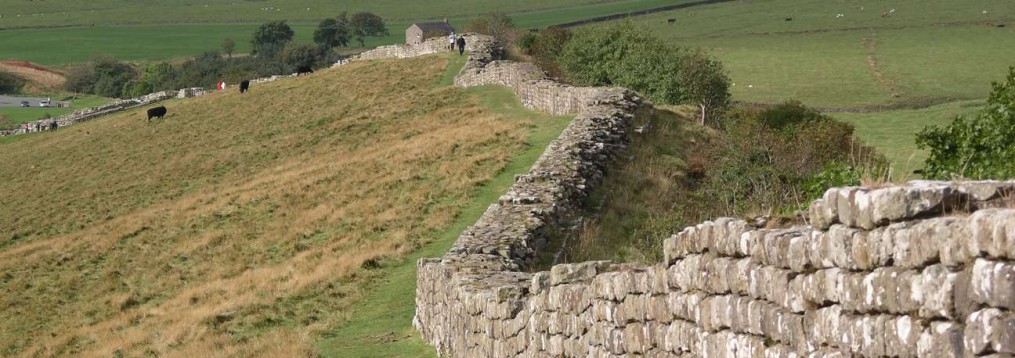
J. Barrett Lee's avatarHopping Hadrian's Wall

The Eucharist is a supreme moment of cosmic, planetary, spiritual, and human embodiment.  All the elements meet as one in a ritual engagement from which nobody, for any reason, should be excluded.  Radical inclusion is at the heart of every eucharistic enactment, subversively modeled by the Jesus of Christianity, who welcomed everybody to the eucharistic table, including those who were totally prohibited according to the religious rules of the day: tax collectors, prostitutes, and sinners…

The Eucharist acclaims and celebrates unashamedly the radical relationality that characterizes every form of embodiment, from the cosmic to the personal.  And it also pronounces that God is totally at home in the immediacy of that encounter; stated in the affirming assertion of Sallie McFague: God loves bodies!  God is present precisely in the moments of intense bodily encounter, whether in the erotic passion of sexual embrace, the intensity of human intimacy, or the inexpressible…

View original post 83 more words

Journeying on by Stages

Abram's Altar

It’s no secret that I’ve been part of several different varieties of Protestant church: Baptist, Evangelical, Charismatic, Emergent, Episcopal, Presbyterian…

All this time, I’ve been longing for a tradition, something bigger than my little self, of which I can be a part.  Each time I land somewhere new, I think I’ve found it, that is, the place where I will finally put down roots and stay forever.  And each time, I end up leaving after a few years.  I’m beginning to think my ecclesiology is not as strong as I once thought.

I tend to leave each tradition with a keen (and perhaps overdeveloped) sense of what is wrong with it.  My most severe criticism has been reserved for the one tradition that, during my youngest years, shaped me more than any other: the Baptists.

I graduated from a private Christian high school in the Bible belt that was run by a Baptist church (watch the film Saved! for an idea of my high school experience).  I got to see the very worst of the Baptist tradition there.  Theologically, they were the sweaty-brow, pulpit-pounding, Bible-beating, hellfire-and-damnation preachers for which the American south has become famous.  Their commitment to ignorance was the foundation of their stupidity.

At no time was their hypocrisy more apparent than during my senior year when the pastor of that church sexually assaulted a student and the church covered it up.  Meanwhile, that student’s mother (who happened to be a teacher at the school) was fired from her job.  Later that year, another student was expelled from school because she was caught drinking at a party.  The administration defended their actions, citing “discipleship” and not “evangelism” as the institution’s raison d’être.

After that experience, the one variety of church that I intentionally avoided was Baptist.  To me, they represented the very worst of dogmatic and legalistic Christianity that was devoid of any mysticism, relationality, or intellectual integrity.

More recently, as I’ve been exploring what it means to believe and live as a self-identified liberal Christian, I have been basking in the light of several authors whose lives and words have touched me deeply.  Specifically, I am referring to Howard Thurman, Walter Rauschenbusch, Harry Emerson Fosdick, and Martin Luther King, Jr.  These icons of liberal Protestantism have touched me deeply with their commitment to everything I thought was lacking in my experience of the Baptist tradition.

And then it hit me: these four men had one thing in common that had eluded my consciousness until now.  They were all Baptist ministers.

Delving a little more deeply, I discovered a whole new perspective on the Baptist tradition that I hadn’t noticed until now.  Apart from the die-hard fundamentalists among them, Baptists are (and have been for four hundred years) committed to the power of freedom.

Walter Shurden has articulated the Baptist commitment to freedom in terms of four central values (I have lifted the following summary from Wikipedia):

Soul freedom: the soul is competent before God, and capable of making decisions in matters of faith without coercion or compulsion by any larger religious or civil body

Church freedom: freedom of the local church from outside interference, whether government or civilian (subject only to the law where it does not interfere with the religious teachings and practices of the church)

Bible freedom: the individual is free to interpret the Bible for himself or herself, using the best tools of scholarship and biblical study available to the individual

Religious freedom: the individual is free to choose whether to practice their religion, another religion, or no religion; Separation of church and state is often called the “civil corollary” of religious freedom

Needless to say, this discovery has sparked a reconsideration of my theological roots, dare I say it, the tradition in which I was raised.  Upon further reflection and research, I came to another realization about my heritage:

Apart from the high school I attended, my experience of Baptist churches via the ones I attended as a child was an experience of very moderate to liberal Baptists.  My parents, who I would describe as moderate in most respects, brought us to two different Baptist churches during my youth: First Baptist Church of Melrose, Massachusetts and Binkley Baptist Church in Chapel Hill, North Carolina.  First Baptist of Melrose is where I have my earliest memories of church.  Binkley Baptist is where I received my first Bible in the third grade.  Both of these churches are American Baptist, formerly known as Northern Baptist, a much more diverse and moderate denomination than its southern counterpart.  Binkley Baptist is also affiliated with the Alliance of Baptists, a very liberal denomination that split off from the Southern Baptist Convention in the mid-1980s.  That same church made waves decades ago by hiring an openly gay minister before it was popular, even among mainline Protestants.  Upon close re-examination, I would say that my perspective on my Baptist roots is shifting dramatically.

Having just completed my transition to the Presbyterian Church in the last twelve months, I’m not looking to make another switch.  However, if one were to ask me what I see God doing in my personal life right now, I would probably point to the way in which my relationship toward my Baptist heritage is being redeemed in my own memory.

For the last several years (before this process began in earnest), I’ve even had recurring dreams of returning to Binkley.  One involved making my way down a snowy path through the woods behind my childhood home and arriving at Binkley in order to talk with their pastor.  In another dream, I was worshiping in their sanctuary on a Sunday morning, but the internal arrangement of the church (pulpit, pews, etc.) was 180 degrees opposite to what it had been when I attended there.  Those are striking images, considering what I’ve been talking about here.  Could it be that this internal redemption of my denominational heritage was an unconscious work-in-progress for several ears?

All of this material came up in my mind yesterday during my personal devotions.  I was reading a passage from Genesis 12, where Abram is called away to an unknown land under divine guidance.  The voice said to him, “Go from your country and your kindred and your father’s house to the land that I will show you.”  He had no idea of where he was going.  All Abram knew was that he would be blessed and would be a blessing to “all the families of the earth.”

You would think that this would be the beginning of a long epic that ended years later with his arrival in the Promised Land.  However, such is not the case.  We read in the text that Abram arrived in the Canaan by the end of the next paragraph.  That seems rather anti-climactic and counter-intuitive to me.  Where was the author’s sense of story and adventure?  Odysseus took fourteen years to get where he was going, Abram took a paragraph.

But then I noticed something else: Abram’s journey did not end with his arrival in the Promised Land.  It was only beginning.  He continued to live as a nomad in Canaan, moving from place to place, “journeying on by stages,” as the text says.  And at each stage along the way, he set up an altar.  He acknowledged the sacredness of each patch of earth and gave thanks to the One who had called him in the beginning, guided him thus far, and promised to bless him until the end.

As it was with Abram, so I believe it is with me.  Perhaps I have been in the Promised Land all along, still living as a nomad, traveling from place to place and church to church.  Perhaps that sense of tradition and belonging for which I yearn has been with me the whole time.  Maybe it is only now, as I am being led to embrace the part of my heritage I have despised most, that I am finally able to see my real tradition.

I build an altar here, acknowledging the sacredness of this patch of earth called ‘Baptist’ and blessing the One who brought me to and through its territory.  I do likewise for the other theological provinces I have visited: Evangelical, Charismatic, Emergent, Episcopal, and Presbyterian.  I do not know where my journey will lead me from here, but I look forward to exploring the land that is being shown to me and experiencing the mutual interflow of blessing between myself and all the families of the earth.

How Important is the Afterlife?

Ok class,

My classes will never be as cool as this guy's.

Time to sit up and pay attention.  I’m asking YOU a question today, so I want to see lots of answers and comments down below!

This is a question that my philosophy students at Utica College are pondering and discussing this week and I thought it would be fun to put it before you.

I was having lunch at a cafe yesterday when someone walked up and handed me a religious pamphlet that asked whether I knew for sure that I was going to heaven when die.  This is an interesting question.

It’s even more interesting that so many in the fundamentalist camp choose to start their evangelistic pitch with this question.  If one’s faith is based on fear for the ego’s survival in an unknown afterlife, then it doesn’t seem to be qualitatively different from the dog-eat-dog drive for survival in this world.

I’m not trying to disparage eternal hope for anyone, but during Holy Week, Christians celebrate the death and resurrection of Jesus.  Jesus was willing to sacrifice himself.  His vision and ultimate concern was much larger than his drive for egoic survival.  He embraced death willingly and so became the primary model by which Christians measure their faith.

There is an extent to which I believe we Christians are called to do the same.  Jesus said, “Take up your cross and follow me.”  Christians like to remind each other that Christ died for us, but there is also a very real sense in which we are called to die with Christ.  We are participants, not merely consumers, in the unfolding drama of eternity.

Friedrich Schleiermacher said it like this in On Religion: Speeches to its Cultured Despisers (1799):

Religion is the outcome neither of the fear of death, nor of the fear of God. It answers a deep need in man. It is neither a metaphysic, nor a morality, but above all and essentially an intuition and a feeling. … Dogmas are not, properly speaking, part of religion: rather it is that they are derived from it. Religion is the miracle of direct relationship with the infinite; and dogmas are the reflection of this miracle. Similarly belief in God, and in personal immortality, are not necessarily a part of religion; one can conceive of a religion without God, and it would be pure contemplation of the universe; the desire for personal immortality seems rather to show a lack of religion, since religion assumes a desire to lose oneself in the infinite, rather than to preserve one’s own finite self.

The question I am putting before you, superfriends and blogofans, is taken from chapter 9 of William Rowe’s Philosophy of Religion: An Introduction.

How important to religion is the belief in personal survival after death?  Do you think that religion must stand or fall with this belief?  Can you imagine a viable religion which accepts the view that death ends everything?  What would such a religion be like?  Explain.

Post your answer in the comments below!