To Boldly Go Where No One Has Gone Before…

USS Enterprise NCC-1701-D

This week’s sermon from First Pres, Boonville.

Click here to listen to it at fpcboonville.org

The text is I Thessalonians 4:1-13.

“Space: the final frontier.  These are the voyages of the starship Enterprise.  Its continuing mission: to explore strange new worlds, to seek out new life and new civilizations, to boldly go where no one has gone before.”

These words were a mantra to me during my childhood.  For those who might not recognize them, they come from the opening credits of the TV show Star Trek.  And every Saturday night at seven, I could be found in the living room with our family television set tuned to channel 12.  And for the next hour, I would be transported (“beamed up”, if you will) into the 24th century and onto the bridge of the USS Enterprise, where Captain Picard would be my guide as we faced crises of galactic importance (but none so complicated that they couldn’t be resolved by the end of the hour).  This weekly ritual was like a Sabbath to me.  Star Trek gave me comfort and it gave me hope.  It restored my faith in the power of the human spirit.

One of my favorite things about Star Trek is its constant theme of exploration.  The crew of the starship Enterprise spent a lot of time in distant and uncharted regions of the galaxy.  They existed on the growing edge of human experience that led to new discoveries and new insights.  Something about that spoke to me.  At ten years old, I knew that was how I wanted to live my life.

Initially, my hunger to explore was directed outward to the stars.  I wanted to travel into outer space.  To be honest, I still do.  Whenever humans get around to colonizing Mars, I figure they’ll eventually need pastors up there.  And you know what?  I’d put in for that call!  I’m just sayin’…

In the meantime, I’ve turned my attention to exploring the “inner space” of spirituality.  The territory is different, but that drive to explore is the same.  I still want to “boldly go where no one has gone before.”  That’s what motivates me to keep going and keep growing as a human being.  I can’t say that I’ve ever explored completely new ground for humanity, but I’m constantly discovering plenty of territory out there that’s new to me.  It’s exciting and I love it.

Some of us explore because we want to.  Others explore because they have to.  One of my hardest moments as a pastor came last year when my wife and I co-officiated at a funeral for a baby.  In that moment, every bit of conventional wisdom, biblical scholarship, and theological understanding went right out the window.  We were forced to explore completely new territory.  It wasn’t fun or exciting but we had to go there because the parents of that little girl were depending on us.  We had no answers for them.  There is no bumper sticker slogan in the world that will make that kind of pain easier to deal with.  So, we were forced to explore new territory.

As hard as it was for us, it was a million times harder for the parents.  They said it felt like they had been initiated into a club that no one wants to be a member of.  They would have given anything to be anywhere else in that moment.  That kind of exploration is nothing but torture.

That’s the kind of exploration the Thessalonian Christians were forced into in today’s scripture reading.  We’ve been learning a lot about the Thessalonian church during these past few weeks.  They were a dynamic, loving, and spiritually vibrant church.  When the apostle Paul came through town as a missionary, these folks were particularly and remarkably open to what he had to say.  Their reputation as people of faith had spread all over the region.  But they also had some hard questions that they were struggling with.

You see, a big part of Paul’s message had to do with the return of Christ.  When he preached, he made it sound like Jesus might be coming back as soon as next Thursday, certainly within the lifetimes of his audience members!  From what we can tell, it seems like Paul himself truly believed that was the case.  He wasn’t trying to pull the wool over anyone’s eyes.

The problem came as time went by.  Jesus was nowhere to be seen.  What happened?  Did they miss it?  Was Paul wrong?  The point when they got really REALLY nervous is when people in their community started dying.  What would happen to them?  If they weren’t here when Jesus got back, would they be lost forever?  The Christian church never had to ask these kinds of questions before.  They didn’t have any answers to fit the mold.  What were they supposed to do now?

It was a moment of necessary spiritual exploration.  They were asking questions that no one had thought to ask before.  What will happen to our deceased Christian friends?  What will happen to us if Jesus doesn’t return during our lifetime?

It must have been a difficult moment for Paul as a pastor.  He had taught his flock in the best way he knew how.  Had all of that ministry been in vain?  Was there any hope left?  Paul was forced into some pretty heavy-duty spiritual exploration.

He begins with the assumption that there is hope.  He may not know much else, but he believes that God in Christ can be trusted.  That’s number one.  Next, he thought about what he already knew he believed.  In verse 14, he talked about how they already believed that “Jesus died and rose again”.  To him, this meant that the dead are not beyond God’s care.  Inspired by further reflection and a powerful visionary experience, Paul presented the Thessalonian Christians with an image of “meet[ing] the Lord in the air.”  In other words, Paul was saying that there is a place (i.e. “in the air”) where heaven and earth come together.  In this place, we have communion with Christ, each other, and all of those who have died before us.  They are not gone.  We will be together again.

Paul gives the Thessalonians this inspirational exploration as a source of strength and encouragement.  It’s something to hold onto in dark and uncertain times so that they might also hold onto hope.  It’s a mental image that arises out of questions they’ve never had to ask before.  In one sense, it represented a shift away from what they had initially been taught.  Jesus might not physically return within their chronological lifetime.  On the other hand, it points to much deeper truths that do not change.  Hope does not change.  God’s faithfulness does not change.  God’s love, which is stronger than death itself, does not change.

In the same way, we who live in the 21st century are forced into constant exploration.  Society around us is changing on a scale and at a rate that is heretofore unknown in the history of our species.  We are asking questions that have never been asked before.  What are appropriate Christian responses to evolution, human cloning, or same-sex marriage?  There are many people of faith who claim to know the answers already, but the reality is that those are questions that Jesus and Paul never had to ask in the time and place in which they lived.  It is left to us to faithfully explore these questions and try to answer them in a way that affirms those things that don’t change: God is faithful.  There is hope.  God loves you.

We’re probably going to disagree with one another in the answers we come up with.  That’s okay.  It’s all part of the process of exploration.  It’s a lot of trial and error.  In fact, I think we’re more likely to get at the (capital T) Truth if we go ahead and assume that each of us is probably going to get the answers wrong somewhere along the line.  Remembering that will keep us humble.

There is a wonderful hymn that is not in our hymnal.  It was written in the 1850s by a man named George Rawson who based the words off of the last sermon preached to the Plymouth Rock pilgrims before they left Europe for the New World.  It goes like this:

“We limit not the truth of God to our poor reach of mind —
By notions of our day and sect — crude partial and confined
No, let a new and better hope within our hearts be stirred
For God hath yet more light and truth to break forth from the Word.”

So, go out from this place today and back into the final frontier.  Remember your continuing mission: to explore this strange new world, to seek out new light and new revelations, to boldly go where no one has gone before!  Remember, above all else, those truths that don’t change: God is faithful.  There is hope.  God loves you.

Wonders Known In The Place Of Darkness

This is my column for this month’s church newsletter:

Dr. Rodney Duke, my former college professor, was fond of saying, “My favorite thing about the book of Psalms is that these poets say things that would get you kicked out of church.”  I think he’s right.  Nowhere is this more apparent than in Psalm 88.

Many of the psalms are brutally honest about hard times and hard feelings in life, but most of them resolve with a statement of joy or praise at the end.  The notable exception to this rule is Psalm 88.  It ends with the chilling phrase, “darkness is my closest friend.”

The popular conception of spirituality in our culture is that it will make you into a happy, well-adjusted, and peaceful person.  When many people hear the term “spirituality”, they picture someone sitting serenely in the lotus position, chanting “all shall be well” over and over again.  Such a people are either lost in the exercise of “navel-gazing” or else wandering around with their heads in the clouds.  Seeing them, one can understand why Karl Marx called religion “the opiate of the masses”.

True spirituality, as I have come to understand it, enables its practitioners to honestly face the darkness of life without reverting to fantasy as a crutch.  It can ask God, with the author of Psalm 88, “Are your wonders known in the place of darkness, or your righteous deeds in the land of oblivion?”  Such people don’t often think of themselves as particularly religious or spiritual, yet their authenticity speaks for itself.  They are in a privileged position to discover, with the author of Psalm 51, that God has little to no interest in those who go through the motions of religion in order to “look spiritual” to others.  In fact, God has little interest in religion itself.  Psalm 51 says, “You do not delight in sacrifice or I would bring it; you do not take pleasure in burnt offerings.  My sacrifice, O God, is a broken spirit; a broken and contrite heart you, O God, will not despise.”

Those broken souls who often feel (or appear to be) farthest from the life of religion are often the ones who are most ready to be honest about themselves.  If the ministry of Jesus taught us anything, it is that these broken hearts are welcomed by God.  When we finally get real enough to say, “darkness is my closest friend”, we put ourselves in a position to find the presence of our Eternal Friend within the darkness itself.  Only then do we begin to see a way out.  Only then are we ready to hear the answer to the question, “Are your wonders known in the place of darkness, or your righteous deeds in the land of oblivion?”

I dare to posit that, in such a moment, an inaudible voice whispers back to us through that darkness: “Yes.”

The Prophetic Paradox

An excerpt from The Shaking of the Foundations by Paul Tillich:

All people desire false prophets, who, through the glorification of their gods, glorify their followers and themselves. People long to be flattered in regard to their desires and virtues, their religious feeling and social activity, their will to power and utopian hopes, their knowledge and love, their family and race, their class and nation. And a false prophet can always be found to glorify the demon they worship. But when the voice of the true prophet is raised, they shut their ears, they contradict his statements, and they ultimately persecute and kill him, because they are not able to receive his message…

We are all eager for the prophetic spirit. We are anxious to lead the people to a new justice and to a better social order. We long to save the nations from a threatening doom. But does our word, if it be God’s word, have better effect than that which Isaiah saw in his vision and experienced in his life? Are we more than he was? Are our people today less devoted to demons than his people were? If not, can we expect anything other than what he was told to expect through his vision? We must pray for the prophetic spirit which has been dead for so long in the Churches. And he who feels that he has been given the prophetic task must fulfill it as Isaiah did. He must preach the message of a new justice and of a new social order in the name of God and His honour. But he must expect to be opposed and persecuted not only by his enemies, but also by his friends, party, class, and nation. He must expect to be persecuted to the degree to which his word is the word of that God Who alone is holy, that God Who alone is able to create a holy people out of the remnant of every nation.

Copied from www.religion-online.org

On “Organized Religion”

What a fearful phrase this is when one stops to think about it, and how calamitous that Christians should have come to find themselves committed to its defence.  That the Church has a concern with religion – as with every other aspect of human life – no one would doubt.  That it must be organized – and efficiently organized – is equally clear.  But that Christianity should be equated in the public mind, inside as well as outside the Church, with ‘organized religion’ merely shows how far we have departed from the New Testament.  For the last thing the Church exists to be is an organization for the religious.  Its character is to be the servant of the world.

-Bishop John A.T. Robinson, in Honest to God

God’s Living Word

This week’s sermon from First Presbyterian, Boonville.

The text is I Thessalonians 2:9-13.

Click here to listen at fpcboonville.org

This coming December, my wife Sarah and I will celebrate five wonderful years of marriage.  Five years of growing in commitment and trust for each other.  Five years of facing life’s challenges together.  Five years of blessing, closeness, and love.  Incidentally, it also happens to be our seventh wedding anniversary.  I’ll let you do the math.

Why the discrepancy?  Well, I’ll tell you.  A couple of years into our marriage, I learned the secret to wedded bliss and it’s three little words.  These are the three little words that everyone longs to hear.  The depth of their meaning transcends history, culture, and religion.  The power of these words has sustained people through the very darkest hours of life.  They should be spoken as often as possible.  Let them be the first words out of your mouth when you get up in the morning and the last words before you turn out the lamp at night.  Say them when you leave the house and when you get home.  Hold each others’ hands, gaze into each others’ eyes, and mean them when you say them.  These are the three most powerful words in the English language.  What do you think they are?

“I love you”?  No.

It’s “You’re right, dear.”

(Pause for laughter)

I’m only joking, really.  All of my nearly seven years with my wife have been fantastic.  And Sarah is a wonderfully generous person, with an open mind and an open heart, who does NOT need to be right all of the time.  However, most of us, at some point in our lives, have probably known someone who DOES need to be right (or at least feel like they’re in the right) all of the time.  These folks can be very difficult to live with or work with.

Any personal relationship involves some kind of give and take.  It also involves things like change, risk, and trust.  None of that can happen when one (or both) of the people in the relationship is bent on being (or feeling) absolutely right all of the time.  Nobody is that perfect.

Most of us already understand this truth when it comes to our interpersonal relationships.  We know how to say “I’m sorry” when we mess things up.  We know how to forgive other people when they mess things up.  We don’t expect ourselves or other people to be perfect (or right) all of the time.  We know this.  And because we know this, we’re able to stay committed to each other in healthy relationships and grow together into the kind of people we’re meant to be.

Now, it’s pretty common for people to talk about their spiritual lives as a relationship.  They talk about their “personal relationship with God”.  I know of several Christians who are keen to claim that Christianity itself is “a relationship, not a religion”.  But the funny thing is that, in this relationship, one party (God) is expected to be absolutely perfect all of the time while the other party (the person) is expected to simply acknowledge and appreciate the perfection of the first.

Now the expectation of perfection in this relationship, while based in God, is not usually restricted to God alone.  Absolute perfection usually gets projected onto something or someone else that somehow reveals God to people.  This can be some supposedly perfect person (like the Pope), a supposedly perfect institution (like the church), or a supposedly perfect book (like the Bible).

I think people tend to make these kinds of projections because they desperately long for a deep, personal relationship with God, the source of all goodness and love.  However, God is also mysterious and intangible.  This mysteriousness can cause some people a lot of anxiety, so they direct their devotion toward the Pope, the church, or the Bible as a stand-in for God.  It’s more comforting to have a relationship with something you can see, touch, and understand.  The problem is that projecting God onto someone or something that is not God is the very definition of idolatry.  It would be no different if they built a statue of a golden calf and bowed down to it.

I think this is exactly what happened about a hundred years ago in the Presbyterian Church when a group of scholars at Princeton Theological Seminary felt their faith being threatened by developments in modern science and philosophy that called into question certain traditional Christian beliefs.  They took it upon themselves to defend what they considered to be the fundamentals of the Christian faith.  Referring to themselves as “Fundamentalists”, they developed the doctrine of biblical inerrancy.  The Bible, according to the doctrine of biblical inerrancy, was to be read and interpreted as a spiritually, theologically, morally, historically, and scientifically accurate book.  Every single word of the Bible was absolutely true and came directly from the mouth of God.  Questioning a single word in the text of the Bible was tantamount to rejecting the perfect authority of God.  The absolute goodness and perfection of God was projected onto the text of the Bible.  Thus, according to the Fundamentalists, we imperfect people can relate to the perfect God through this perfect book.  But, as we’ve already noticed, worshiping the Bible in place of God is idolatry.  Also, it’s really hard to have an honest, personal relationship with someone who has to be absolutely right all of the time.

In case you couldn’t tell already, this is a big pet peeve of mine.  It really irks me.  So, I have to admit that I really struggled with I Thessalonians 2:13 in preparation for this week’s sermon.  It reads, “We also constantly give thanks to God for this, that when you received the word of God that you heard from us, you accepted it not as a human word but as what it really is, God’s word, which is also at work in you believers.”

At first glance, it seems like the Apostle Paul is setting himself up as an inerrant or infallible source of revelation, saying that his words are God’s word.  So I read over it, I thought about it, I struggled with it, and eventually I just sat with it.

What struck me after sitting with it for a while is that Paul hardly seems to be the type to set himself up as a perfect and absolute authority.  Paul is referred to elsewhere in the New Testament as the “chief of sinners”.  He calls himself, “least of the apostles”.  This strikes me as the voice of a humble person who knows he has been saved by grace.  If Paul is drawing any kind of connection between his voice and God’s, I doubt he is doing so in the spirit of an indisputable expert.

What struck me next is the language around this verse in I Thessalonians 2.  In this section, Paul is simply recounting the story of his ministry with the Thessalonians.  Paul does a lot of storytelling.  The story of his dramatic conversion on the road to Damascus is told no less than three times in the book of Acts.  Paul is also a first-rate scholar who knows the stories of his Jewish heritage.  When Paul talks about delivering the “word of God” to the Thessalonian Christians in verse 13, I bet there was a lot of storytelling involved.  I bet he told them about his first encounter with Jesus in a vision (and how he walked around blind as a bat for days afterward).  I bet he told them about those early Christians, who were suspicious of him at first but eventually welcomed him with open arms.  I bet he told them how his newfound faith in Christ and assurance of God’s unconditional love changed his life forever.

If there is a word from God to be heard here, it seems that it must be found between the lines of the story of Paul’s life.  Furthermore, this word of God is not only to be heard in the lives of famous heroes like Paul, but, as Paul tells the Thessalonian Christians in verse 13, God’s word is also “at work in you believers.”  Paul is adamant in declaring that his story is not unique.  The word of God can be heard in their stories as well.

God’s word is not some dead text written on a page or carved into tablets of stone.  God’s word is a living word that sings and dances through the lives of all people.  Unlike an infallible text, the living word can lead us into an honest, personal relationship with the living God.  It can handle questions, doubt, and differing interpretations.  It allows our faith the freedom to trust, change, and grow into new forms of believing.  If we listen for it, we can hear God’s living word in the wind that blows through the trees and the river that rolls over the rocks.  We can hear it echoing between the stars and pulsing between the atoms.  Reading between the lines of the poet’s verse and the physicist’s equation we listen for God’s living word.

God’s living word can be heard in your life as well, if you know where to listen for it.  This can be tricky because life isn’t always pleasant.  I won’t go so far as to say that everything that happens to us in life is God’s will, but I will go so far as to say that there is no person and no situation that is beyond healing and redemption.  God’s living word is always present, even in the dark and chaotic times, growing us toward peace and proclaiming, “Let there be light!”

I believe God’s living word is even present in this message.  If you’re hearing this today, it’s not by accident.  Not that I am claiming to be perfect or infallible.  In fact, God’s word might not be speaking to you through me but in spite of me this morning.  Listen for whatever is going on in your mind and heart right now.  Listen for any thought or feeling of blessed assurance that inspires you to keep exploring the height, depth, length, and breadth of love in this world.  That’s the living word of God at work in you!

Finally, last but not least, lest you think I’m leading you to abandon the Bible entirely, we can and should listen for the living word of God in its pages as well.  The Bible is a sacred book.  For us Christians, it is our sacred book.  I believe it is blessed and inspired.  It holds an honored and central place in our tradition.  It can serve as a helpful guide on the spiritual journey.  We would do well to keep reading and studying it as best we can.  But it’s not a perfect book.  Everything God has to say is not contained within its pages.  Jesus himself said in John 16:12, “I still have many things to say to you, but you cannot bear them now.  When the Spirit of truth comes, [the Spirit] will guide you into all the truth”.  Personally, I like the way that comedian Gracie Allen says it, “Never put a period where God puts a comma.”  God is still speaking (as our friends in the United Church of Christ like to say).  Do we have ears to hear?

Mission and Vision

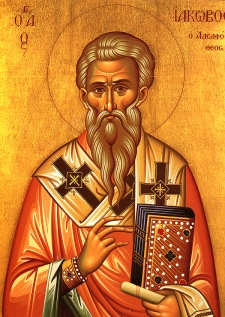
This past Thursday, the people of St. James Mission officially adopted their new Mission and Vision statements during worship.  Many months of thought, prayer, and discussion have gone into the production of this document.  Unintentionally, this process has finished on the first Thursday after the Feast of St. James the Just (October 23), from whom our community takes its name!

St. James the Just; Brother of Jesus; Bishop of Jerusalem; Activist for equality, justice, and inclusivity in the early church; Leader, pastor, healer; Doer of the Word

Our Mission

St. James Mission is an inclusive, Christ-centered community where all people can experience the love of a living God through healing and free-spirited reverence.

Our Vision

  • At St. James Mission, different individuals find common ground in the context of experimental, alternative, Christ-centered worship; seek spiritual truths together through study and conversation; and embrace our spiritual commonality through weekly celebration of the sacrament of Holy Communion.
  • We aspire to accept and include everyone, especially those who have experienced exclusion and wounding in the past.  We strive to be open to voices that have yet to be heard and to the spiritually homeless.
  • We invite people to experience the Divine with us in community, but without any pressure.  We believe it is necessary to create a space where all questions are welcome – a space that is peaceful, safe, non-violent, and non-abusive.
  • We will increase our visible presence in the community; facilitate healing for those in crisis; and encourage & empower people in other churches who share a similar vision.
  • With the Holy Spirit’s guidance, we seek first to attend to people’s physical needs and then their spiritual and other needs.  We want to communicate unconditional love and peace, not only in our worship but also in our daily living.
  • Trusting in the Holy One who speaks through scripture, we will answer the call to do justice in the world.  We are assured of divine love and seek to return that love in the way Jesus taught us, by loving others.

Click here to visit our website!

Political Songwriting Revival

Driving to church last Sunday, I heard a new song on the radio called ‘I Get By’.  The artist is Everlast.  Here’s the video:

What struck me about this song is how similar the feel and content is to the old folk tunes by people like Johnny Cash and Woody Guthrie.  Their work was edgy and controversial.  It spoke directly from and to the experience of marginalization.  Compare the Everlast song to these:

The only place where consciously political songwriting has maintained any kind of presence is in hip hop.  Nas is my favorite.  Check it out:

Finally, just because I can’t resist getting theological, here’s one last comparison.  The language is rough and offensive, but there are some pertinent insights, if you have ears to hear:

Jesus Makes Things Complicated

One of my favorite pictures of the Rev. Sarah E. Schmidt-Lee

I’m about to take a huge risk by sharing one of my wife’s sermons with my friends in the blogosphere.  When it comes to preaching, Rev. Sarah Schmidt-Lee blows me out of the water.  This is the woman who made me want to be a preacher.  During our dating and newlywed years, her sermons shaped my spirituality at a very deep level.  So I’m excited to share one of them with you today.  This was preached yesterday (10/23/2011) at Westernville Presbyterian Church.  The text is Matthew 22:34-46.

Have you heard the story about the pastor who asks a group of kids a question during the kids’ conversation: “what has a furry tail, lives in trees and eats nuts.” One of the kids raises his hand and says, “It sounds like a squirrel, but I know the answer is Jesus.” It’s a joke that always makes me cringe a little bit, because it feels a little too close to home—I can’t count the number of times I’ve been in a Sunday School class, either as a child or as a teacher, when I know the answer is supposed to be Jesus, or God, or maybe church or the Bible. It is so tempting to reduce our faith into a series of right answers.


The Pharisees and Sadducees who are interacting with Jesus throughout this section of Matthew seem to approach their faith in a way that assumes there are right answers. Faith or religion seems to be a puzzle and if they have all the right pieces, they can generate the right answers and teach those to people to make them into right—or righteous people.


Or, in the case of these interactions with Jesus, test him to find out if he has the right answers, and hopefully expose that he is wrong.

But Jesus refuses to play the game. He doesn’t see faith and tradition as a puzzle with one right answer. He sees it as open to interpretation—complex and mysterious and hard to pin-down. Instead of giving the “right” answer or “the wrong” answer, Jesus punches holes in all those boxes and challenges these religious leaders to ask better questions.


Last week we read how the Pharisees confronted Jesus with a question about taxes designed to force him into one political camp or another—to test him. After that, the Sadducees confront him with a question about resurrection—a kind of rhetorical question meant to show how illogical it is to believe in the resurrection, but Jesus pokes holes in their logic, leaving them dumbfounded. That’s when the Pharisees come in with their lawyer—the pull out the big guns.


Now, Jesus probably gave them exactly the answer they were hoping he would—it would have been fairly common for people in those days to consider the she’ma—Love the Lord your God with all your heart, soul and strength—the greatest commandment. And if there were any controversy, loving your neighbor as yourself would be the next contender. At first, it may have seemed that Jesus fell straight into their trap—giving a simple answer that they considered the wrong answer. See, it’s likely that this was a trick question to begin with—no law should be more important, or greater than any of the others, because they all come from God—that would be the right answer.


But Jesus seems to anticipate the trick, because after naming the two greatest commandments, he explains why they are the greatest—on these hang all the law and the prophets. Jesus refuses to fall into their trap—none of the other laws are less important, but they depend on these two—these two form the base or the trunk of the tree on which all the other laws hang like fruit. Not the right answer, but not the wrong answer, either, Jesus succeeds again and again at complicating the questions, reframing them.


And now, after this series of interrogations, Jesus turns the table, and he initiates a question: Whose descendant is the Messiah? The Pharisees probably rolled their eyes. Really? Everyone knows that—he is David’s descendant. But Jesus isn’t done. Okaaaay, he continues, if so, why does David refer to the Messiah as Lord—a title reserved for fathers and elders? Shouldn’t it be the other way around? If David is the Messiah’s ancestor, then shouldn’t the Messiah call David, Lord and not the other way around?


Hmmm. The Pharisees don’t have an answer for that. They leave in an embarrassed silence, and never muster up the guts to confront Jesus with questions again. Instead, we know, they plot to have him killed, because Jesus makes things complicated and mysterious, when the Pharisees want clear cut answers.


We may not identify with the questions that are getting tossed around in these confrontations—questions about resurrection, Romans taxes, and Messianic lineage are not particularly hot-button issues in 21st century North America, but the dynamic of the interaction is all too familiar. Just like the Pharisees and Sadducees, 21st century Christians still like clear cut answers, don’t we? We still want faith to boil down to right answers—clear, simple truths that we can teach to our children and use as a litmus test to determine who is right and who is wrong—or at least, who is with us and who is against us.


One of the supposedly clear-cut questions that is used to draw dividing lines in churches and denominations all over the country is the question: What does the Bible teach about same-sex relationships?


I’ll admit that I grew up thinking this question had a clear answer, but then Jesus threw a wrench in things. Through relationships with people God brought into my life, and through watching the ministry of people I grew up thinking shouldn’t be pastors, I began to read the Bible with different questions in mind. I started confronting questions like—why is the church fighting over this issue, and hurting lots of people who are already hurting, when Jesus never talks about it at all? Why aren’t we talking about the things Jesus really did spend most of his time talking about, like how we use our money—how we share our resources—how we treat the poor, outcast, and misunderstood?


And speaking of the outcast and misunderstood—didn’t Jesus spent his time hanging out with people who were kicked out of the religious life of his community—welcoming people who were considered unclean or immoral, because scripture said so? And didn’t Jesus treat those people with dignity and compassion and love?


One of the big eye-openers for me came as Barrett started a mid-week Bible study and communion service in Utica. His goal was to make it a welcoming place for people who did not feel comfortable going to a typical church on Sunday morning. He was really expecting to attract homeless people. We knew from work in Vancouver that a lot of homeless and near-homeless people are intimidated to walk into a church on a Sunday morning because they don’t feel like they can dress appropriately, or they know that they smell bad, or because when they ask for help they are usually asked to leave. And sure enough, we have had some homeless folks involved in the community over the three years we’ve been meeting.


But what neither of us could anticipate was the number of gay and lesbian folks who started showing up—every single one of them with a story of being wounded by a church—stories of being told implicitly, and sometimes explicitly that they didn’t belong at church. And every single one of them has come, longing to be a part of a community of faith—to find a place to belong—a place where they could talk about their experience of God, their love for Jesus, their search for spiritual truth. If Jesus welcomed the outcasts, the people kicked out of the synagogues, then shouldn’t our churches figure out how to do the same? And what does that look like?


These are uncomfortable questions, aren’t they? Jesus makes things more complicated—when we want to boil faith down to clear-cut answers, universal truths and straight-forward moral imperatives, Jesus throws a wrench in the well-oiled machine of our religious institutions and reminds us that faith is about knowing and loving and trusting God, and God is a mystery. We don’t trust in our answers, we trust in the mystery—the huge, complex, unfathomable, frightening mystery of God. Being a Christian is not about having the right answers—it is about loving God and loving neighbor. When we learn to do that, we might even learn to love the mystery—to delight in asking better and better questions—questions that lead us deeper into the mystery of God’s love, rather than simply settling for easy answers.


The Messenger is the Message

Jay Bakker

The text for this week’s sermon is I Thessalonians 2:1-8.

Click here to listen at fpcboonville.org

Back when I was in high school and college, the churches I went to made a particularly big deal about certain little things that weren’t such a big deal to other people.  These churches were really concerned about what Christians were wearing, what they were drinking, the places where they would hang out, the people they were friends with, the TV shows and movies they were watching, and the music they were listening to.  They spent a lot of time thinking and talking about this stuff because they figured that if Christians participated in any of these so-called “forbidden” activities, then people who saw them and weren’t Christians might somehow think less of Jesus (and therefore not want to become Christians themselves, thus condemning their souls to hell for all eternity… or so the argument goes).  They called this process “protecting your witness.”

“Good Christians shouldn’t go out dancing,” they’d say, “because it might ruin your witness!”

Now, to their credit, there’s certain logic to this idea.  Our actions, as Christians, certainly do reflect upon the God we claim to believe in.  However, I think these churches focus on the wrong kinds of actions.  When I talk to people who aren’t Christians and ask them why they’re not interested in Christianity, I’ve never once heard someone say, “Because I once saw a Christian dancing in a nightclub.”  However, I’ve heard lots of people say, “I don’t want to be a Christian because most Christians I know are judgmental hypocrites and I don’t want to be like them.”

Sometimes, these folks will point to the headline-making scandals involving high-profile Christians.  One favorite example that people mention is the infamous PTL scandal from the mid-1980s involving Jim and Tammy-Faye Bakker.  For those who might not remember the story, Jim and Tammy-Faye built a huge faith-based media empire that combined evangelism with entertainment.  They loudly proclaimed the power of the so-called “prosperity gospel”: that God would bless people with material wealth so long as they “planted seeds of faith” (which typically meant donating a certain sum of money to the organization in question).

After years of successful growth, the bottom fell out of Jim and Tammy-Faye’s empire when severe allegations of marital infidelity and financial malfeasance began rising to the surface.  Jim Bakker went to prison for a number of years and the PTL organization went bankrupt.  It’s stories like this that tend to put people off of Christianity in the long-term.

The Apostle Paul was aware of this kind of danger in his own day.  In fact, people accused him of doing something very similar to Jim and Tammy-Faye Bakker.  Paul’s apostolic ministry kept him on the road a lot, which was a bigger deal in those days than it is now.  He came through the city of Thessalonica at one point and started some very meaningful relationships there.  As we heard in last week’s reading, the Thessalonian Christians became known for their deep and open-hearted spirituality.  But the Spirit moved and needs were pressing in other churches, so Paul eventually had to say goodbye.

After his departure, things continued to go (mostly) well for the new Thessalonian church.  Their faith was strong, but doubts eventually began to arise about Paul himself.  Was he just some fly-by-night preacher?  Did he just blow out of town as soon as he had their money in the collection plate?

Word of these rumors reached Paul himself and he decided it was important enough to respond with this letter.  He wasn’t just concerned about defending his own reputation.  Paul knew that the life he lived would reflect upon the faith he preached.  So he wanted to make darn sure that people were left with the right impression.

Paul wrote to the Thessalonians saying, “you know what kind of persons we proved to be among you for your sake.”  The others he mentioned were Silvanus (a.k.a. Silas) and Timothy, his associates in the mission field.  Paul drew the Thessalonians’ attention, not just to the content of the message, but to the character of the messengers.  He goes into detail, saying “our appeal does not spring from deceit or impure motives or trickery”.  He continues, “As you know and as God is our witness, we never came with words of flattery or with a pretext for greed”.  We’ll have to forgive Paul for tooting his own horn here, but he seems that he had a pretty clear sense of what he was trying to do in his ministry.  He appeals to the collective conscience of those who knew him personally and saw him in action.  We know from other parts of the New Testament that Paul had a side-job making tents.  He used this trade to support himself while he traveled and preached.  This, by the way, is why some pastors (like me) who support themselves with jobs outside the church are called “tentmakers” to this day.  My “tent” just happens to be my classroom at Utica College.  It’s not always easy, but it helps to know that I’m following in the footsteps of those who have gone before me.  In our case, tentmaking allows this church to have a regular pastor.  In Paul’s case, tentmaking protected his credibility as a minister of the gospel.  In fact, the only time we have any record of Paul taking up a collection anywhere is for the relief of famine victims in Judea.

As we already said, Paul knew that the life he lived would reflect upon the faith he preached.  So, what kind of message about God did Paul’s lifestyle send?  Paul writes, “we were gentle among you, like a nurse tenderly caring for her own children. 8So deeply do we care for you that we are determined to share with you not only the gospel of God but also our own selves, because you have become very dear to us.”  The message that Paul was trying to send through his life was that God is gentle with us, “like a nurse tenderly caring for her own children.”  God gives life, love, care, affection, nourishment, guidance, and protection.  Isn’t that what a nursing mother does?  That’s the message about God that Paul wanted the Thessalonians to absorb.

More than that, Paul said, “So deeply do we care for you that we are determined to share with you not only the gospel of God but also our own selves”.  Isn’t that also a statement about God?  God shared God’s own self with us in the person of Jesus Christ.  The Incarnation, which we celebrate each Christmas, is the remembrance of the time when “God so loved the world that he gave his only Son, so that everyone who believes in him may not perish but may have eternal life.”  To paraphrase the same idea in Paul’s words, “So deeply does God care for us that God is determined to share with us… God’s own self, because we are very dear to God.”  Paul meant for his actions to be a reflection of God’s love for all people.

There can be no doubt that the lives we live reflect upon the faith we profess.  Regardless of the words we use, we should pay attention to the messages our actions send to others about God.  Churches like the ones I used to go to send the message that God is demanding, uptight, and watching your every move to make sure you don’t have any fun.  People like Jim and Tammy-Faye Bakker reinforced the idea that God is judgmental and hypocritical.  Isn’t there a better message for Christians to send about God?  I think there is.

Does anyone remember that Jim and Tammy-Faye Bakker had a son named Jamie?  He was still very young when scandal brought the PTL organization down.  Whatever happened to him?  Well, you probably wouldn’t recognize him today.  He goes by “Jay” now.  He looks nothing like the clean-cut little boy in a sweater-vest on his parents’ TV show.  These days, he’s completely covered in tattoos and piercings.  As it turns out, Jay has followed in his father’s footsteps as a minister, but of a very different kind than his dad.  Jay Bakker is the pastor of an unconventional church in New York City called ‘Revolution’.  It meets in a bar and attracts all kinds of misfits who would never feel comfortable in a more conventional church.  The Sundance Channel did a documentary on Jay’s life in 2006 called One Punk, Under God.  It’s worth watching, if you get the chance.

What kind of message do you think people absorb about God from Jay Bakker’s life?  I imagine they see God as unconventional, creative, and inclusive.  I think they see God as someone who will travel outside the bounds of traditional religion in order to bring good news to outcasts and misfits.  Doesn’t that sound like a God worth believing in?

When people look at your life, what kinds of conclusions do they draw about God?  How does the life you live reflect upon the faith you profess?  Through your actions, do people see God as uptight and hypocritical?  Or do they see God as creative and nurturing?  What do you think people see?  What do you want them to see?

May God bless us all and continually guide our lives to be more and more like Jesus, whose life perfectly reflected the love of God in every way.

Slippery Slopes

Another “informed and compassionate” response from the happy elves at Crisis Magazine:

You want contraception; someone else wants easy divorce. You want easy divorce; someone else wants homosexual marriages. You want homosexual marriages; someone else wants threesomes. You want threesomes; someone else wants children. You want children; someone else wants sheep. And his reason for wanting sheep will be just as good as yours for wanting contraception or easy divorce or homosexual marriages.

You heard it here, folks:

Using condoms leads to sex with sheep.

I took this paragraph from an article entitled Gay Marriage and the Slippery Slope to Polyamory.

“Slippery Slope” is an interesting choice of words.  I use this term with my Philosophy 101 students at Utica College.  The “Slippery Slope” is an example of what we call an “informal fallacy” (i.e. an error in the logical process).

This next paragraph is taken from the textbook I use with that class:

Sometimes people argue that performing a specific action will inexorably lead to an additional bad action (or actions), so you should not perform the first action.  An initial wrong step starts an inevitable slide toward an unpleasant result that could have been avoided if only the first step had never been taken.  This way of arguing is legitimate if there is good reason to believe that the chain of actions must happen as alleged.  If not, it is an example of the fallacy of slippery slope.

So, before you go looking for a hot date in a barnyard, remember that questioning one boundary does not necessarily mean eliminating all boundaries.