Taking It With You: Living the Oblate Life

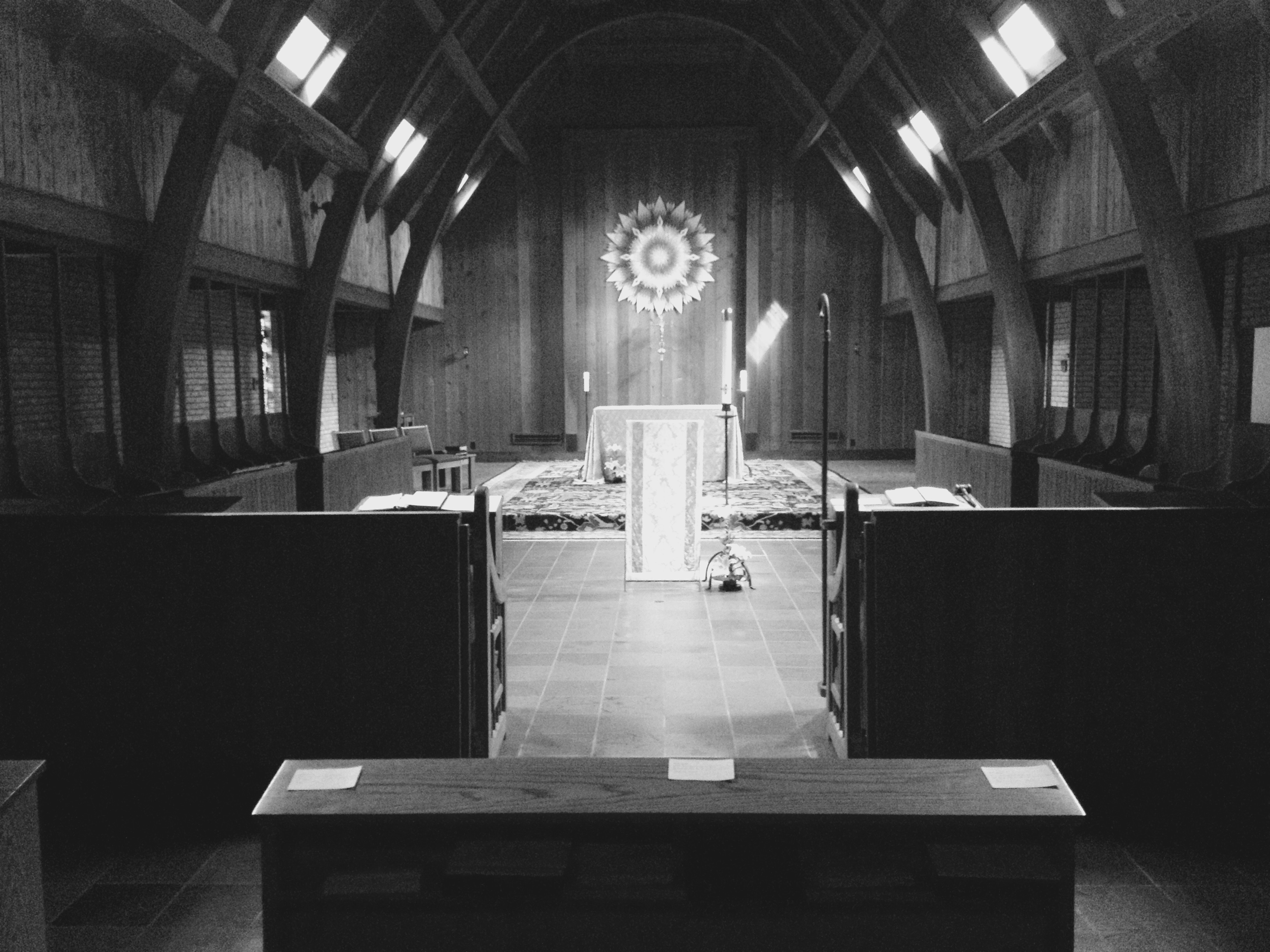
In my previous post, Wibbly-Wobbly Timey-Wimey Stuff, I wrote about my first experience visiting a Benedictine monastery: St. Gregory’s Abbey, Three Rivers.

Today, I would like to write more about my ongoing experience with the monastery and how it continues to affect my life today.

During my first visit to St. Gregory’s, I discovered a new (to me) conception of time as a spiral, instead of a line. Life, according to this vision, is less about success and more about fidelity to the daily round of prayer and work (Ora et Labora) that takes place at work and in the home.

Within the monastic rhythm of life, I discovered a deep peace that I had never experienced before. My primary question to myself as I left the abbey after that first visit was, How do I take something of this experience with me into the rest of my life?

Obviously, as one who is already bound by marriage vows and responsibilities toward children, becoming a monk was out of the question for me. But I refused to believe that the stable heartbeat of the Spirit is available only to those who live in a monastery. Every monk and nun I have ever met would tell me that the monastic life is only one path to holiness within the larger Christian way. Any person, in any station of life, who lives with an open heart to God can take part in the blessed peace “that passeth all understanding” (Phil 4:7). For some, the Benedictine monastic tradition is a helpful tool for achieving spiritual growth in their life outside the cloister. I have come to believe that I am one such person.

But how does one do that?

As I looked around the abbey grounds during my first visit, I saw a word that I had not encountered before: Oblate.

I asked one of the monks, Br. Abraham, what it meant. He told me, “An oblate is someone who would be a monk, but is prevented from doing so by some other life commitment (like marriage).” Intrigued, I went into the monastery library and looked up everything I could find on the subject. Benedictine oblates are people “in the world” (i.e. outside a monastery) who live according to the Rule of St. Benedict in a way that is adapted to their particular station in life. They affiliate with a particular monastery that becomes their home abbey for life. They support the work of the monks with their prayers and finances. They visit as often as they are able.

One author writes that oblates are “the arms of the monastery into the world.” By embodying the spirit of the Rule in their lives, oblates are able to demonstrate the gentle power of Benedictine spirituality to those who never have (or perhaps never will) visit a monastery. Br. Benet Tvedten OSB humorously describes oblation as “how to be a monastic and not leave your day job.”

Well-known Benedictine oblates include authors Walker Percy and Kathleen Norris, famous actor Sir Alec Guinness (who played Obi-Wan Kenobi in Star Wars), and social activist Dorothy Day.

Someone asked me today what benefits come with being an oblate. Does one receive special privileges at the abbey? None that I know of. Does one receive a plaque to hang on the wall? No. Does oblature certify one to work in a particular career? No. Why then would a person go through the trouble of becoming a Benedictine oblate?

I cannot answer this question for everyone. I can only speak for myself.

And all I can say is that this is the life I want to live.

I have found through St. Benedict a way of life that is grounded and balanced, built on moderation and flexibility. People like me, who throw themselves into new things with gleeful abandon (and subsequently beat themselves up when they are unable to attain the heights to which they had aspired), need someone like St. Benedict to come along and remind us, “Easy does it,” and “Slow and steady wins the race.” Growth is about progress, not perfection.

St. Benedict sums up his Rule by declaring that it is written for “beginners” who are “who are hastening to the heavenly homeland” and want to “show that we have attained some degree of virtue and the rudiments of the religious life” (RB 73). In other words, Benedictine spirituality is for regular people on the journey, not superheroes who want assurances that they have already arrived. I heard a story about a monk who, when asked what one does in a monastery, replied, “We fall down and we get up, we fall down and we get up, we fall down and we get up.”

That kind of patience and perseverance have been noticeably lacking in my life up to this point, but I believe I began to experience them when I first visited the monastery. Since then, I have tried to get back every month or so. I try to carve out a week each year for a longer retreat in relative silence. When I leave, I make every effort to take the monastery with me and apply what I have learned there in my life at work and at home. The effort is incomplete and faltering. Like the monk said, “I fall down and I get up, I fall down and I get up, I fall down and I get up.” But I keep going, which I guess is the point of the whole thing.

The great benefit I can see to being a Benedictine oblate is that I get to live the life of a Benedictine oblate. I find peace in it, even when life is chaotic and the feeling of “inner peace” is absent.

After reading several books on oblature, speaking with others who are taking the journey, and trying little by little to incorporate the practices into my daily routine, I came to the decision that this is the kind of life I want to live, whether I am clothed as an oblate or not. According to St. Benedict, a person ought “not to wish to be called holy before one is holy; but first to be holy, that one may be truly so called” (RB 4).

Having official standing as an oblate is not essential in itself, but living the oblate life with the support and accountability of more experienced members of a monastic community would certainly be conducive to doing it well.

Larger monasteries, like St. Meinrad Archabbey and St. John’s Abbey, Collegeville, have sizable oblate programs with chapters meeting all over the world. I have gotten to know people from several other fine monastic communities in the United States, especially the ecumenical Benedictines of Holy Wisdom Monastery (home to this country’s only Presbyterian nun) and the Order of St. Helena, a Benedictine-inspired order of women in the Episcopal Church. In addition to these, there are numerous “dispersed” (non-residential) Benedictine communities of lay brothers and sisters all over the world. All of these are wonderful communities and I feel privileged to call their members friends, but St. Gregory’s Abbey, Three Rivers is home to me.

My particular relationship is with these brothers, in this place, living the Rule in this way. In seeking oblation, there was no question in my mind that St. Gregory’s should have the right of first refusal.

St. Gregory’s is small, with only seven monks, including one novice. They prefer to keep their oblate program limited to those who have demonstrated a sustained commitment to Benedictine spirituality in relationship with this community over a period of several years. With that in mind, I didn’t want to rush things. I spoke with the abbot about my interest and continue to keep him apprised of my progress. While remaining hopeful that the day may come, I have made my peace with patience. In the meantime, the main thing for me has been to continue to live the life.

A couple of weeks ago, I was visiting the abbey with a friend from Grand Haven, who informed me that the date of his clothing as an oblate novice has been set for this November. I know that he has been working toward this diligently for several years and was delighted for him. I told my friend that I would certainly be there to support him on the big day.

Besides, I thought to myself, I’ve never been to a clothing ceremony of an oblate novice before; this could be helpful to me as I prepare to possibly take this step myself one day, if and when Father Abbot thinks I’m ready.

This was great news.

And then, last week, I got an email from the abbot, asking if I would like to be clothed as an oblate novice on the same day as my friend. I nearly fell over when I read the message. Naturally, I said Yes. Abbot Andrew asked if I wanted to take a saint’s name at my clothing.

On Saturday, November 19, I will be clothed as an oblate novice and given the oblate name Odo (after St. Odo of Cluny… more on him later) during 8am Mass at St. Gregory’s Abbey, Three Rivers.

I appreciate your prayers on that day, for my novitiate and for St. Gregory’s extended community of monks, oblates, and confraters.

PAX.

Wibbly-Wobbly, Timey-Wimey Stuff: Benedictine Monasticism and the Sanctification of Time

In early 2014, I realized something needed to change in my life.

I was regularly working twelve to fourteen hours a day, sometimes going a month without taking a single day off. I had a moment of clarity while sitting in my office at 2 o’clock in the morning on a Saturday. At first, I felt proud of myself for being such a hard worker, but then I thought, “Wait a minute, this is insane. Who does this?”

After returning from my second trip to the emergency room with stress-related illness, I decided that I needed to find a better sense of balance in my life. I thought, “Who understands balance and rhythm? Monks! I wonder if there’s a monastery somewhere near me?”

A Google search revealed that I lived a mere forty-minute drive away from St. Gregory’s Abbey, an Episcopal Benedictine monastery in Three Rivers, Michigan. Without even calling home to check with my wife, I called and booked a week-long retreat in April.

That week changed my life. Sitting in the abbey church, I felt quiet on the inside for the first time ever. I had long felt an attraction to contemplative Christian spirituality, but had never given myself permission to stop long enough to try it.

The first insight I gleaned from the Benedictines is a different conception of time than I had previously held. To quote the British sci-fi series Doctor Who:

“People assume that time is a strict progression of cause to effect, but actually, from a non-linear, non-subjective viewpoint – it’s more like a big ball of wibbly-wobbly, timey-wimey stuff.”

I had presumed that time is a line, progressing inexorably from Point A to Point B. As one who exists on this timeline, my goal was success: asserting my powers of will to make the timeline go in the direction I wanted.

What I learned from the monks is that time is actually a circle, or perhaps a spiral. Making the daily rounds of the Divine Office and the Mass, we keep going around and around, returning to the same point in the liturgy again and again. It wouldn’t be all that far-off to say that the Eucharist itself is a form of “time-travel”, wherein the Church in finds herself gathered around the table with Christ and his Apostles at the Last Supper. Saints and angels from all of time and space gather with us in the Paschal mystery. Likewise, the hours of the Divine Office are often called “the sanctification of time.”

The goal of history in this circular vision of time is not success, but faithfulness. We return to the same points again and again. We cannot go forward without going around. This is very much in-tune with the circular rhythms of the natural world. Day follows night as the planet rotates. We pass through the lunar and seasonal phases as we go around the sun, year after year. The monks mark the passage of time with prayer, pausing to feel the earth twisting and turning beneath their feet. They return to the hours of the Office and the Mass in order to renew their conscious contact with the Source of motion. It is their faithfulness to this daily rhythm that makes them monks.

Between the hours, the earth continues rotating and revolving. There are periods of work and rest: guests need attending to, meals need to be prepared and eaten, dishes need to be washed, buildings need repair, books need to be written and read, library shelves need to be dusted, leaves need to be raked, snow needs to be shoveled, but the spiral rhythm remains constant. A symphony is just a jumbled mess of noise without the pauses and rests between the notes.

This is the first insight I learned from my time with the monks at St. Gregory’s. It has changed the way I approach my life at work and at home. Time is not a line, but a spiral. The goal is not success, but faithfulness. One can only move forward by going around.

And now, if you’ll excuse me, it’s time for me to step away from this computer screen and go recite one of the Hours.

PAX

Singing the Hours: Musical Resources for Benedictine Daily Prayer

For many years since college, the staple of my private devotional life has been the Daily Office in the 1979 Book of Common Prayer (BCP). I’ve sampled other prayer books and breviaries over the years, but nothing has come close to the BCP. Nothing, that is, until I discovered Benedictine Daily Prayer (BDP).

I fell in love with this particular breviary because of its close similarity to the Office as it recited at my home monastery, St. Gregory’s Abbey, Three Rivers. It offers seven offices daily, with a robust cycle of longer biblical readings at Vigils. Of all the prayer books currently on the market, this is the one that most closely resembles the Liturgy of the Hours as prescribed in the Rule of St. Benedict and the Thesaurus Liturgiae Horarum Monasticae. The editor of BDP, the Rev. Dr. Maxwell Johnson of the University of Notre Dame, has done an amazing job with this project. With the recent release of a revised edition, Dr. Johnson has even managed to improve on excellence. This volume is great for Benedictine oblates, monastic enthusiasts, or anyone else who is passionate about the Divine Office. Choosing between BDP and my long-beloved BCP has been a difficult challenge.

You can order a copy of BDP from the publisher by clicking here.

The biggest challenge with BDP is the lack of musical resources available for those, like me, who prefer to chant the Office. I have managed to piece together several helpful resources in this regard and would like to share them here. I would be remiss if I did not give credit to Dr. Johnson for recommending several of these resources to me.

The Mundelein Psalter <— Click here for link

This is a fantastic resource for chanting the Office. It was designed for chanting the Liturgy of the Hours for the Roman Catholic Church. There is a selection of lovely, simple psalm tones that are easily learned. There are hymn tunes from the Liber Usualis for most of the major office hymns. These could be easily adapted for the psalms and hymns in the BDP. Frankly, some of the hymn translations in the Mundelein Psalter are better than the ones in BDP. Additionally, there are tones for chanting the other parts of the office, like the opening versicle and doxology, the litany, and the Lord’s Prayer. I also really like that the editors printed the full text of the General Instruction for the Liturgy of the Hours in the front of the book. The website (linked above) has several useful resources for learning the chants. It should be noted that the music in the Mundelein Psalter is printed in Gregorian notation. This system is different from the modern, five-line staff, but can be easily learned and is actually more adaptable than modern notation. The learning curve for Gregorian notation is steep at first, but well worth the effort, especially for those who are serious about chanting the Divine Office in the monastic style.

There are two significant downsides to the Mundelein Psalter. First, it is quite expensive (about $50). Second, it is almost a full breviary in itself (for the Roman LOTH), so you get a lot of material you don’t need and will likely never use. That being said, if it fits your budget, the Mundelein Psalter is an excellent resource for music and instruction.

The Lumen Christi Hymnal

This smaller, less expensive volume is great for the hymns. Like the Mundelein Psalter, many of these hymn translations are superior to the ones printed in BDP. The tunes are straight out of the Liber Usualis and are printed in modern notation (unlike the Mundelein Psalter). Also, I particularly appreciate that the Lumen Christi Hymnal includes tones for the Marian Antiphons in Latin. These are a beautiful way to end Compline just before bed.

[On a personal note, my very Presbyterian wife has come to love the Marian Antiphons by osmosis. She is usually settling into bed as I sing Compline in our room. One of the highlights of her day is when I “sing her to sleep” in Latin.]

St. Meinrad Psalm Tones

Click here for the tones in Gregorian notation

Click here to see them in modern notation

The first, best thing about these tones is that they are available for free. You can’t beat that on a budget. For those who don’t want to shell out the money for the Mundelein Psalter, these can be printed and used easily with the hymn tunes from the Lumen Christi Hymnal. St. Meinrad’s Archabbey is one of the largest and best-known Benedictine communities in the United States. Their tones are simple and elegant. Unlike the traditional Gregorian psalm tones, the St. Meinrad tones have more than two lines. This may be off-putting to strict traditionalists, but I am finding they have an elegance of their own that blends well with Gregorian chant. In many ways, I prefer them to the traditional tones for use with BDP because the multi-syllabic intonations and cadences of the Gregorian tones often don’t fit into the shorter psalm lines of the adapted Grail Psalms used by BDP.

Theses are the musical resources I am most familiar with. All of them have worked well for me in chanting the Divine Office as laid out in Benedictine Daily Prayer. I sincerely hope this is useful for others on the path.

Anglicanism and the Benedict Option

Reblogged from Anglican Pastor

The Anglican spiritual theologian Martin Thornton once remarked that “the genius of St Benedict cannot be confined within the walls of Monte Cassino or any other monastery.” In continuing a discussion of the so-called Benedict Option, and what it means for Anglicans, my suspicion, and what is becoming my conviction, is that we Anglicans hold to a tradition which is not only well-suited to the Benedict Option, but which is the very thing itself. To be sure, there are Anglicans who would never in a million years consider themselves as such, but one can hardly deny the Benedictine character of Anglicanism, in her Prayer Book, in her mission, or in even the unique spiritual tradition of the English people. In the Middle Ages, England was often referred to as the “land of the Benedictines,” dotted as it was with monasteries, typically tied to the cathedral cloisters, following the Rule.

Click here to read the full article

Lex Orandi

FullSizeRender(5)

Here, at long last, is a big project I have been working on this year:

Lex Orandi: An Ordo for the Divine Office based on the Rule of St. Benedict and the Book of Common Prayer (pdf file)

It is not a complete breviary that stands on its own, but a guide for praying the Office in a manner similar to the monks at St. Gregory’s Abbey, Three Rivers.

While not an exact replication of the Liturgy of the Hours at St. Gregory’s, Lex Orandi has been adapted to fit the schedules of people who live outside the monastery, but still want to pattern their prayer life after the Benedictine spirit.

While Abbot Andrew Marr​ and the brothers have helped me in this project and granted permission to reprint select portions of their Office (e.g. the Confraternity Prayers), Lex Orandi is an independent publication that has not been authorized or endorsed by St. Gregory’s Abbey, Three Rivers. Its use is not required.

Thank you to the community of St. Gregory’s Abbey, Three Rivers for your friendship, support, and guidance in this labor of love. It is my joy to make it available online for free to anyone who wishes to use it.

The Divine Office

This is a short introduction to the Liturgy of the Hours (a.k.a. the Divine Office) by Fr. Jeremy Driscoll, OSB of Mount Angel Abbey. It is beautifully and simply done. Very much worth a few minutes of your time, especially if you’ve ever wondered what monasticism is all about.

Laura Dunham: Becoming a Presbyterian Benedictine

A Benedictine monk… perhaps wishing that he had more Presbyterian friends? Image by Jesus Solana, retrieved from http://commons.wikimedia.org/wiki/File:Monk%27s_Loneliness_La_soledad_del_monje.jpg on September 12, 2012

As one who has long been interested in all things monastic, this article at Duke Divinity School’s Faith and Leadership blog really tickled my fancy.  Enjoy!

Laura Dunham: Becoming a Presbyterian Benedictine

A Presbyterian minister finds in the Rule of Benedict a living tradition and a way of life that leads to spiritual renewal. The Benedictine way, she says, has much to offer the wider church… (Click to continue reading)