Tripping over Jesus

Sermon Advent 3 A 2025
Advent 3, Year A

Text: Matthew 11:2–11

People sometimes ask me, “What’s a typical day for a priest?”
And I usually say, “As soon as I have one, I’ll tell you.”

It gets a laugh—but underneath it is something more honest than funny. Most of us assume that if we plan carefully enough, if we follow the right steps, life will eventually settle into something predictable that we can wrap our minds around.

And then it doesn’t.

Occasionally, things fall apart all at once, but more often they just stop lining up the way we thought they would. The plan works—until it doesn’t. The explanation helps—until it doesn’t.

It seems that by now things should be clearer, that faith would feel steadier, that doing the right things would eventually lead to a sense of arrival.

Instead, it feels slower. More complicated. Less certain. And sometimes the hardest part isn’t the pain itself. It’s the disorientation—the sense that the maps we were given no longer match the terrain beneath our feet.

That’s not a failure of faith. That’s simply what happens when life refuses to fit our expectations.

Which is exactly where today’s Gospel begins.

John the Baptist sends word to Jesus from prison. And that detail matters. John is not asking this question from a place of comfort or curiosity. He is asking it from confinement, from danger, from a situation that has already gone very wrong.

“Are you the one who is to come,” he asks, “or are we to wait for another?”

This is not the question of a weak believer. This is the question of a faithful prophet whose expectations have been stretched to their breaking point. John has done everything right. He has prepared the way. He has spoken truth to power. He has named injustice. And now he is sitting in a cell, waiting.

John expected the Messiah to bring urgency. Fire. Judgment. A turning of the tables. What he gets instead is something much gentler.

Jesus doesn’t say yes. He doesn’t say no. He doesn’t explain why John is still in prison. He simply says, “Go and tell John what you hear and see.”

Look.
Pay attention.
Notice what is happening.

And then Jesus adds a blessing:
“Blessed is anyone who does not stumble because of me.”

The word translated stumble means to be tripped up—to lose your footing. And in this story, what trips people up is that Jesus does not match what they were expecting.

That’s not an explanation.
It’s not a justification.
It’s not a promise that things will turn out differently.

It’s simply an acknowledgment that what Jesus is doing will unsettle people—that his way of being Messiah will not line up with their categories—and that some will walk away because of it.

And yet, Jesus names blessing here—not for those who understand, not for those who can make sense of it all, but for those who do not turn away.

Notice what Jesus does not do. He does not rescue John. He does not clarify the timeline. He does not explain the suffering. John remains in prison. The empire does not fall. The story does not resolve.

What Jesus offers instead is a larger horizon. A deeper reality. A God who is present—but not in the ways John expected.

That’s the promise buried inside this strange exchange. The mismatch is not a failure. It’s a revelation. It reveals that reality is larger than the boxes we build for it. That God is larger than the categories we carry. That faith sometimes matures not through clarity, but through disorientation.

And if I’m honest, this is where the text presses closest to home.

I’m learning—slowly, and not without resistance—that some of the most important moments of faith are the ones where the old frameworks stop working. Where the explanations that once brought comfort start to feel thin. Where the answers I memorized don’t quite reach the questions I’m living now.

My faith hasn’t gone away,
but it no longer fits into the box where I used to keep it.

What I’m losing is the version of faith that promises things will go right if I get things right. And that loss matters.

I’ve realized over time that I’m much more familiar with Advent than with Christmas—with waiting in the cold and the dark, trusting that God is present, even though that presence doesn’t look the way I expect.

That’s been unsettling.
But it’s also been honest.

And I suspect I’m not alone in that.

So this is the courage Advent asks of us.

Advent becomes the courage to let our boxes break open, to let our faith deepen, mature, awaken—not toward easy answers, but toward deeper participation in reality, even when that reality unsettles us.

Staying awake looks like resisting the urge to label uncertainty as failure.

It looks like refusing to rush past questions that don’t yet have answers. Like remaining present to lives and stories that are still unfinished.

Advent doesn’t ask us to stop hoping. It asks us to hope without insisting that reality conform to our expectations.

John never gets an answer that explains his suffering. He gets a blessing—and a larger horizon.

He remains in prison.
The empire does not fall.
The story does not resolve.

And still, Jesus says,
“Blessed are those who do not stumble because of me.”

Not blessed are those who understand.
Not blessed are those who are certain.
But blessed are those who stay awake to a reality larger than their expectations.

That may be all the blessing Advent gives us.
And it may be enough.

Amen.

The Winnowing Wind

Sermon for the Second Sunday of Advent, Year A

Click here to read the biblical passages.

So, we are now into that time of year when everybody hunkers down to watch their favorite holiday movies. Some people like It’s a Wonderful Life. Some people like the Hallmark Channel, but I only count that one as one movie because they all have the same plot. (No offense, I’m just preaching the truth.) Some people like Die Hard with Bruce Willis. Instead of deck the halls, he likes to deck the terrorists. But for me personally, there can be only one. And it’s The Muppet Christmas Carol. If you haven’t seen it, I highly recommend it. Because not only is it absolutely hilarious because of the Muppets, but Michael Caine, as Ebenezer or Scrooge, is just (*) chef’s kiss perfection. And finally, it’s actually one of the more faithful renditions of the classic novel by Charles Dickens. Most of us know the story already. Ebenezer Scrooge is a grouchy old miser, who gets visited by three spirits on Christmas Eve. The ghosts of Christmas past, present, and future. And through these visits, Ebenezer comes to a greater understanding of himself in order to make some necessary changes in his life. It’s a story about personal transformation, and that’s the exact same theme we find in today’s gospel.

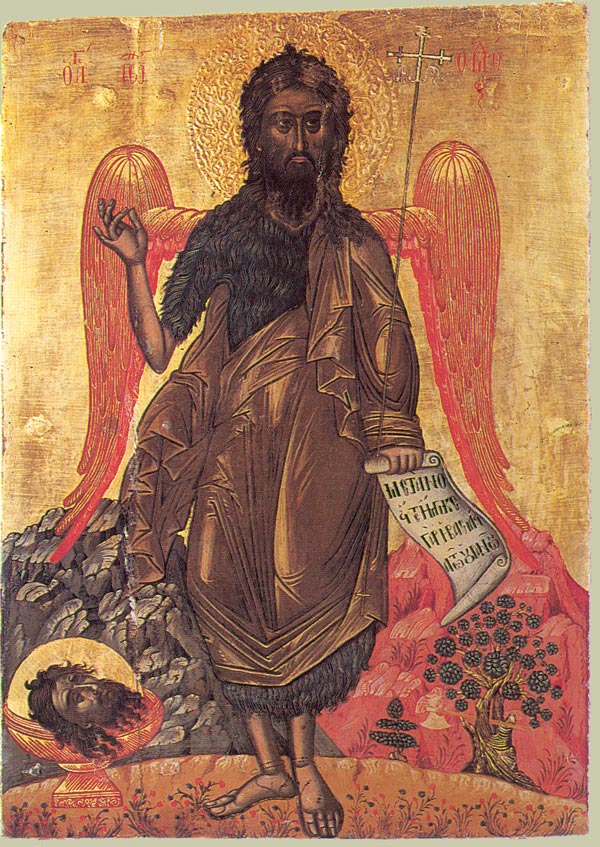
The passage focuses on the ministry of St. John the Baptist, and as you may know, John could be more than a little intense, like camping. He walks in screaming,

“Repent, for the kingdom of heaven has come near,”

calling people names, and talking about pitchforks and unquenchable fire. That’s why he’s called John the Baptist (because if he was John the Episcopalian, he would have been much more polite about the whole thing). But he wasn’t polite. He was a prophet. And the message that God spoke through this prophet was a pretty direct one.

I think it might help if we were to unpack that message just a little bit. So, first of all, we hear that word repent, which makes a lot of us think about those angry preachers we see screaming and waving a Bible around on TV. We think that to repent means to feel guilty or ashamed, but that’s not actually what it means. In Greek, the word is metanoia, coming from meta, meaning “change,” and noia, meaning “mind.”

So in the language in which the New Testament was written, the word repent actually means, “to change your mind.” Anybody here ever change your mind about something? It happens.

It makes sense to change your mind when you get new information. The poet Maya Angelo said it beautifully,

“Do the best you can until you know better. And then, when you know better, do better.”

That’s what repent means. It’s not easy, but it also has nothing to do with guilt or shame. And that’s the core of John the Baptist’s prophetic message.

He tells people to

“bear fruit worthy of repentance.”

This has to do with how they live their lives. This is what Maya Angelou was talking about: “When you know better, do better.” No need to wallow and shame. Just learn from your mistakes.

After that, John starts to get really deep, but we miss what he’s saying if we get stuck on that idea of punishment and shame. John says,

“I baptize you with water for repentance, but one who is more powerful than I is coming after me. I am not worthy to carry his sandals. He will baptize you with the Holy Spirit and fire.”

Okay. I want you to remember those words: “Holy Spirit and fire.” They’re important. Specifically, I want you to remember that the Greek word for spirit is the same word they use for wind. So what John just said to the people is that the one coming after him (that’s Jesus) will baptize them with sacred wind and fire. I know that sounds weird, but stay with me because it’s about to become important.

John says,

“his winnowing fork is in his hand, and he will clear his threshing floor and will gather his wheat into the granary, but the chaff he will burn with unquenchable fire.”

Couple of unfamiliar terms in that sentence. They are agricultural terms, and I’ll deal with them in reverse order. First for us, and second for John, is the term chaff.

Chaff is a part of the wheat plant. It’s a kind of husk that protects the grain while it’s still growing on the stalk. It’s very important, because without it, the grain would be vulnerable to predators and the elements. So the chaff isn’t bad, it’s necessary.

The only problem is that it’s not very tasty or nutritious. So, if you want to harvest that wheat and bake bread, you have to get rid of the chaff first. That’s where winnowing comes in.

Winnowing is another agricultural term. After the farmers would harvest the wheat, they would heat it up over a fire, which would crack open the husks that surrounded and protected the grain. And then the farmers would take their winnowing forks and sift the wheat by tossing it up into the air, letting the wind blow the tough husks away and allowing the delicious and nutritious grain to fall back to the earth, where it could then be collected into baskets, and later baked into bread.

So, the thing to remember about chaff is that it’s the part of the plant that protects the grain while it’s still growing, but no longer serves the purpose of what the grain is meant to become. That’s the winnowing process, if we’re talking about wheat, and it’s also the repentance process if we’re talking about us, and using the word repent in the way that it was originally intended.

That’s what I see happening in Ebenezer Scrooge, throughout the story of A Christmas Carol. Our friend Ebenezer was taken on a journey through his childhood and youth where he saw how he had used study, work, and money as a shield to protect himself from the rejection that he experienced from his family and friends.

His skills made him very successful as a financial manager, but they left him empty when it came to the really important and valuable things in life. Miserliness for Ebenezer was like the chaff that protected the grain while it was still growing, but it was also the very thing that kept him from becoming the person he was meant to be. The work of the Holy Spirit in his life, the wind and the fire, was to help him let go of his old protective shell and embrace the truth of who he really was in God’s eyes, and I think the same thing is true for each and every one of us.

We all have old habits or beliefs that hold us back from living authentically as our truest and best selves. We might think that staying thin and beautiful is the key to a long and happy marriage. We might believe that next drink might make us the life of the party. We might wonder whether we will finally feel acceptable in God’s eyes if we could just pray the gay away. But none of these things are true. They are all chaff, and the work of the Holy Spirit in your life is the work of God, helping you to like yourself just the way you are and living that truth boldly and bravely in the world, just as God intended for you.

That’s what winnowing means. That’s what repentance means. And that is the message of St. John the Baptist for us in today’s gospel and in this season of Advent.

Kindred in Christ, I pray that you will come to know this message more fully for yourself during this holiday season, and that you will bear fruit worthy of changed minds by loving yourself, your neighbors, and God more authentically. When we finally come to that blessed celebration of Christmas, I pray that you will see the light of Christ being born in you in a new way, so that you can be that light for others and let your light shine for all to see.

It’s Not About Me!

Sermon for the first Sunday after the Epiphany: Baptism of the Lord

Click here for the Scripture readings.

“It’s not about me.”

That is St. John the Baptist’s message to the people in today’s gospel.

Allow me to explain:

Judea, in the time of John the Baptist, was a very tense place to live. Approximately 170 years before John’s time, about as long ago as the American Civil War is from our time, a revolutionary hero named Judas Maccabee overthrew a foreign tyrant who had tried to forcibly eradicate Jewish culture. For the next century, the Jewish people enjoyed a period of semi-independence under the leadership of the Maccabee family, known as the Hasmonean dynasty. Over time, the Hasmoneans themselves became entrenched in their power and gradually fell out of favor with the people. When the Romans conquered the region, they hand-picked King Herod and his sons to be puppet rulers who, while powerful due to their allegiance to Rome, were almost universally despised by the common people.

In their vexation, the Jewish people remembered the golden days of Kings David and Solomon, when Israel was prosperous and free. They dreamed of a future time when God would send an “Anointed One” (Heb. Mashiach/Messiah; Gk. Christos/Christ) who would liberate the nation from foreign domination and restore the people to spiritual purity.

When John the Baptist started his movement in the Judean countryside, people began to get excited. He was a priest, by lineage, but he didn’t act like any other priest they knew. He was young, charismatic, and energetic (though some wondered, “What’s up with that hair?”). Most of all, he was unafraid to speak his mind and call out the corruption he saw in the ruling elites. As word spread and this grassroots movement picked up speed, the people began to speculate that John might be the anointed leader they had been hoping for.

This scene is an excellent example of the psychological concept of transference. Transference is what happens when people project their own hopes or fears onto another person. If you’ve ever fallen in love, then you know what I’m talking about. You spend all day thinking about this person and will gush about them to anyone who asks: “Oh, they’re so wonderful; they’re so perfect; they’re my whole world; they’re my everything!” If you’ve never had that experience yourself, just listen to love songs on the radio and I promise you: You’ll hear it. The way infatuated people sometimes talk about their beloved almost makes that person seem like some kind of deity.

We don’t just do this with our romantic partners; we do it with political and religious leaders too. Parishioners or constituents think a particular leader embodies everything right (or everything wrong) with the world. Once again, our projections elevate a person to the level of a deity (or a demon) in our own eyes. Neither of these things is true, of course. Our partners, presidents, and priests are neither angels nor devils. They are ordinary human beings, fabulous and flawed, just like the rest of us.

The problem with projecting our hopes and fears onto others is twofold. First, as I already said, it stops us from seeing them as real human beings, which they are. Second, projecting onto others prevents us from doing our own inner work of self-awareness and self-improvement.

Let’s try an exercise: To find out where you are making projections in your own life, I invite you to think about someone who brings up big feelings for you. Please don’t say any names out loud (especially if that person is sitting next to you). This is just between you and God.

  • This could be anyone…
  • The feelings could be good or bad…
  • Think about what qualities, in that person, evoke these big feelings in you…
  • Now (and this is where you have to be very honest), ask yourself: “Where do I see those same qualities in myself?”

When we project our feelings onto other people, we unconsciously assume (in the case of positive projections): “If I could just be in a relationship with this person, or elect that candidate, or attend this church, then I would automatically possess the qualities I admire in them.”

Conversely, in the case of negative projections, we unconsciously assume: “If I could just get rid of this partner, president, or priest, or if I could somehow fix them, then I would no longer have to be reminded of the things I don’t like about myself.” That’s the danger that comes with projecting our feelings about ourselves onto other people.

Of course, the same thing holds true when other people project their feelings onto us. Sometimes, their projections help us to see something we need to work on in ourselves. But other times, all we can do is step back, take a deep breath, and say, “It’s not about me.”

Other people are neither angels nor demons; they’re just people. Of course, it’s perfectly normal to have opinions about them, to agree or disagree with them, and work together to solve problems in our relationship or society. But the fact remains that our fellow human beings are unique individuals, in their own right and on their own journey, and no one can do our inner work for us.

John the Baptist, in today’s gospel, understood this truth. He saw clearly the hopes and fears that people were projecting onto him, speculating whether he might be their long-awaited Messiah, and he denied it outright.

“It’s not about me,” he said, in effect, “but one who is more powerful than I is coming, and I’m not even worthy to untie his shoes.” The people pointed to John with their hopes and fears and John, very wisely, pointed them back toward Jesus. That is the first duty of every faithful leader in the Church. Furthermore, pointing to Jesus is everyone’s duty to their fellow Christians.

The Risen Christ, the Incarnate Word of God, who lives in our heart of hearts, loves us unconditionally, and knows us better than we know ourselves, is the only one qualified to guide our inner work.

John said, when people came to him with their projected hopes and fears, “It’s not about me; it’s about Jesus. Jesus is the one you’ve been waiting for, not me. I baptized you with water; he will baptize you with fire. His winnowing fork is in his hand, to bring you the clarity you need in order to sort out the wheat from the chaff (the good from the bad) in your own soul.”

To borrow a rhetorical image from the Buddha, John the Baptist is “a finger pointing to the moon.” So long as people are looking at the finger, they’re looking at the wrong thing; they need to look where the finger is pointing. John, the faithful prophet, is pointing them to Jesus.

Kindred in Christ, my prayer for you this week is that each of you would look to the presence of the living Christ in your heart of hearts, that you would know yourself to be fully known and loved for the fabulous and flawed human being that you are, and that you would go forth in the blessed assurance of that love to extend the same grace to your fellow fabulous and flawed human beings.

I pray that you will be you, so that I can be me, and we can be us together, giving glory to God, whose power, working in us, can do infinitely more than we can ask or imagine. Glory to God from generation to generation in the Church, and in Christ Jesus for ever and ever. Amen.

By Unknown - http://fos-kastoria.blogspot.bg/2015_01_01_archive.html, Public Domain, https://commons.wikimedia.org/w/index.php?curid=45766613

A God’s-Eye View

Click here to read the service bulletin, including biblical texts.

Introduction

Think about a time when you felt misjudged or misunderstood. How did it feel? Who was involved? What was it that you wanted them to realize about you? What do you wish you had said to make that person understand?

Most of us have memories like that. The pain of the memory can sometimes cause us to seethe with anger at the injustice, even years after the fact.

Less common and less visceral are memories of times when we have discovered ourselves to be the ones misjudging others. Psychologists have discovered a reason for this: they call it “the fundamental attribution error.” What it means is that people tend to name external circumstances as the cause of their own faults, while simultaneously blaming other peoples’ faults on defects of character.

Here’s an example: You are at a stoplight and cut across a lane of traffic to turn right in order to not be late for work, cutting another driver off in the process. You think to yourself, “Sorry about that, but I can’t be late for work!” Now, if you’re the driver in the other car, and you see this happen in front of you, and are forced to slam on the brakes to avoid an accident, you think, “What a jerk! They must not know how to drive!” That’s the fundamental attribution error in action. The first driver chalks the mistake up to circumstances, while the second driver chalks it up to the other person’s character.

People do this. In the story of our own lives, we tend to cast ourselves in the role of the hero or the victim, almost never as the bad guy. The role of villain is given to others. The funny thing is that the “bad guys” in each of our stories also think of themselves as the “good guys,” while we ourselves play the role of the villain in their stories.

The world loves to divide people into categories: us and them, good guys and bad guys, heroes and villains. We pass judgment on one another and react, rather than respond, when circumstances turn inconvenient. In time, we learn how to impose those categories on whole groups of people: black and white, straight and gay, men and women, American and Russian, Republican and Democrat. It’s as though each of us is in the process of writing our own superhero comic book, fighting like mad to ensure that the good guys win in the end.

The problem is that, when we do this, we aren’t relating to each other as whole people, each with their own complex challenges of circumstance and character. Life is complicated. People are complicated. And at the end of the day, there are no good guys or bad guys, just people.

Exegesis

In today’s gospel, we get to see an example of a time when one person was able to look at another and see the truth beneath the surface of that person.

Last week, we looked at the relationship between Jesus and St. John the Baptist as a door that opens us up to the relational nature of reality in the Trinity. Today, we are going to look at that same relationship from the opposite direction: we are going to see how one’s relationship with the Triune God opens a door for us to see our relationships with our neighbors differently.

When St. John the Baptist looked at Jesus, he saw past the categories that other people used to put on him. John saw Jesus for who he truly is: the Son of God and the Lamb of God, who takes away the sin of the world.

Jesus was no stranger to being categorized by other people. We read about this time and again in the gospels. His hometown neighbors listened to his first sermon and couldn’t get past the mental categories in which they had placed him, as the son of Joseph the carpenter. The clergy and theologians couldn’t get past the fact that Jesus sounded like a heretic to them, calling into question centuries of religious tradition. The political authorities had him pegged as a dangerous radical. Even his own family came to believe that Jesus had lost his mind. All of these made their judgments about Jesus and tucked him away in their mental categories as a way of dismissing him and his message. But John the Baptist doesn’t do that. John sees Jesus with a different set of eyes.

The gospel calls John a “prophet”, who was “sent from God” as “a witness to the light.” Whatever else this may mean, we can at least say that it means this: John the Baptist saw the world at large, and Jesus specifically, from a spiritually-centered point-of-view. He saw Jesus clearly, with spiritual eyes.

John was able to this, most basically, because of the gifts and calling that God had placed on his life. God wanted John to see Jesus in this way. But, along with that, I tend to believe that John was able to sharpen and hone this gift of God by his spiritual practices.

We know that John lived simply, out in the desert. He had few possessions and sustained himself, as the text of the Bible tells us, on “locusts and wild honey.” As far as we can tell, he was unmarried. He was given to prayer and the preaching spiritual renewal in baptism. In many ways, his life resembles that of an Old Testament Nazirite, a holy person dedicated to God and separated from the world. Traditionally, they refrained from alcohol, haircuts, and funerals. Other famous Nazirites from the Old Testament include the prophet Samuel and the hero Samson.

Although John is not specifically named as a Nazirite, his life resembles that of one, being wholly dedicated to the service of God. In modern terms, we might think of him like a hermit or monk.

John’s spiritual practices give him the ability to see the world differently from the way most people see it, and when Jesus arrives on the scene, John is ready to see him differently too. Where some saw just another crazy person or heretic, John saw Jesus as the Son of God, upon whom the Holy Spirit had descended, and the Lamb of God, who takes away the sin of the world. John saw Jesus’ true self, beyond the categories imposed on him by the world.

Application

I don’t think this ability is unique to St. John the Baptist himself.

First of all, I think we get a glimpse, in John’s vision, of the way God sees each and every one of us. When we are misunderstood or misjudged, there is another who sees and loves us as we truly are. God looks at us and sees past the shell of worldly categories to the treasure beneath the surface of our lives. That treasure is there in your life because God wants it to be there and placed it there himself. Even better, God wants us to see that treasure too, so that we can share it with others. Whenever our dignity is maligned by our neighbors (or even ourselves), God is working quietly behind the scenes to bring prophets like John into our lives who will see and draw out the divine treasure that is in us.

Second, I believe that John’s gift of spiritual insight is available to all of us, if we choose to make use of it. Like John, we can make use of spiritual practices to sharpen and focus the way we look at the world and people around us. Studying the Word and celebrating the Sacraments keep us connected to the core beliefs and values that tell us there is inherent dignity in every human life, no matter what categories people may try to impose on it. We read in the Bible that our neighbors are reflections of God’s image, members of the Body of Christ, and living stones in the temple of the Holy Spirit. In the Sacraments, we all pass through the waters of Baptism and partake of the bread and cup of the Eucharist as members of the one Body of Christ. We are part of each other, precisely because we are part of Christ. This is how St. Paul is able to say, “The eye cannot say to the hand, ‘I have no need of you,’ nor again the head to the feet, ‘I have no need of you.’” (1 Cor. 12:21)

In prayer and meditation, we connect the joys and concerns of daily living to our divine life in God. Even secular psychologists have come to admit in recent years that the practice of meditation is good for human relationships. When we meditate, we lower our stress levels and become better able to respond to crisis from a place of peace, rather than react out of anger. Meditation helps us develop empathy and detachment, so that we can see past the hard categories we impose on each other. Spiritually centered people don’t see “good guys” and “bad guys,” but instead just see “people.” They don’t think in terms of “us” and “them,” but think instead of “We.”

God sees each of us as beloved sons and daughters. People learning to see the world from God’s point-of-view begin to see their neighbors in that same way.

That’s how John saw Jesus. That’s how God sees us. My prayer this morning is that we too will learn, day by day, by Word and Sacrament, by prayer and meditation, how to see each other in this way. When we do, we will be seeing one another with the eyes of God.

The Cold and Dark Season

This week’s sermon from North Presbyterian, Kalamazoo

Click here to see the bulletin of the liturgy, including the biblical text

After an unseasonably mild autumn, it’s finally beginning to feel like winter here in Michigan. The nights are getting longer and the weather is getting colder.

I love that the Church’s celebration of Advent happens to coincide with the onset of winter in the Northern Hemisphere. I take it as an apt metaphor for my spiritual life.

In spite of the commercial holiday hype, I have always been more of an Advent person than a Christmas person. Advent is about waiting in the darkness and the cold for God to show up, and when God finally does show up (at Christmas), it doesn’t look how I expected. Those expecting the “King of kings and Lord of lords” are met with a refugee baby born into poverty in a backwater village of an occupied country. It’s not what anyone expected, yet this is how God chooses to come to us.

I strongly suspect that I am not alone when I describe my spiritual life as “waiting in the darkness and the cold.” Popular conceptions of faith and spirituality focus on feelings of serenity, unshakeable commitment, and an immediate sense of God’s presence through dramatic events like visions and miracles.

But most who have seriously tried to live the life of faith will tell you that it’s not much like that at all. In fact, it’s mostly just a struggle. There’s an awful lot of waiting around involved, and in the internal space created by that waiting comes pouring all the junk of my ego, old habits, and false perceptions of myself. It’s not fun or particularly peaceful.

The benefits and blessings are certainly there for those who persevere, but they are often much more slow and subtle than we would like. So, why on earth would anyone put themselves through the trouble?

Because, to quote the novelist Gertrude Stein, “there’s a there there.” There really is something to it. One might call it “the peace that passeth understanding” or the presence of the Holy Spirit. This presence is often subtle and unexpected. Don’t blink, or you’ll miss it. Most of the time, I’m not able to accurately identify what God has been working in my life until after the fact. Looking back, I can sometimes put the pieces together and go, “Oh yeah… there’s a there there!”

Spirituality is a process that takes time to grow. I think that’s why Christ compares faith to a mustard seed: it’s not much to look at in the beginning and it doesn’t sprout all at once, but give it time and you will begin to see that it is a living, breathing, growing thing. It requires patience and a willingness to keep an open mind. The good news is that Christ is an experienced farmer who understands the slow, subtle ways of growth and refuses to give up on his struggling crops.

That is the lesson that St. John the Baptist is learning in today’s gospel.

John, as we know from last week, was a revolutionary prophet and a dangerous radical. He was among the first to correctly identify his cousin Jesus as “the Lamb of God, who takes away the sins of the world.” He understood the purpose of his whole ministry as preparing the way for the Christ.

Unlike the apostles and the crowds, John understood that the Messiah’s liberation of God’s people would be more spiritual than political. But he himself also had a few preconceived notions about what this would look like that turned out to be a little off-base. John believed that the Christ would finally come to “set things straight” in Israel. He would cleanse the people of their sin and get them back on track to having a healthy relationship with God. These notions were confirmed, in his mind, at Jesus’ baptism in the Jordan River. Here, finally, was the in-breaking of the Messianic age. Now things would really start to change… except they didn’t… at least, not right away.

Jesus turned out to be a more gentle Messiah than the one John was imagining. He led with grace, accepting sinners as they were and trusting that grace to do its slow, subtle work in their lives. He kept company with a rough crowd and seemed to condone their unseemly activities by his relative silence.

To make matters worse, things were not going particularly well for John. After speaking out against the personal life of the local puppet king, John was arrested and thrown into prison. Didn’t Jesus realize how bad things were getting? Wasn’t he going to do something about all this injustice? Wasn’t Jesus supposed to be the one who would baptize “with the Holy Spirit and fire”? So… where was that fire, already?

St. John the Baptist, like so many of us in this long, cold, and dark “Advent of the soul” (as my friend Renee calls it), was struggling with his faith. Let’s take a look at what he does about it:

When John heard in prison what the Messiah was doing, he sent word by his disciples and said to [Jesus], “Are you the one who is to come, or are we to wait for another?”

And how does Jesus respond to this question? With characteristic gentleness. He doesn’t berate or upbraid John for his lack of faith. In fact, he compliments him. He says to the crowd:

“What did you go out into the wilderness to look at? …A prophet? Yes, I tell you, and more than a prophet… Truly I tell you, among those born of women no one has arisen greater than John the Baptist”

Jesus praises his friend and cousin. John’s doubt does not reduce Jesus’ opinion of him one iota.

Too many of us feel afraid to engage with faith in the midst of doubt. We have this bizarre notion that doubt is the antithesis of faith, so it couldn’t possibly belong at church or in our conversation with Jesus. But I reject that idea outright.

Doubt is what makes faith possible. Without it, faith is nothing more than a blind acceptance of ideas that don’t ask anything of us. I don’t put much faith in the Law of Gravity because I simply accept it as a fact. It requires no imagination or personal commitment on my part. Faith in Christ, on the other hand, is of an entirely different order. Because I struggle with doubt in this area of my life, I have to dig deep and risk the very essence of my being on this mystery. It’s like doing a trust-fall exercise off the edge of the Grand Canyon. I have to give my whole heart, soul, mind, and strength to it. That’s why it matters to me, more than anything else in this world. None of that would be possible for me without the simultaneous presence of doubt. In the words of Episcopal priest Fr. John Westerhoff, “The opposite of faith is not doubt, but certainty.”

Christ understands this reality, which is why he is then able to be so gentle with John.

And John, for his part, does the perfect thing: he goes to Jesus with his doubts and asks the honest question that is on his mind.

Those of us, like myself, who find faith to be a constant struggle have a good friend in St. John the Baptist. He shows us how to come to Christ with our doubts and incorporate them into our faith and spirituality. Christ, for his part, is not scared of us or our struggles with doubt. Christ has the grace to accept us, not just in spite of our doubts, but with them. That is the good news that Christ has for us in today’s gospel.

And with that good news comes a call to respond:

Christ loves us just as we are, and loves us too much to allow us to stay that way.

After complimenting John (“Truly I tell you, among those born of women no one has arisen greater than John the Baptist”), Jesus invites him and us, by extension, to take the next step of faith:

“yet the least in the kingdom of heaven is greater than he.”

Now matter how much Christ loves us, and no matter how far we have come in the life of faith, there is always room to grow. There is always a next step to take in faith. That is what Christ is inviting us to do today: Not to be perfect or pretend that we don’t struggle with doubt, but simply to take that one, small, next step toward God.

Jesus has some very specific advice to John for how to do this:

“Go and tell John what you hear and see: the blind receive their sight, the lame walk, the lepers are cleansed, the deaf hear, the dead are raised, and the poor have good news brought to them. And blessed is anyone who takes no offense at me.”

Jesus invites John to open his eyes, ears, heart, and mind to what is happening around him. He asks him to pay attention. John, as we know, had some pretty specific ideas about what he thought the Messiah would be and do. When he didn’t see those things happening, his doubt momentarily got the better of him. The things he thought God should be doing were not getting done.

So Jesus very gently redirected his attention to the things that were getting done. It’s not as though Jesus was simply sitting down and twiddling his thumbs all day. Far from it:

“the blind receive their sight, the lame walk, the lepers are cleansed, the deaf hear, the dead are raised, and the poor have good news brought to them.”

God was doing something different from what John thought God would do, but that didn’t mean that God wasn’t doing something. Jesus invites John to take the next step of faith by setting aside his own preconceived notions and keeping an open mind. That’s what faith looks like in the midst of doubt.

Here in this Advent season, I believe Christ is inviting you and me to do the same thing.

It is so easy to stumble into old patterns of doubt and despair when life doesn’t go the way we think it should. We look around at the way things are in our personal lives/families/church/country/world and can’t help but wonder whether something has gone wrong. In the darkest and coldest times, it may even seem like God is absent. We may wonder, like John, whether this Jesus guy might not be everything he’s cracked up to be. We question whether the Christian life is worth all the effort.

In those moments, Christ comes to us with all the love and acceptance he gave to his friend John. He invites us to look around at all the good that is happening, instead obsessing over the things we wish were happening. It might feel like Advent, but the truth is that Christmas is already here: God is with us, meeting us in the cold and dark seasons of the soul, working for the good in our lives and world, and loving us with a love that will not let us go.

The Unquenchable Fire

Click here to read the service bulletin, including the biblical text

Introduction

There is a story of a young novice in a monastery who goes to his abbot and says, “Father, what can I do to attain Salvation?”

The wise old abbot responds, “As little as you can do to make the sun to rise in the morning.”

So the novice replies, “What then is the purpose of meditation and all our spiritual exercises?”

And the abbot says, “To make sure that you are awake when the sun begins to rise.”

I love this story because it does such a good job of getting right to the reason why we, as people of faith, put ourselves through the hard work of prayer and the rigorous demands of the Christian life.

Saved by Grace

As Christians in the Reformed tradition, we are fond of insisting that salvation comes to us by grace, as a free gift apart from our good works, ritual observance, and correct theology. We receive this gift by faith, but even that receiving faith, St. Paul says, is a gift from God, “so that none may boast.”

We sainted sinners and sinful saints are utterly incapable, either by works or by faith, of doing anything to make the light of Christ appear in our hearts or world. Like the young monk in the story, we can do as little to attain salvation as we can to make the sun rise in the morning.

Like the shepherds of Bethlehem in the Christmas story, we do not bring Christ to birth, we simply bear witness as the Word of God “takes on flesh and dwells among us.”

Exegesis

In today’s gospel, we encounter a man who understands intimately what it means to bear witness to the presence and activity of Christ in the world.

Radical Prophet

St. John the Baptist was a dangerous radical and progressive prophet whose task was to “prepare the way” for Christ’s first coming to earth. I call him a “radical” because of the Latin term radix, which means “root.” John was a powerful mystic. As the last prophet from the Old Testament era, his ministry was inspired, not by a particular school or tradition of rabbinic interpretation, but directly by God.

Religious traditions need prophetic renewal from time to time. Without direct experience of the divine, religions begin to calcify and get “stuck in their ways.” The Buddha played a similar role in the Hindu faith. We Protestants might point to Martin Luther and John Calvin as prophetic voices in 16th century Europe. In Judaism, there were many prophets who arose throughout the history of Israel. Prophets, as radicals, reconnect the faithful to the “root” of their faith in God. They are always “dangerous” to established authorities because they call into question “the way we’ve always done it” and remind us of our core commitments to God and neighbor.

This is exactly what St. John the Baptist is doing in today’s gospel. He calls the people to a renewal of their spiritual and political lives by announcing:

“Repent, for the kingdom of heaven has come near.”

Bearing Fruit

He has particularly harsh words for the Pharisees and Sadducees, the two major parties of established religious authorities in first century Judea. To them, John says:

“You brood of vipers! Who warned you to flee from the wrath to come? Bear fruit worthy of repentance.”

By “fruit,” John means the kind of changed life that a person leads when they have come into a deep relationship with God.

The religious leaders would have been understandably offended by such comments. They might point to their seminary degrees on their office walls. Or they might make reference to their traditional ancestry, which they trace back through the prophet Abraham in the biblical book of Genesis.

But John anticipates this defensive response. He says:

“Do not presume to say to yourselves, ‘We have Abraham as our ancestor’; for I tell you, God is able from these stones to raise up children to Abraham.”

In other words, John recognizes this ruse for what it is: a distraction from living the kind of life that God envisions for the covenant community. After liberating the Hebrews from slavery in Egypt, God said to them, in effect, “I want you to be a different kind of community from the nations you see around you. Old patterns of exclusion and oppression must not be present among you. I want the nations of the world to look at you, my people, and see what kind of God I am.”

But the people of Israel, like all peoples, were consistently unable to live up to this high standard. We read in the Old Testament just how often God’s people “missed the mark” and began to take on characteristics of Egypt, Canaan, and Babylon. They worshiped humanly constructed images and ideologies in place of God, exploiting the earth and their neighbors. This is why God continually sent prophets like John. They called the people back to what it means to be God’s covenant community on earth.

Facing the Consequences

When the people refuse to listen (which is most of the time), God warns them that this way of life (“Every man/woman for him/herself”) leads only to death and destruction. This is why John says:

“Even now the ax is lying at the root of the trees; every tree therefore that does not bear good fruit is cut down and thrown into the fire.”

Notice how John does not name God as the source of this destruction. We might be tempted to think of God as the primary actor in this event, but I think it would be just as legitimate to think of it as a natural consequence of our tendency toward selfishness and the violent ways of the world. God’s intention, in sending us the prophets, is to save us from this path of self-imposed destruction. If we refuse to heed this warning, God respects our decision by allowing us to face the consequences of our actions.

Wheat and Chaff

The good news is that there is another way. Even in the midst of our rebellion against God’s ways of peace, God is present and active. In first century Judea, God sent St. John the Baptist to prepare the way for Christ.

John says:

“I baptize you with water for repentance, but one who is more powerful than I is coming after me; I am not worthy to carry his sandals. He will baptize you with the Holy Spirit and fire. His winnowing fork is in his hand, and he will clear his threshing floor and will gather his wheat into the granary; but the chaff he will burn with unquenchable fire.”

At first glance, this image might seem like another warning of wrath and judgment. But it might help if we look more closely at John’s image of the Messiah as a farmer winnowing a harvest of wheat.

Wheat grains grow inside of a husk on a stalk, much like corn. In order to salvage the nutritious wheat, the husk must be removed. This is done by a process called “winnowing.” In the ancient world, farmers did this by setting the pods over a fire. The heat would crack the husks open and the wheat would fall out. Then the farmer would toss the pile in the air with a large fork. The wheat would fall through while the husks (called “chaff”) would be blown away by the wind.

Here’s the interesting thing: the wheat and the chaff are parts of the same plant. I take them, not as symbols of two different kinds of people (“good” and “bad”), but as two realities that exist within myself. I am, at the same time, both sinner and saint. There are good parts of me and bad, wheat and chaff.

Chaff is an essential part of wheat. It protects the precious grain while it grows on the stalk. Without it, the grain would be vulnerable to predators and the elements. But there comes a time when the chaff must be removed, or else the grain will never fulfill its destiny to make new plants or be ground and baked into bread. In the same way, we who live in this complicated world are a mixture of more useful and less useful parts. These parts of us must grow together for a time, so that we can become fully-formed, well-rounded people. We wrestle with these complexities and long for the simplicity of a life where only good remains forever.

When I imagine my destiny at the end of life, I imagine God taking those less useful parts of me and separating them from the goodness in me that reflects the divine image. I see divine judgment as the “winnowing” process, by which goodness is preserved and evil eliminated. Whatever is left at the end of this process is that which will live forever in God.

Unquenchable Fire

How will God accomplish this division of good and evil with us? John tells us quite clearly:

“He [Christ] will baptize you with the Holy Spirit and fire.”

This is directly related to the winnowing process. The Holy Spirit, the presence of God within us, is the winnower’s fire that liberates the good wheat from the chaff we no longer need in our lives. God is at work within us, transfiguring us day by day into the divine image and likeness.

And John reassures us with the good news that this inner fire of God is “unquenchable.” That is, all the chaff and sin within us is unable to snuff out the presence and power of the Spirit.

Kindled by Water

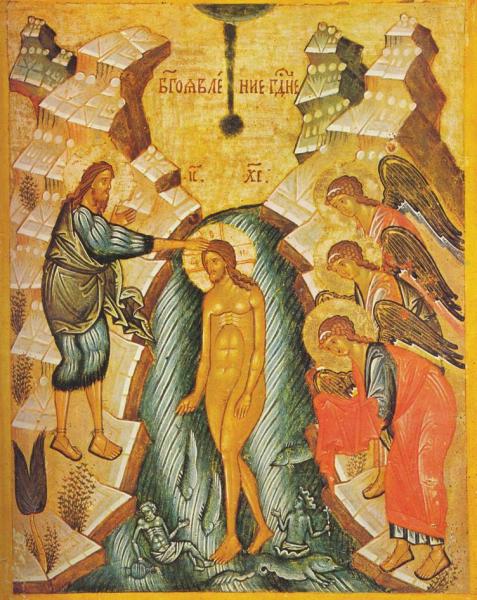
This fire was kindled in us, ironically, by water in our baptism. In that moment, when the benefits of Christ’s death and resurrection were applied to us, the Holy Spirit came to dwell in us in a way that cannot be undone. Baptism is not so much something that we do for God so much as something that God does in us. Baptism is the sign and seal of God’s pledge to save us and never leave nor forsake us.

Baptized Christians are part of Christ’s Body, and Christ loves us as dearly as we love the parts of our own bodies. He could not abandon us any more than one of us could cut off a hand or a foot. This is why John calls the fire “unquenchable.” We can resist the Spirit, but we cannot snuff her out entirely.

Application

The prophet invites us, in this Advent season, to “prepare the way” for Christ’s coming by cooperating with the energy of the Holy Spirit, who is already at work in us, separating the good wheat from the chaff we no longer need. We are invited to return to the roots of our faith and consider again what it means to be a member of Christ’s Body, the covenant community of God’s Church in the world.

This work is not something we do for God, but what God is doing in us. We cannot make Christ appear in our hearts any more than we can make the sun to rise in the morning. The good news is that Christ is already here, working God’s will in us through the power of the Holy Spirit. Our only choice is whether we will resist or cooperate with the work of the Spirit in our lives.

St. Paul writes, in his first letter to the Thessalonians:

“May the God of peace himself sanctify you entirely; and may your spirit and soul and body be kept sound and blameless at the coming of our Lord Jesus Christ. The one who calls you is faithful, and he will do this.” (1 Thess. 5:23-24)

This Advent, may we open our hearts to allow the fire of the Spirit to crack open our hard shells, and the wind of the Spirit to blow away that which we no longer need. May the water, wind, and fire of baptismal grace gather us once again into the barn of the Church, where we will dwell together in peace at Christ’s coming.

God wants spiritual fruits, not religious nuts

Today’s sermon from North Presbyterian Church.

The text is Luke 3:7-18.

Jesus is coming!

That’s what Christians believe. We say it a lot, especially in this season of Advent. The phrase has a dual-meaning for us. First of all, we use it as we prepare our hearts and minds for the upcoming celebration of Christmas. We remind ourselves annually that, in the mystery of the Incarnation, God crossed the divide between heaven and earth to meet us here, where we live. We couldn’t get ourselves to heaven, so heaven came to us.

But there is a second layer to our celebration of Advent. We’re not just looking back to remember when Jesus came to earth the first time; we’re also looking forward to his Second Coming and preparing ourselves for it. Christians believe that God’s story is not yet over. We believe that history is not a random series of events, but the gradual unfolding of God’s plan for the world over time. History is going somewhere, and we believe the day will come when the divine plan is accomplished and all that is wrong will be set right in the world. Until then, we are invited to play a small part in that unfolding story as Christ’s church on earth.

We remind ourselves that Jesus is coming so that we don’t forget or lose heart in the struggle to establish God’s kingdom on earth as it is in heaven. The drudgery of everyday life, combined with the tyranny of the urgent, can easily distract us from the primary purpose of our lives. The still-unfolding story of God’s creation and redemption of the universe in Christ is what gives our lives meaning. We say, “Jesus is coming” in order to remind ourselves of that. As we sing in the hymn For All the Saints: “And when the strife is fierce, the warfare long, steals on the ear the distant, far-off song and hearts are brave again and arms are strong. Alleluia! Alleluia!”

But we also sometimes use that phrase in ways that are less than helpful. For many Christians, “Jesus is coming” has become an escapist slogan. We sometimes use it as an excuse to not get involved in the very real problems of the world around us. We say, “Jesus is coming… so we don’t need to worry about preserving our natural resources, fighting poverty, or working for social justice.”

There is a popular idea that has taken hold in some Christian circles. It’s called the Rapture. Many claim that it is a biblically-based doctrine, even though it did not exist at all before the 1830s (when it was invented out of thin air by two preachers named John Darby and Charles Scofield). Those who hold to this idea believe that the world is soon headed for a seven year period of great suffering called the Tribulation. During this time, an evil world leader called the Antichrist will achieve global dominance through a reign of terror. At the end of these seven years, Jesus will return to judge the world and history will reach its conclusion. But before all this happens, according to Darby and Scofield, all true believers in Christ will be mysteriously “caught up in the air” (i.e. Raptured) and taken out of the world to be with Christ, so that they won’t have to endure such pain and suffering.

What it means then, for those who accept this idea, is this: So long as you are in God’s club, you don’t have to worry about all that difficult stuff in life. Our club membership grants us a “get out of jail free” card. By this, we know that we are in God’s good graces and can expect to be excused from the many trials and tribulations that afflict the world from time to time.

It is this same kind of attitude that St John the Baptist is addressing in today’s gospel reading. His prophetic ministry was taking off, John himself had become quite the popular preacher, and people were coming out in droves to hear the sermons and get their spiritual “membership card” stamped by participating in the ritual cleansing of baptism. But John very quickly realizes what’s going on and, in typical prophetic fashion, addresses the issue head-on.

“You children of snakes!” He says, “Who warned you to escape from the angry judgment that is coming soon? Produce fruit that shows you have changed your hearts and lives. And don’t even think about saying to yourselves, Abraham is our father. I tell you that God is able to raise up Abraham’s children from these stones.”

John is talking here about those who take pride in their cultural and religious heritage. They thought to themselves, “We’re members of God’s club! Our dues are paid and our card is stamped, therefore we shouldn’t have to worry about what comes next.”

In John’s place and time, it was Jewish ancestry that counted for membership in God’s club. Here and now, we have different criteria for membership, but the process is the same. We like to think of ourselves as “the good guys” by virtue of our ethnicity, nationality, or political affiliation.

We even do this when it comes to the way we practice our religion. We rely on church affiliation, regular attendance, or the size of our offering check as indicators of our membership in “God’s club.” If John the Baptist were with us today, he might say something like: “Don’t even think about saying to yourselves, we are Presbyterians. I tell you that God is able to raise up Presbyterians from these stones.”

What John is trying to do here, both in his day and ours, is draw our attention to what it is that spirituality is all about. He’s trying to help us distinguish between the grain of wheat, which is the kernel of our faith, and the husk that surrounds it.

John says, “I baptize you with water, but the one who is more powerful than me is coming. I’m not worthy to loosen the strap of his sandals. He will baptize you with the Holy Spirit and fire. The shovel he uses to sift the wheat from the husks is in his hands. He will clean out his threshing area and bring the wheat into his barn. But he will burn the husks with a fire that can’t be put out.”

Wheat, just like ears of corn, grows inside of a husk that carries and protects it. The husk is part of the wheat, the wheat wouldn’t survive without it, but there comes a time when the husk must be discarded in order for the wheat to fulfill its destiny and become what it was meant to be.

In the same way, the elements of our religion (e.g. churches, denominations, buildings, rituals, the Bible, and the Sacraments) are like husks of wheat. They are necessary to protect the seed, which is our faith, but they are only a means to an end. God, according to John the Baptist, is not interested in our husks, but in the fruit that grows from the seed inside the husk. He says to the people in the crowd, “Produce fruit that shows you have changed your hearts and lives.”

A changed life is the fruit that grows from the seed of faith. The evidence of authentic faith is not religious observance, church attendance, tithe checks, or Christian bumper stickers. The evidence of faith is when your neighbors in the world look at you and say, “There’s something different about you.” St Paul called this “the fruit of the Spirit” in his letter to the Galatians. He described this “fruit” as “love, joy, peace, patience, kindness, goodness, faithfulness, gentleness, and self-control.”

When the husk of our religion has done its job well, the seed of faith will grow up to produce this kind of fruit in our lives. When we see that fruit, in our lives or in anyone else’s, we can trust that it comes from an authentic faith (no matter what its previous husk may have looked like).

The really interesting thing about fruit is that each kind is unique to the tree that produced it. Oranges don’t grow on apple trees or grapevines. Fruit grows naturally out of each tree’s unique identity. In the same way, the fruit of the Spirit growing in your life will inevitably look different from the fruit of the Spirit growing in the life of your neighbor. I think this is why John the Baptist, in today’s reading, gave different instructions to different groups of people.

The crowds asked [John], “What then should we do?”

He answered, “Whoever has two shirts must share with the one who has none, and whoever has food must do the same.”

Even tax collectors came to be baptized. They said to him, “Teacher, what should we do?”

He replied, “Collect no more than you are authorized to collect.”

Soldiers asked, “What about us? What should we do?”

He answered, “Don’t cheat or harass anyone, and be satisfied with your pay.”

The fruit for which John was calling is diverse. It comes in all shapes, sizes, and colors. I think that’s why Paul kept his description of this fruit very broad and general. God wants us to have the freedom to explore the unique ways that the fruit of the Spirit might take form in our lives.

When it comes to the way we talk about religion today, I think we spend way too much time arguing over the husks (the religious externals), instead of nurturing the growth of spiritual fruit (the seed of faith). I saw a bumper sticker once that said, “God wants spiritual fruits, not religious nuts.”

I think our friend St John the Baptist would agree with that. In this Advent season, as we await the coming of Jesus, may we become the kind of Christians who know how to discard the husk of religion when it is time, and nurture the growth of the Spirit’s fruit in our lives and in our world.

It’s Time for Love to Get Loud

This week’s sermon from First Pres, Boonville.  Blog fans will notice some similarity with my previous post, Get Loud.

There is considerable congregational participation toward the end, so it would be better to listen at fpcboonville.org

The text is Mark 1:1-8.

First impressions are funny things.  They have a way of setting the tone for what comes next.

This is true for stories:

Who doesn’t remember the opening scene of Star Wars, when Princess Leia’s starship races across the screen, relentlessly pursued by Darth Vader’s menacing Star Destroyer?  George Lucas had audience members on the edge of their seats from the beginning to the end of that film.  How about the first line of the novel, A Tale of Two Cities?  “It was the best of times.  It was the worst of times.”  I particularly like the opening line of my favorite novel: Neuromancer by William Gibson.  “The sky above the port was the color of television, tuned to a dead channel.”

It’s also true in relationships:

My over-eager self-introduction to a professor on my first day of seminary effectively ended my career in academic theology before it started.  On a more positive note, my propensity for sharing too much information made an impact on my friend Matt, who works at a bagel shop in Utica.  At first, he was taken aback by my apparent lack of tact and subtlety, but those same qualities came to shape our future friendship as one characterized by intense honesty and trust.  He is one of my closest companions today.

This morning, we’re taking a look at the opening scene of Mark’s gospel.  Right off the bat, Mark sets the tone for what comes next in the story.  This gospel has a powerful opening line that often gets overlooked: “The beginning of the good news of Jesus Christ, the Son of God.”

That sounds pretty straightforward and innocuous, right?  Wrong.  There are three terms I need to unpack before we can come to a full understanding of what this verse is saying.  Those three terms are good news, Christ, and Son of God.

Good news.  The Greek word we’re looking at here is euangelion.  It’s a term that comes from the world of imperial politics.  An euangelion was a joyful announcement sent out by royal courier to the farthest reaches of the empire.  It usually announced big news, like the birth of a new heir to the throne or the victory of the emperor over his enemies.  Anyone else who proclaimed an euangelion that didn’t have to do with Caesar could be found guilty of treason.  Mark’s use of euangelion in the very first sentence of his gospel is an extremely radical and subversive move.  It’s the kind of thing that could get someone arrested by the Department of Homeland Security.  It says something important about the way Mark looks at the world and, more importantly, the way he looks at Jesus.

Christ.  Most people these days are used to thinking of this word as Jesus’ last name.  Well, it’s not.  Christ is a title.  It’s a Greek translation of the Hebrew word Messiah, which means “Anointed”.  When first century Jews talked about the Anointed, they imagined this Che Guevara kind of person who would rise up and liberate the Jewish people from Roman tyranny.  In short, the Anointed/Messiah/Christ was supposed to be a terrorist.

Son of God.  This is another title that was reserved for the emperor.  Caesar was worshiped as a god in ancient Rome.  People were required to make regular sacrifices to his statue as a sign of loyalty.  It was kind of like pledging allegiance to the flag, only more so.  When Mark proclaims Jesus as divine, he is implying that Caesar is not.  This is a bold statement to make in an occupied country.

With a fuller understanding of what these words mean, let’s hear them again: “The beginning of the good news of Jesus Christ, the Son of God.”  In American terms, we might say, “The inauguration of President Jesus, our real commander-in-chief.”  Anyone who walked around this country seriously talking like that would probably earn a one-way ticket to Guantanamo Bay.

Mark goes on from that opening sentence to paint a picture of the person who first ran through the countryside, shouting this euangelion at the top of his lungs.  His name was John.  He, like the message he preached, was a radical.  Later in the story, John is arrested and eventually executed for exposing the hypocrisy of Herod, the puppet king set up by the Roman government to maintain order.  Like the opening sentence of Mark’s gospel, John is subversive of the established status quo.  He looks instead to the way things ought to be, the way they will be, in God.  John is not satisfied with mere Roman order; he longs for the divine harmony that God intends for all creation.

John is not alone in his task.  He stands in the shadow of another outspoken reformer.  When John first shows up in Mark’s gospel, he is “clothed with camel’s hair, with a leather belt around his waist” and eating “locusts and wild honey”.  That might not mean much to us, but it would mean a lot to first century Jews.  Dressed in those clothes, they would immediately recognize him as the prophet Elijah, as surely as we would recognize a fat man in a red suit coming down the chimney on Christmas Eve as Santa Claus.

Elijah was another subversive radical from Israel’s history.  Like John, he exposed and confronted the powers that be.  He was constantly challenging the corrupt government of King Ahab and Queen Jezebel in his day.

Mark seems to be going out of his way to drive the opening point home: the gospel of Christ is a subversive message preached by radicals.  Those who want safe, predictable religion should stay away from Jesus at all costs.

What made John live his life as a “prisoner of hope” who never stopped questioning the way things are?  What is this radical message that turns the whole world upside down?  Mark spends the rest of the book answering that question.  It’s the story of Christ, a never-ending story that includes John, you, and me in its eternal plot.  There’s no way to fully capture its message in a single sermon, book, or library.  That being said, I’ll try to sum up one small part of it like this: God is with us, God is Love, Love wins.

This, in part, is the message of Christmas: God is with us, God is Love, Love wins.    Therefore, all that is not Love is destined to fade away like dust in the wind or a bad dream after you wake up.  There is hope in this.  And that hope gives us the strength to stand up and speak out loud and clear against all that would stand in Love’s way.

John believed in this Love (i.e. God’s Love, the God of Love, the God who is Love).  That’s why it bothered him to see so much un-Love in the world around him.  I call John a realist because he confronted the reality of the world as it is.  However, I also believe he trusted in a deeper reality that is more real than what he saw with his eyes.  I think John’s faith in that deeper reality is what gave him the strength to stand up and get loud.  His is not a voice of rage or hate.  There is no call to arms or partisan propaganda.  When John gets loud, it’s the voice of Love getting loud.

Here in this room today, we believe that God is with us, God is Love, and Love wins.  But, like John and Elijah, we live a world that is deaf to Love’s call because Love has been drowned out by the white noise of apathy and injustice.  What does that mean for us?  It means it’s time for Love to get loud.

What does that mean for us?

It’s time for Love to get loud.

God is with us, God is Love, and Love wins.  But somewhere this week a boy got his face slammed into a locker at school just because he likes other boys.  What does that mean for us?  It’s time for Love to get loud.

God is with us, God is Love, and Love wins.  But somewhere this morning a girl looks into a mirror and cries because what she sees there doesn’t look like what she sees on the cover of a magazine.  What does that mean for us?  It’s time for Love to get loud.

God is with us, God is Love, and Love wins.  But somewhere there’s a local shopkeeper who is fretting about how to keep the family business open for another generation.  What does that mean for us?  It’s time for Love to get loud.

God is with us, God is Love, and Love wins.  But somewhere today someone is mourning the death of a beloved parent, spouse, or sibling.  What does that mean for us?  It’s time for Love to get loud.

God is with us, God is Love, and Love wins.  But in 2011, there are still churches in this country where the Bible is used as a weapon and people can be denied membership just because of the color of their skin.  What does that mean for us?  It’s time for Love to get loud.

God is with us, God is Love, and Love wins.  But Oneida County is still eliminating daycare funding for children already living below the poverty line.  What does that mean for us?  It’s time for Love to get loud.

It is indeed time for Love to get loud.  How will Love get loud in you?

It’s time to raise your voice, like John the Baptist, in the name of Love.  It’s time to lift every voice and sing!