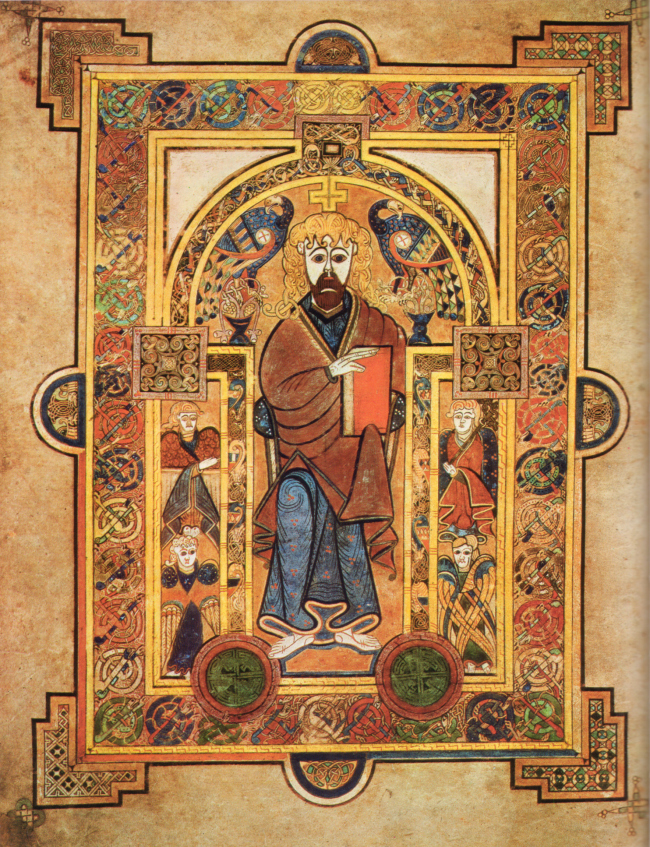
The Merciful King

Sermon for Christ the King Sunday (Proper 29), Year C.

Click here for the biblical readings.

Back when I was newly ordained in my previous denomination and serving my first congregation, the time came for me to request a Sunday off in order to attend a friend’s wedding. Not wanting to be too forceful, I intentionally phrased my request very gently. And one of the board members commented, “Gosh, you sound like a kid asking for candy.” I was a bit taken aback by this comment because the board member had obviously mistaken my kindness for weakness. Looking back, what I wish I’d said was, “Ma’am, if you think this is me asking for candy, then you have seriously underestimated just how much I love candy!”

It’s funny how often people mistake kindness for weakness. In this world we live in, it’s the blustering, strong-man style of leadership that tends to get the most attention: leaders who are loud, decisive, never apologize or admit when they’re wrong, who rule by force, fear, and the power of sheer will. Such leaders are not confined to any particular political party, country, or era of history; even going back to biblical times, they’re everywhere — even inside our own heads. Who among us doesn’t sometimes hear that harsh voice in the back of our minds, yelling at us when we struggle?

“Suck it up, Buttercup. Quit your crying, loser. Forget about your feelings. You don’t need a break. You need to push harder.”

If we listen to that voice in our heads day in and day out, we become our own tyrants. And society rewards us for it. The message we hear again and again is: “That’s just how you get things done. You may not like it, but reality doesn’t care about your feelings.”

But let me share something with you that I have learned from reading up on leadership science. Strong-man and fear-based leadership styles are useful in the midst of a sudden crisis because they’re very good at achieving fast results in the short term. But in the long term, they’re subject to the law of diminishing returns. Over time, fear-based environments become less and less effective because they lose talent by stifling creativity and causing burnout among their best performers. Mercy-based environments, on the other hand, foster resilience, creativity, and loyalty. They have lower turnover and higher productivity.

So if we’re going by the numbers, it’s not about feelings at all. It’s about results. Compassionate leadership is more effective than fear-based leadership. Mercy isn’t a feeling. It’s a method — a strategy for transforming the world from the inside out.

Which brings us to our Gospel reading for today. Today we celebrate the Feast of Christ the King, which was added to our liturgical calendar exactly 100 years ago, in 1925, by Pope Pius XI. The Pope created this new festival in direct response to the rising tide of fascism in Italy at that time. By establishing this new liturgical feast, Pope Pius was declaring that Jesus Christ is Lord and Benito Mussolini is not. It was a direct challenge to the authoritarian strong-man style of leadership that was so prevalent in the culture at that time.

In today’s Gospel for Christ the King, we get to see firsthand what Jesus’ merciful style of leadership looks like. His throne is not a majestic chair of gold, but an old rugged cross. His crown is not made of jewels, but of thorns. Beside him are not trusted advisers, but criminals.

Traditionally, one of them has been labeled as “the good thief.” But here’s the thing: he was neither good nor a thief. The Romans didn’t crucify pickpockets. Crucifixion was too slow and too expensive for such petty crimes as that. Crucifixion was reserved for the most severe crime of sedition against the authority of the empire.

So the man commonly known as the “good thief” was not like Jean Valjean, who was thrown into prison for stealing a loaf of bread. He was most likely a religious zealot who believed that God had called him to overthrow the Roman Empire by violent force. He was probably a killer, an extremist. In modern-day terms, we might even call him a terrorist. So you can imagine the kind of person to which that term might apply today.

That’s the person to whom Jesus says, “Truly I tell you, today you will be with me in Paradise.” That one line exposes every lie that we have ever been told about what true power looks like. Jesus doesn’t say this line to someone who has proved his worth through good deeds or correct theology. He says it to the least likely and most despicable person imaginable. By speaking words of forgiveness to the terrorist on the cross next to him, Jesus demonstrates that his only method is mercy. It is the entire basis of his kingship and authority.

William Shakespeare said it well in The Merchant of Venice, Act IV, Scene 1:

“The quality of mercy is not strained.
It droppeth as the gentle rain from heaven
Upon the place beneath.
It is twice blest:
It blesseth him that gives and him that takes.
’Tis mightiest in the mightiest;
It becomes the throned monarch better than his crown…
And earthly power doth then show likest God’s
When mercy seasons justice.”

Mercy is the foundational principle of Christ’s kingdom, just as equality of all persons is foundational to the American system. Mercy is a direct challenge to the strong-man style of leadership in any age, because there is always another strong man waiting in the wings somewhere who promises salvation, saying, “Fear me, follow me. I will protect you, and I will punish your enemies.”

But Christ doesn’t promise those things.
Jesus Christ says, “Father, forgive them, for they do not know what they are doing.”
Jesus says, “Blessed are the peacemakers, for they will be called the children of God.”
Jesus says, “Love your enemies and pray for those who persecute you.”
Jesus says, “Truly I tell you, today you will be with me in Paradise.”

If God wanted the world to be saved by force, Jesus would have come with an army of angels. But instead he broke bread with outcasts and forgave sinners like you and me. He led with mercy — not because he is soft or weak, but because mercy is the strongest force in the universe.

Some people imagine that when Christ comes again in glory, he will drop the mercy act and behave like the conquering king we all expected. That apocalyptic idea suggests that mercy was just a temporary mask, and violence is the true nature of God. But I wholeheartedly disagree with that sentiment.

The Christ who will come again is the same Christ who came before, who broke bread with outcasts and sinners, and forgave the unforgivable. Mercy isn’t the exception — it is the essence of who Jesus Christ is as the King of kings and Lord of lords.

During World War II, a Dutch woman named Corrie ten Boom hid some of her Jewish neighbors in her attic from the raiding parties of the Nazis. Eventually, she was discovered, arrested, and sent to a concentration camp, where her sister, Betsy, eventually died. Several years later, she was preaching in a church on the subject of forgiveness when a man approached her whom she recognized. He confessed to her that he had been a guard at the concentration camp to which she and her sister had been sent.

“Since that time,” he said, “I have become a Christian. I know that God has forgiven me for the cruel things I did there, but I would like to hear it from your lips as well. Fräulein, will you forgive me?” And he extended his hand.

Corrie ten Boom said,

“It could not have been many seconds that he stood there, hand held out, but to me it seemed like hours as I wrestled with the most difficult thing I had ever had to do. For I had to do it — I knew that. I knew it not only as a commandment of God, but as a daily experience. Those who were able to forgive their former enemies were able also to return to the outside world and rebuild their lives, no matter what the physical scars. Those who nursed their bitterness remained invalids. It was as simple and as horrible as that.

“And still I stood there, with the coldness clutching my heart. But forgiveness is not an emotion; forgiveness is an act of the will — and the will can function regardless of the temperature of the heart. ‘Jesus, help me!’ I prayed silently. ‘I can lift my hand. I can do that much. You supply the feeling.’

“And so, woodenly, mechanically, I thrust my hand into the one stretched out to me. And as I did, an incredible thing took place. The current started in my shoulder, raced down my arm, sprang into our joined hands. And then this healing warmth seemed to flood my whole being, bringing tears to my eyes.
“I forgive you, brother,” I cried, “with all my heart!”

For a long moment we grasped each other’s hands — the former guard and the former prisoner.

“I had never known God’s love so intensely as I did then.”

Kindred in Christ, what does this mean for us? It means that sometimes our kindness will be mistaken for weakness. But each time we choose to lead with mercy instead of fear, the kingdom of Christ comes a little bit more on earth as it is in heaven.

Leadership is not about getting people to do what you want — it is about helping them grow into the kind of people they were always meant to be. And that applies just as much to our leadership of ourselves as it does to the way we relate to other people. Many of us know the voice of the inner tyrant, who expects perfection and punishes us when we fall short. But that voice is not the voice of Christ.

Christ did not come to replace one tyrant with another — including the tyrant that lives in your own head. Let Christ’s mercy reign in you. Be patient with your own healing. Forgive yourself for the mistakes you keep making. Speak to yourself as Christ spoke to the terrorist on the cross next to him: “Truly, I tell you, today you will be with me in Paradise.”

Today. Not someday. Not when you’ve cleaned up your act. Not when you’ve fixed everything that’s wrong with you. Not when you’ve come up with airtight answers to the doubts and the questions that plague your mind.

Today — because mercy begins here and now.

This is where the kingdom of Christ begins: in you. But it doesn’t stay there. It flows out. It changes how you speak to your spouse, how you raise your kids, how you treat your neighbors and your coworkers, how you handle difficult people — and the people who find you difficult.

This is how the kingdom comes on earth as it is in heaven: not by brute force or fear, but by mercy, dropping like the gentle rain from heaven, as Shakespeare said.

So today, on the centennial anniversary of the Feast of Christ the King, you and I stand together beneath the old rugged cross — the throne of grace — and we hear Christ saying to us, as he did to the penitent terrorist:
“Truly, I tell you, today you will be with me in Paradise.”

Not someday, but today.
Here and now — let mercy reign in you.
Let it flow out from you.
And let it change the world through you.
One little bit at a time.

Laughing at Ourselves

Sermon for Proper 25, Year C

Click here for the biblical readings

As I was coming up with an opening illustration for this week’s sermon, it occurred to me that the one thing you’re probably learning about your new rector this year is that he watches way too much TV. But then again, maybe that’s just something I’m learning about myself. Anyway, what came to my mind this week was a scene from an episode of the famous sitcom The Office.

And in this scene, the boss was on his way to a very important meeting when he slipped and fell into a koi pond. When he got back to the office, soaking wet, he tried making up all kinds of stories to hide his embarrassment about what really happened. But the thing is that all his rationalizations and excuses just made people laugh at him more.

Later on, when he finally admitted the truth about what happened and started poking fun at himself, people’s laughter started turning into compassion. Instead of making up jokes at his expense, they said, “You know, Michael, that’s really the kind of thing that could have happened to anybody.”

I find that moment in the scene very fascinating. It’s like the situation itself was calling for laughter, no matter where it came from. If Michael couldn’t laugh at himself, then the universe was going to make sure that somebody was laughing about it. But when Michael finally did learn how to laugh at himself, the laughter became a gateway to mercy and understanding. It’s as if laughter had this secret power to unlock the doors of compassion in our hearts.

How like life! When we as human beings stand on the firm bedrock of safe and supportive relationships, we gain the ability to laugh at ourselves. And that kind of laughter, rather than tearing us down or pushing us farther apart, has the ability to build us up and pull us closer together — provided that our relationships do, in fact, stand on that solid ground of safe and supportive love.

As a Christian, I do believe that the entire universe stands on just such a solid ground. When we say each week in the Nicene Creed that we believe that Christ will return in glory to judge the living and the dead, I imagine that judgment not as a verdict in a courtroom, but more like a funny story told around the Thanksgiving table. The embarrassment is there, but so is the love. And that love gives us the power to laugh at ourselves.

That’s how I imagine the final judgment of the living and the dead — not as a sentence to hellfire and damnation, but as a side-splitting laugh at ourselves. Because we learn from Scripture that God is both just and merciful. The one who judges us is also the one who knows and loves us best.

In today’s gospel, we get a glimpse of that justice and mercy in action. Jesus tells a parable about a Pharisee and a tax collector. Pharisees, as we know, were very educated and religious people — upstanding citizens and pillars of their community. Tax collectors, on the other hand, were the scum of the earth: bottom feeders, liars, and traitors to their own people.

The Pharisee in this story is doing exactly what we would expect an upstanding citizen to do — holding his head up high in church, listing his accomplishments, and thanking God that he is not like other people, especially this tax collector here. The tax collector, meanwhile, is standing at the back of the church, looking down at his shoes, and the only prayer he can manage to get out is, “God, be merciful to me, a sinner.”

It’s the tax collector, according to Jesus, who went down to his home justified that day, despite his lack of religious or moral qualifications.

Now, what I find interesting about this passage is that at no point does Jesus say that the Pharisee is not justified. Our English translation says that the tax collector went down to his home justified instead of the Pharisee. But the Greek word translated as instead of in our English Bibles is actually the word para, which literally means alongside. So another way that we might translate this verse from the Greek is to say that the tax collector went down to his home justified alongside the Pharisee, not instead of.

And I really like that. Because if I’m really honest with myself, then I have to admit that there is both a Pharisee and a tax collector within me. Like the Pharisee, I too have the capacity to act like a self-righteous windbag. And like the tax collector, I too have the ability to act like a selfish dirtbag. And if I’m being really, really honest, I’m often doing both at the exact same time.

So it’s very comforting for me to be able to read this story as one where both the Pharisee and the tax collector go down to their home justified alongside each other — because most days, both of those guys are coming home with me.

Several years ago, I had a job interview at the hospice agency where I ended up working for several years before I came here. The interview went really well. I came home all excited and ready to talk about it. But then I walked through the door, and my wife Sarah had just had a disaster of a day. Things were stressful at her job, the kids were acting out, and she needed to unload about all of it.

At the end of the night, we went to bed, and she had forgotten to ask me how my interview went. One part of me was seething — this is the Pharisee part of my brain. Except I was imagining him as more like a tough guy from New Jersey. And he said, “Here’s what you’re gonna do. You’re gonna get that job, and you’re gonna work there for like six months, until one day she asks you, ‘Hi, honey, how was the hospital today?’ And you’re going to be like, ‘Lady, I ain’t worked there in six months! But what do you care?’ And then she’s gonna feel real bad about it. Forget about it.”

So that was one voice in my head — the Pharisee from New Jersey. I decided I should name him Carl. So that’s Carl.

The other part of me was not from New Jersey, but rather from the Midwest. So obviously, he was a nice guy, because we Midwesterners are nice people. And this part of me was saying, “Oh, don’t you know, Sarah’s really busy, and she’s worried about a lot of really important things. You’re not that important, so you should just keep your yapper shut. Remember that you love each other and just get back to your darn life.”

I didn’t give that voice a name, but it was more like the tax collector side of me. That’s the part that just wants to stand in the back, look down at my shoes, and make myself small and invisible.

But let’s be honest: if I was to listen to either of these voices by itself and do what it says, would either one lead me toward having a more honest and loving relationship with my wife? No, it wouldn’t.

So instead, I took a deep breath and imagined myself sitting at a table with both of these guys. I let each one have their say, and even wrote out what they said in a journal. Because the thing is, each part of me was actually trying to help me — they just weren’t being very helpful in the way that I needed at that moment.

So I heard them out, listened with compassion, and tried to understand where each one was coming from. And what I ended up doing was sitting down with Sarah the next day and saying, “Hey, I’m sorry you had such a rough day yesterday, but I had that really big job interview with hospice, and it hurt my feelings when you didn’t ask me about it.”

And Sarah, my wonderful wife, said, “Oh my gosh, you’re right. I’m sorry. Please tell me — how did it go?” And I did tell her about it, against the advice of the Midwest nice guy, because I am important to her, even though she does have a lot of other really important things to worry about.

And I also went against the advice of Carl from New Jersey and his elaborate ruse about working a job for six months without telling my wife, because obviously that plan would not have worked — but mostly because I didn’t actually want her to feel bad. I just wanted my wife to take an interest in my life and the things that are important to me and to our family. Which, of course, she does. We all just have bad days sometimes.

I tell this story as a personal illustration of the Pharisee and the tax collector that exist within each of us — because they both do. That’s why I’m glad that the text of Jesus’ parable can be translated as, “The tax collector went down to his home justified alongside the Pharisee.”

At the end of the day, it was neither the religious and moral observance of the Pharisee nor the humility of the tax collector that justified each of them in the eyes of God. It was God’s own mercy that supported them both. The only difference between them is that one of them recognized that truth and the other did not. But they both needed it, and they both got it — whether they realized it or not, whether they deserved it or not.

Kindred in Christ, the same thing is true for each and every one of us today. We stand in right relationship with God not because we deserve it by virtue of our righteous deeds or our honest confession, but simply because we need it, and it is there. We stand in right relationship with God because God loves us, whether we realize it or not, whether we believe in God or not.

We receive love because God is love. And that is the central truth not only of our faith but of our entire existence. And that love is what gives us the ability to laugh at ourselves — when we trip over our own shoelaces, or when we strut around like a bunch of pompous and self-righteous Pharisees, or when we betray our moral values and closest relationships like the tax collector did. Beneath all of that, the central truth holds firm: you are loved, whether or not you realize it, whether or not you deserve it, whether or not you believe in it. It’s still true — for you and for everyone else in this hurting world.

My prayer for you today is that you would come to know this truth more fully for yourself, and that knowing it will make it easier for you to reflect that same love onto the faces and into the lives of the people around you.

Fire and Fruit

Sermon for Proper 8, Year C

Click here for the biblical readings.

Sometimes I walk into a conversation ready for a fight.

Like, I’ve been rehearsing my speech all day, muttering in the car, working up just the right balance of righteous indignation and devastating logic. I am locked, loaded, and ready to fire…

And then the other person just says,

“Oh gosh! I’m really sorry. Thanks for telling me how you feel. I had no idea.”

And now I’m standing there like,

“Ugh… Now I’ve got to rearrange my tone, because you were supposed to argue with me. I was all set for a fight…

And now I have to figure out how to be a reasonable human being…”

That’s more or less what happens to James and John today.

They’re ready to go scorched earth on a Samaritan village—and Jesus… doesn’t let them.

No fire. No fight. Just a rebuke, and a long walk to Jerusalem.

And maybe the most uncomfortable part is:

He’s still walking that way.

And we’re still being invited to follow.

I’ve been thinking this week about Inspector Javert, the relentless police officer from Victor Hugo’s novel Les Misérables. He’s a man of uncompromising principle, obsessed with justice. For him, the law is sacred—it orders the universe, separates good from evil, and gives people what they deserve. No exceptions. No second chances.

Then comes the moment that undoes him: Jean Valjean, the escaped convict Javert’s been been hunting, has an opportunity to kill him, but spares his life instead. And suddenly, Javert doesn’t know who he is anymore.

If I’m honest—there are times when I’ve recognized a bit of Javert in myself.

Moments when I felt sure I was standing up for what was right… only to realize later that what I really wanted was to feed my own ego.

I wanted fire.

Jesus offered fruit.

And that kind of grace isn’t cheap. It’s a costly grace. It doesn’t just change you—it undoes you, and makes you new.

In today’s Goslel, Luke tells us that Jesus has “set his face toward Jerusalem.”

That’s more than a GPS update. It’s a theological turning point in the story—a shift from healing and teaching in Galilee to a deliberate, unflinching journey toward the cross.

And the disciples are not ready.

They still want results. They want clarity. They want to win.

When the Samaritans won’t welcome Jesus, the disciples don’t just shrug and move on.

They say, “Lord, do you want us to call down fire from heaven?”

That’s not just hyperbole. It’s a reference to Elijah, who once called down fire on the enemies of God. These disciples think they’re following in a great prophetic tradition.

And in one sense—they are.

But they’ve misunderstood the spirit of the prophet, and more importantly, the Spirit of the Christ.

So Jesus turns and rebukes them.

Luke doesn’t tell us exactly what he said, but the Church has long remembered his tone: not fury, but love.

Some Bible translations insert an extra verse here. Biblical scholars call it a “textual variant” (in case you want to sound impressive at your next dinner party). The extra verse recalls Jesus saying:

“You do not know what spirit you are of.

For the Son of Man came not to destroy lives, but to save them.”

Whether those were his exact words or not,

they sound like Jesus.

They feel like him.

And they land like truth.

Jesus turns and rebukes them.

Not because the Samaritans were right.

Not because the disciples’ feelings were invalid.

But because they didn’t know what Spirit they were of.

That phrase lingers for me:

It’s as if Jesus is saying:

That’s not how we do things. That’s not what I’m about. That’s not who we are.

And Jesus is still saying the same thing to the Church today.

Fire is easy.

Fruit is harder.

Fire is fast.

Fruit takes time.

We reach for fire.

Jesus gives us fruit.

St. Paul knew this struggle well. Writing to the Galatians, he’s speaking to a community splintered by judgment and suspicion.

They’re fighting about circumcision and law observance.

They’re drawing lines. Picking teams. Measuring holiness. Reaching for fire.

And Paul says: No.

“If you bite and devour one another, take care you don’t consume each other.”

Instead—live by the Spirit.

And what does that look like? Paul tells them that the Fruit of Spirit is:

Not rage. Not rivalry.

But:

Love that listens. Joy that lingers. Peace that roots.

Patience. Kindness. Generosity. Faithfulness. Gentleness. Self-control.

These aren’t achievements.

They’re not the result of trying harder.

They grow naturally from following the way of Jesus and desiring in our hearts to be the kind of person that he is.

Fruit doesn’t come by force.

It ripens slowly.

It grows from staying rooted.

Let me tell you a story about a pastor I once knew. His name is Buck Roberts.

His two young kids had been arguing one day, when the older one lost his cool and smacked the other.

Buck saw it happen and took his son aside to give him a stern talking-to. But when he got down on the kid’s level and looked him in the eye, something in the back of Buck’s mind told him to take a different approach. Instead of scolding or punishing his son, he just reached out and hugged him. The little boy immediately burst into tears and said he was sorry. The father’s mercy was able to inspire transformation more effectively than punishment ever could.

It was a small gesture.

But that moment—choosing to meet fire with something softer—has stayed with me.

I remember another time when I made a quick joke in the wrong tone and watched my friend’s face fall.

Words meant to be funny can land like fire.

I apologized later, and thankfully, my friend forgave me. But I carried it as a valuable learning experience.

Self-control isn’t just about big moral failings.

Sometimes, it’s about knowing when to speak.

Or when to stay silent.

Or when to say you’re sorry.

And that’s fruit too.

We might not be chasing someone across France with arrest papers, like Javert.

We might not be calling down fire from heaven.

But we know what it feels like to want to.

And we know what it feels like to choose something else.

To take a breath.

To stay rooted.

To begin again.

This is discipleship.

Not spectacular. Not showy.

But slow and faithful.

We reach for fire.

Jesus gives us fruit.

Let me be clear:

This isn’t about tone-policing.

It’s not about letting harm go unchallenged or injustice go unchecked.

Jesus got angry.

But even when he flipped tables, he didn’t burn down the temple.

His anger made space for healing.

Fire gets attention.

Fruit makes change.

So, kindred in Christ, here’s my invitation to you this week:

Take a look at the Fruit of the Spirit in today’s Epistle and pick one. Just one.

Let it live on your fridge or your phone or your dashboard.

Let it shape your prayer life.

Let it grow.

Let it ripen.

We reach for fire.

Jesus gives us fruit.

And maybe, just maybe, that’s how the kingdom comes.

Not in a blaze of glory.

But in a harvest.

Archbishop Desmond Tutu once said,

“Do your little bit of good where you are; it’s those little bits of good put together that overwhelm the world.”

That’s what fruit does.

It doesn’t go viral. It doesn’t make headlines.

But it transforms a landscape when enough trees bear it together.

So picture this:

Jesus turning to look at the angry disciples—not with fury, but with love.

Imagine him shaking his head gently, then setting his face forward again:

His eyes on Jerusalem.

On the cross.

On self-giving love.

And then imagine yourself there—following along with the group.

Not because you’re ready.

But because you’re willing.

In a few moments, we’ll come to this altar together. It’s a moment we’ve all been waiting for.

For the first time, we will come in a new way—as priest and parish.

And there—without fire or fury—Jesus will give himself to us again.

Not to punish us. 

Not to prove a point.

But simply… to love.

Jesus doesn’t just model mercy—he gives it.

In the Eucharist, he places it in our hands, into our bodies.

He makes us part of himself.

And from that grace, the fruit begins to grow.

It takes root.

It bears witness.

It begins again.

This is the Spirit we are of.

This is the fruit we are becoming.

Thanks be to God.

Amen.

The Amazing Grace People

Sermon for the Third Sunday after the Epiphany.

St. Mark’s Episcopal Church,
Coldwater, MI

The biblical text is Luke 4:14-21. Click here to read.

In the 2001 movie Shrek, the titular ogre tries to explain to his friend, the donkey, how ogres are complex beings.

“Ogres are like onions,” says he.

The donkey replies, “Why? Because you smell bad?”

Shrek: “No.”

Donkey: “Because you make people cry?”

Shrek: “No… because we both have layers. Onions have layers; ogres have layers. You get it.”

Just like ogres and onions, today’s gospel also has layers. Specifically, it has three layers: Jesus, Isaiah, and Jubilee. We are going to have to unpack each of those layers in order to fully appreciate what Jesus is saying in this passage of Scripture.

In the first layer, we have Jesus preaching a sermon at the synagogue in his hometown of Nazareth. This would have been very exciting for the people of that town. Many of our parishioners at St. Mark’s will remember the late Bishop Tom Shaw, who grew up in this parish and later became a monk, a priest, and a bishop in The Episcopal Church. We still keep a candle burning in his memory between the pulpit and the altar. Imagine how exciting it would be for Bishop Shaw to come back and say Mass here, at the parish church where he grew up. That’s how big a deal it would have been for the people of Nazareth when Jesus came home to preach.

This story is also a big deal in the gospel according to Luke because the author uses it as Jesus’ inaugural address at the beginning of his ministry. In the same way that a president’s inaugural address sets the tone for that president’s term of office, this sermon is Luke’s way of setting the tone for the rest of Jesus’ ministry.

So, what is the tone that Luke is trying to set? To understand that, we need to look at the second layer of this passage: Isaiah.

The passage of Scripture that Jesus read in the synagogue comes from the book of Isaiah, chapter 61. The prophet, in this section of Isaiah, is writing to the Jewish people as they return from a half-century of exile. In 587 BCE, the Babylonians invaded the southern kingdom of Judah and hauled their leaders away as slaves. During the next 50 years, the Babylonians tried to do to the Jewish people what white settlers did to indigenous tribes in North America: They displaced the people from their homeland and tried to erase their culture by outlawing the speaking of their language and the practice of their religion.

Thankfully, the early Jews resisted this attempt at forced assimilation. They pushed back against their enslavers, wrote down their ancestral stories in the Torah, taught those stories to their children, and went on strike once a week, on the Sabbath, to remind themselves and their captors that they were not the property of the Babylonians, but beloved children of God. After two generations of resistance, the Persians conquered the Babylonians and allowed the Jews to return home and rebuild.

Isaiah 61 was written as the Jews were beginning that process of rebuilding after the Babylonian Exile. During this time, the people were looking for some kind of inspiration to guide them in that process. The prophet provided that inspiration by looking even further back into Israel’s history. When Isaiah talks about “good news to the poor,” “release to the captives,” and “the year of the Lord’s favor,” he is talking about the year of Jubilee, which leads us to the third and final layer of this story.

The year of Jubilee was prescribed as one of God’s laws in the Torah. It appears in chapter 25 of the book of Leviticus. According to this law, there was to be a general amnesty of debts, once every fifty years. All debts would be forgiven, all enslaved people would be freed, and all land would return to its original owners. Practically, this would mean doing a hard reset on the economy. It would interrupt patterns of generational poverty and allow a fresh start, so that grandchildren were not still paying for the mistakes of their grandparents. Spiritually, the year of Jubilee communicated to the ancient Israelites that their God was a God of fresh starts and new beginnings. The God of Israel is, not just a God of law, but also a God of mercy. Compassion and forgiveness were established as foundational principles in the Torah, which is why Isaiah pointed to them as foundational principles of the new society that Jews were rebuilding after their return from slavery and exile in Babylon. The people had just been through a horrible period of collective trauma, so the prophet wanted to ensure that their new society would be a safe place to heal from that trauma. That’s why Isaiah pointed to the year of Jubilee as the model for what this new society would look like. The ancient prophet Isaiah understood what the 21st century prophet, Archbishop Desmond Tutu, also understood: that “there is no future without forgiveness.”

This brings us back to the first layer of our story: the layer of Jesus. Jesus appeals to the prophet Isaiah, who appeals to the year of Jubilee, to establish the fact that the foundational principle of God’s kingdom on Earth is the principle of mercy.

Mercy is the driving force behind everything that Jesus says and does. He demonstrated mercy by healing the sick and feeding the hungry. He showed mercy by welcoming tax collectors and sinners. He taught mercy by saying, “Blessed are the merciful, for they will receive mercy” (Matthew 5:7) and “Truly I tell you, just as you did it to one of the least of these brothers and sisters of mine, you did it to me” (Matthew 25:40). Finally, Jesus embodied mercy in his death on the cross, praying for his executioners, “Father, forgive them, for they do not know what they are doing” (Luke 23:34).

The reason why the author of Luke’s gospel has Jesus quote this passage from Isaiah, who refers to the year of Jubilee, in his first sermon, is to establish the fact that mercy is foundational principle of Jesus’ ministry on Earth. Therefore, if mercy is the driving principle behind Jesus’ ministry, then it ought to be the driving principle behind the Church’s mission as well.

Mercy is, and ought to be, an unsettling topic. Mercy takes away any sense of power from those who need and receive it. Mercy is shocking to those who still cling to their illusions of control. Mercy is offensive to the self-righteous, but, in the words of the late author (and Episcopalian) Rachel Held Evans, “What makes the gospel offensive is not who it keeps out, but who it lets in.”

Scripture and history are rife with examples of people for whom the mercy of Jesus became the central fact of their life. St. Paul the Apostle was transformed, by God’s mercy, from a persecutor of the Church to its first theologian. He writes, “I am the least of the apostles, unfit to be called an apostle, because I persecuted the church of God. But by the grace of God I am what I am, and his grace toward me has not been in vain” (I Corinthians 15:9-10). In the same way, the Rev. John Newton, who began his career as the captain of a slave ship, later experienced the mercy of God, repented of his sin, and became an Anglican priest. He dedicated the remainder of his life to ending the Atlantic slave trade and penned the most famous hymn in all of Christian history: “Amazing grace! How sweet the sound, that saved a wretch like me! I once was lost but now am found, was blind but now I see.”

According to Luke, in today’s gospel, mercy lies at the heart of everything Jesus does, therefore it ought to lie at the heart of everything the Church does in his Name. As receivers and conduits of God’s mercy, we are, and ought to be, the “Amazing Grace People.” The world ought to look at us with shock and awe when they see how indiscriminately we lavish the mercy of God upon those who deserve it least. As sinners, saved by grace, we ought to be offensive in our witness to the mercy of our Lord and Savior Jesus Christ.

Mercy was the driving force behind the year of Jubilee in Leviticus 25; mercy was the foundational principle of the new society that the prophet was rebuilding in Isaiah 61; mercy was the theme of Jesus’ ministry in the gospel according to Luke; and mercy is the Church’s reason for existing today.

Kindred in Christ, we have opened the Scriptures and examined Church history to wrap our minds and hearts around this overarching theme of God’s mercy. One question still remains: Where does this leave us, today? Will we be Christians or not? Will we risk everything to be conduits of God’s shocking and offensive mercy or not?

Thankfully, because of you “Amazing Grace People,” I don’t have to look very far to find an answer to that question.

Last Friday, I had the privilege of touring and speaking with the staff of Tommy’s House, which you may already know as a transitional residence for women recovering from the disease of addiction. The director of Tommy’s House, a parishioner in our congregation, explained to me how Tommy’s House provides a safe and supportive environment for its residents, helps them get back on their feet, and empowers them to begin new lives, beyond the shackles of chemical dependency.

During the tour, one of the staff members (who had previously been a resident in their program), asked me, “Why is it that, wherever we go, we always find that it’s the Episcopal churches in a city that open their doors to our Twelve Step recovery meetings?”

What a great question! There are two answers.

First, Episcopalians were there when the Twelve Steps were invented. Bill Wilson, the original author of the Twelve Steps, had a spiritual mentor named Fr. Samuel Shoemaker, who was an Episcopal priest. Bill W. often referred to Fr. Shoemaker as “the co-founder of Alcoholics Anonymous.” Fr. Shoemaker, of course, denied this allegation and gave full credit back to Bill. The fact remains, however, that The Episcopal Church was there when it happened and continues to be recognized as a safe space for Twelve Step recovery meetings.

The second, and more spiritually significant, reason why Episcopal churches are frequently known as reliable hosts for AA and NA meetings is because we are an “Amazing Grace People.” We believe that God is a God of second chances. We understand that a finite sinner cannot out-sin the mercy of an infinite God, therefore we are “the Amazing Grace People.”

Friends, I send you into the world this week in full assurance of the infinite mercy of God, which easily overwhelms the finite number of your sins. May the mercy of God be the foundation of your new life, from this day forward, just as it was for Isaiah, Jesus, and all who continue to minister in his holy Name. And “May the grace of our Lord Jesus Christ, and the love of God, and the fellowship of the Holy Spirit, be with us all evermore. Amen” (II Corinthians 13:14).

Fully Human

Preaching this week at First Presbyterian Church of Paw Paw, MI.

Click here to read the biblical text.

There are two great mysteries that are central to the Christian faith, as it has been handed down to us from the Apostles. As mysteries of the faith, they cannot be proved by philosophical reasoning, but can be experienced directly and expressed through intuition and imagination in the stories and practices of our tradition.

The first is the mystery of the Trinity: we believe in one God who exists co-eternally as three persons, traditionally referred to as Father, Son, and Holy Spirit. The main thing we learn from the mystery of the Trinity is that God is relational. God exists, not as a monolithic object in space, but as network of relationships between individual persons. It would not be too much to say that God is a relationship. This is how Christians are able to say, in the words of 1 John 4:16, “God is love, and those who abide in love, abide in God, and God abides in them.”

The second great mystery is the mystery of the Incarnation, which we are gearing up to celebrate during Advent and Christmas. Christians believe, in the words of John 1:14, that God “became flesh and lived among us” in the person Jesus Christ. In other words, God is one of us. Jesus Christ, according to the Church, is both fully human and fully divine, at the same time. According to the mystery of the Incarnation, everything Jesus is, God is. Jesus Christ reveals the Divine to us. If we want to understand what God is like, we look at the human person Jesus.

These two mysteries, the Trinity and the Incarnation, are central to the Christian faith. They are also central to understanding today’s Gospel reading from Matthew 25.

In this passage of Scripture, Jesus tells us a story of the Final Judgment. At the end of the age, the Son of Man (literally “the Human One”, Jesus’ favorite title for himself) will come to Earth in all his glory and divide the people of the world into two groups. One group, whom he calls “sheep”, and another, called “goats”. The “sheep” will “inherit the kingdom prepared for [them] from the foundation of the world” while the “goats” will “depart… into the eternal fire prepared for the devil and his angels.”

The basis for this final judgment, contrary to what we tend to hear from popular “evangelists” in the media, is not a test of theological doctrine or church attendance, nor is it a question of whether one has received the Sacraments of the Church or “accepted Jesus as their personal Lord and Savior.” The basis of this final judgment, according to Jesus himself in Matthew 25, is how we treated the most vulnerable people among us in this life.

Jesus said, “I was hungry and you gave me food, I was thirsty and you gave me something to drink, I was a stranger and you welcomed me, I was sick and you took care of me, I was in prison and you visited me.”

With a look of confusion on their faces, the righteous ask when it was that they did all these things, and Jesus replies, “Truly I tell you, just as you did it to one of the least of these who are members of my family, you did it to me.”

What Jesus says here is firmly rooted in the central mystery of the Trinity and the Incarnation.

From the mystery of the Incarnation, we learn that God is fully human, so Jesus asks us, “Are you fully human?”

From the mystery of the Trinity, we learn that God is relational, so Jesus asks us, “Are you relational?”

Much of the imagery that Jesus uses in this story comes from chapter 7 in the book of the prophet Daniel, in the Hebrew Scriptures. In that chapter, Daniel has a vision of four empires, which he envisions as vicious monsters that destroy and devour people with their violence. But then, Daniel says, “I saw one like a human being (literally “a Son of Man”…get it?) coming with the clouds of heaven.” And this “Son of Man” will repeal and replace the monstrous empires with the kingdom of heaven-on-earth. And Daniel says, “His dominion is an everlasting dominion that shall not pass away.”

According to Jesus and Daniel, this is God’s ultimate vision for the human species: for a truly human kingdom to replace the monsters and empires that have the power on earth for now.

So, how did we get into this sad state of affairs? What happened?

Well, the Gospel tells us that our Triune, relational God created a relational universe and invited human beings to take our part in harmonious relation to the whole of creation, but we were not satisfied with this gift. We humans wanted to be the center of our own little worlds. We were ambitious to become gods, but became monsters instead. We destroyed and devoured one another in our lust for power, and set up exploitative systems that oppress our fellow creatures in the name of “law and order”.

God kept trying to reach out to us, to show us that there is another way, but we were unwilling to listen. So, God “took on flesh and lived among us” in the person Jesus Christ, showing us that to be fully human is to be fully divine. Jesus loved us, bringing healing, wisdom, and forgiveness into our midst.

But we were still unwilling to listen. Clinging to our old delusions of grandeur, we rejected Jesus and turned on him with all the monstrous might of imperial power. We crucified and killed this God-made-flesh in a final, desperate attempt to shut him up.

But Jesus wouldn’t take No for an answer: he rose from the grave on Easter morning, conquering the power of death and hell, and declaring peace and forgiveness to his deniers and betrayers.

After his resurrection, Jesus gathered his community of followers once again and breathed into their hearts the Holy Spirit, the very presence and power of God. Jesus made the Apostles into little incarnations of the Divine.

These Apostles were sent out to say and do the same things that Jesus said and did: gathering communities of lost and broken people, blessing the little ones, teaching, healing, forgiving; baptizing, confirming, and ordaining, human beings to be the hands and feet of God in the world.

These gathered communities, the Church, gradually spread and grew to the ends of the earth, continuing the Apostles’ mission, right up to this very day in Paw Paw, Michigan, where we have been gathered together by the Holy Spirit as the apostolic people of God in this place and time.

All of us have come here today to hear God’s Word and be fed with the Sacrament of Christ’s Body and Blood, to give thanks, to pray, to give, and to be sent back out into the world, that we might take our part in the advancing kingdom of heaven on earth, saying and doing the very same things Jesus said and did when he walked among us in the flesh.

We are called upon today to live as citizens of the kingdom of the One who is fully human (and therefore fully divine).

This kingdom of heaven-on-earth is advancing here and now, just as Jesus and Daniel said it would. The kingdom’s advance is not always readily apparent, but it is real. In every age, women and men have risen up to demonstrate to the monstrous empires of this world the truth that there is another way to be human. We call these people “Saints”. But saints are nothing more than further examples of what life in this world could be, if we would but set aside our selfish, ego-driven agendas and pledge allegiance to God’s kingdom of heaven-on-earth.

The marching orders of Jesus, our commander-in-chief, are clear: Feed the hungry, slake thirst, welcome foreigners, care for the sick, and visit incarcerated criminals.

The quality of our spirituality (and our divinity) is measured, not by our religious observance or theology, but by the quality of our relationships with hurting, broken, and vulnerable human beings, without stopping to ask whether they are worthy. This is what it means to live in this world as citizens of the kingdom of the truly human one, the kingdom of heaven-on-earth, which is our clear and present hope.

Jesus asks these things of us, not because they work as effective policy in this world, but because they are right. Jesus asks these things of us because they make real to us the presence and power of our fully human and relational God. As a bonus, this strategy happens to make God real to others, as well.

Jesus asks these things of us because the kingdom of heaven is real and advancing across the broken terrain of this Earth. In every age, the saints of God have taken their place in this kingdom, living on Earth as if they were already in Heaven. Today, we are invited to take our place in this kingdom as well.

Our God is relational, therefore Jesus’ question to us is: “Are you relational?”

Our God is fully human, therefore Jesus’ question to us is: “Are you fully human?”

To the extent that we can answer Yes to those questions, we can honestly say that we are living in the kingdom of heaven-on-earth, and we are finally fulfilling humanity’s oldest and greatest ambition: To become divine.

Bible Study: The Addict in Abraham’s Bosom

We had an amazing time during Bible study today.

The setting is the Rickman House, a single-room occupancy (SRO) subsidized apartment complex for adults who live with mental illness in Kalamazoo, Mich. The Rickman is often many residents’ last stop before (or first step after) being homeless. The names of participants have been changed and comments have been paraphrased.

There were two participants in today’s study, in addition to myself.

One participant, let’s call him Tom, is a socially awkward man in his late thirties who likes to dress in leather. He self-medicates his mental illness with alcohol and other substances. On Sundays, he sits on the steps of the Roman Catholic cathedral, but doesn’t go in, afraid that he doesn’t have enough faith. He says, “I just need a break from this place (i.e. the Rickman) sometimes.” He was raised in an evangelical Christian household but now isn’t quite sure what to make of faith. He says, “I believe, but I don’t believe… y’know?”

Our passage is Jesus’ parable of the Rich Man and Lazarus, recorded in Luke 16:19-31

Click here to read it with us

I’ve been wrestling with this passage all week as I prepare to preach on it this Sunday. As is often the case, participants in this Bible study hardly ever attend church (if at all). I lead this study using techniques I learned from Bob Ekblad, one of my seminary professors and author of Reading the Bible with the Damned.

Looking at the text, we read, “There was a rich man who was dressed in purple and fine linen and who feasted sumptuously every day.”

Looking for equivalent images in contemporary society, we decide to imagine this rich man as a business man in a three piece suit who eats lobster and filet mignon at a swanky downtown restaurant.

Continuing to read: “And at his gate lay a poor man named Lazarus, covered with sores, who longed to satisfy his hunger with what fell from the rich man’s table; even the dogs would come and lick his sores.”

They decide that Lazarus was probably like a homeless panhandler in the city. They notice that Lazarus was sick, like so many of them who live with mental illness at the Rickman. Thinking specifically about the sores, they recognize that there are many “sore spots” in their own lives and minds: painful wounds that refuse to heal after so many years. Without access to proper medical care, Lazarus reaches out for some kind of temporary relief from the pain, even if it comes from a dog’s tongue.

“He’s self-medicating,” says Tom, noticing the similarity with his own tendency to ease the pain of his emotional “sores” with drugs. It may not be good or healthy (like letting wild dogs lick open sores), “but that’s the only thing that quiets my emotions,” he says. Like so many other people who are substance-dependent, Tom assumes that his addiction is due to his own moral failing. He thinks he shouldn’t call himself a Christian if he is still using. He sometimes worries that he will go to hell if he dies in his current condition.

I decide to test this assumption by looking carefully at the biblical text.

In the next sentence, the text reads, “The poor man died and was carried away by the angels to be with Abraham.”

I ask, “Does it say that, when Lazarus died, the demons came up and dragged him down into hell?”

Looking puzzled, he says, “No, it says angels came and took him to heaven. They were compassionate. They showed him mercy.”

I note that Abraham was an important figure in biblical history. He is the founder of three world religions: Judaism, Christianity, and Islam. So, to be with him is to be in a place of great honor.

I ask a very important question: “What did Lazarus have to do in order to earn his place of comfort and honor in Abraham’s bosom? Does the text say that he repented of his sins? Did he accept Jesus as his Lord and Savior? Did he join the church and put a big, fat check in the offering plate?”

“No, definitely not,” Tom says in reference to the last question.

“What did Lazarus have to do, then?” I ask.

“Nothing,” Tom says, “he was just poor and in pain, and God showed him mercy.”

I suggest that God wants to do the same thing for him.

There are two linguistic details that want I clarify for the group from the text. The first is the name of the homeless man: Lazarus. In Hebrew, that name is Eleazar, which literally means “God helps.”

“This is not a coincidence,” I say, “It’s very intentional and important to the meaning of this text. When Lazarus is dying, what does God do?”

“God helps him,” they say.

Does that mean God ignores Lazarus?

“No,” they reply, “God helps.”

Does God judge or criticize Lazarus for letting the dogs lick his sores?

“No, God helps.”

Does God shout, “Go get a job, you lazy bum”?

“No, God helps.”

The text says that angels picked Lazarus up and took him “to be with Abraham.” The original Greek text of this phrase literally translates as “Abraham’s bosom”. I compare it to the image of a mother holding a crying child close to her chest for comfort and love.

“Yeah,” Tom says, “my girlfriend used to do that for me, before she died.”

I suggest that maybe God wants to be his girlfriend and care for him in the same way, holding him close in God’s arms.

“I don’t know,” he says, “I’m not really into guys that way.”

I point out that God is not exclusively male; there are several feminine images for God in the Bible. Jesus described himself as a mother hen gathering her chicks. Deuteronomy describes Yahweh as a mother eagle, teaching her young to fly. And then there is Sophia (“Wisdom”), a feminine image for God in the book of Proverbs. She is a beautiful woman who stands in the door of her house and invites us in to share a feast. “I never knew that,” Tom says as he smiles and nods his head.

Before I leave, we pray that God will help Tom experience God’s care and compassion for himself, even in the midst of his struggle with illness and addiction.