A Biblical Guide to Debunking the Heterosexual Agenda

Image
By Carloxito (Own work) [Public domain], via Wikimedia Commons

SATIRE WARNING
Don’t get your knickers in a twist

If you want to get the non-satirical version,
read my follow-up post: The Real Story (Not Satire)

As a baptized, ordained, practicing, Bible-reading, Spirit-filled, Jesus-loving Christian, I just have to say how sick and tired I am of these straight-marriage activists spreading their heterosexual agenda all over my church and country!

Their sinful, detestable practices are unbiblical and unnatural in the eyes of science and God.  It may not be “politically correct” to say so these days, but I refuse to “tolerate” these perverts and their lies anymore…

Don’t take my word for it, here is what the BIBLE says:

Genesis 4

After God made Adam and Eve, they had three sons: Cain, Abel, and Seth.  No daughters.  Yet is specifically says that Cain got married to a woman.  Did you know that Cain, the first murderer, was a STRAIGHT?  Heterosexuality and murder have gone hand-in-hand since the earliest days of the human race.

What’s even worse is that Cain got married to a woman even though the Bible very clearly states that there were no human women (other than his mother) in existence at that time.  The conclusion is inescapable: Cain married an ANIMAL.  Heterosexual marriage sits at the top of a slippery slope that leads directly to bestiality.

Not only that, but the Bible tells us how Lamech, an early descendant of Cain the hetero and murderer, took two wives and was a very violent person.  Elsewhere in the Bible, there are other flagrant, unrepentant heteros like Abraham, David, and Solomon who have multiple wives.  Judah, another heterosexual pervert, impregnates a prostitute who turns out to be his own daughter-in-law!  Here again, we see the Bible clearly showing how sin begets sin and straight-marriage leads directly to POLYGAMY and FORNICATION.

Genesis 19

In the story of Sodom and Gomorrah, the Bible is VERY clear in its condemnation of the heterosexual lifestyle.  While the men of Sodom were at his door, Abraham’s nephew Lot (another known heterosexual) offers his virgin daughters to be raped.  After Sodom and Gomorrah were destroyed, Lot’s daughters, burning with heterosexual lust, get their father DRUNK and have SEX with him so that they will get pregnant.  The Bible is crystal clear on this point as well: Heterosexuality leads to drunkenness and INCEST.  That’s what these straight-marriage activists are pushing for.  DON’T LET THEM GET AWAY WITH IT!!!

Leviticus

The Old Testament book of Leviticus spends significantly more time condemning straight sex than it does dealing with sexual activity between people of the same gender.  Therefore, heterosexuality is obviously a far bigger problem in the eyes of God.

The most direct and clear condemnation of heterosexuality can be found in Leviticus 19:19 –

“Ye shall keep my statutes. Thou shalt not let thy cattle gender with a diverse kind: thou shalt not sow thy field with mingled seed: neither shall a garment mingled of linen and woollen come upon thee.” (Lev. 19:19, KJV)

God gave us an orderly and organized universe, therefore he is offended by different kinds of things mixing together.  If God went to such lengths to condemn the mixing of different cattle, seeds, and fabrics, why wouldn’t he also condemn the mixing of genders and their bodily fluids?  Do you think God would be so foolish as to overlook something that big?  Obviously not.  The meaning of this verse is clear: God never intended for people of different genders to mix sexually.

Matthew 5:27-29

Jesus never had a bad thing to say about same-sex relationships.  He obviously didn’t consider them to be much of a problem.  But he had quite a bit to say about the sin of heterosexuality!  In his Sermon on the Mount in Matthew’s gospel, Jesus tells us that even those who secretly harbor heterosexual tendencies are in danger of burning in hell:

Ye have heard that it was said by them of old time, Thou shalt not commit adultery:

But I say unto you, That whosoever looketh on a woman to lust after her hath committed adultery with her already in his heart.

And if thy right eye offend thee, pluck it out, and cast it from thee: for it is profitable for thee that one of thy members should perish, and not that thy whole body should be cast into hell.

If the heterosexual orientation is so “normal”, as straight-marriage activists claim it is, then why is there no evidence that Jesus ever married a woman?  If the Son of God thought it was worth avoiding, then Christians should too.

1 Corinthians 7

The apostle Paul stated very clearly in his first letter to the Corinthians, chapter 7, verse 1: “It is good for a man not to touch a woman.”  This is his first condemnation of heterosexuality, but he doesn’t stop there.  In verse 27, he advises young men to “seek not a wife.”  He tells us why in verses 33-34: Paul says that a married person “careth for the things that are of the world” whereas an unmarried person “careth for the things that belong to the Lord.”  Once again, the Bible is clear in stating that heterosexual marriage puts people into a spiritually compromised position.

Conclusion

Don’t get me wrong in all this: I don’t hate straight people.  I love them as Jesus commanded me to.  I live in a part of town that has a rather large heterosexual population.  There’s even a straight couple that lives down the block from me.  In fact, one of my very best friends is straight, so I can’t be heterophobic.  I’m no bigot; I’m just a Bible-believing Christian who follows what the Word of God says, and the Bible is quite clear in its message that heterosexuality is less than God’s best for human beings.

My heart breaks when I see the youth of our nation getting sucked into a heterosexual lifestyle without knowing the clear and present danger that lurks there!  The mainstream media refuses to talk about this, but I have come to believe, through prayer and the study of Genesis 3, that God has sent the plague of pregnancy among the human race as punishment for the sin of heterosexuality.  Pregnancy and childbirth was one of the leading causes of death for women throughout history.  Recent medical advances have lessened that probability, but they can’t erase the fact that heterosexuality is still a SIN.

Statistics and medical data clearly show that people are more likely to get pregnant from straight sex than they are from sexual activity shared with a partner of the same gender.  Why would the numbers be so dramatically higher for straight folks unless GOD was trying to send us a message?

The message is clear: REPENT of your heterosexual perversion and turn back to God’s plan for your life!

Go find a good church that preaches what the Bible REALLY says about heterosexuality.  You can tell them by the rainbow flags hanging outside.  You can also find them by looking for words like:

  1. Integrity (Episcopal)
  2. Dignity (Catholic)
  3. More Light (Presbyterian)
  4. Reconciling (Methodist)
  5. Open & Affirming (United Church of Christ, Disciples of Christ, or Baptist)

This is a free country, so I don’t mind sharing it with straight people, so long as they don’t flaunt it in public.  Whatever sins they commit behind closed doors is between them and God.  But I have a big problem with the way these straight-marriage advocates push their unbiblical heterosexual agenda in the media and the government.  Did you know that some of them are even trying to get LAWS passed that FORCE you to marry people of the opposite gender?!  Some of these sick hetero perverts have even set up RE-EDUCATION CAMPS that brainwash kids and adults into accepting their agenda!  Before long, these fanatics will even be doing away with the separation of church & state in order to FORCE pastors and churches to marry ONLY straight people.

This is my country too and I WANT IT BACK!

Remember to get out and VOTE!

Only you can stop this heterosexual menace from conquering America!

Making Friends With Witches

Image
Photo by Shahmai Network. http://www.shahmai.org/


I just read an article about a fascinating guy, but I’m not going to link to it, seeing how it comes from one of the extremist publications of the religious right.  However, the subject of the article (who is blasted therein) seems like a pretty stand up dude.  His name is Phil Wyman and he’s a pastor in Salem, Mass who was expelled from a Pentecostal denomination for building a ministry with the expressed goal to “make friends with witches and atheists.”

Here’s what Pastor Phil has to say for himself:

“We did something few other Christians in the world were doing… We loved the witches and they loved us back.”

He doesn’t try to convert Wiccans to Christianity because:

“Theology doesn’t work like that. I don’t think I have the capability of converting anyone… I don’t look at the Christian salvation thing as a sales pitch. That’s God’s job. I talk about practical things. Why can’t I just have a regular relationship and talk about the Red Sox?”

Also, he sets up confessional booths on Halloween, but with a twist:

“We didn’t have them confess to us, but rather, we confessed the sins of the Church and apologized for hideous things that had happened, not only down through history but in recent times… That was evidence that we cared.”

Like Pastor Phil, I am one who has repeatedly found himself in committed professional and personal relationships with atheists and pagans.  I have worked hard to win their respect as a Christian who will listen to reason with compassion.  The resulting friendships have been some of the longest and richest of my life.  I have tried to be more Christ-like than Christian and often discovered Christ in them, even though our ideological boundaries don’t line up like one would expect.

In the Bible, Jesus often called his friends and followers to travel beyond the pale of established religion and morality.  He ate with tax collectors and sinners, he touched the untouchable, he traveled through enemy Samaritan territory and gratefully received their hospitality, and he found more faith in one (pagan) Roman centurion than he had seen in all of Israel. 

Jesus was never one to circle his theological wagons.  He never deemed orthodoxy worthy of defense.  He taught that love is the greatest commandment and the quality of one’s religion equals the quality of one’s relationships.

Let’s (Not) Make a Deal

Do you ever feel like everyone wants a piece of you and maybe there’s not enough to go around?

You and I live in a transactional society where everything is quid pro quo: there’s no such thing as a free lunch, you get what you pay for, and you pay for what you get.  This, obviously, is how we do business: a product or service is offered at a fair price that both parties agree on, the exchange takes place, and both parties go their separate ways.  Ostensibly, this is also how we do government: public officials are elected to their positions for a term of service wherein they are authorized to exercise a certain amount of political power over the populace in exchange for their promise to protect the well-being of those they serve.

So, in sectors public and private, our society runs on the idea of transactions.  Life, it seems, is one big game of Let’s Make a Deal.  There are some people who find that thought appealing.  Ayn Rand, for example, is a Russian philosopher whose work is often read and quoted admiringly by members of the so-called Tea Party movement.  She believed that people are selfish by nature and self-interest is the only correct way to make decisions in life.  Charity, compassion, goodness, love, and God are all ridiculous ideas, according to Ayn Rand.  For her, self-interest is the only good and life is one big business transaction.

Personally, I would have a hard time living my life that way.  Business transactions are necessary, useful, and good for those times in which they are appropriate, but they become toxic when the principle of self-interested exchange is applied to the whole of life.  There are times in life when we are called upon to make sacrifices for which we will reap no material reward.  Likewise, we would not be who we are, what we are, and where we are today if it hadn’t been for others who sacrificed for us and gave freely without any thought of seeing a return on their investment.

At the end of the day, when my energy is spent from all my wheeling and dealing, I need to know that I can lean on something deeper and more meaningful than a contract drawn-up in the name of mutual self-interest; I need to lean on some everlasting arms; I need to know that the amazing grace that has brought me safe thus far, through many dangers, toils, and snares, will also lead me home; I need to feel that the house of my soul is built, not on the shifting sands of self-interest, but on the solid rock of Love that is without condition, proviso, or exception.

In our gospel reading this morning, Zacchaeus found that kind of Love, or more accurately: Love found him.  Zacchaeus, we know, was a tax collector.  We talked about them last week.  Tax collectors were some of the most hated people in ancient Israel.  First of all, they were traitors: Jews working for the occupying Roman government.  Second of all, they were liars: they overcharged people on their taxes and kept the extra for themselves.  So, it would have been quite a shocking moment to Rabbi Jesus’ devoutly Jewish audience when he singled out the local tax collector in his search for a place to stay.

This gesture from Jesus was a bold, symbolic statement.  Sharing someone’s home in that culture meant that both parties welcomed and accepted each other as family, without question.  Zacchaeus had done nothing in the way of belief or behavior to deserve such public affirmation from Jesus.  Those respectable folks in the crowd probably wondered whether Jesus realized the kind of message he was sending.  How were sinners like Zacchaeus ever supposed to learn their lesson if they didn’t experience the full sting of rejection from God-fearing society?

That’s the way their minds worked: they had a transactional relationship with their religion.  They gave obedience to the laws of the Torah in exchange for inclusion in the life of society.  They were shocked and offended at the thought that Jesus, as a rabbi and potentially the Messiah, might offer such a radical gesture of acceptance without first requiring that Zacchaeus repent of his old, scandalous ways.

But Jesus doesn’t ask that of Zacchaeus.  He commits an act of civil disobedience and direct action against the morals and values of his culture: Jesus offers acceptance first.  He asks nothing of Zacchaeus.  There is no transaction happening here, no business deal. 

This flies in the face of most traditional religious wisdom (Jewish and Christian), which says that repentance comes first, then forgiveness.  Most folks think that God needs people to do, say, or think certain things before they can reap the rewards of heaven, eternal life, or acceptance in the church community.  However, Jesus seems to take the opposite approach in this passage.  He doesn’t ask Zacchaeus about how many times he’s been to synagogue in the last year, he doesn’t ask about which commandments he had broken or whether he was sorry, Jesus doesn’t even ask whether Zaccheaus believed in him as the Son of God and Messiah.  Jesus simply accepts him as he is.

The amazing thing is that this makes all the difference.  In the light of such unconditional love, which he had probably never experienced before in his entire life, Zacchaeus becomes a changed man.  Something about that kind of grace made him want to pay it forward and pass it on.  Jesus accomplished in one gesture of grace what so many others couldn’t do through years of judgment.

Can you imagine what it would be like if we ran our churches this way?

When I talk to people who don’t come to church about why they’re not interested in Christianity, they often (but not always) express some kind of faith in God and respect for Jesus, but most of them say that they are turned off by hypocritical Christians who are judgmental toward those who don’t believe or behave like them.  In our culture so full of business transactions at every level, people are longing to experience a God and a church who will love them unconditionally and accept them as they are.

This, more than anything else, is the greatest gift we have to offer the world as Christians.  We can follow in the footsteps of Rabbi Jesus, who wasn’t afraid to rise above the culture wars of his day and even go beyond the letter of the Bible in the name of love.  Christ’s is a love that will not wait for you to get your act together and will not let you go once it gets hold of you.  In contrast to conventional, transactional religious wisdom, the deep, deep love of Jesus offers grace and acceptance first, only then does it call forth transformation from within.

When that change comes, it will not look like simple observance of a set of commandments.  Like Zacchaeus, your life will begin to overflow with the kind of radical grace and generosity that was once shown to you and you will make your way out into the world, proclaiming the good news to everyone you encounter: “I love you, God loves you, and there’s nothing you can do about it.”

Be blessed and be a blessing.

The Most Durable Power

Another treat for the anniversary of ‘I Have A Dream’. This is one of my favorite preachers, Rev. Tamara Lebak, Associate Minister at All Souls Unitarian Church in Tulsa, Oklahoma. If you only listen to one sermon today, make it Dr. King’s, but if you listen to two, make this the next one.

alt/theism

Image by Rennett Stowe. Retrieved from Wikimedia Commons

Reblogged from CNN:

How many ways are there to disbelieve in God?

At least six, according to a new study.

Two researchers at University of Tennessee at Chattanooga found that atheists and agnostics run the range from vocally anti-religious activists to nonbelievers who still observe some religious traditions.

“The main observation is that nonbelief is an ontologically diverse community,” write doctoral student Christopher Silver and undergraduate student Thomas Coleman.

Click here to read the full article

I had fun with this study because, although I don’t ascribe the label atheist to myself, I am not a theist in the classical sense.  For those who may not be familiar with the terms: Classical Theism refers to belief in an eternal, omnipotent, omniscient, benevolent, and personal deity who is responsible for the creation of the universe, exists separately from it, and interferes with its normal operations at least occasionally.  Depending on who you ask, the God of classical theism might also be defined as omnipresent, immutable (unchanging) and/or impassable (incapable of feeling or suffering).

I really like a conversational strategy adopted by Unitarian Universalist minister John Buehrens: whenever someone says, “I don’t believe in God,” Buehrens responds, “Tell me about the God you don’t believe in.”  Most of the time, he says, he is able to say that he doesn’t believe in that God either.  Likewise with me: if the classical theist concept of divinity is the only legitimate definition of the word God, then I would be forced to classify myself as an atheist.  For various reasons, I reject outright the ideas of immutability, impassability, and separateness from the universe.  I radically redefine concepts of omnipotence, omniscience, creativity, and personality in ways that would make them nearly unrecognizable to a classical theist.  For reasons that I admit are not entirely rational, I continue to accept the quality of benevolence as central to my understanding of the idea of God.

There are two thinkers with whom I tend to resonate when it comes to talking about God.  The first is philosopher/theologian Paul Tillich who famously declared that God is not “a being” but “Being Itself” or “the Ground of Being”.  This is also vaguely reminiscent of St. Thomas Aquinas who said (not in so many words) that God does not “exist” but “is existence”.  In more recent years, Forrest Church (another Unitarian Universalist) wrote in his book The Cathedral of the World, “God is not God’s name.  God is our name for that which is greater than all, yet present in each.”

Like most atheists, I have no trouble acknowledging that God is a mythical concept devised by human minds in a particular cultural milieu.  I utterly reject the hypothesis that there is actually an “old man in the sky” who created the world, controls everything, and condemns earth to destruction and the majority of humanity to eternal postmortem torture as punishment for various moral and dogmatic infractions.  If that’s who God must be, then you can call me an atheist.

When it comes to the six types of atheists, I might be classified somewhere between a 3 (seeker-agnostic) and a 6 (ritual atheist).

Regarding the 3 (seeker-agnostic) the article says this:

This group is made up of people who are unsure about the existence of a God but keep an open mind and recognize the limits of human knowledge and experience.

Silver and Coleman describe this group as people who regularly question their own beliefs and “do not hold a firm ideological position.”

That doesn’t mean this group is confused, the researchers say. They just embrace uncertainty.

Regarding the 6 (ritual atheist) the article says:

They don’t believe in God, they don’t associate with religion, and they tend to believe there is no afterlife, but the sixth type of nonbeliever still finds useful the teachings of some religious traditions.

“They see these as more or less philosophical teachings of how to live life and achieve happiness than a path to transcendental liberation,” Silver and Coleman wrote. “For example, these individuals may participate in specific rituals, ceremonies, musical opportunities, meditation, yoga classes, or holiday traditions.”

For many of these nonbelievers, their adherence to ritual may stem from family traditions. For others, its a personal connection to, or respect for, the “profound symbolism” inherent within religious rituals, beliefs and ceremonies, according the researchers.

If I had to classify myself as an atheist, based on my rejection of classical theism, it would probably look like some combination of these two categories.  However, I don’t consider myself an atheist because even a combination of these recently expanded ideas is still too dogmatically confining for me.

So here I am: neither a classical theist nor an atheist.  If there is a widely acknowledged category that most closely describes the place where I live, it would be panentheism (God exists within the universe and the universe exists within God).  Unlike pantheism (God is the universe and the universe is God), panentheism leaves more room for mystery and transcendence beyond the realm of time/space/matter/energy.

However, because I like to challenge conventional labels and make up new words, I’ve been playing with the term alt/theism as a description for where I’m at.  Don’t read too much into it or get your torches and pitchforks ready, this is just pure fun with words.

For me, as an alt/theist, faith in God is based on a meta-rational “hunch” about the mysteries of existence, connection, personality, and harmony.  My hunch (which I cannot prove as fact but cannot reject as possbility) is that each of these experienced realities is derivative from some larger source or whole that can never be fully understood or explained by human reason.  To this mystery, the language of my Christian tradition attaches the name God.  My only hope in the quest for understanding is to approach the very tip of reason’s precipice and peer over the edge into the ongoing mystery with my eyes, ears, heart, mind, and mouth hanging open in wonder.

God-Talk

Image

The most ancient shrine described in the Bible was a rock.  As the story is told in Genesis, Jacob founded the shrine because of a dream.  Traveling alone, he fell asleep one night in the mountains, with his head resting on a stone for his pillow.  Perhaps it was one of those bright nights when the stars are thick and close, like a spangled quilt thrown over the earth.  He dreamed he saw a ladder connecting heaven and earth, with angels climbing up and down.  “This is none other than the house of God and the gate of heaven” he exclaimed when he woke.  He set up the stone to mark the place and named it Beth El – the House of God.  Another night, on another journey, Jacob tossed and turned in fear that his brother, whom he’d wronged, might kill him.  An angel came in the darkness and fought him.  Jacob survived the fight but limped ever after, and he gained a new name – Israel, which means “one who struggled with God and lived.”

The divine-human encounter is the rock on which our theological house stands.  At the heart of liberal theology is a mysterious glimpse, a transforming struggle, with the oblique presence of God.  “Theology” literally means “God-talk” and derives from theos (God) and logos (word).  But talk of God is tricky business.  The same Bible that tells of Jacob’s marking stone also warns, “Make no graven images of God.”  God may be sighted by a sidewise glance, sensed in a dream, felt in a struggle, heard in the calm at the heart of a storm, or unveiled in a luminous epiphany.  But the moment human beings think they know who God is and carve their conclusions in stone, images of God can become dangerous idols.  In Jewish tradition, God is ultimately un-nameable, and some never pronounce the letters that spell out God’s unspeakable name.

In liberal theology, at the core of the struggle with God is a restless awareness that human conclusions about God are always provisional, and any way of speaking about God may become an idol.  This is why not everyone welcomes talk of God.  God-talk has been used to hammer home expectations of obedience, to censure feelings and passions.  It has been invoked to to stifle intellectual inquiry and to reinforce oppression.  For many people the word “God” stands for conceptions of the ultimate that have harmed life, sanctioned unjust systems, or propelled people to take horrific actions “in the name of God.”

-Rebecca Ann Parker in A House for Hope: The Promise of Progressive Religion for the Twenty-first Century (Beacon Press: 2010), p.23-24

‘Religiously Unaffiliated’

Like many of you, I’m sick and tired of news sources hashing and rehashing last month’s presidential election.  I don’t want to hear about “Mitt Rominey and Bronco Bama” anymore either.  However, this particular NPR post caught my attention and was worth the reading.

This passage was particularly interesting to me:

“Young people just now entering adulthood are not only significantly more religiously unaffiliated compared with their elders today,” [Gregory Smith of the Pew Forum on Religion & Public Life] says, but they are also more religiously unaffiliated than previous generations of young people.

He cautions, however, against conflating the “nones” with nonbelievers.

“Those two things are not the same,” Smith says. The “nones’ are certainly less religious than those who say they belong to a religious group, but many are also believers.

“The absence of a connection to an organized religion is not the same as the absence of a religious belief or practice,” he says.

Click here to read the full article

Is America Indispensable or The Only Hope of the Earth?

Reblog from Patheos.com.

Here is a selective excerpt:

There is no doubt in my mind that both Romney and Obama described America in such religious and exceptionalist terms because they are trying to win the election. As a nation we want to believe that we are special–a source of categorical good in the world. We want to believe that we are the greatest nation in the world, but more than that, that we are making the world a better place…

…My concerns about such glowing descriptions of America is that they assume things about our nation that may or may not be true. And such assumptions keep us from looking at the state of our union with sober judgement and consequently from seeing our weaknesses and failures. As Christians, we ought to hope that America would be a source of good in the world. But it is the height of hubris to assume that we are the greatest nation in the world. As Christians, we ought to be concerned primarily with God’s judgments over and against the judgments of others. And further, we should be very careful in presuming to speak for [God].

Click here to read the full article

Why You Want a Physicist to Speak at Your Funeral

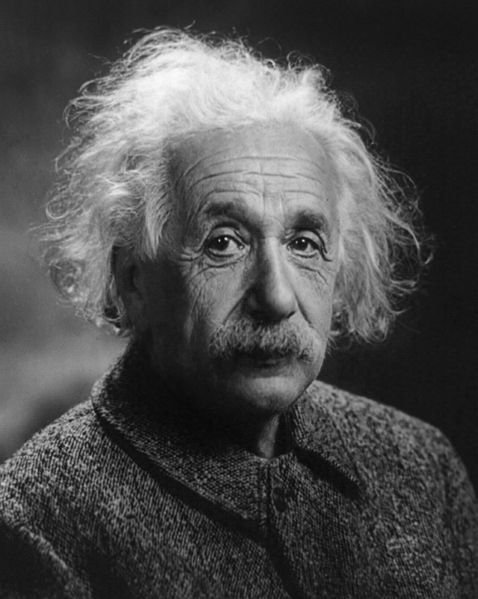
By Photograph by Oren Jack Turner, Princeton, N.J. Original image cleaned/leveled by User:Jaakobou. [Public domain], via Wikimedia Commons

My wife sent me this brilliant piece this morning.  The original author is Aaron Freeman.  It first appeared on NPR’s All Things Considered in 2005.  As you’ve probably figured out by now, I tend to identify myself as a somewhat religious person.  The professional language used here is not the one in which I’m trained, but I nevertheless find it beautiful and inspiring.  I would even go so far as to say that the physicist and the minister (this one, anyway) are describing, each in their own way, the same grand mystery of ultimate reality, in which we all live, move, and have our being.

You want a physicist to speak at your funeral.

You want the physicist to talk to your grieving family about the conservation of energy, so they will understand that your energy has not died. You want the physicist to remind your sobbing mother about the first law of thermodynamics; that no energy gets created in the universe, and none is destroyed. You want your mother to know that all your energy, every vibration, every Btu of heat, every wave of every particle that was her beloved child remains with her in this world. You want the physicist to tell your weeping father that amid energies of the cosmos, you gave as good as you got… (Click to read the full article)