Sermon recording for Good Friday.
Click here to read the biblical texts.



Sermon for the Feast of All Saints.
The text is John 11:32-44. Click here to read it.
Here is the video of the entire service. The sermon starts at 32:23.
“Jesus began to weep.”
John 11:35
This brief verse, John 11:35, rendered even more concisely in other translations as, “Jesus wept,” is well-known as the shortest verse in our Bible. For that reason, it was a favorite among students at the Christian high school I attended, where our teachers required us to memorize a Bible verse each week.
As a teenager, I liked this verse because it was short, but today, in my middle age, I have found other reasons to love it. I continue to love John 11:35 (“Jesus wept”) because it puts the grief of our fully divine and fully human Lord and Savior on full display and, thereby, it gives us mere mortals permission to grieve, when we feel the need to do so.
Grief is a tricky subject. We pragmatic Americans tend to think of grief as a problem and grieving as an emotional symptom of said problem. When we operate under this misconception, we try to solve the “problem” of grief by making the “bad feelings” go away. This is why so many well-intentioned friends tend to offer so many problematic platitudes like:
If you’ve ever found yourself in a state of grief, and heard this kind of pseudo-theological drivel spat at you by well-intentioned believers, then you too know just how unhelpful such slogans can be. These kinds of “bumper sticker theology” serve to comfort the minds of the bystanders more than the hearts of the bereaved.
Through my years of service as a hospice chaplain, I have come to realize that the beliefs that “grief is a problem to be solved” and “grieving is a feeling” are fundamental errors. Grief is not a problem; it is a process, and grieving is not a feeling; it is a skill. And frankly, speaking as a fellow pragmatic American, grieving is a skill at which we tend to be very, VERY bad.
If we were to look for a culture that is more skilled at the art of grief than our own, I think we need look no further than the Jewish culture of our Lord Jesus. Jewish culture tends to understand the process of grief better than our own. Our Jewish neighbors have, over the course of several millennia, developed a practical approach to mourning that guides people through the process of grief in a systematic way.
During the first stage of grief, between the death of a loved one and their funeral, Jews recognize that people are in an initial state of shock. The bereaved are exempted from performing many of the commandments of the Torah while they process the loss of their loved one. For the first week after the funeral, they are said to be “sitting shiva,” where they are not expected to go to work, leave the house, or even prepare meals. During this time, friends will visit the family to bring food, sit with them, tell stories, and say prayers. Gradually, after this week of sitting shiva, family members will begin to reintegrate into society. There are certain limitations placed on their activity for the first month and the first year after their loss. After that first year, life has more-or-less returned to normal, but they still pause once a year to remember their loved one on the yahrtzeit, the anniversary of their death. Jewish culture understands, better than American culture, that grief is a process and grieving is a skill that must be taught and can be learned.
In today’s gospel reading, we get to see an example of Jesus sitting shiva with his close friends, Mary and Martha, after the death of their brother Lazarus. What’s amazing about this passage is how Jesus meets each of the sisters where they are, according to their distinct personalities. Both sisters begin their conversation with Jesus in the exact same words:
“Lord, if you had been here, my brother would not have died.”
John 11:32
And then, with Martha, the more practical and intellectual of the two, Jesus engages in a theological discussion about resurrection; with Mary, the more emotional and contemplative sister, Jesus says nothing, but simply weeps.
Though we know, from the rest of the gospel story, that Jesus is about to miraculously raise Lazarus from the dead, that knowledge does not stop Jesus from being fully present with these bereaved sisters in their grief. Jesus knows what he is about to do, but he still takes time to meet people where they are.
The most beautiful thing about the Christian faith is our belief that God, in Christ, has entered fully into the human experience, including our experience of grief and death. Divine omnipotence does not create a stoic barrier between us and our feelings, but allows us to enter into them more fully. Real faith enables us to skillfully navigate the troubled waters of grief, charting a steady course between the way things are and the way they ought to be.
When I, as a hospice chaplain, am invited to the bedside of one who has recently died, I notice how often the bereaved family members feel ashamed of their grief. While I stand silently by, they sometimes say to me, “I’m sorry for crying; I know they’re in a better place and I should have more faith, but I just miss them so much!”
Those are the moments when I, as their chaplain, will break my silence by referring to the very Bible verse that inspired this sermon. I say to them, if they are Christian, “When Jesus visited the grave of his friend Lazarus, the Bible very clearly tells us that ‘Jesus wept.’ If it’s okay for Jesus Christ himself to weep at the death of a loved one, then it’s okay for you to do it too.”
As further evidence for my position on this matter, I would cite St. Paul the Apostle, in his first letter to the Thessalonians, chapter 4, verse 13:
“We do not want you to be uninformed, brothers and sisters, about those who have died, so that you may not grieve as others do who have no hope.”
1 Thessalonians 4:13
St. Paul does not say, “so that you may not grieve;” he says, “so that you may not grieve as others do who have no hope.” Grief is a very good and natural part of human life, even for the life of a Christian. Grief, as I like to say, is simply “love in the past tense.” Others have said that grief is just “love with no place to go.” Grief is not a sin. Grief is not a problem to be solved. Grief is a normal process, which we all must go through. Grief is a natural consequence of love, which our Lord Jesus commands us to do.
Kindred in Christ, I want you to hear today that there is no shame in grief; it is simply “love in the past tense.” If you feel sad because you are working through the process of grief, I want you to know that Christ is with you in your grief and this shortest verse of the Bible, “Jesus wept,” is spoken for you this day.
The grief that you experience might be for a loved one who has died; it might also be because of the loss of a job or the end of a relationship. Your grief might be part of coming out of the closet, because you yourself or someone you love is not the person you thought they were. The grief you experience might even be because of something good, like getting married, having a baby, graduating from school, or retiring from a career after many years of faithful service. All of these events are good things, but each of them also involves the end of a previous identity and way of life.
Whatever the source of your grief is today, I want you to know that it is healthy, normal, and good. Jesus Christ does not stand in judgment over you for your grief, but kneels down in the dirt and weeps with you for your loss.
I pray that you will take this mental image with you into your experience of grief. I pray that it will give you the grace to go easy on yourself while you are going through the process of grief. I pray further that your self-acceptance, and your faith in Christ’s acceptance, will give you the wisdom to have mercy on others who are going through their own process of grief.
Through it all, may the peace of God, which passes all understanding, keep our hearts and minds in the knowledge and love of God, and of Jesus Christ, God’s Son, our Lord. And may the blessing of God Almighty, the Father, the Son, and the Holy Spirit, be amongst us and remain with us always.
Amen.

Sermon I gave for Memorial Day weekend at People’s Church (Unitarian Universalist) in Kalamazoo, Michigan.
A friend asked me this week, “What do you tell yourself when you are fearful of your own mortality and the fragility of your own life?” This is one of those questions that people ask you when they find out you’re a minister. (I suppose it’s an occupational hazard.) It’s an important question that gets at the heart of what drives people to religion and spirituality in our culture.
I say, “in our culture,” because this is not the only question that has driven the spiritual quest in every place and time. The ancient Hebrews, for example, had no concept of an afterlife. Their primary religious question was not, “What will happen to me when I die?” but “What will happen to our people now?” The reward they conceived for obedience to the Torah of their ancestors was not a blissful afterlife for individuals in heaven, but a prosperous life for their community on Earth. Individual mortality was a given for them, but the survival of their people was of paramount importance.
The Jewish concept of an afterlife developed over time and took several different forms before the beginning of the Common Era. Later Christian formulations evolved from those forms. Both traditions, to this day, maintain multiple views and opinions on the subject of the afterlife.
Other spiritual traditions have their own opinions about what happens to people when they die. Hinduism and Buddhism, for instance, both espouse a belief that people in the West call “reincarnation” (though a Tibetan Buddhist friend tells me that his tradition prefers to call it “rebirth”).
Some (though certainly not all) who claim no religious affiliation take a “that’s it” approach to the end of a person’s physical existence. “The body dies,” they say, “and then that’s it.Nothing else comes next.”
I will not be so bold as to attempt to resolve this important question for all of you today. One of the beautiful things about Unitarian Universalist communities is the theological diversity that exists among your membership. It would be a sacrilege to insult that diversity by imposing one particular interpretation above all others. What I purpose to do instead, in this sermon today, is to take an “at least” approach to questions about the afterlife. Whatever else life after death may (or may not) be, it is “at least” as much as what we know through science.
Let’s start with the following assertion: Reality is relational. At every conceivable level. Community is everything and everything is community.
This is a fact. We know this from our study of the universe.
At the macroscopic level, planets and stars are drawn together by gravitational attraction to form solar systems and galaxies.
At the microscopic level, we can observe those same gravitational forces drawing electrons, protons, and neutrons together to form atoms. Atoms bond to form molecules. Molecules form cells. Cells form organisms. Organisms form ecosystems.
At the level of human observation, gravity is the arm that Earth uses to hold us all close to her heart.
Human beings and other animals experience a similar force of attraction that draws us together into families and communities for the purposes of survival and reproduction. When we experience this attraction to one another, and the conscious choice we bring to that attraction, we don’t call it gravity; we call it love.
In politics and economics, our choices to honor “the inherent worth and dignity of every person” and respect “the interdependent web of all existence” are themselves acts of love. To quote the present-day prophet Cornel West, “Justice is what love looks like in public.”
Even the individual “I” that I think of as “me” is, in truth, a community. My consciousness is an emergent property of the electrochemical relations between the cells of my body.Biologists refer to this as “the neural network.” The atoms that presently comprise my body were forged billions of years ago in the furnace of a long-dead star. The stars are my ancestors and are part of me today. As Carl Sagan was so fond of telling his audience, “We are star stuff.” After my biological life is over, the atoms of my body will disperse and go on to become part of someone else. From the cellular, to the social, to the solar levels, and everywhere in between, reality is relational.
The relational nature of reality is “the story I’m telling myself” about life after death. Whatever else the afterlife might (or might not) mean, it means at least as much as this. How then do these thoughts about the relational nature of reality help us in our spiritual reflections about life after death?
First of all, I think the relational nature of reality gives us a way to get past the seemingly insurmountable differences we find between various theories of the afterlife. If reality is relational, then relationship is the ultimate source from which all beings derive their existence. If reality is relational, then equitable relationships (with ourselves, each other, and the planet) are the highest and most sacred goal that human beings could pursue. Terms like “most sacred” and “source of all being” are titles that people in some religions would apply to their concept of “God.” My favorite passage in the sacred texts of my own Christian tradition is 1 John 4:16, “God is love, and those who abide in love abide in God, and God abides in them.” This passage takes on new depths of meaning for me when I hold the phrase “God is love” next to “reality is relational.” A person need not be religious or believe in a personal deity to see the value in this interpretation.
When I die, my body will be recycled back into Earth. I will still be giving new life to other organisms long after I am gone. Those organisms too will eventually die and pass the gift of life to others, just as it was passed to us. The physical and chemical elements that currently empower my neural network will eventually disperse and enter into new relationships with other beings. The “I” that think of as “me” will one day become part of someone else. On that day, relationship will be all that is left of me. On that day, I will become love.
When I imagine death and reality in this relational way, I can see how people in some spiritual traditions could say that the dead have been “reborn” or “resurrected.” If the dead have indeed “become love,” I can understand how some might say that they now have “eternal life” with God and the saints. I can also see how it makes sense to believe that an individual’s personal identity ceases to exist when their brain and body stop functioning. When we imagine reality as relational, we gain the power to resolve the conflict between differing interpretations and religious traditions. We gain the power to hold all of them (and more) together in a unified and interrelated whole.
The second gift that relational nature of reality offers us is the power to have faith without superstition. A person need not believe in a personal God or an immortal soul to accept that reality is relational. If reality is relational, a naturalistic worldview need not necessitate the cynical belief that life is meaningless or hopeless. Indeed, a naturalist who understands the relational nature of reality may find it easier to grow a meaningful and hopeful life than a traditional theist who maintains belief in “God” and “soul” as isolated monads. Even the most ardent atheist can say a heartfelt “Amen!” to the Unitarian Universalist principles of “the inherent worth and dignity of every person” and “respect for the interdependent web of all existence, of which we are a part.”
This understanding of the relational nature of reality offers much to us, but it also asks much from us. It asks that we let go of our egocentric and anthropocentric ways of thinking and living. It asks that we stop centering ourselves in conversations and focus our attention on serving the common good. It asks us rememberthat the way we treat ourselves, our fellow humans, and ourplanet has more spiritual value than any religious dogma or spiritual platitude ever could. In the words of Jesus of Nazareth, the only way to truly love God is by loving your neighbor as yourself. The relational nature of reality asks us to “become love” while we are still alive and have the power of intentional choice. This, in the end, is the kind of life that matters most.
On this Memorial Day weekend, the people of this congregation have gathered to remember those who have come before us, those who have died, those who have “become love” in our midst. May our good memories of these people inspire us to become the hands and feet of love while we still have breath in our lungs. May our bad memories of these complex and imperfect people guide us to honor their legacy by doing better than they did. May we learn from their successes and failures. May we, by our own moral choices, claim our place in the cosmic network of relationships until that day when our biological functions cease and we ourselves “become love.”

One of the many remarkable truths about nature is that death is often a gateway to new forms of life. My favorite illustration of this process is the most powerful incident of death in the known universe: a supernova.
A supernova is how a star dies. Stars are born as hydrogen atoms are drawn to each other in the cold depths of outer space. These atoms huddle together in the dark until their bodies fuse into one. This fusion gives off a burst of energy that can be felt as heat and light. The end product is a new atom called helium. As more and more hydrogen atoms join the group, they start a chain reaction that results in a giant ball of gas that we call a star. Stars burn for billions of years, constantly making new kinds of atoms. You can look out the window on a clear day and see this process happening right before your eyes.
Eventually, these atoms become too big and heavy for this process to continue. When this happens, the inward pressure of gravity overwhelms the outward pressure caused by fusion and the star implodes. Because every action in physics causes an equal and opposite reaction, the star’s implosion results in a dramatic explosion. In that brief moment of tremendous destruction, the light of a single star outshines the entire galaxy.
I imagine that for you, the loved ones of those who have recently died, the pain of grief feels overwhelming in the same way. The felt absence of the one who died seems to outshine every other concern in life. This feeling is very normal and natural. You might wonder: Can my universe ever be the same again? Can any good possibly come from a loss so great? These questions are also very normal and natural.
Here’s how nature answers those questions:
Can the universe ever be the same again? No. A great star has been lost, just as the unique light of your loved one’s presence has faded from this world. We grieve this incalculable loss with you.
Can any good possibly come from a loss so great? Yes! The new atoms forged in the heart of that star get launched into space, where gravity draws them back together over billions of years. They form new bodies like other stars, comets, and planets. On our planet Earth, these atoms came together in just the right way to allow life to form and grow. Today, in the ground beneath your feet, in the air you breathe, and even in the atoms of your own body, you carry the remnants of these deceased stars. Quite literally, you are made of stardust!
The spiritual traditions of the world have observed this process and expressed it in various ways. Some believe in reincarnation while others believe in resurrection. Some believe that our physical life ends while our spirits live on in some mysterious way. What all of these beliefs have in common is the hunch that death is not just an end, but also a gateway to new life, just like a supernova.
I know that your world will never be the same again after the loss of this precious loved one. I invite you, in this time of overwhelming grief, to be patient and caring with yourselves and each other. May the gravitational forces of love draw you closer together and help you pick up the scattered pieces. May the blinding light of loss plant seeds of new life as it fades. And may you remember always the unchanging truth that fires your life with dignity: You are stardust!

I’d like to say a few words this morning on the subject of life after death.
“What happens to us after we die?” is one of those religious questions that people in our culture are accustomed to asking at least once in their lives. When I taught philosophy at Utica College, I used to give a whole series of lectures on this subject. I’ve paired down and digested some of those lectures for today’s sermon, so you’re getting a little taste today of what it was like to be one of my students (but don’t worry, there won’t be a pop quiz at the end of church).
There are not a few voices out there today claiming that the whole point of being religious is to secure for oneself a more pleasant afterlife. But this hasn’t always been the case.
For the ancient Israelites, the problem of life after death was a non-issue. It’s not that they didn’t believe in it; it’s that they never even thought to ask the question. For them, the great religious question was not “What will happen to me after I die?” but “What will happen to our people in this life?” The blessings and curses of the Torah all have to do with Israel’s collective prosperity in this world.
The closest the ancient Israelites got to asking and answering the question of life after death is in their concept of Sh’ol. Sh’ol is the Hebrew name for the realm of the dead. They never speculated about what that realm was like. One’s status in that realm was not dependent upon one’s actions in life. There was no concept of eternal judgment, reward, or punishment. For the ancient Israelites, Sh’ol was just “the place where dead people go.” Modern English versions of the Bible have typically translated Sh’ol as “the grave.” When people die, they are simply “in the grave.” Life stops at death. That’s as far as the ancient Israelites got with the question.
By the time of Jesus, the Jewish people had been influenced by several of the cultures around them. Many of these cultures had a more elaborate view of the afterlife. For the first time, that question showed up as a blip on their theological radar. Jewish thoughts on the matter went on to influence the early Christians in their thinking. By the time we get to the apostle Paul in the mid to late first century, Christians had come to believe that there would be a day in the future when Jesus would physically return to earth and the dead would be resurrected, raised back to life like Jesus was, physical bodies included. This was the dominant view of life after death that one finds in the New Testament and in the early church.
As the centuries went by, Christianity became more and more influenced by Greco-Roman culture and less influenced by its Jewish roots. People started reading some of the great Greek philosophers like Plato, who taught that the mind and the body were separated at the moment of death. The body dies, but the mind lives on in an ideal realm where it can contemplate goodness, truth, and beauty in their pure forms, unencumbered by the limitations of physical existence. Christians who read this found it appealing. Translating Plato’s ideas into Christian terms, they decided that the “ideal realm” was the kingdom of heaven, where God lives. After our bodies die, they thought, our souls go to heaven where they can see God directly.
This last perspective is the one that has become most prominent in Christianity today, which is interesting for Christians because we say that our faith comes from the Bible, but the belief that people’s souls go to heaven when their bodies die actually comes from Greek philosophy rather than the Bible. But even within the pages of Bible itself, we can see that there is more than one concept of life after death.
In this morning’s gospel reading, we can see two of these worldviews at war with one another. On one side, you have the Sadducees, who believed in Sh’ol, the grave: that life stops at death. On the other side, you have the Pharisees and the Christians, both of whom believed in resurrection. Luke probably decided to include this story in his gospel as a defense of the early Christian position over and against the Sadducees’ position, but I don’t particularly care about that aspect of the question, right now.
We could sit here all day and speculate about the technicalities of the afterlife (i.e. “What goes where, when, and how?”) but I would rather focus on the questions “Who?” and “Why?” when it comes to life after death.
The “Who?” is God. In the Bible (Acts 17:28), the apostle Paul quotes the Greek philosopher Epimenides, saying that we “live, and move, and have our being” in God. Later, in Romans 11:36, Pauls says that all beings are on a journey “from God, through God, and to God.” So, when we die, in the words of biblical scholar Marcus J. Borg, “we do not die into nothing; we die into God.” The same God who loved us into existence and loves us and holds us now in life will continue to love and hold us after death. When we die, we do not wander into the darkness; we are welcomed into the light. When we die, we are not enveloped by oblivion; we are embraced by eternity. When it comes to the “Who?” of life after death, the answer is that we put our trust in God, “in whom we live, and move, and have our being,” “from whom, through whom, and to whom are all things,” “the Alpha and Omega, the first and the last,” “as it was in the beginning, is now, and ever shall be, world without end. Amen.”
When I imagine our return to God at the end of this journey, I like to imagine rain drops falling into the ocean. When the rain drop hits the surface of the ocean, what does it experience? In one sense, it ceases to exist; it becomes nothing. But this isn’t entirely true, because the water molecules that made up that rain drop are still there, they’re just part of the ocean now. So, in one sense the rain drop becomes nothing, but in another sense it becomes part of everything. Likewise, when the rain drops of our souls return to the infinite ocean that is God, what will we experience? Will I still know that I am Jonathan Barrett Lee? Will you still know that you are you? I honestly don’t know and I won’t try to speculate or offer you a theory that may or may not later prove to be true. Any analogy I make right now will most likely fall short of reality, anyway.
Even my favorite ocean metaphor doesn’t really work because the truth is that we are already living, moving, and existing in and through the ocean of God right now. We don’t have to wait until we die to experience that. The infinite ocean of God is already within you and me, and around us in the earth, sky, sea, and stars.
And if the apostle Paul is right in saying that we “live, and move, and have our being” in God and that all things are on a journey “from God, through God, and to God” (and I think he is), then the illusions we create for ourselves of separateness and superiority are nothing more than lies we make up in order to stroke our own insecure little egos. If we truly realized how loved we are as children of God, we wouldn’t need to make distinctions like “I’m better because I’m white/male/straight/American/Christian and she’s black/female/gay/Korean/Muslim.” If we really embraced who we are in God, we wouldn’t need to split those hairs (because they’re all growing on the same head). But because we do live in a world where people don’t know who they really are in God, we do have to spend time rectifying those errors and healing those divisions. We are called upon by God to participate in what the apostle Paul called “the ministry of reconciliation,” which leads me to my final point: the “Why?” of life after death.
Why do we ask these questions and formulate these theories about life after death? We do it because we need to know that our efforts on behalf of this “ministry of reconciliation” are not done in vain, but have lasting value. We need to know that our little stories are part of some Great Story being woven by the ages. We need to know that life matters and we are not alone. And as we put our parents, friends, lovers, and children into the ground, we need to hear that there is a love “strong as death” and a passion “fierce as the grave.” As the lid on that coffin closes, or when we lie in hospital and our breathing becomes more labored as the end draws closer, something within us is screaming. Something within us feels the urge to sing with that great poet, John Donne:
DEATH be not proud, though some have called thee…
Mighty and dreadfull, for, thou art not so,
For, those, whom thou think’st, thou dost overthrow,
Die not, poore death, nor yet canst thou kill me.
From rest and sleepe, which but thy pictures bee,
Much pleasure, then from thee, much more must flow,
And soonest our best men with thee doe goe,
Rest of their bones, and soules deliverie.
Thou art slave to Fate, Chance, kings, and desperate men,
And dost with poyson, warre, and sicknesse dwell,
And poppie, or charmes can make us sleepe as well,
And better then thy stroake; why swell’st thou then;
One short sleepe past, wee wake eternally,
And death shall be no more; death, thou shalt die.
We feel the urge to sing in the face of death and sing we do. “Even at the grave, we make our song.” We sing to remind ourselves that there abides with us a Love that wilt not let us go.
In defiance, we sing:
I fear no foe with thee at hand to bless,
ills have no weight and tears no bitterness.
Where is death’s sting? Where, grave, thy victory?
I triumph still if thou abide with me.
In faith, we sing:
O Love that wilt not let me go,
I rest my weary soul in thee;
I give thee back the life I owe,
that in thine ocean depths it’s flow
may richer, fuller be.O Light that followest all my way,
I yield my flickering torch to thee;
my heart restores its borrowed ray,
that in thy sunshine’s blaze its day
may brighter, fairer be.O Joy that seekest me through pain,
I cannot close my heart to thee;
I trace the rainbow through the rain,
and feel the promise is not vain
that morn shall tearless be.O Cross that liftest up my head,
I dare not ask to fly from thee;
I lay in dust life’s glory dead,
and from the ground there blossoms red
life that shall endless be.
Brothers and sisters, I’m here today to tell you what happens after we die. I’m not here to talk about the “What/Where/When/How?” of life after death. I’m here to talk about the “Who?” and the “Why?” The “Who?” is God and the “Why?” is because your life does matter and you are not alone.
So, when your day comes (and it will), whether it comes sooner or later, whether you are old or young, whether it comes suddenly or gradually, whether you are alone or surrounded by loved ones, I give you permission, as you feel yourself fading, to close your eyes for the last time in the peace that comes from the knowledge that “you do not die into nothing; you die into God.” The God who has loved you in life is the same God who will continue to love you in death. As you go, you are not enveloped by oblivion, you are embraced by eternity. You do not wander into the darkness, you are welcomed into the light.
 RIP to Fr. Andrew Greeley, a bastion of progressive Roman Catholicism in the USA. His novel Ascent Into Hell, recommended by Brennan Manning, was an important early step in my departure from Fundamentalism just over a decade ago.
Fr. Greeley’s voice was a passionate one for justice and inclusion in Catholicism. He died this week at age 85.
Reblogged from the NY Times:
In a time when the word “maverick” is often used indiscriminately, Father Greeley — priest, scholar, preacher, social critic, storyteller and scold — was the real thing. One could identify a left and a right in American Catholicism, and then there was Father Greeley, occupying a zone all his own.
Exuberantly combative, he could be scathing about the nation’s Roman Catholic bishops; at one point he described them as “morally, intellectually and religiously bankrupt.” If the church wanted “to salvage American Catholicism,” he wrote, it would be well advised to retire “a considerable number of mitered birdbrains.”
But he could be equally critical of secular intellectuals, whom he accused of being prejudiced against religion, and reform-minded Catholics, who he said had a weakness for political or cultural fads.
Touching Bill Murray story on how comedians say goodbye forever.
Reblogged from Old Love:
We kept carrying her around, but like upside down, every which way—over your shoulder and under your arm, carrying her like luggage. And that went on for more than an hour—maybe an hour and a half—just carrying her around and saying, “She’s leaving! This could be it! Now come on, this could be the last time we see her. Gilda’s leaving, and remember that she was very sick—hello?”

Reblogged from Thom S. Rainer.
A truly frightening and sobering analysis. Here is a summary of Rainer’s report:

Click here to listen to this sermon on our church’s website
A middle aged man goes to see his doctor for a physical. At the end of the examination, he asks, “Well Doc, do you think I’ll live to be a hundred years old?”
“Let’s see,” the doctor said, “do you smoke?”
“No,” the man said, “absolutely not. Never.”
Doc: “OK then, do you drink?”
Man: “Not a single drop in my entire life.”
Doc: “Do you eat a lot of sugary or fatty foods?”
Man: “No way! I’ve always been very careful about what I eat.”
Doc: “Do you drive very fast?”
Man: “Never! I always drive 5 miles an hour below the speed limit, just to be sure.”
Doc: “I don’t quite know how to ask this one, but have you had a lot of girlfriends?”
Man: “Absolutely not. I’m celibate and I’ve been celibate for my entire life.”
Doc: “Then why on earth would you want to live to be a hundred?!”
Why indeed. You and I live in a culture that has mastered the art of denying death. Everything from anti-aging cream to plastic surgery is designed to keep us from facing the reality of our own mortality. Consumer advertising and commercial television keeps us distracted from thinking about death until we absolutely cannot avoid it anymore. At that point, if we so choose, they can give us drugs that will “make us as comfortable as possible,” effectively tuning us out until our bodies stop functioning. Our culture’s goal, it would seem, is to first ignore and finally numb the dying process so that we won’t ever have to come to grips with it.
Of course, the wisest among us don’t wait until that point to reflect upon their own mortality. They find their own way to accept it and even make peace with it. For these people, thinking about death doesn’t have to be something dark or morbid. In fact, it can give their lives a sense of meaning and purpose. People who know and accept the fact that they are going to die live with a conscious awareness that they have a finite amount of time on this earth and it’s up to them to make the most of it.
If you knew that you only had a week, month, or year to live, how would you choose to spend that time? What do you want your life to stand for? When other people look back at your life, what would you want them to remember about you? These are the questions that a wise person asks in the face of mortality.
When we accept that this life will not last forever, we realize that it cannot be an end in itself. Like the man in the joke, we have to ask ourselves: what’s the point of living to be a hundred years old if all you’re going to do is eat Brussels sprouts? The truly wise among us realize that life cannot last forever, therefore the truly wise among us also realize that each life must be lived for something larger than itself. Every mortal life, it seems, is a means to an end.
In spite of our culture’s death-denying attempts to distract or numb us, each of us has probably known, met, or heard about at least one person who made his or her mortal life meaningful by dedicating it to something larger than himself or herself. We tend to respect or admire such people when we meet them. Their examples might even inspire us to look more deeply at our own lives, face our mortality in new ways, and discover meaningful possibilities within us that we hadn’t noticed before. It’s a beautiful thing when that happens.
However, it’s at this point that our cultural programming kicks back in and tends to shut us off toward the next step in our development. Our culture is so individualistic that we don’t even think about the larger social bodies of which we are a part. We tend to stop with ourselves and not notice how it is that an awareness of mortality applies to larger realities.
People are mortal. We know that. We accept that fact, at least theoretically, even if we choose to ignore it for our entire lives. However, not many of us stop to think about other things that share our mortality. These things might last much longer than we do, but they too will one day fade from existence. Families are mortal. Surnames and lineages come to an end through a lack of offspring. Churches and other faith communities are mortal. There comes a point when dwindling membership and a lack of funds causes an institution to close its doors. The same thing is true of entire religions at large. There are very few people on this planet who continue to worship the gods of Mount Olympus in the same way that they were worshiped by Greeks in centuries past. Nations are mortal. The Roman Empire was once the dominant superpower in the world, unlike anything else that had come before it. Where is the great Roman Empire today? Buried under the rubble of history and preserved in ruins frequented by tourists in Bermuda shorts. Species are mortal. Dinosaurs no longer roam the earth like they did 65 million years ago. Finally, even the planets and stars are mortal. One day, our very own sun will burn up all of its hydrogen fuel and explode into a violent supernova, momentarily becoming the brightest star in some distant sky.
If coming to grips with our own individual mortality is difficult, accepting the mortality of families, churches, species, and stars feels almost impossible. Yet, the same truth applies to these larger mortal beings that first applied to mortal human beings: it is in facing mortality that we find meaning.
Let’s look at this idea in relation to this morning’s reading from Mark’s gospel. The story opens as Jesus and his disciples are leaving the great Jerusalem temple, the epicenter of Jewish worship in the first century CE. Jesus, as usual, is walking away from yet another fight with the established religious leaders of his day. In the previous chapter, chapter 12, you can read about Jesus butting heads with representatives from almost every major Jewish sect and community: Pharisees, Sadducees, Herodians, and temple scribes. The conflict between Jesus and the organized religion of his day had reached such a boiling point that Jesus, in his frustration, was about ready to give up on it. When this morning’s passage opens with him leaving the temple, he’s not just out for a stroll, he’s right in the middle of storming out in a huff.
It’s at this point that Jesus’ disciples, in their usual tactless and somewhat dimwitted manner, decide to stop and admire the lovely architecture of this religious icon and national monument of Judaism. They say of the temple, “Look, Teacher, what large stones and what large buildings!” Jesus is unimpressed. He says, “Do you see these great buildings? Not one stone will be left here upon another; all will be thrown down.”
He’s talking about mortality of the temple: this central symbol of religious and national identity for the Jewish people. They were under the impression that this sacred building would stand forever under divine protection. For them, the temple was immortal. It was an end in itself as a center of worship. The idea had never occurred to them that it might not be there one day.
As it turns out, Jesus’ prediction was spot-on. The Jerusalem temple, like any human being, was mortal. It was eventually burned to the ground by the Romans during an uprising in the year 70 CE. It was never rebuilt. The site where it once stood is now occupied by the Dome of the Rock, one of the most sacred places in Islamic religion.
The destruction of the temple was unthinkable to the average Jew, but to Jesus it was inevitable. The wisdom of Jesus did not stop with an awareness of his own individual mortality, but extended to embrace the mortal and finite nature of all things. Just as it was for individuals, so it is for temples, religions, countries, species, planets, and stars: to face mortality is to find meaning.
If our great struggle in life is limited to ensuring the continued existence of particular people, places, institutions, or things, then we have already doomed ourselves to failure. Nothing lasts forever. We need to accept that. What Jesus said about the Jerusalem temple, we could say about anything: ““Do you see these? Not one stone will be left here upon another; all will be thrown down.” All things are mortal.
The sooner we realize this truth, the sooner we can get on with the business of asking the really important questions about existence in reality. Concerning our individual selves, we can ask: “What am I living for? What will people remember about me when I’m gone? What will be my lasting contribution to the world around me or the universe as a whole? What is the meaning of my life?”
We can ask these same questions about our mortal families or this mortal country. The day will come when the United States, like the Roman Empire, will only exist as a chapter in a history book. Accepting the inevitability of this fact, we need to ask ourselves as Americans: “When that day comes, what will that chapter say?”
As Christians, we can also ask these same questions about our church, our denomination, and our religion as a whole. We need to get over this ego-centric idea that God will protect and preserve us from our own collective mortality. Just look at the way Christianity itself has changed over the last two thousand years. We shouldn’t kid ourselves into thinking that the Christianity we practice is identical in faith and form to the Christianity practiced by the Apostle Paul or St. Augustine of Hippo. We identify ourselves as Presbyterians, but if John Knox and John Calvin (the founders of Presbyterianism) were sitting in this church right now, they would be horrified by much of what they would see. Likewise, if a Christian from the year 2412 were to time travel into this sanctuary right now, that person’s faith would likely seem so foreign to us that we wouldn’t even want to call it ‘Christian’ at all. Just as Paul and Calvin have shaped us, our faith will shape the future long after we are gone and the pressing crises of our era have ceased to be relevant concerns. What will be our lasting contribution to that future?
Finally, as members of this church, I think we need to ask these questions about our mortal congregation. This little church has been in Boonville for over two hundred years. We take great pride in our history and our building. Maintaining the integrity and beauty of this place is a chief concern for many people in this room. But all of us together need to hear Jesus saying to us what he said about his own temple: “Do you see these great buildings? Not one stone will be left here upon another; all will be thrown down.” This place, this building, and this congregation are all mortal. They will not last forever. “All will be thrown down,” as Jesus said. If our only motivation in coming here week after week is to keep the doors open and the lights on, then we’ve already failed. We’re like the man in the joke at the beginning of this sermon: we have no reason to live for another hundred years. Wise individuals live with a conscious awareness of their inevitable death and then adjust their lives accordingly, so as to make them as rich and meaningful as possible. It is no different with wise churches.
This church will die eventually. Whether it’s in ten years or another hundred years, it will happen. We need to remember that. We need to embrace that truth for ourselves so that we, as a church, can make the most of the time we’ve been given right now. Knowing that this church will one day die and “not one stone will be left here upon another,” we need to ask ourselves, “Why are we here? What is this church living for? What will be our lasting contribution to the life of this community after our doors are closed and our lights shut off forever? What is the meaning of our life together, as a church?” Those are the real questions that we need to be asking, not just once for a special project or a mission study, but continually. We need to set these questions before our eyes like a carrot dangling in front of a horse during a race. These are the questions that need to drive us, propel us, or perhaps lure us forward into the future.
As we explore these questions within the conscious awareness of our church’s impending death (whenever that will happen), I believe we’ll start to see a slow-motion miracle in progress. Even as we are facing and embracing death, I believe that we will also start to experience a kind of resurrection. It’s been my experience and observation that the most vibrant, active, and growing churches are the ones who have found their reason for being, the meaning of their existence, outside themselves. These churches are passionate about spiritual growth and community service. Their members gather together, Sunday after Sunday, not to maintain what they have, but to seek what they desire. There is a yearning deep within such people for “something more.” They are hungry for silence, prayer, scripture, and sacrament. They long to deepen their connection with the sacred mystery of divine love. This love, in turn, leads them out, away from the church and into the streets of this community where love demands to be shared with hurting people through compassionate word and deed. This is my vision of a church that faces mortality and finds meaning. When the day comes that “not one stone will be left here upon another,” such a church will live on in a state of resurrection, even if our doors are closed, our lights shut off, and our roof caved in. Even then, even if our church dies, it will live.
As a church, as individuals, as a country, and as a species, may we be people who live with a consciousness of death. May we face mortality and find meaning. In the midst of these piles of rubble, where stones have been thrown down from the broken remnants of our sacred temples, may we walk together the path of our own, continual, slow-motion resurrection, following in the footsteps of the Living Christ, the Risen One in our midst, the faithful friend who abides with us and guides us on our way.
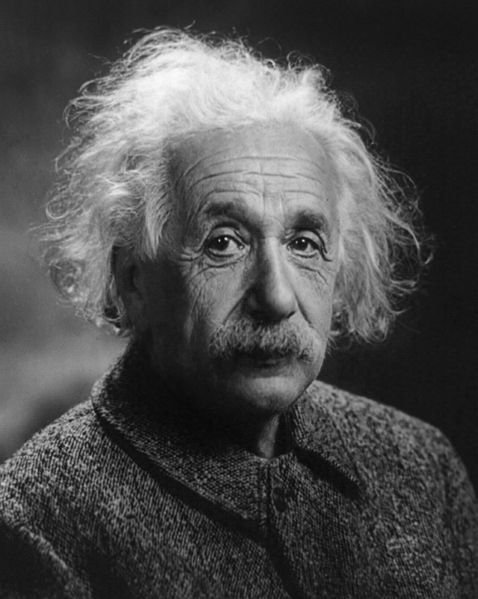
My wife sent me this brilliant piece this morning. The original author is Aaron Freeman. It first appeared on NPR’s All Things Considered in 2005. As you’ve probably figured out by now, I tend to identify myself as a somewhat religious person. The professional language used here is not the one in which I’m trained, but I nevertheless find it beautiful and inspiring. I would even go so far as to say that the physicist and the minister (this one, anyway) are describing, each in their own way, the same grand mystery of ultimate reality, in which we all live, move, and have our being.
 Hopping Hadrian's Wall