I saw that the church implicitly invited people to treat God like an actual therapist. In many evangelical churches, prayer is understood as a back-and-forth conversation with God — a daydream in which you talk with a wise, good, fatherly friend. Indeed, when congregants talk about their relationship with God, they often sound as if they think of God as some benign, complacent therapist who will listen to their concerns and help them to handle them.
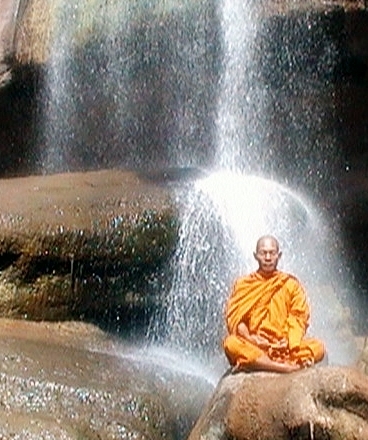
Image by Tevaprapas Makklay. Retrieved from Wikimedia Commons on 10/14/2012
In the first pages of his classic book, Orthodoxy, the twentieth century British journalist G.K. Chesterton outlines the plot of a novel he would like to write:
I have often had a fancy for writing a romance about an English yachtsman who slightly miscalculated his course and discovered England under the impression that it was a new island in the South Seas. I always find, however, that I am either too busy or too lazy to write this fine work, so I may as well give it away for the purposes of philosophical illustration. There will probably be a general impression that the man who landed (armed to the teeth and talking by signs) to plant the British flag on that barbaric temple which turned out to be the Pavilion at Brighton, felt rather a fool. I am not here concerned to deny that he looked a fool. But if you imagine that he felt a fool, or at any rate that the sense of folly was his sole or his dominant emotion, then you have not studied with sufficient delicacy the rich romantic nature of the hero of this tale. His mistake was really a most enviable mistake; and he knew it, if he was the man I take him for. What could be more delightful than to have in the same few minutes all the fascinating terrors of going abroad combined with all the humane security of coming home again? What could be better than to have all the fun of discovering South Africa without the disgusting necessity of landing there? What could be more glorious than to brace one’s self up to discover New South Wales and then realize, with a gush of happy tears, that it was really old South Wales. This at least seems to me the main problem for philosophers, and is in a manner the main problem of this book. How can we contrive to be at once astonished at the world and yet at home in it? How can this queer cosmic town, with its many-legged citizens, with its monstrous and ancient lamps, how can this world give us at once the fascination of a strange town and the comfort and honour of being our own town?
I love this passage. For me, it really captures what my own spiritual journey has been like: simultaneously setting out to explore places where I’ve never been before and returning home to the place where I’ve been all along.
This is one of the great paradoxes of spirituality. Authentic spirituality is often characterized by paradox (i.e. truth in apparent contradiction). Christian spirituality in particular is no stranger to paradox: we believe that Christ is both fully divine and fully human, God (as conceived in the Holy Trinity) is both three and one, the elements of Communion are both bread & wine and flesh & blood. Paradox is the air in which we live and breathe. Therefore, it should come as no surprise that we are able to conceive of the spiritual journey as both a setting out and a coming home.
We Christians have often made use of journey imagery as well, especially when it comes to our spirituality. Just think about some of the classics of Christian religious literature: Dante’s Divine Comedy is a fantastical journey through hell, purgatory, and heaven. John Bunyan’s allegory, Pilgrim’s Progress, is the story of a journey. Even in the Bible itself, the Christian life is described as “following Jesus” and those who walk this path are referred to as “followers of the Way”. Keep that in mind when you hear the opening words of today’s gospel reading, which sets the scene for Christ’s encounter with the rich man as Jesus is “setting out on a journey”. The setting for this story is the open road, where people are traveling together toward some other destination.
Where are they going? The text doesn’t say explicitly. The important fact seems to be that they are traveling. However, I think we can understand this journey metaphorically as a symbol of the great spiritual journey. If such is true, then the journey’s destination is implied no less than three times during this passage. It’s described as: eternal life, the kingdom of God, and salvation.
At the beginning, the rich man asks Jesus, “what must I do to inherit eternal life?” Later on Jesus comments, “How hard it will be for those who have wealth to enter the kingdom of God!” Finally, the disciples ask in desperation, “Then who can be saved?”
Eternal life, kingdom of God, and salvation: these three ideas are pretty common to discussions of Christianity. Most of the time, people talk about them in reference to the ideas of immortality and life after death. They would say that we receive salvation so that we can have eternal life in the kingdom of God (a.k.a. the kingdom of heaven).
The afterlife discussion is certainly an important one, but I’m not going to have it here. I think these ideas have a much broader definition and a much deeper application than simply as speculative statements about what happens after human beings physically die. I think the ideas of eternal life, the kingdom of God, and salvation have much more to do with the quality of life we have here and now in this world.
Eternal life, for instance, has less to do with length of days (i.e. life that lasts forever and ever) and more to do with the kind of life one is living. In John’s gospel, Jesus talks about abundant life, which is a similar idea. He’s talking about the life that’s really living and not just surviving or existing. One can see why the rich man might have been interested in discussing this subject with Jesus. After all, he was wealthy, successful, and religious. By anyone’s account, this guy had it all and had it all together. By all accounts, he was an icon of the ideal life for first century Jews. However, this same successful guy knew deep down that he had not managed to silence that inner voice of uneasiness or fill the void of emptiness. He knew that, in spite of his relative comfort and devout observance of tradition, he wasn’t yet living, he was still simply surviving and “getting by” (even though he seemed to be doing a better job at that than most of his peers). The question he brings to Jesus was born out of intense existential anxiety and a hunger for real life.
We can also look at the deeper meaning of the kingdom of God. God’s kingdom is not a place in heaven or on earth, but a way of being in the world. In the words of biblical scholar Marcus Borg, the kingdom of God is God’s vision of what this world would be like if God were allowed to be in charge instead of the powers that be who currently run things. According to Jesus, the kingdom of God is a state of affairs where “the last will be first and the first will be last.” When God’s dream comes true, when God’s vision becomes a reality on this earth, relationships characterized by domination and exploitation are redefined and turned upside down. Anyone who enters into this reality (this way of being in the world) no longer recognizes the artificial and hierarchical distinctions we humans construct along the lines of gender, race, and social class. As the apostle Paul wrote in his letter to the Galatians, “There is no longer Jew or Greek, there is no longer slave or free, there is no longer male and female; for all of you are one in Christ Jesus.” As the old social pecking order is dismantled in the kingdom of God, people begin to recognize one another as family, co-equal brothers and sisters: children of God. With this end-result in mind, it makes sense then that Jesus would advise the rich man, “go, sell what you own, and give the money to the poor, and you will have treasure in heaven; then come, follow me.” Jesus was inviting the rich man to let go of these old status symbols and enter into this new way of being in the world that recognizes the drunken bum sleeping under a park bench as his brother.
Finally, let’s look at the other word that appears in this passage: salvation. This word, more than any other, is most often used to describe one’s religious affiliation and presumed status in the afterlife. Many folks say, “Hallelujah, I’ve been saved!” Some ask, “Have you been saved? Do you want to be saved?” When we use this word in such a limited and narrow sense, we miss the deep nuance implied by its use elsewhere in the Bible. Most often, the word saved refers to deliverance or liberation. For Jewish people (including the apostle Paul and Jesus himself), the central story of salvation is the ancient legend of God, through Moses, liberating the Hebrew people from slavery and genocide in the land of Egypt. In the New Testament, the Greek word Sozo (i.e. save) can also be translated as heal or make well. So, when Jesus goes around healing people, the text literally says that he is saving them from their illnesses. So, when Jesus challenges the rich man to let go of possessions, he is trying to set this man free for a life of real wholeness and well-being. This is what it means to be saved or experience salvation.
So then, let me sum up our new and deeper definition of these three ideas: eternal life, kingdom of God, and salvation.You and I are being set free so that we can experience a new way of being in the world that empowers us to really come alive instead of just surviving.
Eternal life, kingdom of God, salvation: that’s the destination, the end point, of the spiritual journey. But as we said back at the beginning, the setting out is also a coming home. We are only reconnecting with that which is deepest within each of us and has been all along.
This is why, I think, Jesus was able to look at this rich man and “love him”, as the text says. I don’t think Jesus was all that intimidated by the rich man’s reticence to give up his earthly possessions. Jesus didn’t fear for this man because he (Jesus) knew that the answers this man was searching for already existed inside him. The text says that this man “went away” from Jesus, but it never says that Jesus stopped loving him. It says that the rich man was “grieved” at Jesus’ words, but it never says that Jesus did likewise. I like to imagine Jesus quietly smiling as the man walks away, trusting that “for God all things are possible” and slyly knowing that this man’s journey would one day lead him back to the place where he started: with himself.
The rich man in this story, with his life of material success and religious observance, knew an awful lot about having and doing, but very little about being. He came to Jesus with the question, “Good Teacher, what must I do to inherit eternal life?” He felt like he was “lacking” something, but he didn’t know what. Jesus’ advice to this rich man involved a letting go of both having and doing in favor of just being.
It was obviously a letting go of having because Jesus advised him to give away what he owned. Less obviously, it was also a letting go of doing because Jesus asked this person to complete an impossible task. “For mortals it is impossible,” Jesus said, “but not for God; for God all things are possible.” In order for the rich man to let go of having, he will also have to let go of doing. He will have to just “let go and let God,” as they say.
You and I are no different. Like the rich man in this story, we live in a society that trains us to identify ourselves by the things we have and the things we do. We hold on to having and doing and so we forget all about being. As a result, we are slaves to survival. We need to be set free so that we can experience a new way of being in the world that empowers us to really come alive instead of just surviving. We need to experience eternal life, the kingdom of God, and salvation. We need to set aside time to just be, to adopt a regular posture of non-doing and non-having. We need to allow our souls to embark on this incredible journey of simultaneously setting out and returning home.
Personally, I have found that the best way for me to adopt a posture of being and non-doing is by setting aside time for regular meditation practice. I can’t say that I’ve fully entered into this peace of being as of yet, but I do feel like this practice has been helpful to me in my journey. Maybe it will be helpful to you as well. There are no special chants or postures in meditation as I practice it. I simply sit upright in a straight-back chair with my hands in my lap and my feet flat on the floor. I let myself become still and quiet to the point where I begin to notice my own unconscious breathing. I focus my attention on the rhythm of my abdomen as it expands and contracts with each breath. Whenever my mind begins to wander, I calmly remind myself to focus on the breath. If I have to do this a hundred times, so be it. I just keep gently redirecting my attention back to my breathing. I try to do this for about twenty minutes or so a day. If you don’t think you have that kind of time or patience, try it for a shorter period. As Dr. Jon Kabat-Zinn says, “Any practice is better than no practice.” If five minutes a day is all you can manage, then go for it. Given time, you just might find yourself longing and ready for more.
Just be. Let go of having and doing. Herein lies eternal life, the kingdom of God, and salvation. This is the whole agenda. It is the beginning and the end of your spiritual journey. That which you seek is already within you.
Mumford & Sons. Photo by prusakolep. Retrieved from Wikimedia Commons.
Here’s a link to an NPR review of the new Mumford & Sons album that, while critical, manages to tap into deeper questions about spirituality, the creative process, and dealing with reality. Worth a read…
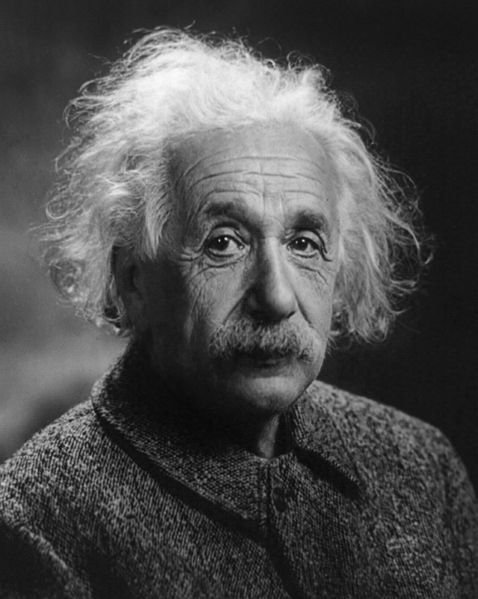
By Photograph by Oren Jack Turner, Princeton, N.J. Original image cleaned/leveled by User:Jaakobou. [Public domain], via Wikimedia Commons
My wife sent me this brilliant piece this morning. The original author is Aaron Freeman. It first appeared on NPR’s All Things Considered in 2005. As you’ve probably figured out by now, I tend to identify myself as a somewhat religious person. The professional language used here is not the one in which I’m trained, but I nevertheless find it beautiful and inspiring. I would even go so far as to say that the physicist and the minister (this one, anyway) are describing, each in their own way, the same grand mystery of ultimate reality, in which we all live, move, and have our being.
I was at a pastors’ retreat earlier this week where a spiritual director suggested that I might find Dark Night of the Soul by St. John of the Cross to be a particularly helpful read at this point in my journey.
So, I’ve decided to take it up. Just for fun, I’ll also be posting my thoughts on the chapters here on my blog. I hesitate to call it a “commentary” because the book itself is a commentary on a poem by the same author. Mine would be a commentary on a commentary, sort of like the Jewish Talmud, but without all the incessant arguing.
But first, here is the poem that forms the basis for this book. I read it out loud to myself before each chapter, therefore I’ll be posting a copy of it with each blog post in this series.
On a dark night, Kindled in love with yearnings –oh, happy chance!– I went forth without being observed, My house being now at rest.
In darkness and secure, By the secret ladder, disguised –oh, happy chance!– In darkness and in concealment, My house being now at rest.
In the happy night, In secret, when none saw me, Nor I beheld aught, Without light or guide, save that which burned in my heart.
This light guided me More surely than the light of noonday To the place where he (well I knew who!) was awaiting me — A place where none appeared.
Oh, night that guided me, Oh, night more lovely than the dawn, Oh, night that joined Beloved with lover, Lover transformed in the Beloved!
Upon my flowery breast, Kept wholly for himself alone, There he stayed sleeping, and I caressed him, And the fanning of the cedars made a breeze.
The breeze blew from the turret As I parted his locks; With his gentle hand He wounded my neck And caused all my senses to be suspended.
I remained, lost in oblivion; My face I reclined on the Beloved. All ceased and I abandoned myself, Leaving my cares forgotten among the lilies.
Since I only got the idea to blog about this after I’d already read the first two chapters, I’ll be playing a bit of initial catchup in this post.
Mother and child in Bolivia. Image by Peter van der Sluijs
The first chapter talks about the love of God being like the love of a mother for her baby. A newborn soul (i.e. someone taking ownership of her spirituality for the first time) is nourished and cuddled without much being required on her part. Later, as the child grows, the mother weans the child from nursing and teaches her how to walk on her own. This is a difficult-but-natural phase in the growing-up process.
In years past, I would have read this chapter as a legalistic call to arms. I would have said that it was my responsibility to walk on my own and live up to God’s impossible moral standards. However, reading this chapter as a parent changed my outlook significantly. I’m currently at the phase of life with my kids that John of the Cross was using as a metaphor for the spiritual life.
Yes, it’s true that parenting is a challenge for everyone as babies become toddlers. However, the phase doesn’t end all at once. Even on the toughest of days, there is still a lot of affection to be given. My wife and I didn’t just decide one day that it was time for our daughter to grow up. That is happening naturally over time. We expected her to fall down as she learned how to walk. We expected accidents to happen during potty-training. We expected her to mispronounce new words. She wasn’t punished for these things. We just loved her through them and she figured them out on her own (with some help from us).
What’s really amazing is watching her personality emerge as she gets older. Some of it she learns from imitating us (like laughing at fart jokes). Some of it seems to be inborn (like her tendency toward left-handedness). But all of it is part of who she is. And we love her for it.
The same thing is true of us in our development as human beings of the spiritual variety. God’s tenderness toward us does not end as we grow more spiritually mature. God expects us to make mistakes and loves us through them. God is raising us, not to conform to some foreign standard of piety, but to become the best versions of our own unique selves.
If I, as a parent, can find such joy in this process with my own kids, how much more does God do so with each one of us?
Last week, I was invited to speak to the Durham Lions Club. This is what I had to say:
On the first day, God created the dog and said: “Sit all day by the door of your house and bark at anyone who comes in or walks past. For this, I will give you a life span of 20 years.”
The dog said: “That’s a long time to be barking. How about only 10 years and I’ll give you back the other 10?’
So God agreed.
On the second day, God created the monkey and said: “Entertain people, do tricks, and make them laugh. For this, I’ll give you a 20-year life span.”
The monkey said: “Monkey tricks for 20 years? That’s a pretty long time to perform. How about I give you back 10 like the Dog did?”
And God agreed.
On the third day, God created the cow and said: “You must go into the field with the farmer all day long and suffer under the sun, have calves and give milk to support the farmer’s family. For this, I will give you a life span of 60 years.”
The cow said: “That’s kind of a tough life you want me to live for 60 years. How about 20 and I’ll give back the other 40?”
And God agreed again.
On the fourth day, God created man and said: “Eat, sleep, play, marry and enjoy your life. For this, I’ll give you 20 years.”
But man said: “Only 20 years? Could you possibly give me my 20, the 40 the cow gave back, the 10 the monkey gave back, and the 10 the dog gave back — that makes 80, OK?”
“OK,” God said. “As long as you’re sure.”
So that is why for our first 20 years we eat, sleep, play and enjoy ourselves. For the next 40 years we slave in the sun to support our family. For the next 10 years we do monkey tricks to entertain the grandchildren. And for the last 10 years we sit on the front porch and bark at everyone.
And that, my friends, is the meaning of life. Now you know.
This, so we’re told, is the meaning of life. But philosophers, thinkers, and wise people from every time, place, and culture have long suspected that’s not true. Something inside of us resists what Shakespeare’s tragic hero, Macbeth, said about the nature and meaning of life:
Life’s but a walking shadow, a poor player,
That struts and frets his hour upon the stage,
And then is heard no more. It is a tale
Told by an idiot, full of sound and fury,
Signifying nothing.
Most of us refuse to believe that life “signifies nothing”. Something within each of us searches for significance. We need to know that our lives have meaning.
I suspect that such a longing for meaning was active in the mind of Melvin Jones, the insurance agent from Chicago who had an epiphany during a lunch group with business colleauges in 1917.
Jones wondered out loud, “What if these men, who are successful because of their drive, intelligence, and ambition, were to put their talents to work improving their communities?”
It wasn’t long before he discovered other like-minded professionals who were asking themselves the same questions. They organized a group that became the first Lions Club. Within three years, they had grown into an international organization.
Then, in June of 1925, Melvin Jones’ vision of community service began to take on flesh as the members of Lions Club International listened to an impassioned plea from that famous icon of American history, Helen Keller. As you all know, Ms. Keller called upon those Lions to become “Knights of the Blind”. Few have ever heard her brief appeal in its entirety, so I would like to share it with you now:
Dear Lions and Ladies:
I suppose you have heard the legend that represents opportunity as a capricious lady, who knocks at every door but once, and if the door isn’t opened quickly, she passes on, never to return. And that is as it should be. Lovely, desirable ladies won’t wait. You have to go out and grab ’em.
I am your opportunity. I am knocking at your door. I want to be adopted. The legend doesn’t say what you are to do when several beautiful opportunities present themselves at the same door. I guess you have to choose the one you love best. I hope you will adopt me. I am the youngest here, and what I offer you is full of splendid opportunities for service.
The American Foundation for the Blind is only four years old. It grew out of the imperative needs of the blind, and was called into existence by the sightless themselves. It is national and international in scope and in importance. It represents the best and most enlightened thought on our subject that has been reached so far. Its object is to make the lives of the blind more worthwhile everywhere by increasing their economic value and giving them the joy of normal activity.
Try to imagine how you would feel if you were suddenly stricken blind today. Picture yourself stumbling and groping at noonday as in the night; your work, your independence, gone. In that dark world wouldn’t you be glad if a friend took you by the hand and said, “Come with me and I will teach you how to do some of the things you used to do when you could see?” That is just the kind of friend the American Foundation is going to be to all the blind in this country if seeing people will give it the support it must have.
You have heard how through a little word dropped from the fingers of another, a ray of light from another soul touched the darkness of my mind and I found myself, found the world, found God. It is because my teacher learned about me and broke through the dark, silent imprisonment which held me that I am able to work for myself and for others. It is the caring we want more than money. The gift without the sympathy and interest of the giver is empty. If you care, if we can make the people of this great country care, the blind will indeed triumph over blindness.
The opportunity I bring to you, Lions, is this: To foster and sponsor the work of the American Foundation for the Blind. Will you not help me hasten the day when there shall be no preventable blindness; no little deaf, blind child untaught; no blind man or woman unaided? I appeal to you Lions, you who have your sight, your hearing, you who are strong and brave and kind. Will you not constitute yourselves Knights of the Blind in this crusade against darkness?
I thank you.
While I was doing my research for this talk today, I was particularly struck by these words from Ms. Keller’s speach: “a ray of light from another soul touched the darkness of my mind and I found myself, found the world, found God.”
She was referring to Annie Sullivan, the teacher who worked indefatigably to help the young Helen Keller live well with her disability. Ms. Sullivan forged a deep connection with Ms. Keller, who would later describe the event mythically as “a ray of light from another soul touch[ing] the darkness of my mind”. And what was the final result? In Ms. Keller’s words: “I found myself, found the world, found God.”
Now, since Lions Club is not a religious organization, you might find it helpful to replace her word, “God”, in your own mind with “that which gives my life ultimate meaning.”
Through the tireless compassion of Annie Sullivan, Helen Keller experienced a deep and profound sense of connection to herself, the world, and ultimate meaning.
It was this deep and profound sense of connection that resonated so powerfully with Melvin Jones and those early Lions. They felt a longing for meaning that they sought to fulfill by serving their communities.
They wanted to be that ray of light from another soul that touched the darkness of someone’s mind so that, together, we all might find a deeper connection with ourselves, the world, and that which gives life meaning.
As we all know, the Lions accepted Helen Keller’s challenge to become “Knights of the Blind”. Generations of Lions Clubs have dedicated their time, talent, and treasure to the treatment and prevention of blindness.
You and I live in a society that desperately needs the light you Lions carry into the darkness. Our culture of consumerism has blinded us to the needs of others. Our ears are deaf to the call of service. We are falsely informed that ultimate meaning can be found in the pursuit of power, profit, and possessions. It’s obvious to anyone who watches TV that we have forgotten the epic words of John F. Kennedy: “Ask not what your country can do for you; ask what you can do for your country.”
This world needs Melvin Jones and his Lions now more than ever. We need to be reminded that the meaning of life can only be measured in what we give, not what we get. So, I encourage you today to continue your work inside Lions Club and out. Helen Keller is still knocking at your door! Will you answer it?
Answer it with your time, talent, and treasure. More than that, answer it with your whole self. Remember what Ms. Keller said: “It is the caring we want more than money. The gift without the sympathy and interest of the giver is empty.”
Through your caring, you are making a better world, not just for blind people, but for yourselves and all of us who long for meaning.
I conclude with the benediction that I give to my church each Sunday:
Go out into the world in peace. Hold on to what is good. Return no one evil for evil. Strengthen the faint-hearted. Support the weak. Help the suffering. Honor all beings. Love and serve, rejoicing in the power of the spirit.
And may the peace that passes understanding keep your hearts and minds in the knowledge and love of that which gives life meaning. Be blessed and be a blessing.
Fred Rogers can hardly be called an “unsung” hero, but there are few who appreciate how deep were the roots of his wisdom and spirit. He was one of my predecessors in the Presbyterian ministry. He, more publicly than any other Presbyterian in recent memory, embodied the Reformed tradition’s commitments to worldly spirituality and the sacredness of all life. Shortly after his ordination, Mr. Rogers realized that he hated preaching, so he pursued his ministry in the TV studio rather than the church. His message was never explicitly religious, but he communicated the kind of universal spiritual values that continue to shape multiple generations of children. I’m proud to be his posthumous colleague in the Presbyterian Church.
Here’s a wonderfully autotuned video produced by PBS:
Here is a link to an excellent annotated bibliography of several popular-level primers on Liberal (a.k.a. ‘Progressive’) Christianity. For those who wonder what we’re all about, I’d say this is a good place to start. If your looking for one book to begin with, I’d recommend the one at the very top: Marcus Borg’s The Heart of Christianity. It’s concise and well-written for folks on a non-academic level.
It’s an article on the website Spirituality & Practice, which I found by hanging around at Abundance Trek, which is just one of the blogs kept up by my friend, John Wilde. There are many people in this world who strive to be unique individuals who defy all conventional categories; John is one of the very few souls who actually accomplishes it. How like Jesus…
Sorry to crowd the blogosphere this morning, but I came across this article and it was too good to pass by. This is for all religiously and/or spiritually inclined parents out there (of any ideological stripe). Solid, concise, and clear. Originally written by Rev. Rebecca Kirkpatrick.
When I started this blog about a year ago, I planned to focus on sharing my insights into how parents can and should provide religious nurture for their children. As I have reflected on this past year, I thought it would be helpful to briefly lay out in one post some of the most important things that I have learned as a pastor and a parent who works with families.
Almost all of what I have written relates to one of these ten things that I think parents should know. Once we delve into the details and particulars of different parts of scripture or faith, sometimes these essentials can get lost in the shuffle.
“God was not in the fire, or in the earthquake, or in the wind, but in the still, small voice.” 1 Kings 19:12
To sit together in silence requires confronting the inner workings of our own minds. In silence, we see more clearly our thoughts and feelings, our hopes and losses. We can shut them out by compiling our to-do lists or fretting about the crying baby, but if we continue with the silence, we feel the tug of the spirit calling us to a larger life. For some, these feelings are strange and unsettling. There is nothing to do in that silence but “be.” There are no landmarks, no roadmaps, no GPS systems to guide us, save for the rhythm of our own heartbeat and the rise and fall of our own breath.
-Wayne Arnason & Kathleen Rolenz, Worship That Works, 110-111




 Hopping Hadrian's Wall