
Sermon for Proper 5, Year A
Genesis 12:1-9
When I lived down South, we used to have this saying.
It was pretty common—or at least I heard it a lot:
“Bless your heart.”
People would say this to me quite frequently. Every time I heard it, I would think, “What a nice thing to say. This person thinks I have a good heart. Thank you so much.”
It wasn’t until many years later, after I had moved away from the South, that someone finally explained to me:
“Barrett, that wasn’t a compliment. That’s just the polite Southern way of calling you stupid.”
I had misunderstood the meaning of the word “blessing.”
That’s a common thing that happens.
Often, when something good happens in someone’s life, or someone experiences success, material wealth, or prosperity, they might say, “I’ve been blessed.”
And that’s a really beautiful thing.
Because what I think most people are trying to say is, “I’m grateful for the good things in my life, and I want to give thanks.” Whether they are giving thanks to God, to the people around them, or simply expressing gratitude for life’s gifts, they are grateful and they want to express it.
But as with so many things in this world, there’s a flip side.
If material wealth and success become identified as blessings from God, then, if we’re not careful, we can start to think that they are signs of God’s approval.
And if we have God’s approval, then it’s only one more step to saying that whatever we say or do must be right.
And from there, it’s only one more step to saying that we cannot be criticized.
And there, I think, we can see the danger.
Because anyone who claims to be beyond criticism, and uses the Bible to justify that stance, is abusing Scripture.
There is a situation in our world today where I think this danger is present.
Our first reading today, Genesis chapter 12, is often quoted in relation to the tragic situation in the Holy Land between Israelis and Palestinians.
There is a longstanding argument over who gets to be in charge, who belongs there, and who has claim to the land.
Our Jewish neighbors—and we Christians as well—trace our spiritual lineage through Isaac, the son of Abraham.
Our Muslim neighbors trace their spiritual lineage through Ishmael, also the son of Abraham.
And both groups can point back to Abraham and say, “We are descendants of Abraham.”
Anyone who has followed the news at any point during the last fifty years can see that this has been the source of incredible tension and conflict.
I am not going to resolve that today.
It is a complex political problem that requires a complex political solution.
And anyone who claims the solution is simple is probably part of the problem.
But I do think some of that conflict arises from a misunderstanding of what blessing means.
God blessed Abraham and promised land to Abraham and his descendants.
We’ve already noted other ways in which people can misunderstand the meaning of blessing.
As Christians, we have a duty to pray for the leaders of all nations, that they would exercise their authority with justice, wisdom, compassion, and peace for the sake of the common good.
Insofar as our own nation is involved in that situation, let us continue to write letters and make phone calls to our elected officials, advocating for diplomacy, so that all of God’s children might live together in the peace and wholeness that God created them for.
So we’ve talked a little bit about what blessing is not.
Let’s talk now about what blessing is—and what it is for.
A blessing is a recognition of the inherent goodness that resides within someone or something.
When someone or something is blessed, we are saying:
“This person/thing is good.”
Our Hasidic Jewish neighbors have blessings for almost everything.
Like us, they often say a blessing before a meal.
But they also have blessings after meals.
They have blessings for waking up in the morning and blessings for going to sleep at night.
They have blessings for children.
They have blessings for using the restroom.
They even have blessings for seeing a particularly beautiful person.
The reason why our Hasidic Jewish neighbors do this is because there is a belief that a spark of divinity resides within everyone and everything.
When a blessing is spoken over that person or thing, that spark is recognized and reconnected to its source in God.
And this becomes a joyful and holy duty.
I think that’s beautiful.
And I think it captures something essential about what blessing means.
Blessing is the recognition and affirmation of the inherent goodness in someone or something.
It is recognizing that goodness as coming from God and returning to God.
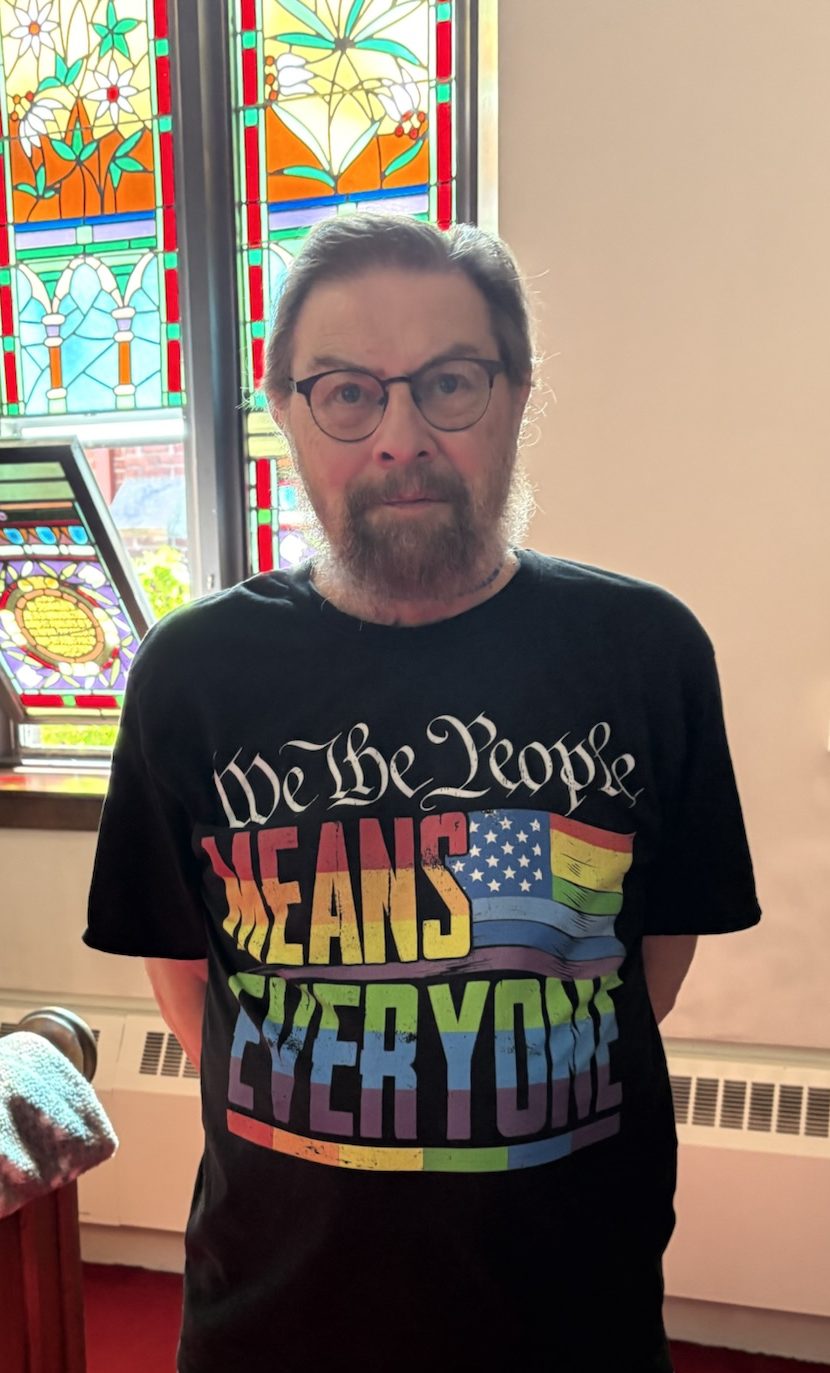
This month, as many of you know, we are celebrating Pride Month.
This is a time of celebration for our lesbian, gay, bisexual, transgender, and queer siblings.
Theirs is a community that has often been demeaned by the language of others, sometimes by people misusing Scripture in order to do so.
People have called them names.
They have been described as abominations, unnatural, inherently disordered, or perverted.
As we have grown as a society, and as many Christians have grown in our understanding of Scripture, we have come to recognize some of those past mistakes.
Pride has emerged, in large part, as a counterargument to those demeaning messages.
It is a way for a community to bless itself.
It is a way of saying:
“There is a spark of divinity in us, too.
And we’re going to gather together and celebrate that.”
That’s what blessing is.
Now let’s talk about what blessing is for.
When God blesses Abraham in our first reading today, God says:
“I will bless you, and make your name great, so that you will be a blessing.”
And a little later:
“All the families of the earth shall be blessed through you.”
What Scripture is saying here is that the purpose of blessing is not ownership or possession.
The purpose of blessing is a calling.
Just as the inherent goodness—the divine spark—exists in me and in each of you, so it exists in everyone and everything else.
Our joyful calling as people of faith is to speak that blessing, to recognize that goodness in everyone and everything.
This is our joyful duty.
So as we go out into this week, as we continue to celebrate Pride Month, and as we continue to carry the burdens of the many problems in our world today, let us remember our calling to be a blessing to others.
And let us recognize that the inherent divine goodness within us is also present in everyone and everything else.
Amen.

