Ignore the misleading YouTube headline. This is a story about nonviolent resistance and the power of love to overcome hatred.
I’ve sat with many civil rights and equality activists who continue to emphasize education and legislation as the key to overcoming injustice. I agree that both are necessary, but the core element that will change hearts is relational proximity. Some criticize him for what he is doing, but the proof is in the results he gets.
“Racism is like cancer: if you choose to ignore cancer, it metastasizes.” -Daryl Davis
“It’s the end of the world as we know it, and I feel fine.” -REM
“Do not let your hearts be troubled.” -Jesus
Harold Camping
It seems like there is always some group of Christians who think they’ve got the inside scoop on the end of the world. A few years ago, one radio minister caused quite a stir when he predicted that the world would end precisely on May 21, 2011 at 6pm. Judging from the fact that so many of us are still here today, I think we can safely say that Mr. Camping’s calculations were (at least) slightly off.
Apocalyptic History
This is not the first time someone has made such precise predictions about the Apocalypse. In fact, Mr. Camping himself previously insisted that the end of days would arrive promptly on September 6, 1994. Before him, there was the very famous case of the…
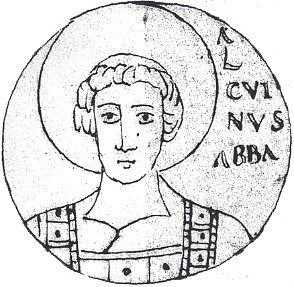
Alcuin (Old English, Ealhwine) was born in Northumberland around 735 into a noble family related to Willibrord, the first missionary to the Frisians. Alcuin was educated at the cathedral school in York under Egbert, archbishop of York and a pupil of Bede the Venerable. Ordained a deacon in 770, he then became the head of the York school. Under Ælberht, bishop and then archbishop of York, he visited Rome and the Frankish court and helped to create a library at the cathedral where he served as librarian and Master of the Schools. Following a meeting in 781 with Charlemagne in Pavia, the Frankish king persuaded him to join the court scholars at Aachen and to serve as his chief minister, with special responsibility for reviving education and learning in the Frankish dominions.
Alcuin withdrew from court life in 796 to become abbot of Saint Martin’s at Tours, where he died…
I know that some of my readers are curious about my week at St. Gregory’s Abbey, an Episcopal Benedictine monastery in Three Rivers, Michigan. In the week since I’ve been back, I’ve been trying to sift through what emerged during my time there. Much of it is too personal for publication, suffice to say that unplugging from work and electronics gave me the space I needed for some internal things to float to the surface, where I could deal with them.
One of the things that amazed me about this time was my experience of sharing space and time with others in silence. There were a few other visitors in the guest house with me. We were present with each other often, but talked very little. We slept in adjacent rooms, ate together, worshiped next to each other several times a day, read next to each other in the library, but said almost nothing.
This experience was quite unfamiliar to me: being present with each other without exchanging information. I got to know these neighbors of mine throughout the week, but there is almost nothing that I know about them. This was new for me, especially considering that I am a chatty, extroverted, social butterfly. Shutting up and just being together in the silence was agony for me at first, but I came to appreciate it by the end of the week.
What strikes me about that experience in retrospect is that it is the polar opposite of what happens with human interaction via social media, where relationship is entirely made up of information exchange and utterly void of real presence. I have Facebook friends and blog readers who I have never met, but we exchange information regularly. Most of it is quite pleasant or amusing. But when I read the comments on a YouTube video, I see the dark side of people whose humanity gets temporarily lost in arguments that are rich in data exchange but poor in intimacy. Spammers and Trolls do not see the humanity in the people on the other side of the screen. Hiding behind the comfortable curtain of anonymity, they say things they would never say to someone they loved, respected, and had to interact with. If I’m honest, I have to admit that I am not totally innocent of this offense myself.
Reading the Rule of St. Benedict this morning, I came across this passage from chapter 2:
Furthermore, those who receive the name of prioress or abbot are to lead the community by a twofold teaching: they must point out to monastics all that is good and holy more by example than by words, proposing God’s commandments to a receptive community with words, but demonstrating God’s instructions to the stubborn and the dull by a living example.
Benedict is the anti-troll in this sentence. He leads by example, especially with those who are resistant to what he has to say. He makes no attempt to argue; he has nothing to prove. He reserves talking for those who are already on the same page with him, so that they might develop and refine their ideas together.
It occurs to me that there is almost no capacity for this kind of leading by example online. Quiet presence offers no exchange of information, therefore no relationship (at least as far as the internet is concerned).
The recovery of sanity and civility requires that each of us recognizes and acknowledges the humanity we share in common with each other, especially those with whom we disagree in matters of politics and religion. Let us recover the lost art of being present with each other when information is not being exchanged, that our conversation might be all the more rich and fruitful.
Today’s sermon from North Church:
“We know from experience
that we can survive without living
and still lose, even when we win.
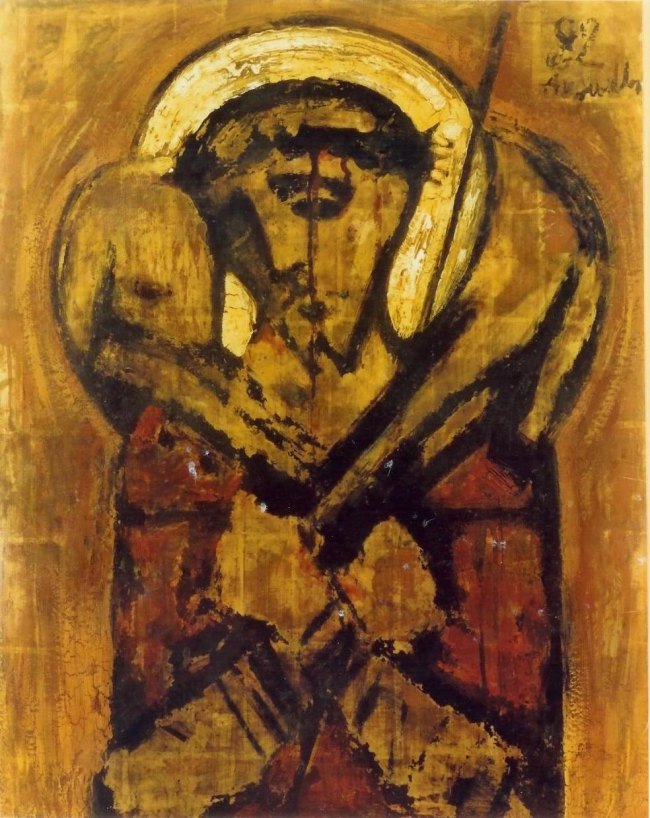
What Christ the Good Shepherd reveals to us
is that there is also a way to live without surviving
and still win, even when we lose.”
It’s time for a pop quiz in honesty: Who here has ever been in an argument? I better not see a single person with both hands down right now. We’ve all been there.
Further question: Who here has ever won an argument?
For extra credit (points for honesty): Who here has ever won an argument and felt really bad about it?
Parenting Kids
Parents of small kids know exactly what I’m talking about here. My kids are really small, so I presently have the advantage of being both bigger and smarter than them (something that will not be true for very long), which means that I am pretty much able to win any argument, either by logic (which doesn’t always work with kids) or by physically picking them up and moving them to wherever I need them to be.
So, we’re talking about Thomas today. The Bible calls him the Apostle Thomas: one of the few who knew Jesus in the flesh and was sent to bring the gospel to the ends of the earth.
Church tradition calls him St. Thomas: if the legends are true, Thomas traveled as far east as India, where he founded a church. The New Testament is silent on his fate and history is inconclusive, but it’s worth noting that when Vasco da Gama made his expedition to India in 1498, he discovered an already vibrant Christian church in the area, claiming to have been founded by Thomas himself.
But the name that Thomas is most remembered for is the nickname people give him when they read today’s gospel story: Doubting Thomas. It’s a big joke, right? People call you a ‘Doubting Thomas’ if you don’t believe some outlandish claim they…
Image by Taka. Retrieved from Wikimedia Commons. This file is licensed under the Creative Commons Attribution-Share Alike 3.0 Unported license.
Life gave
what I took
for my own.
I learned
how to seize
with the hands,
how to tear
with the teeth.
I learned
what it felt like
to touch with the lips,
to press with the tongue,
to be surprised by how much
came out
when I broke the surface,
to be covered with sweetness
all over my body.
Now I know.
It’s complicated.
***
What I took
is mine.
I’m learning
how to build
with the hands,
how to hold nails
with the teeth.
Cleaning up
is never
as much fun
as messing up.
Construction
is never
as cathartic
as demolition.
Nails and wood
are not the same thing
as a tree.
They have no power
to give life.
I’m learning
what it feels like
to be covered with sweat
all over my body.
***
What I made
gave life.
It was an accident.
Nobody meant for it to happen
this way.
It just seemed like a good idea
at the time.
The hands that learned
to seize and build.
The teeth that learned
to tear and hold.
The facsimile of a tree.
I wasn’t expecting it
to be alive
when I broke the surface.
I was surprised by how much
came out
and covered me with blood
all over my body.
William Blake [Public domain or Public domain], via Wikimedia Commons
Today’s gospel reading from the Daily Lectionary introduces us to Bartimaeus, a blind panhandler healed by Jesus in the final days before his crucifixion (Mark10:46-52). When he heard that Jesus was passing by, Bartimaeus started raising his voice, calling upon Jesus to do that which he was meant to do as King David’s anointed heir: liberate his people from oppression. The Temporarily Able-Bodied (TAB) people in the crowd wished this disabled nuisance and general drain-on-the-economy would just shut up and go back to being invisible.
But Jesus, for his part, stopped the parade and listened to the shouts that everyone else wished they weren’t hearing. Begrudgingly, the general public acknowledged to Bartimaeus that his appeal for freedom had been heard.
And when Bartimaeus finally did gain an audience with David’s heir, what happened? One would think that the chosen liberator would know exactly what to do on behalf of an uneducated societal reject. However, that’s not the route that Jesus took:
The Liberator wanted to hear Bartimaeus speak for himself.
Instead of prescribing, Jesus asked what he could do to help. And when the big, miraculous moment came, the Liberator refused to take credit. Instead, Jesus chalked up Bartimaeus’ newfound wellness to that which was already within him.
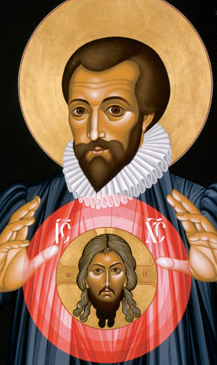
One of the greatest of English poets, and the best known preacher of his day in the Church of England, John Donne (pronounced, “dun”) was born into a wealthy and pious Roman Catholic family around 1572. (His mother was the granddaughter of a sister of Sir Thomas More.) He entered Hart Hall, Oxford in 1584 and possibly studied after this at Cambridge or abroad. He studied law at the Inns of Court in London, entering Thavies Inn in 1591 and transferring to Lincoln’s Inn in 1592. During this time he was exercised over the problem of his religious allegiance (as a Catholic recusant in a country with a established reformed Church), and according to the biographer Izaak Walton, “betrothed himself to no Religion that might give him any other denomination than a Christian“. By 1598 he had conformed to the Church of England. In 1598 he entered into government…





 Hopping Hadrian's Wall

